
 Gaby
Gaby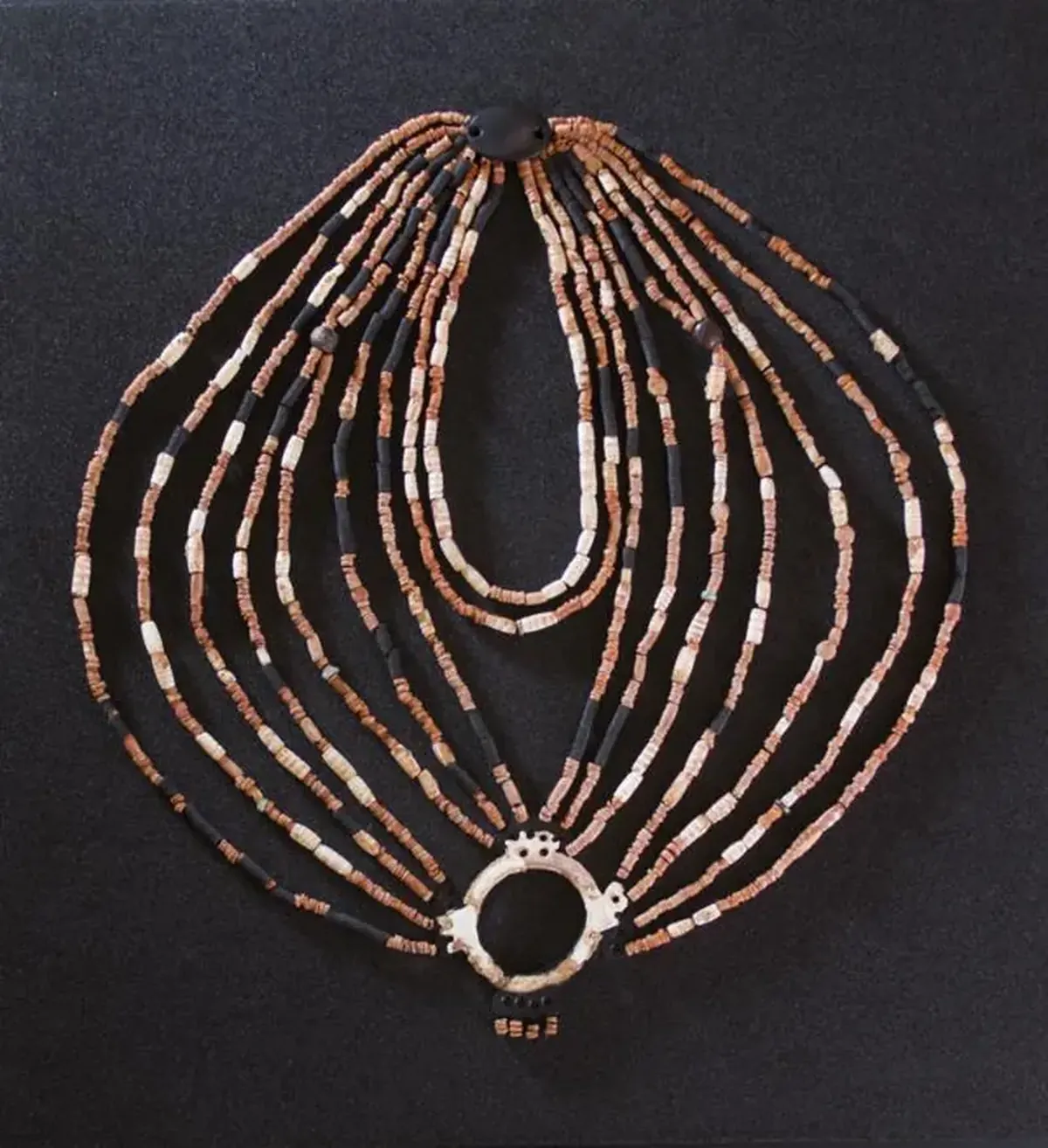
During excavations in Jordan, archaeologists uncovered a child’s grave containing a remarkable necklace that had disintegrated into thousands of beads. The burial dates to about 9,000 years ago.
The Girl with the Neolithic Necklace
Khalil Alarashi, head of the archaeological team, says the shape of the child’s jaw suggests she was about eight years old. The bones are so deteriorated, though, that little else can be known for certain.
The remaining beads give insight into the girl’s life and the cultural practices of her community. They suggest that people in the Neolithic settlement of Bajja took care in burying their children.
The beads were scattered across the child’s chest and neck. Archaeologists counted more than 2,500 beads in the grave. Some were made of turquoise, others of calcite, and some of hematite. Most of the beads had a reddish hue.
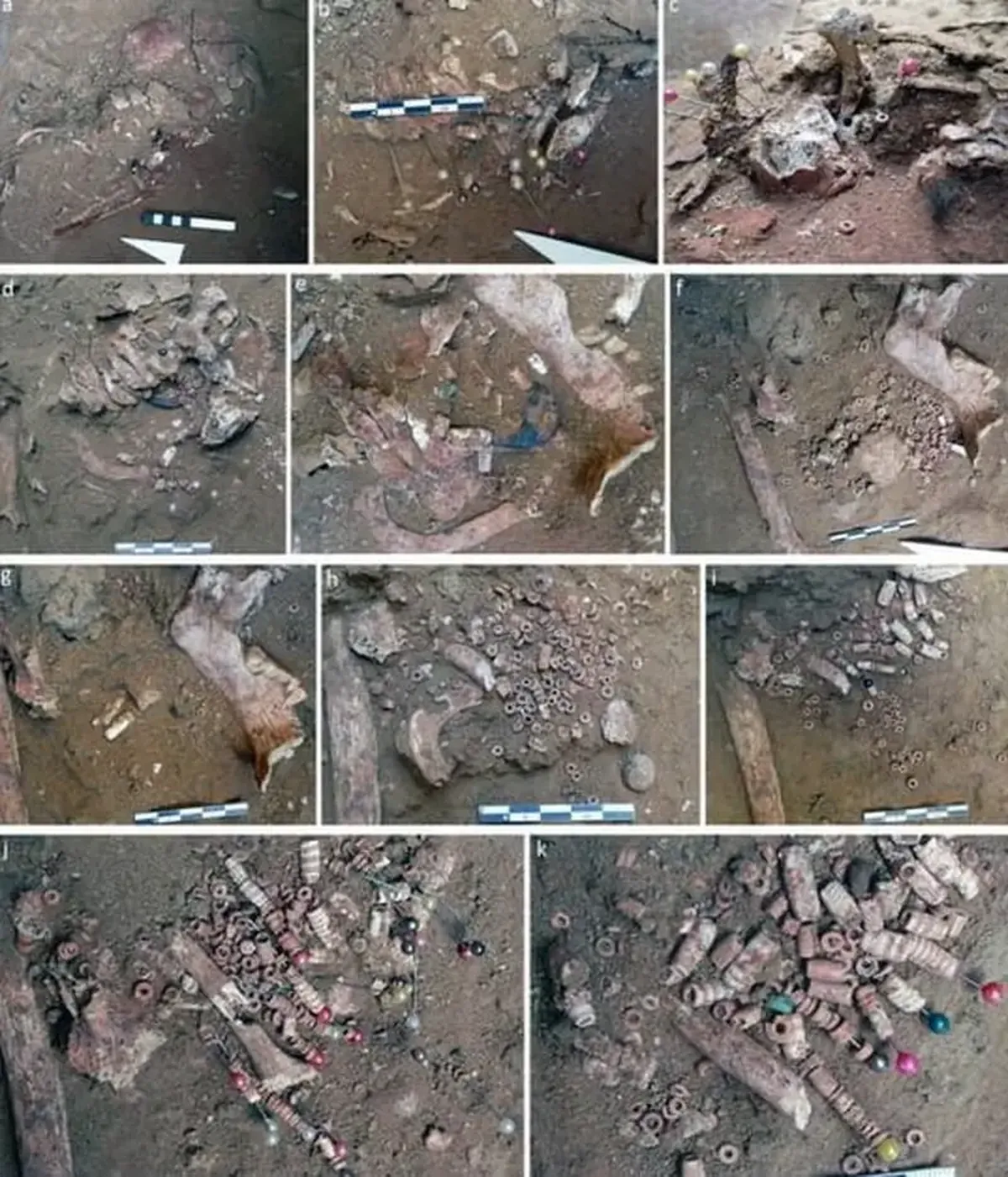
Amid the chaotic remnants, a faint but distinct pattern emerged. Each run of a dozen disc-shaped beads was preceded by two tubular beads. Because of that careful arrangement, researchers conclude the beads were either strung, sewn onto clothing, or attached directly to the body.
Archaeologists also discovered a mother-of-pearl ring and a double pendant with several beads still connected. The latter provided a glimpse into what the scattered necklace might have looked like. Bead by bead, the scientists reconstructed a stunning ornament with exquisite patterns.
The Bajja Settlement and Its Burials
The Bajja settlement was likely inhabited between 7400 and 6600 B.C. Despite its small area, the site is rich in archaeological remains. Accessing the mountainous plateau where it sits requires navigating a labyrinth of winding canyons and vertical rock formations.
Archaeologists say not everyone who lived in this Neolithic settlement was buried there. Only a few graves have been found beneath the houses at Bajja. Most of the graves contain infants and children accompanied by numerous grave goods.
The grave of the eight-year-old girl with the necklace was discovered in 2018. The results of the excavations have now been published. Alarashi told ScienceAlert that the necklace and other ornaments likely formed a specific adornment on the child’s body and gradually fell apart after decomposition.
One of the Oldest, Most Impressive Necklaces
Archaeologists say the necklace has no parallels among other finds in the Levant. The beads were chosen for their color harmony, and the piece astonishes with its meticulous symmetry. Taken together, these features suggest wealth and prosperity among the people who lived here 9,000 years ago.
A true masterpiece is the mother-of-pearl ring. Large and elegant, it likely once dazzled with iridescent colors.
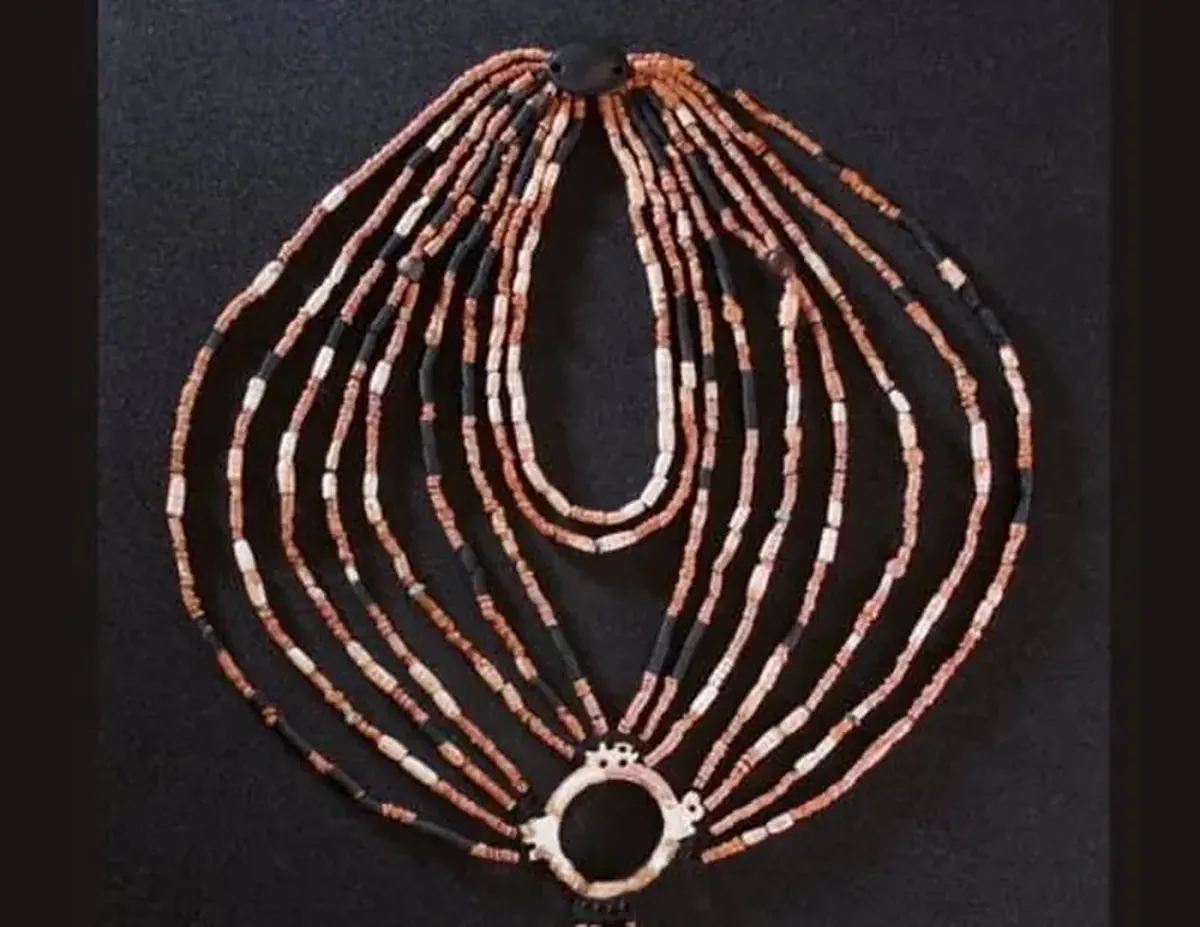
The surface is engraved with precise, delicate patterns that recall filigree. The study’s authors argue the large number of beads, their intricate ornamentation, and their harmony and beauty evoke decorations that appeared later in Mesopotamia and Egypt.
The researchers’ analysis has allowed a re-evaluation of one of the oldest and most remarkable ornaments. The necklace was likely made specifically for this eight-year-old child.
Despite its complex and sophisticated design, the necklace was probably not made for trade. Instead, it was part of the child’s burial and held special funerary significance. The reconstruction is on display at the New Petra Museum in Jordan.
