
 Gaby
Gaby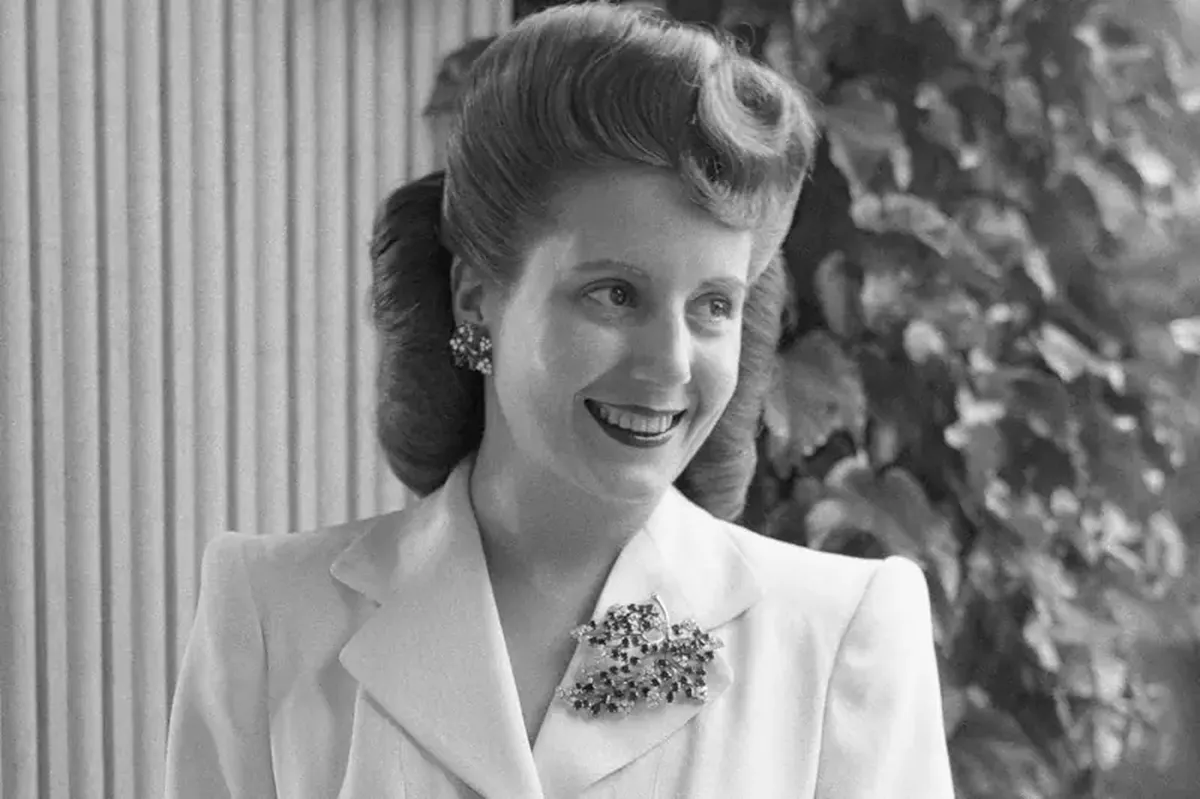
Since the mid-20th century, Eva Perón’s glamorous image in Christian Dior has stood as a symbol of leftist ideals across South America—alongside the fiery “eternal revolutionary” Che Guevara. Supporters of the “spiritual leader of the nation” admire the brief yet consequential life of Juan Perón’s second wife; critics, however, point to plenty of reasons to condemn her influence on state politics.
Juan and Juana
Eva Perón’s story begins with a difficult childhood. The youngest of five illegitimate children of rancher Juan Duarte and his worker Juana Ibarguren (whose maternal line traced back to Basque immigrants), she was born on May 7, 1919, in the patriarchal town of Los Toldos, near Buenos Aires. When María Eva Ibarguren was seven, her father died in a car accident. Five years later she badly burned her face and hands with boiling olive oil. Doctors warned the family the wounds might leave permanent scars. When the bandages came off, there were none. It was as if fate had spared the future actress for a larger role.
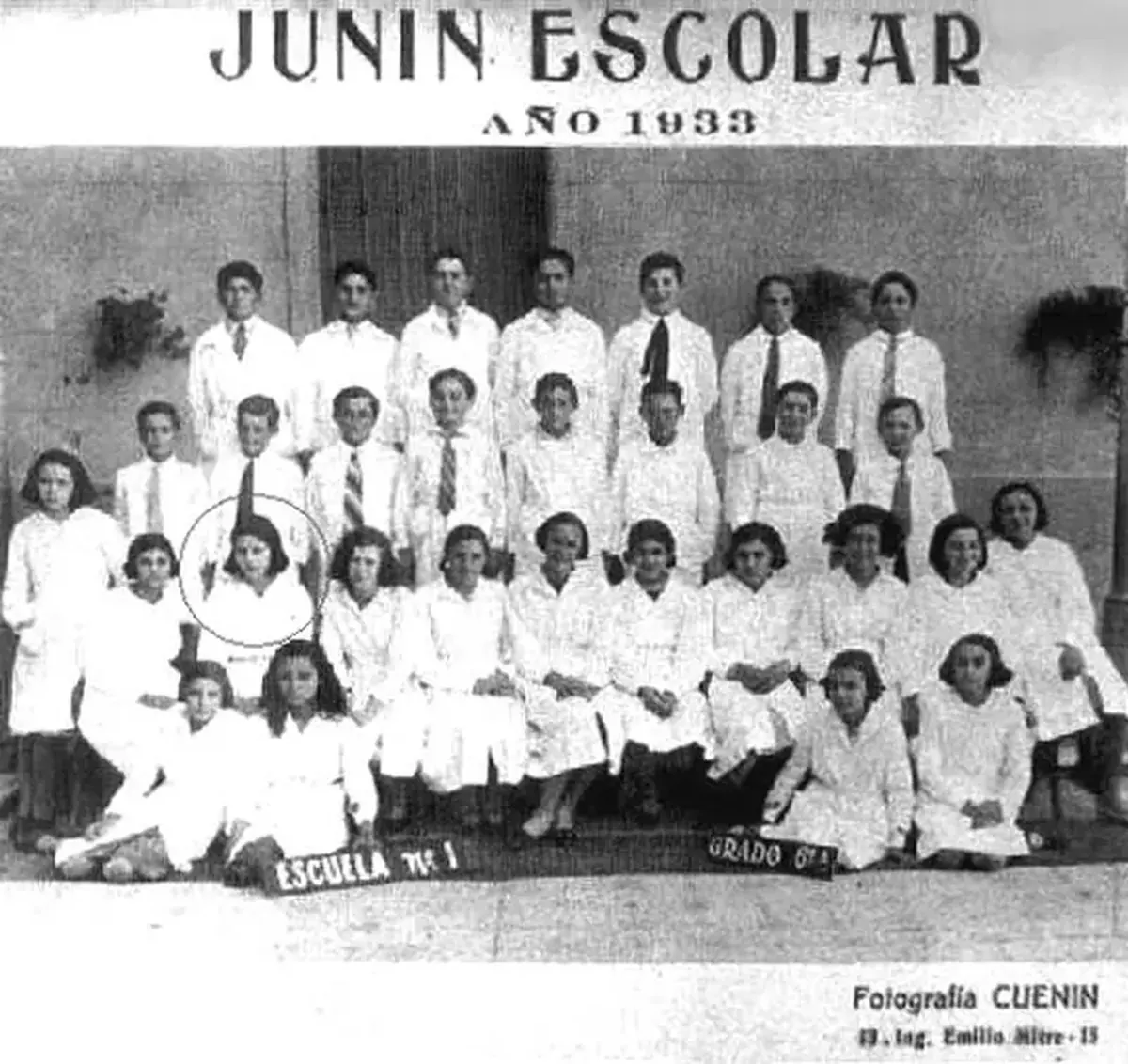
School photo of Eva Duarte, 1933.
After Juan Duarte’s death in 1926, the family’s situation worsened when the legitimate heirs evicted them from the estate. The unofficial widow moved the family to the nearby town of Junín. Over time, Juana managed to get her children back on their feet: she sent her son to the capital for military service, found wealthy husbands for her three older daughters, and bought train tickets to Buenos Aires for her youngest daughter after Eva announced she wanted to be an actress, even though she had finished elementary school late.
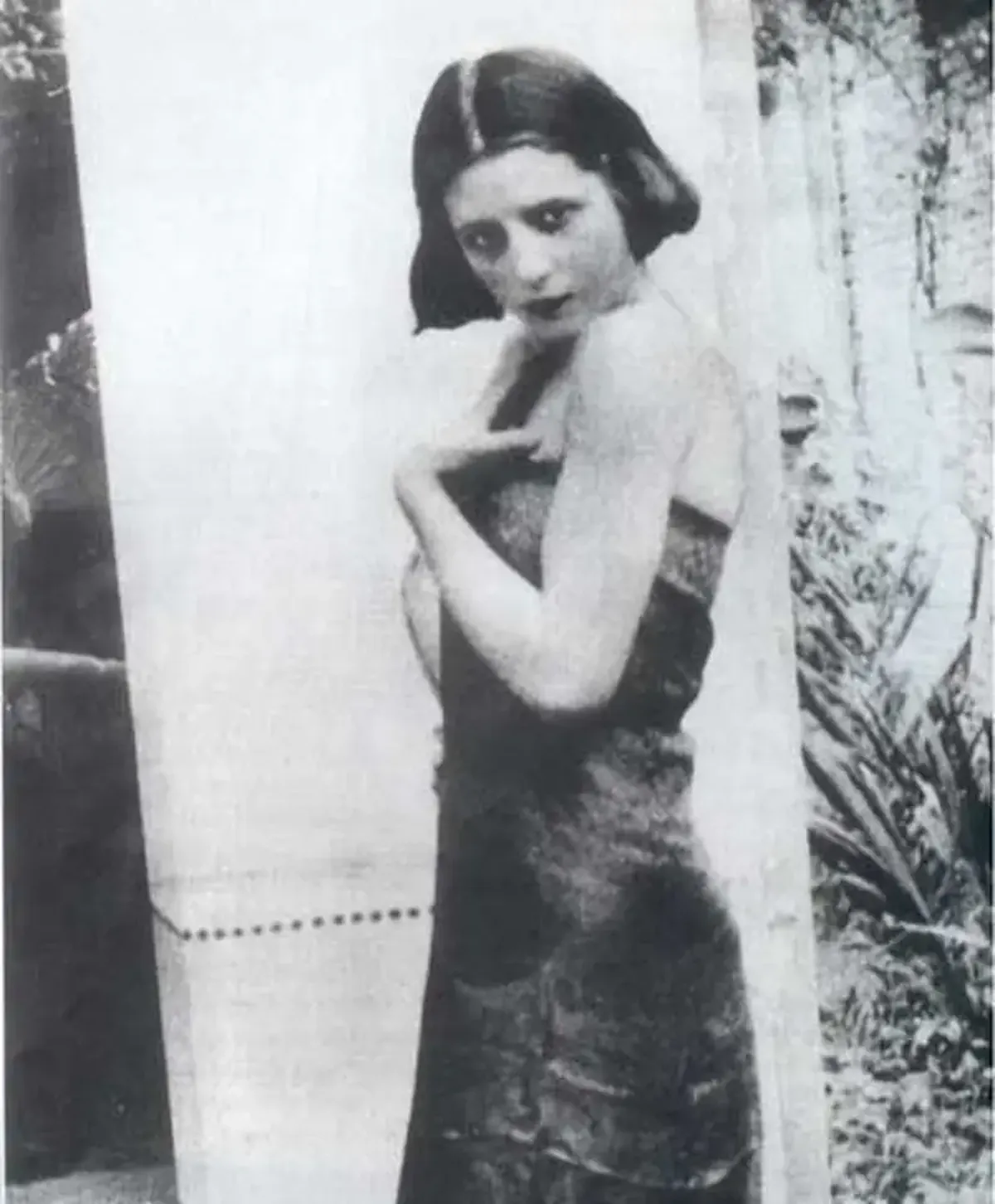
Eva Duarte, 15 years old
Acting Debut
Despite limited formal schooling, María Eva Ibarguren—known on posters as Eva Duarte—found work with a touring acting troupe in the capital. In 1935 she made her debut in a small role at the “Comedia” theater. María Eva didn’t worry about being an amateur. Rather than study at drama school, she found success as a model, posing for advertisements and appearing on the covers of illustrated magazines focused on theater and cinema, such as Antena, Sintonía, and Radiolandia.
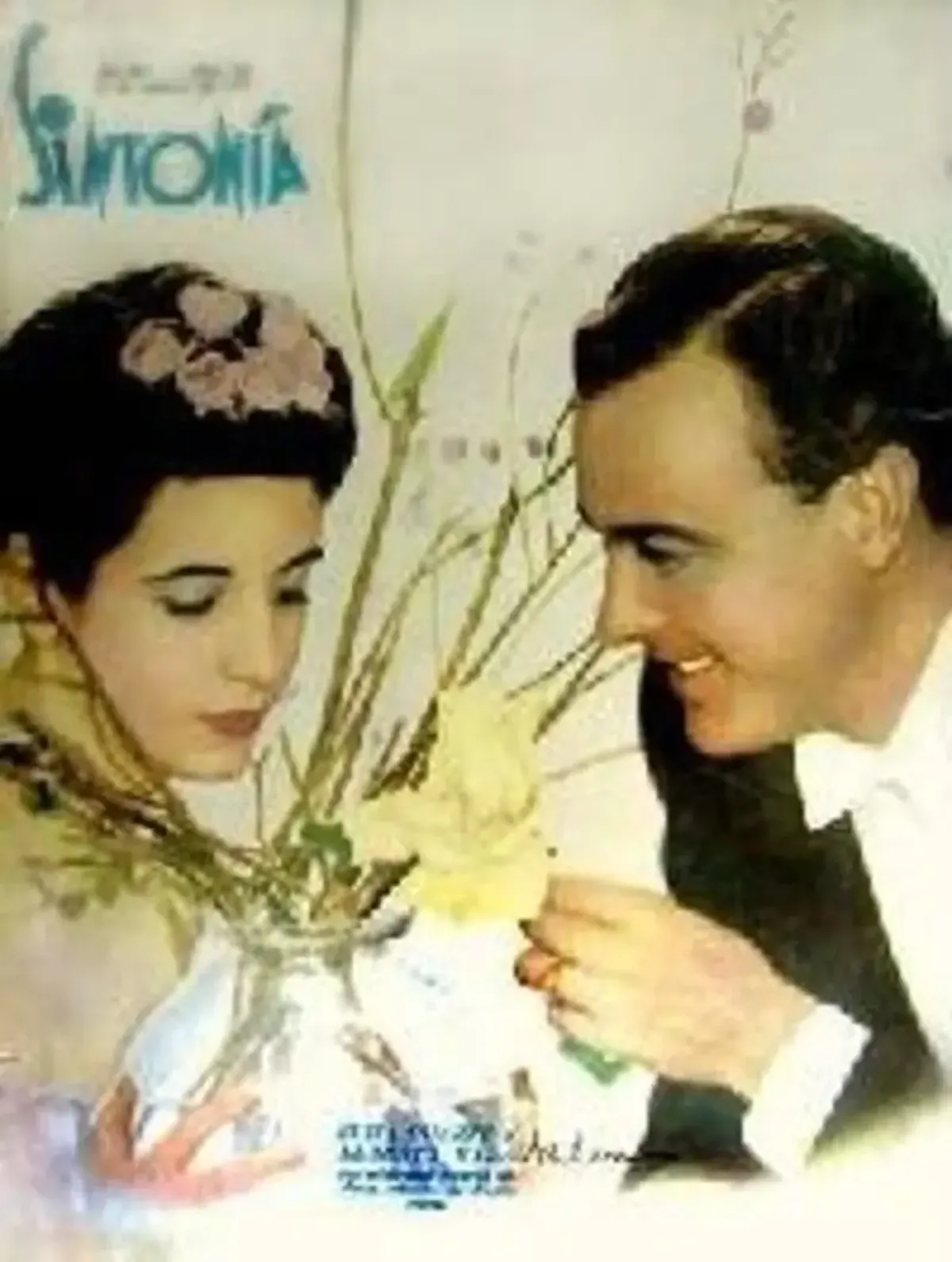
One important chapter in her early career was Eva’s work in popular radio plays in the early 1940s. It began in 1938 when she signed a contract to advertise soap on the radio. Standing in front of the microphone, Eva saw the potential for actors in studio work: in 1939 she formed her first ensemble for radio theater. Two years later she left the stage to focus on that work. Unseen by audiences, she gained recognition on the radio much faster than she had on stage. Her voice made an impression on listeners, and later she appeared in small film roles.
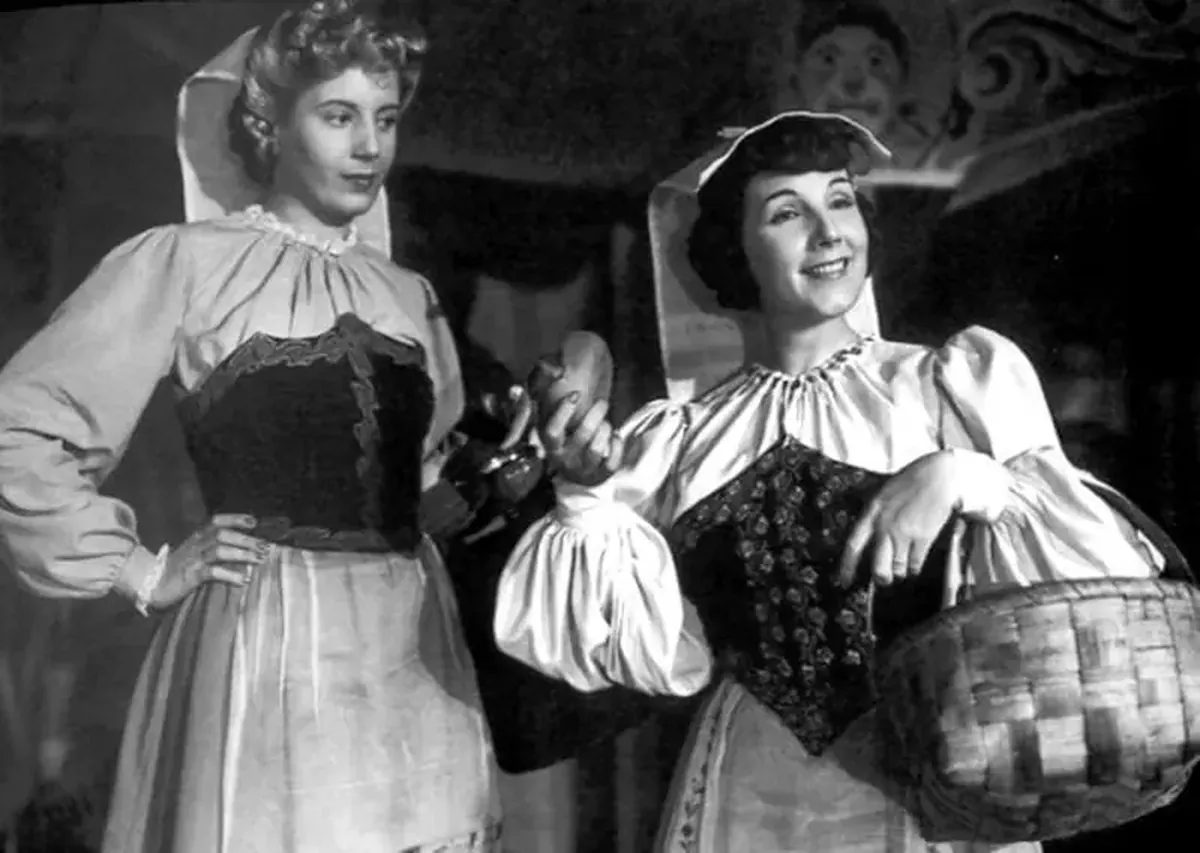
Eva Duarte in “Circus Cavalcade,” 1945.
Real Life
Her career rose with a series of productions about famous women—Joséphine de Beauharnais, Sarah Bernhardt, Eleonora Duse, Anna of Austria, Lady Hamilton, and others. Influential patrons are believed to have helped Eva Duarte realize the project on Belgrano radio. The series was promoted by Antena magazine and backed financially by soap company sponsors. The radio series “Heroines in History” elevated its creator to leading-actress status. Soon she had the chance to meet Juan Perón, who after his role in a 1943 military coup held the modest post of head of the labor secretariat.
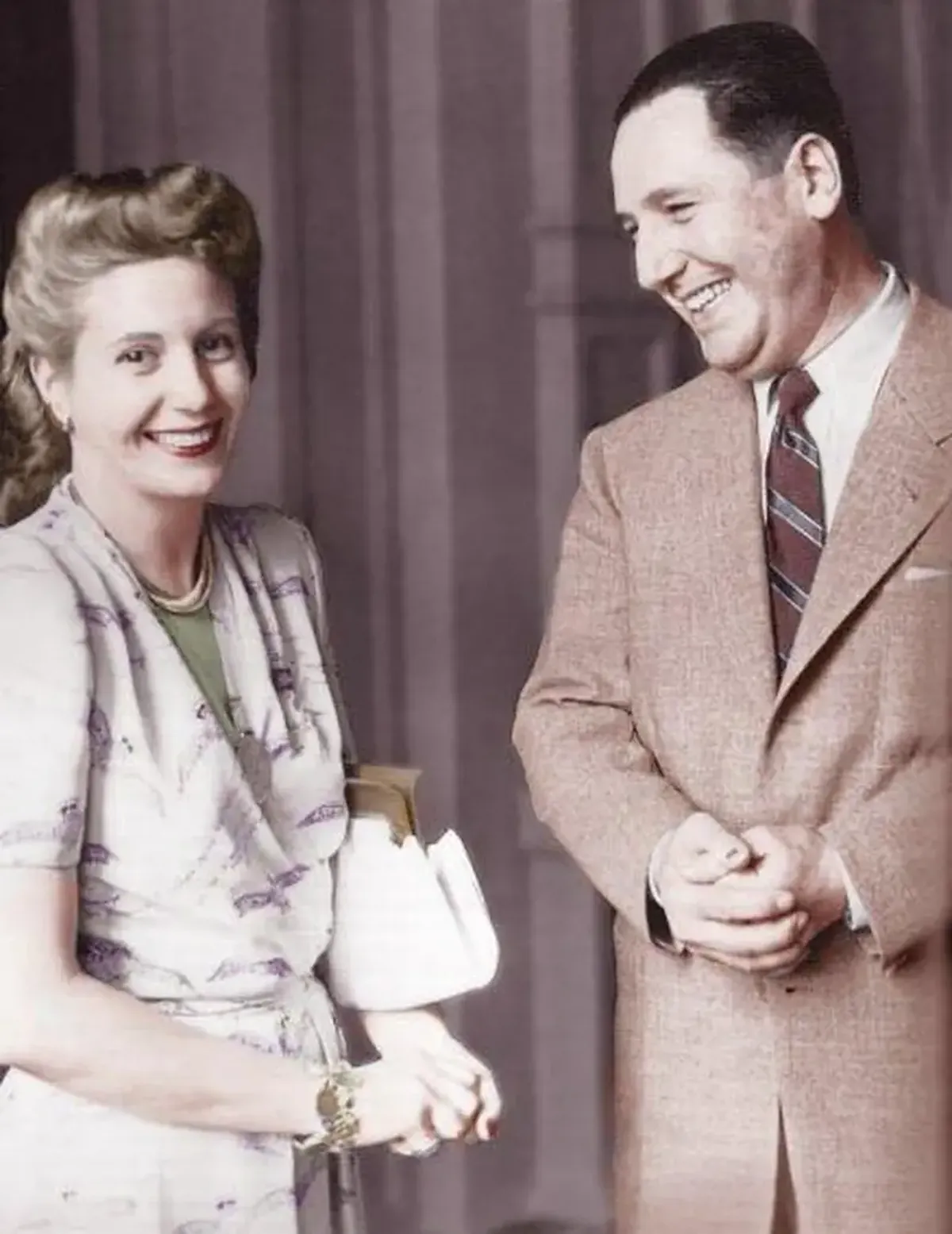
Eva Duarte and Juan Perón, 1945.
To promote his social policies, Perón often appeared on the radio, and they met at an official fundraising event for earthquake victims in San Juan. The ensuing romance with Colonel Perón changed Eva’s life: she later called their meeting “a magical day,” the start of her “real life.” Under Perón’s patronage, she became host of a political radio program supporting the labor secretariat—the program “Towards a Better Future” aired several times a week. Eva also headed a newly created radio workers’ union and worked with Perón’s office on community outreach. When Perón became minister of defense and vice president, her radio position was further secured; she became the highest-paid employee, earning 35,000 pesos.
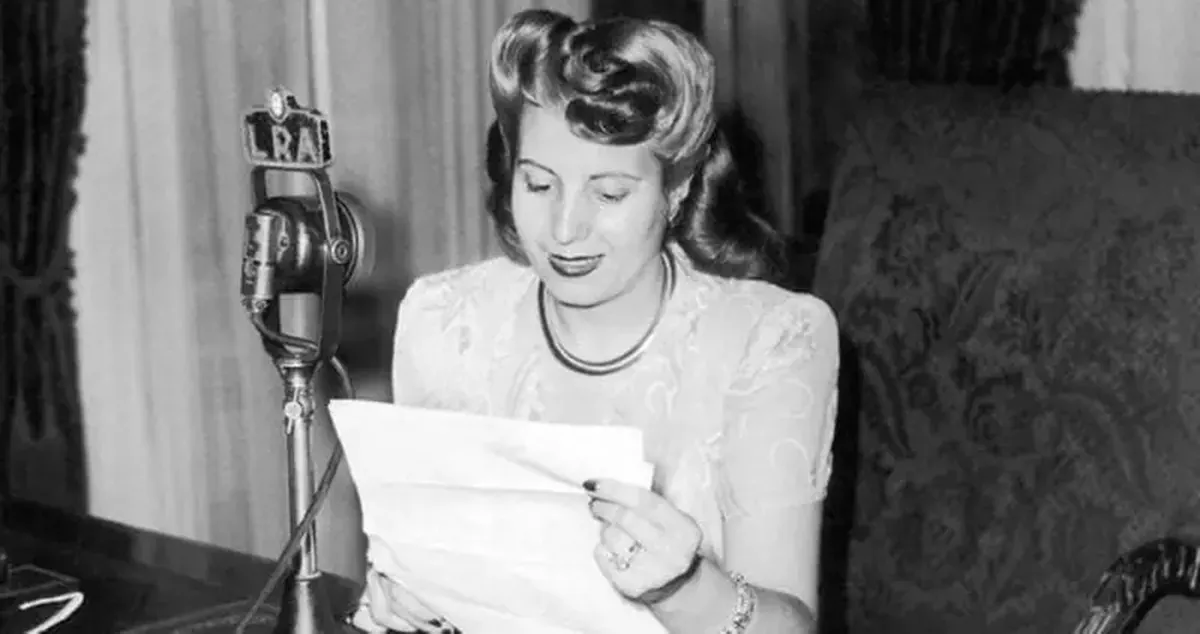
Eva Perón – host of a political radio project
Leading Role
In 1945 Eva landed her first leading film role in “The Spendthrift.” The production was well funded and drew significant media attention. Perón personally visited the set, publicly displaying his connection to the charming actress. Her circle quickly capitalized on that proximity: at her request, the author of “Heroines in History” took a senior post in the presidential propaganda office, and a former radio colleague headed the communications department. Perón’s arrest after a conspiracy among officers reflected the tensions that grew as his power and popularity increased.
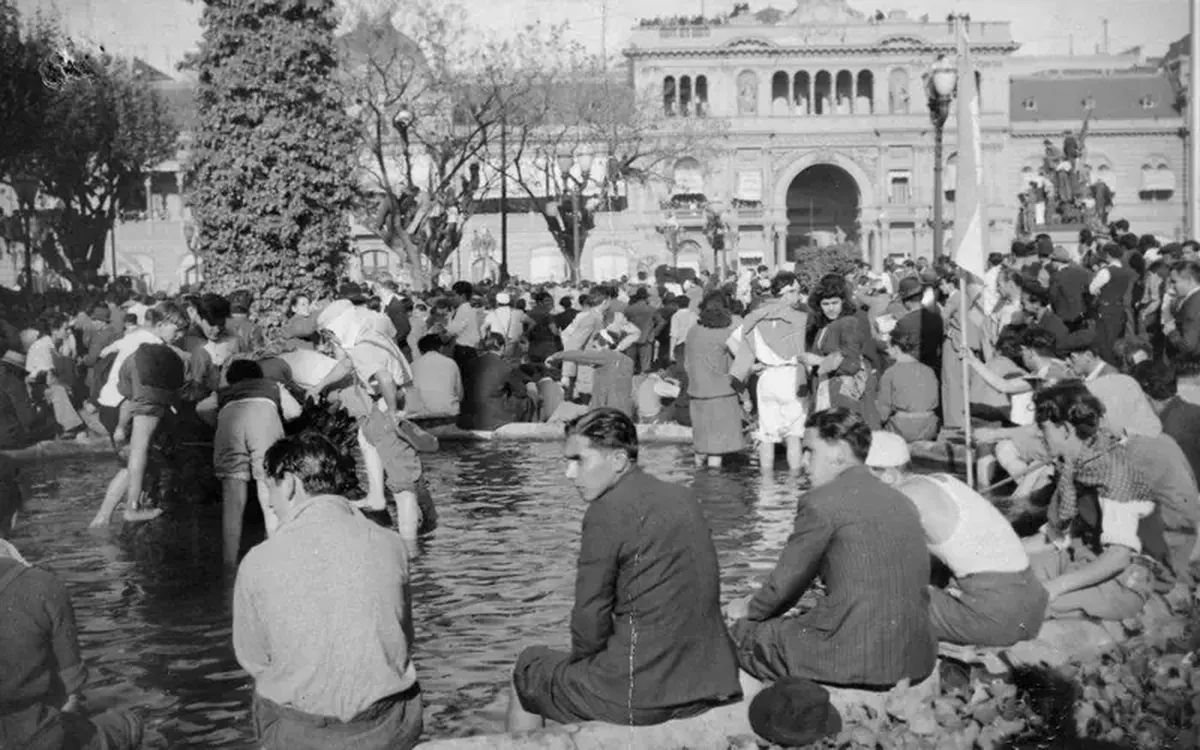 A rally at Plaza de Mayo on October 17, 1945
Perón later credited Eva with helping shape the Peronist movement, and some claimed she helped organize the mass demonstrations of October 17, 1945, when hundreds of thousands of workers gathered at Plaza de Mayo demanding his release. Historians dispute that version. At the time she was still distant from politics, with little influence among workers—she reportedly only heard Perón’s speech on the radio. Later, however, her charisma let her speak from podiums and connect with ordinary people. The “star effect” shows up clearly in Andrew Lloyd Webber’s musical Evita and the film adaptation starring Madonna.
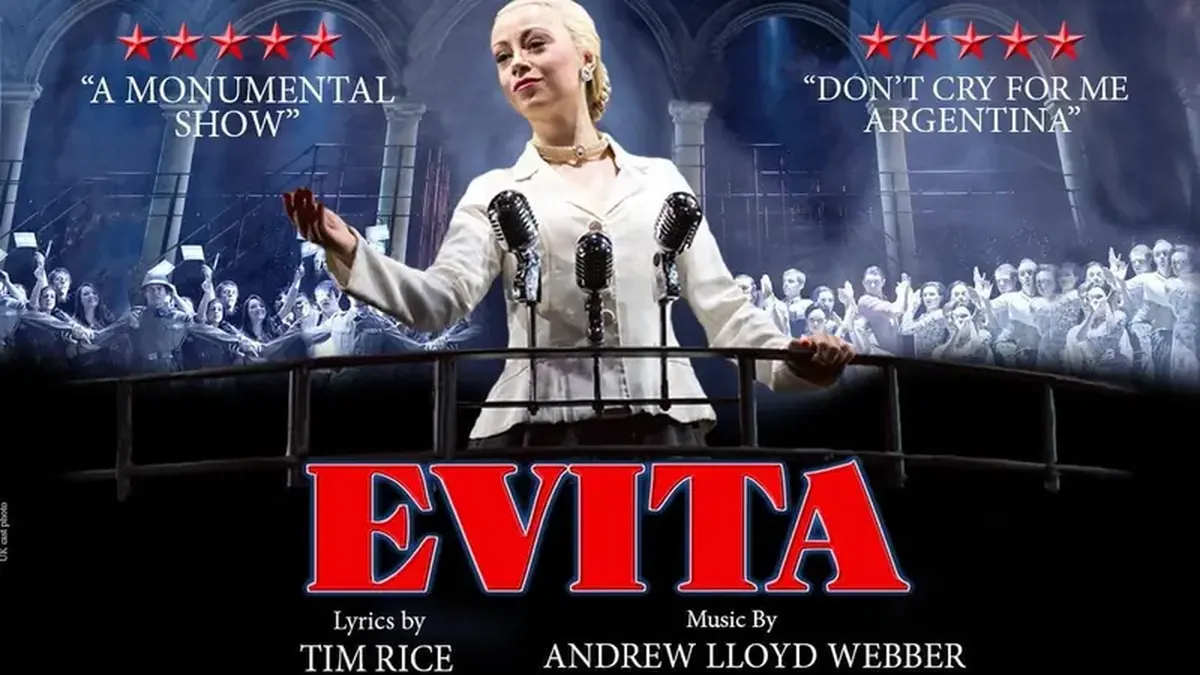
Political Stage
After marrying Perón (the marriage was registered in October 1945, five days after his release from prison), Evita left radio and film to join her husband’s inner circle. As his partner, she embodied a more active role for women and highlighted Perón’s progressive stance on women’s issues. Perón carved out a place for women in the political struggle and moved to grant them voting rights. Eva was an effective campaigner among women. Her energy and organizational skills benefited her husband, while she claimed to have no personal political ambitions.
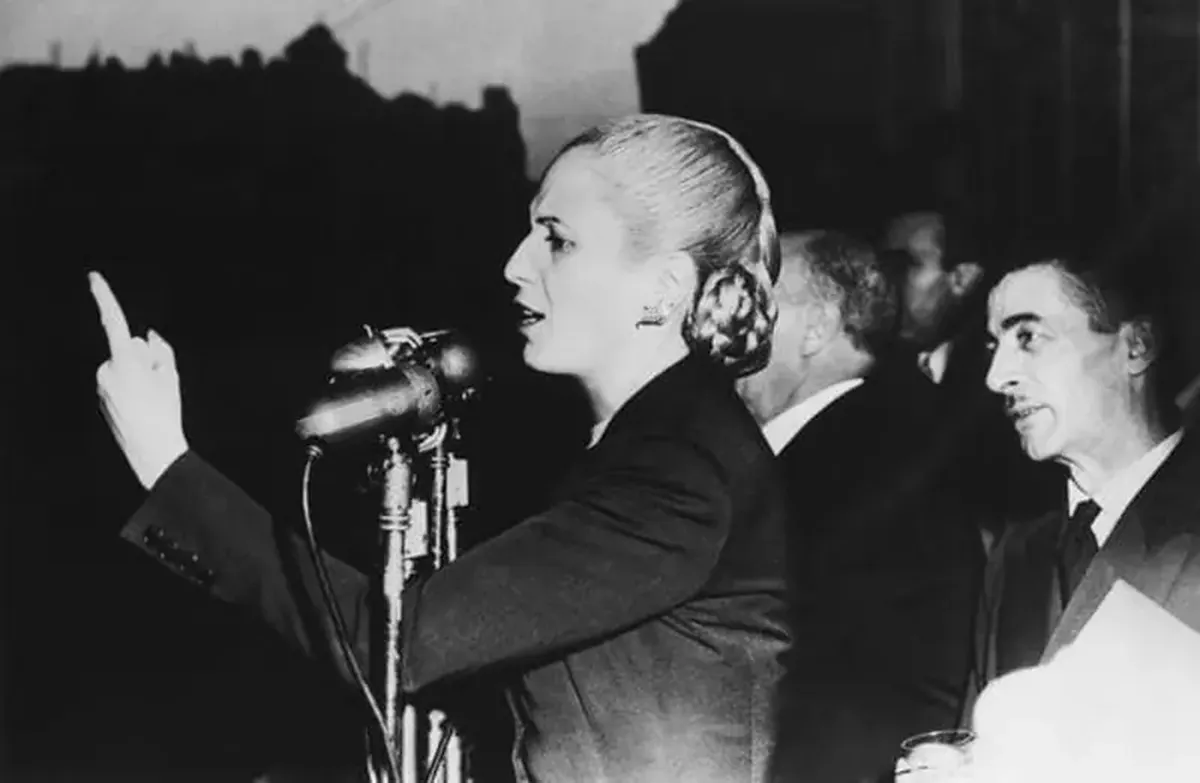
On the campaign trail, Evita adopted her husband’s oratorical style—short, emotional statements and appeals to feeling more than argument. She toured the country delivering rehearsed speeches that often echoed his phrases and rarely offered original political positions. Still, the presence of the presidential candidate’s wife at public rallies was extraordinary in Argentina. “Comrade Evita” convinced many less-educated voters that Perón loved the people, and they rewarded him with genuine trust. In the 1946 presidential election, Perón won convincingly, and Eva became first lady.
Status Change
Now part of Argentina’s elite, the former poor girl embraced new opportunities. She began to distance herself from her peasant origins while pursuing lucrative positions for relatives and acquaintances. She helped her brother Juan rise to prominence; he became Perón’s personal secretary. The husbands of her older sisters were appointed director of Central Customs, head of the Supreme Court, and senator. Her personal doctor became head of the Chamber of Deputies, a bodyguard was named general secretary of the General Confederation of Labor, and a former colleague became Eva Perón’s speechwriter, crafting and editing her public addresses.
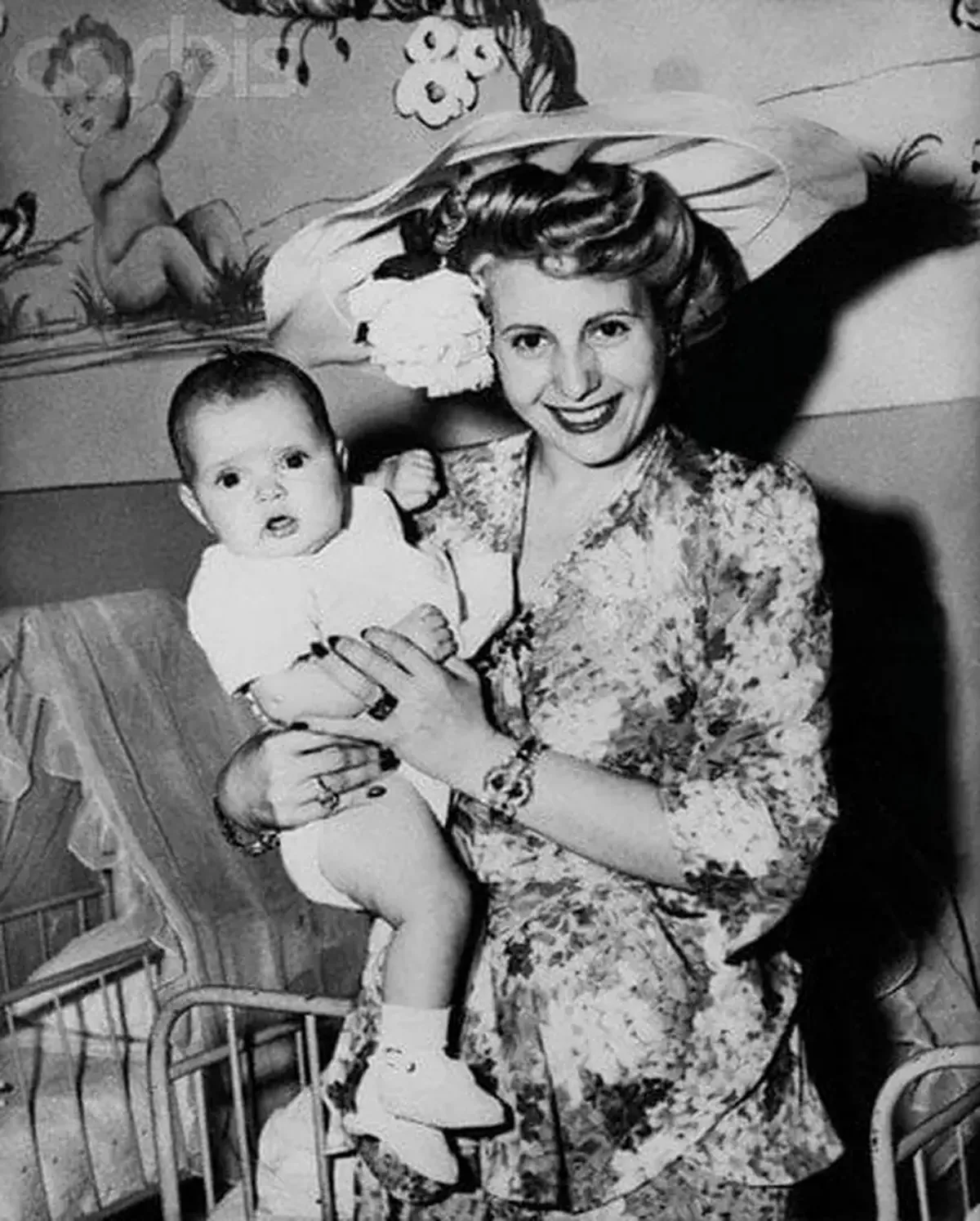
Opponents accused the first lady—who focused much of her effort on supporting the poor—of excessive spending on clothes, with hundreds of designer dresses, a huge shoe collection, and jewelry set with expensive gems. In her tumultuous public role, critics argued she helped Perón consolidate unchecked power. Those concerns had some basis: Perón’s social reforms were accompanied by restrictions on civil rights, and Eva Perón appears to have played an active role in that process.
Cult Formation
Rising conflict with the opposition and accusations of autocracy pushed Perón to seek support abroad. In 1947 he sent his wife on a publicity tour of Europe—the so-called “Rainbow Tour”—which succeeded mainly in Spain, where Eva was received as an important state figure. After World War II, Franco’s regime suffered diplomatic isolation and was interested in Argentine loans. Eva also took part in state affairs without holding official office and ran her namesake foundation with little oversight of its spending.
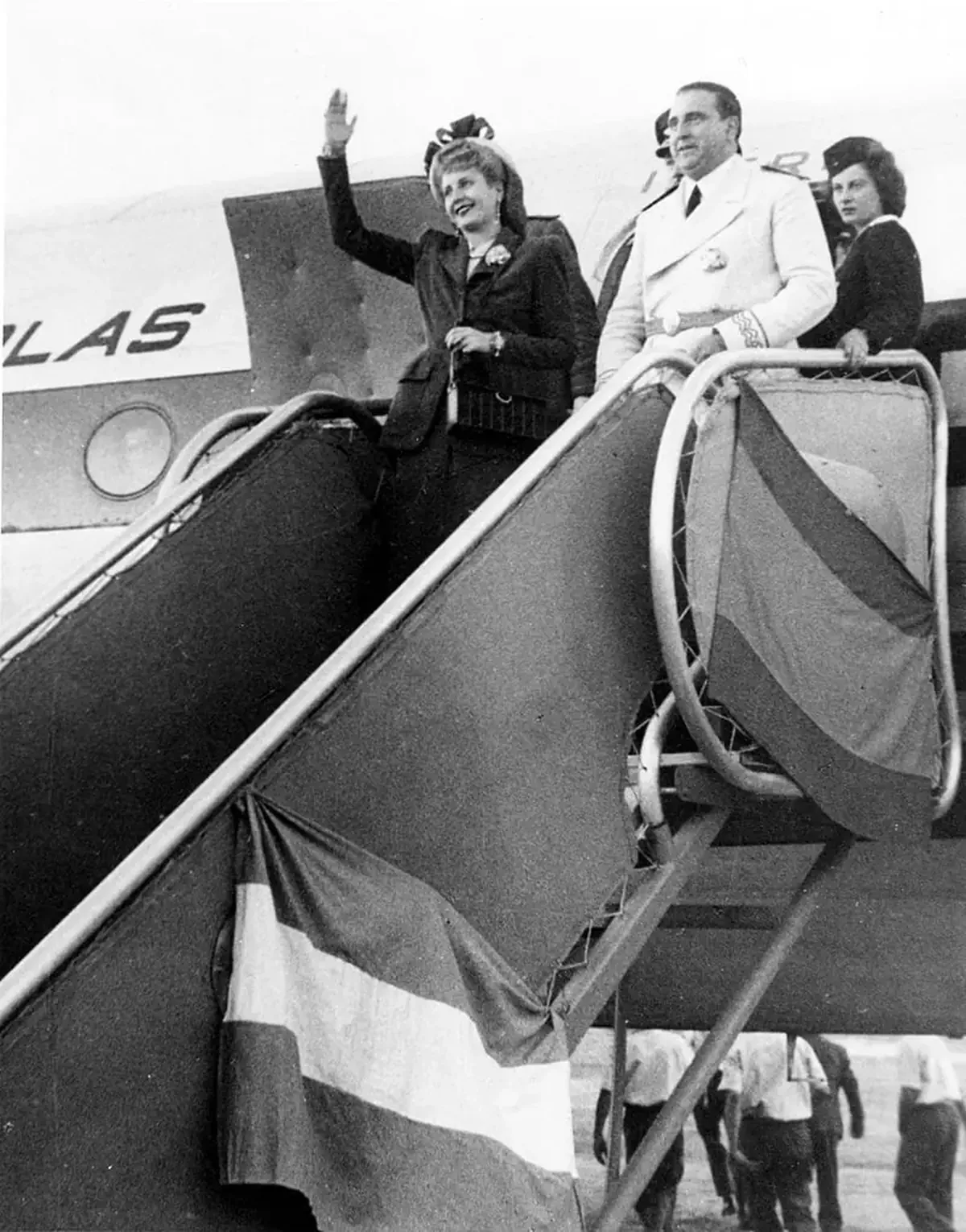
Evita arrives in Madrid
Registered as a nonprofit relying on charitable donations, the Eva Perón Foundation was funded by unions, businesses, and private donors, often amid disputes over state pressure. The foundation also took in money from casinos and the national lottery. It received portions of negotiated salary increases and sums equal to two days’ wages collected from workers on May 1 and October 17. In 1948 the foundation’s annual budget for aiding the poor was about $30,000; four years later it had grown to roughly $500 million. The foundation frequently operated with state resources and orders, helping build the cult of Evita.
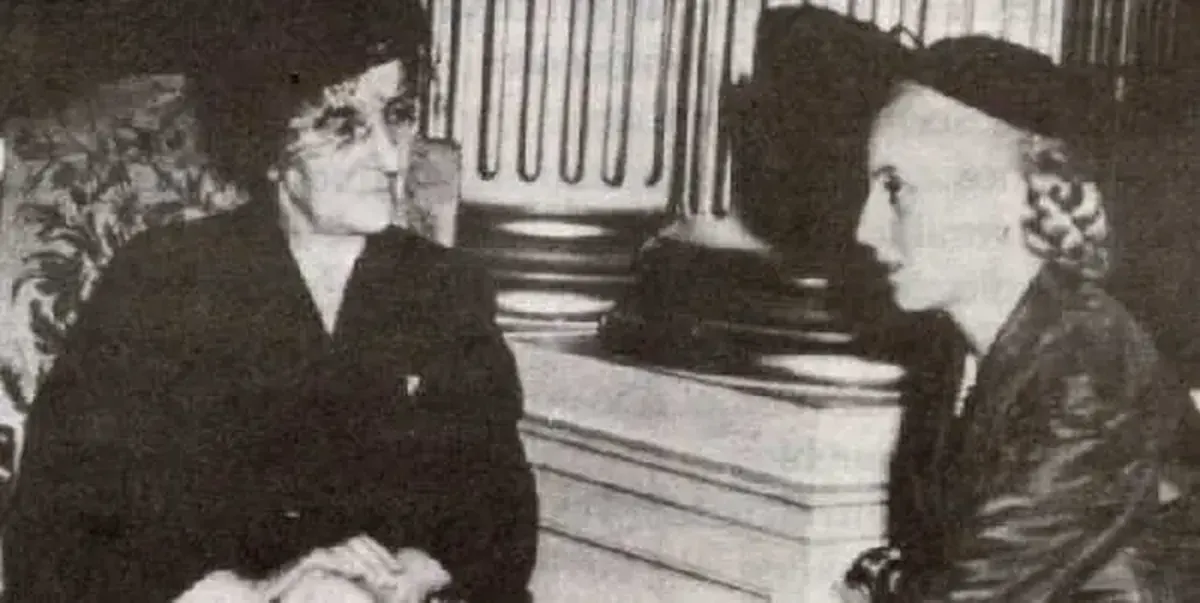
In 1951, Golda Meir visited Argentina to thank the Eva Perón Foundation for its support of Israel
Informal Powers
By the early 1950s Eva’s popularity had peaked—she was a step away from officially becoming vice president. Military opposition blocked the plan, and Perón ultimately rejected her candidacy for the post. In Peronist propaganda, the leader’s wife received unofficial titles like “authorized representative,” “banner of the oppressed masses,” “shield of Perón,” and “hope and guard of the revolution.”
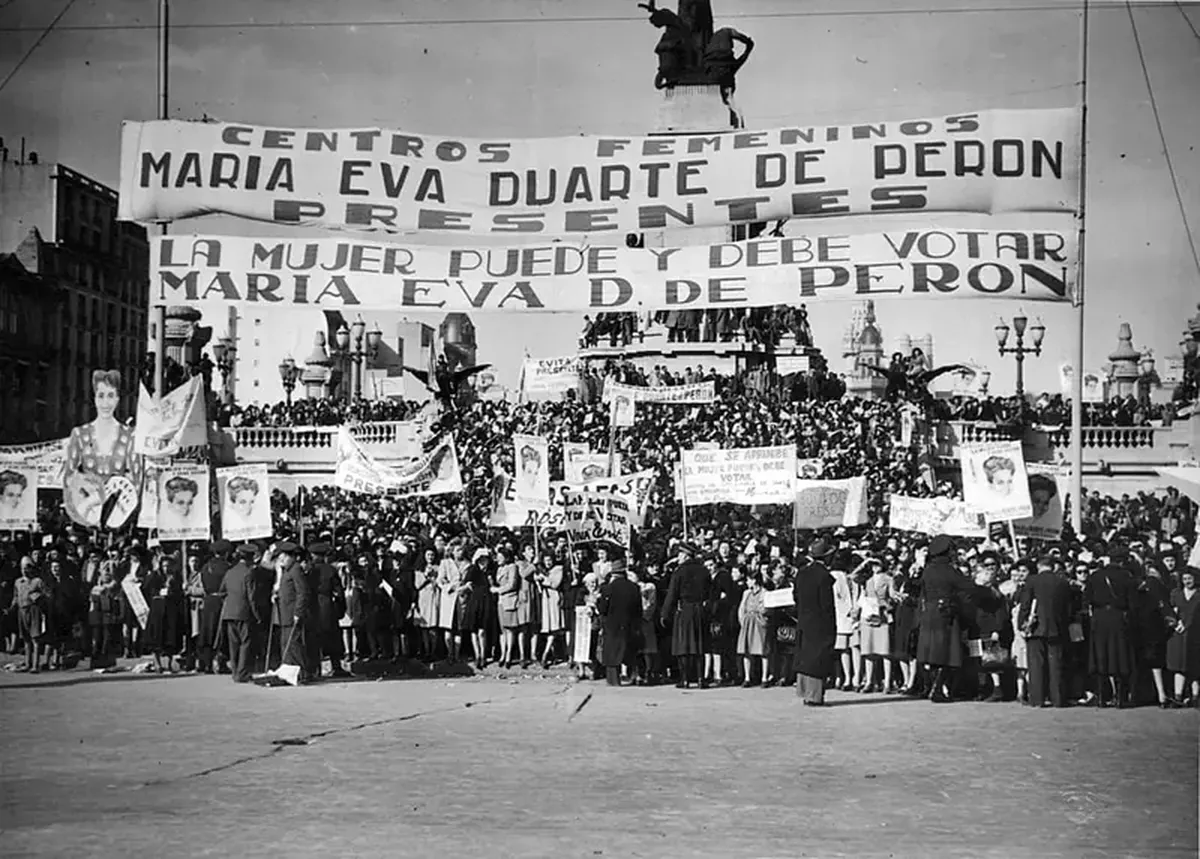
Demonstration in front of the National Congress for women’s voting rights, September 3, 1947.
Eva’s ambitions were cut short by a diagnosis of cervical cancer. The disease advanced rapidly and surgery had no effect. Six months after the operation, the nation’s favorite died on July 26, 1952.
Farewell Applause
She died at 33—at the height of her fame. Even after her death, Eva remained a spiritual authority for many Argentines. Hundreds of thousands came to pay their respects: until 1955, her embalmed body was put on public display in a transparent coffin. Her remains were buried only after Perón’s ousting from power. Eva was buried twice: first under a false name in Italy (the grave in Milan was marked “María Maggi Magistris”) and, in 1974, her coffin was returned to Argentina and interred in the family crypt.
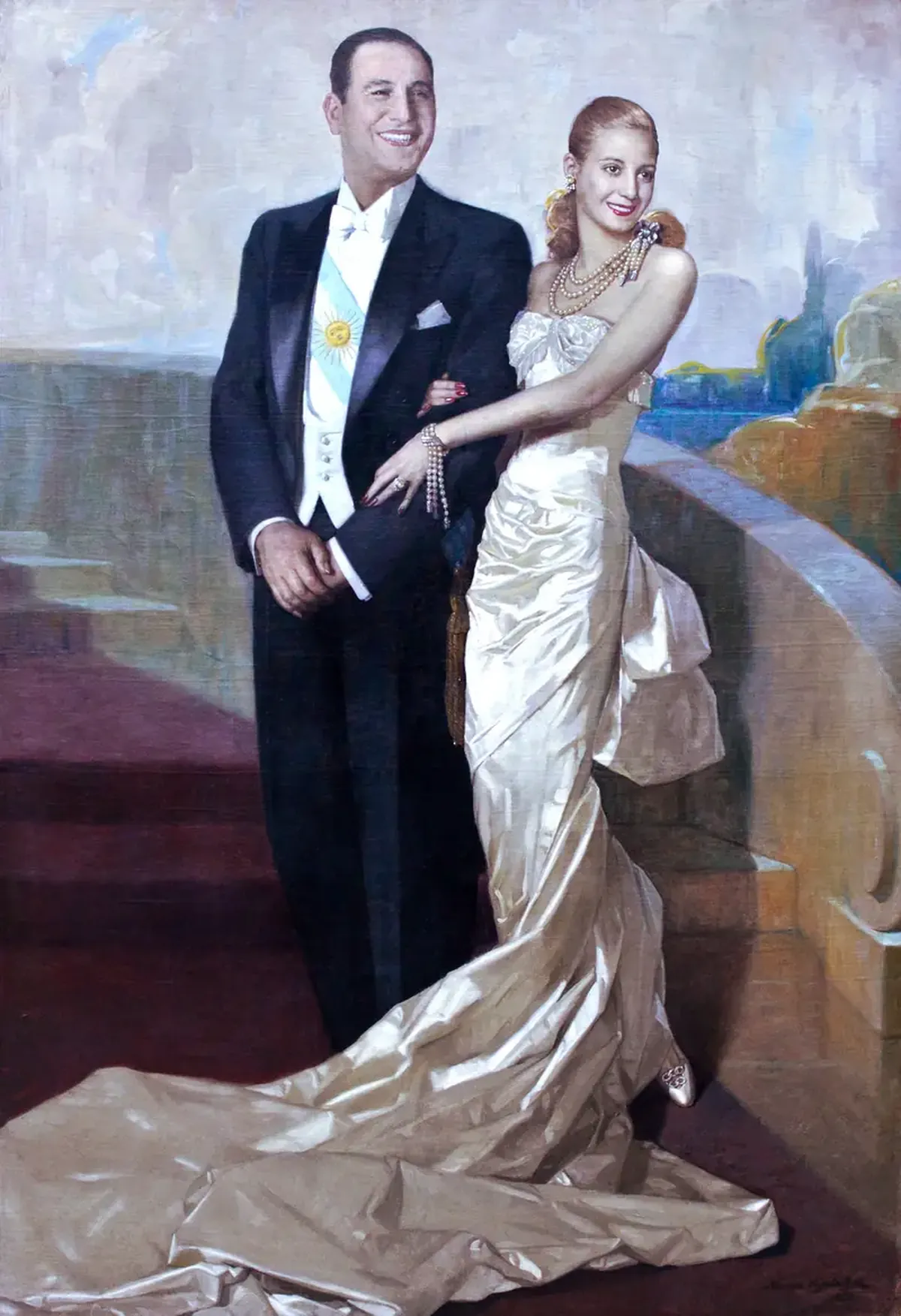
Official portrait of Juan Domingo Perón with his wife Eva, displayed at the Museo del Bicentenario
Perón survived a coup and exile and returned to power in 1973 as president. A year later his third wife, Isabel Martínez de Perón, became president and emulated Evita’s public image—the unparalleled actress of political theater.
