
 Carlos Solis
There’s plenty of evidence that simply slowing your eating can cut your calorie intake without making you feel deprived. Unlike counting calories or cutting carbs, eating more slowly is a weight-loss trick that doesn’t leave you hungry. The reason is simple: satiety starts not only in your stomach but in the act of chewing itself.
Don’t rush to get full
When you chew, your stomach begins to stretch and your intestines release chemical signals that tell your brain you’re full. Those processes take time.
“All those natural processes need time. There’s a short delay between when we eat and when chemical signals change in the brain,” explains Professor Kieran Ford of Wageningen University in the Netherlands, who studies how sensations influence eating behavior.
That delay creates a gap between how much you eat and how full you feel. If you eat quickly, consumption can outrun the body’s physiological satiety signals. Those signals might arrive after you’ve finished your 18th cookie, and suddenly you feel stuffed.
One key player is the hormone GLP-1—the same hormone stimulated by weight-loss drugs such as Ozempic and Wegovy—which signals fullness to the brain. A Waseda University lab in Japan found that chewing shredded cabbage caused a larger GLP-1 release than eating the same cabbage pureed.
The effect goes beyond appetite. In a 2021 study, Ford’s team found that people who ate more slowly not only felt full sooner but also showed a stronger insulin response after meals, meaning their bodies processed sugar more effectively.
“The initial phase of digestion happens in your mouth, not in your stomach. You prepare the body to accept nutrients, so how you chew affects both post-meal metabolism and your sense of fullness,” Ford says.
How to eat slower
Changing a basic habit is hard, but a few simple tactics can help.
- Focus on your food. Put your attention on the meal instead of the TV or your phone.
- Eat with others. Conversation and the natural pauses between sentences slow your pace.
- Put utensils down between bites. Set your fork or spoon on the plate between mouthfuls to force a slower rhythm.
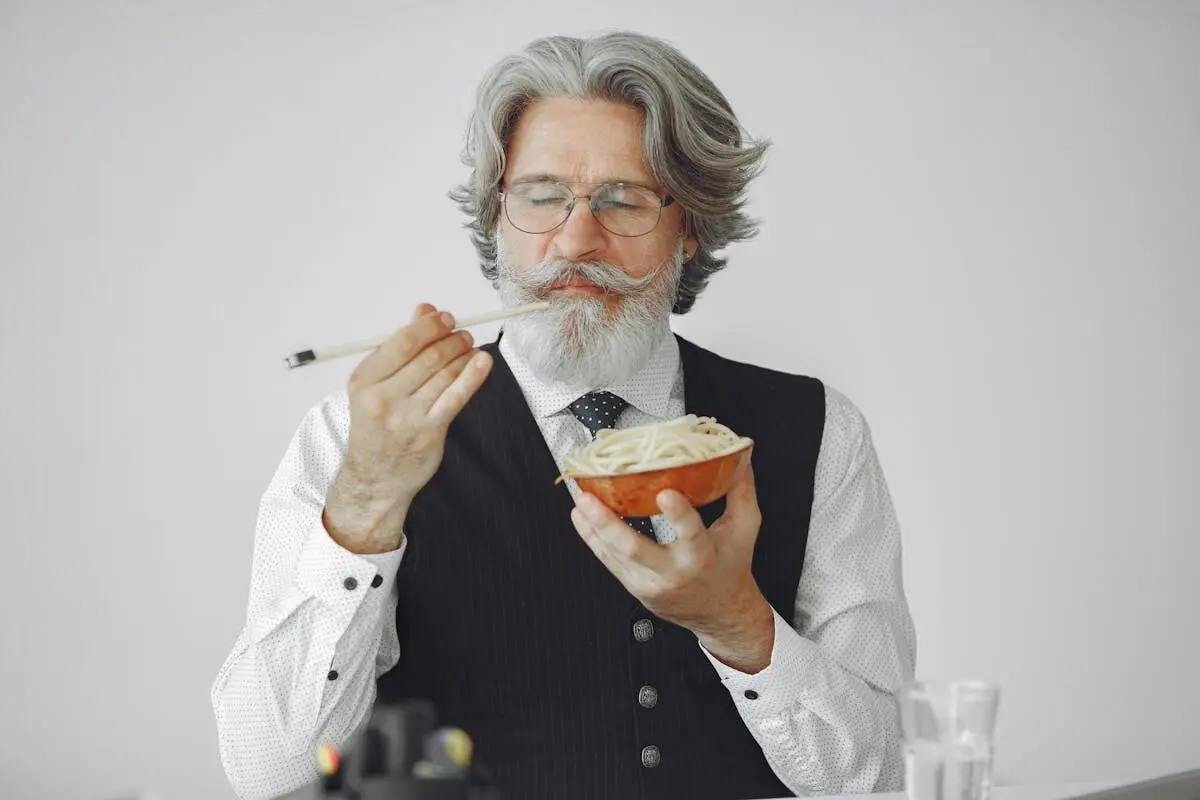
- Try chopsticks. Studies show eating with chopsticks encourages smaller bites, more thorough chewing, and an overall slower pace.
Change the texture of what you eat
Here’s another almost effortless way to slow down: choose chewier, coarser foods. Swapping soft foods for more textured options can lengthen mealtime and reduce appetite.
That was the main finding of the Restructure project led by Ford. Forty-one healthy adults followed two different diets for two weeks each. The diets matched in nutritional value and appeal—the only change was food texture.
“I designed textures so that one diet would be eaten relatively more slowly and the other relatively faster, based only on sensory properties,” Ford explains. The results surprised the team: without giving participants any special instructions, just ordinary supermarket foods, people consumed on average 370 fewer calories per day when they ate the slower-texture diet. On the softer-food diet, participants ate about 5,200 more calories over two weeks. On the slower diet, adults lost roughly half a kilogram of body fat on average.
Also avoid caloric drinks that require no chewing and soft, energy-dense dishes heavy in sauces and oil—those let you consume a lot of calories very quickly.
“Too much oil and sauce speeds up eating. Fatty, sweet, creamy foods can disappear fast—you’re already on your third marshmallow muffin before you notice,” Ford warns.
Simple advice: if you change just one thing at tonight’s meal, slow down. Slower chewing gives your body time to respond, helps you feel full, and can cut calorie intake without hunger.
Adapted from BBC Science Focus
