
 Carlos Solis
After 50, a lot of people start watching their blood sugar. Some have been diagnosed with diabetes, others were simply warned to “be careful with sweets and starchy foods.” What can you eat? Green peas aren’t just allowed — they can actually help control blood sugar.
Why peas don’t spike blood sugar
Most starchy foods hit the body like a shock: blood sugar spikes quickly, the pancreas rushes to produce insulin, and an hour later you’re hungry again. Peas behave differently.
First, pea starch has a dense structure that digestive enzymes break down slowly. Second, peas contain natural compounds that further slow that breakdown. As a result, blood sugar rises smoothly and gradually—without sudden peaks and crashes.
The glycemic index of green peas sits around 40–45. By comparison, boiled potatoes reach about 70–85, and white bread scores around 85–90.
A dietitian’s take
 Liudmyla Palamarchuk, physician and dietitian
When doctors treat insulin resistance—a common companion to type 2 diabetes, metabolic syndrome, and PCOS—their main goal is to smooth the delivery of glucose into the bloodstream. That prevents sharp blood-sugar peaks and avoids excessive insulin release. In this context, green peas are a useful tool because of two biochemical mechanisms:
1. Alpha-amylase inhibitors
These are natural enzyme “blockers” found in legumes. They work gently: they bind some of our digestive enzymes (amylases) in the gut, slowing the conversion of starch into simple sugars. The result is prolonged digestion and a steadier release of energy.
2. Structural amylose
Unlike ordinary starch, pea starch is mostly amylose, which forms a tightly wound spiral. That structure makes the starch physically harder for digestive enzymes to access. Combined with the amylase inhibitors, this creates a true slow-release effect for glucose.
My professional conclusion
Because of these properties, green peas trigger a low glycemic response. Glucose enters the bloodstream in measured amounts instead of rushing in, which lets the pancreas work more efficiently. That makes peas an ideal component of a diet aimed at restoring insulin sensitivity.
One key detail: to preserve these mechanisms, cook peas al dente. Avoid long overcooking, which turns them to mush, because excessive heat breaks down the amylose structure, raises the glycemic index, and reduces the effect of the natural inhibitors.
Read more tips from Dr. Liudmyla Palamarchuk on Facebook, Instagram, and TikTok
How this helps with weight loss
That same slow energy release helps prevent overeating. After a plate of peas, you feel full longer than after potatoes or pasta. No sharp drop in blood sugar means you don’t get a hunger attack an hour later.
Peas are filling while low in calories—about 80 kcal per 100 g. They also provide plenty of fiber and plant protein—the combination dietitians recommend for weight control after 50.
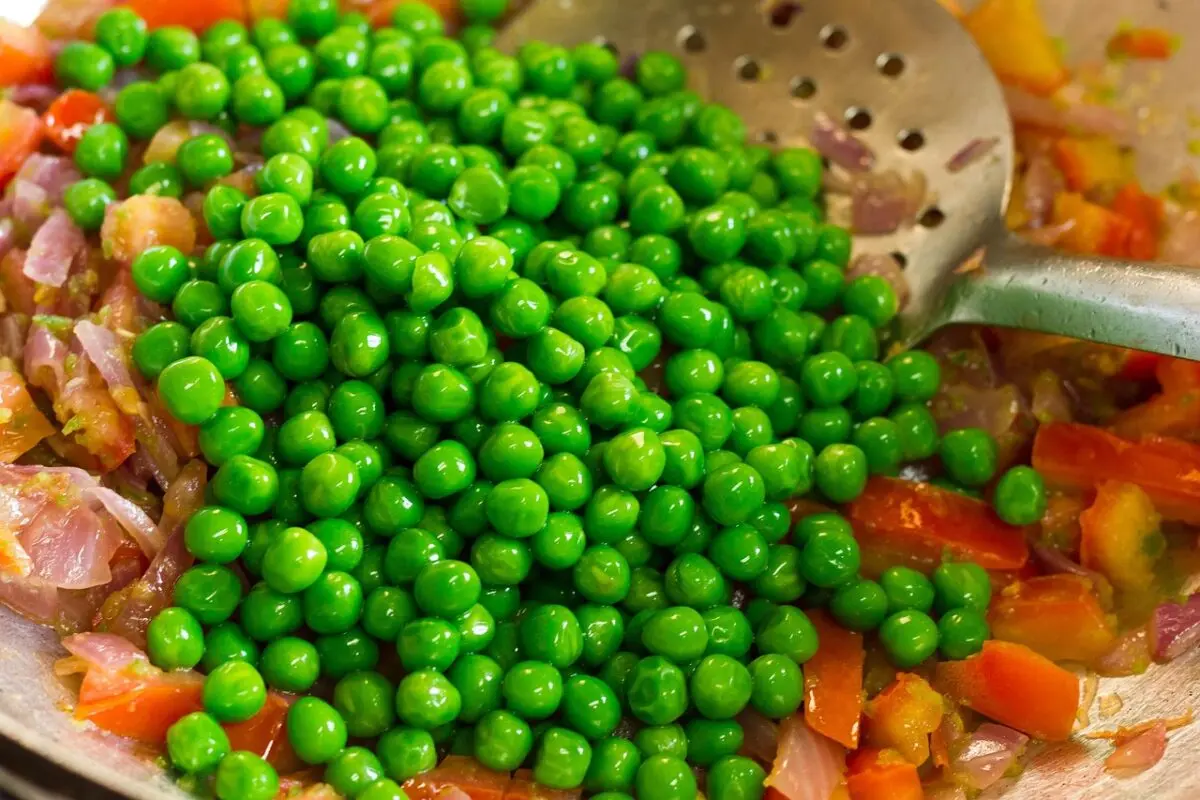
How to cook them right
Don’t overcook them. Keep the peas slightly firm; otherwise they lose beneficial properties and become harder to digest. Fresh or frozen peas need only 3–5 minutes in boiling water. Rinse canned peas and add them at the end of cooking.
Simple ideas: add peas to scrambled eggs or mix them with cooked buckwheat or rice. For something heartier, add peas to soups or stews — many recipes take about 20 minutes and taste great.
Photo: Unsplash
