
 Gaby
Gaby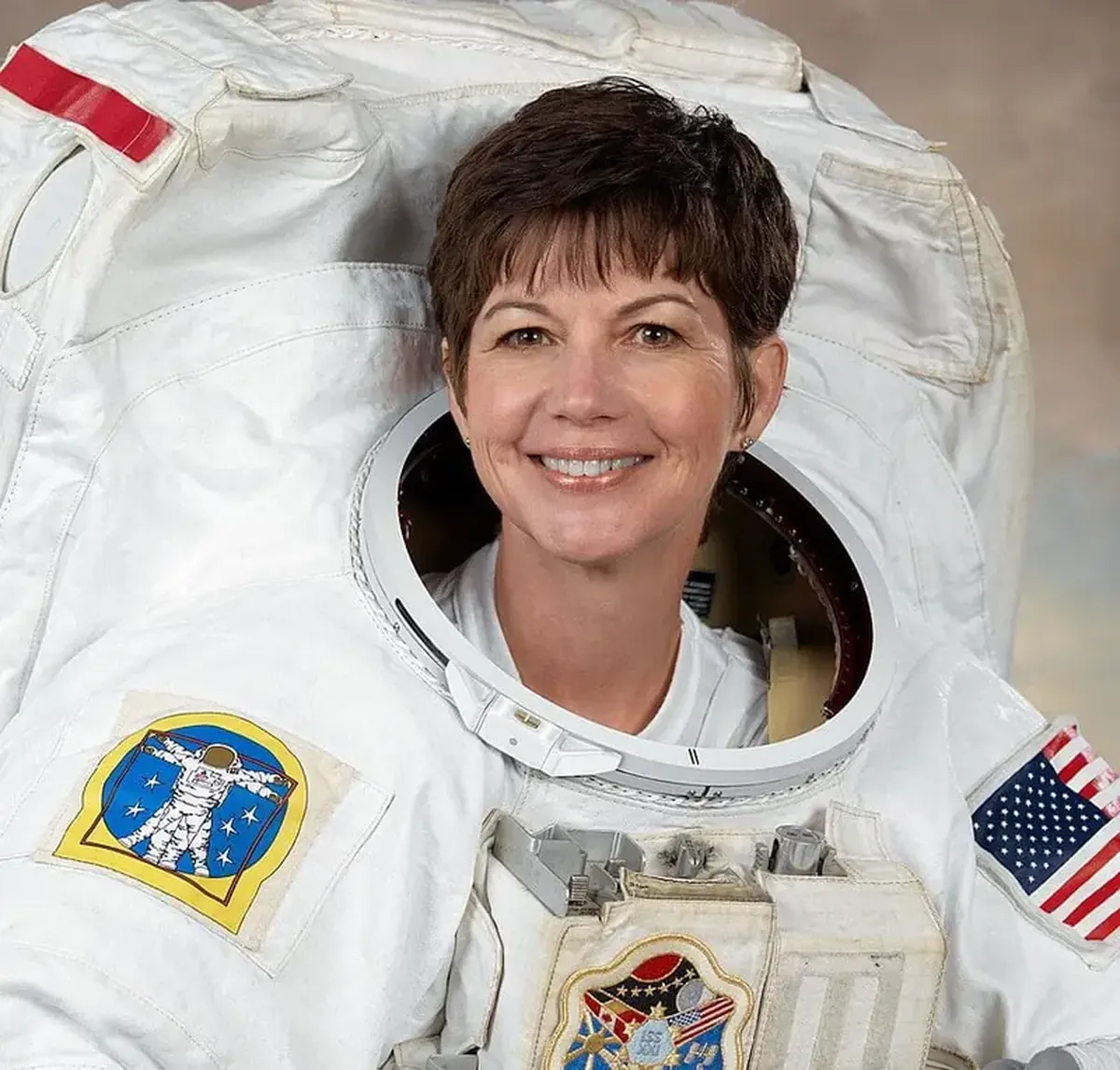
Catherine “Cady” Coleman is the NASA astronaut who advised Sandra Bullock during filming of Alfonso Cuarón’s “Gravity” (2013). In her book “The Space Between,” Coleman — who served on the International Space Station (ISS) — wrote that Bullock’s on-screen role and the life of a real ISS astronaut are entirely different.
Catherine Coleman (born 1960) is an American NASA astronaut, holds a PhD in chemistry, and is a former U.S. Air Force officer. She was part of Expedition 26 on the ISS from 2010 to 2011.
Functioning in a Heavy Spacesuit Is a Matter of Life and Death
Cady says life for female astronauts bears no resemblance to the “glamorous” image Sandra Bullock portrayed in “Gravity.”
Coleman described the painful reality of wearing the bulky extravehicular activity (EVA) suits. In 2003, NASA removed the smallest size of the suit, leaving only one size intended to fit everyone — which, Coleman says, “actually fits all the guys.”
She explained that an EVA spacesuit is unlike any other clothing. “It’s difficult to work inside it, even if it fits perfectly, and when it’s too big—well, that’s another story. And don’t forget, your ability to function inside that suit is literally a matter of life and death,” the astronaut wrote.
The process of donning the suit takes about an hour and requires a team of specialists. First comes an adult diaper — maybe unnecessary, but a precaution. Then a standard sports bra, which “almost always shrinks beyond recognition in NASA’s industrial dryers.”
The next layer is long underwear that wicks away sweat and provides extra cushioning against the suit’s rigid edges. Then comes the critically important garment — the LCVG (Liquid Cooling and Ventilation Garment). This is a kind of jumpsuit woven with numerous tubes carrying water, resembling large veins.
“When you’re moving inside a roughly 130-kilogram suit, your body heats up quickly, and the LCVG allows you to regulate your temperature using a hard-to-reach handle on the front,” Catherine Coleman explained.
Almost There — The Full Suit?
The suit also includes elbow pads, knee pads, 8-centimeter thigh pads, a 10-centimeter groin pad, and a special belt. Only after these layers can the main part of the suit be put on.
“Since my agility is already limited by the water tubes pressing against my long underwear, I plop down and wriggle forward into the lower part of the suit until my legs are inside the boots. Then, with a loud ‘one-two-three!’ the technicians help me to my feet,” the astronaut writes.
She continues: “Supported by the technicians in the suits, I walk a few feet and climb onto a platform where I see the upper part of my suit attached to a rack. Bending down and tilting my head and shoulders back, I slide into it, first sticking out my arms and then my head, like a turtle. The technicians connect the upper and lower parts. They also place a communication cap on my head to help me communicate with Mission Control.”
The Final Phase — Gloves and Helmet
“I slide my fingers into the glove liners, making sure the seams are turned outward, and push each finger into the corresponding slot. Then I put on the large outer gloves that fasten over them,” Catherine Coleman notes, suggesting the end of this multi-step process is near. Finally, it comes down to the helmet.
As Cady explained, if your nose itches, you won’t be able to scratch it for the next few hours.
“I look nothing like Sandra Bullock in ‘Gravity,’ who slips into her suit wearing little black shorts and a tank top before heading to the stars. Instead, I resemble an awkward Egyptian mummy just out of a tomb,” Coleman jokes.
Sandra Bullock during her filming for Alfonso Cuarón’s “Gravity” (2013).
Typically, EVA training takes place in a pool and lasts for six hours. EVA training requires immense concentration. When astronauts dive underwater, they often don’t notice the discomfort from their suits.
At the end of the session, the astronaut removes each layer of clothing in reverse order, as reported by the Daily Mail.
“I always marvel when I see myself in the mirror afterward. My arms and legs are covered in red and purple bruises and scrapes. My nail beds often get damaged, sometimes leading to nail loss,” the astronaut writes.
Fortunately, spacesuit technology keeps improving. Coleman speculates that “when the first woman embarks on a mission to Mars as part of NASA’s Artemis program in 2025, she will have an upgraded spacesuit.”
