
 Gaby
Gaby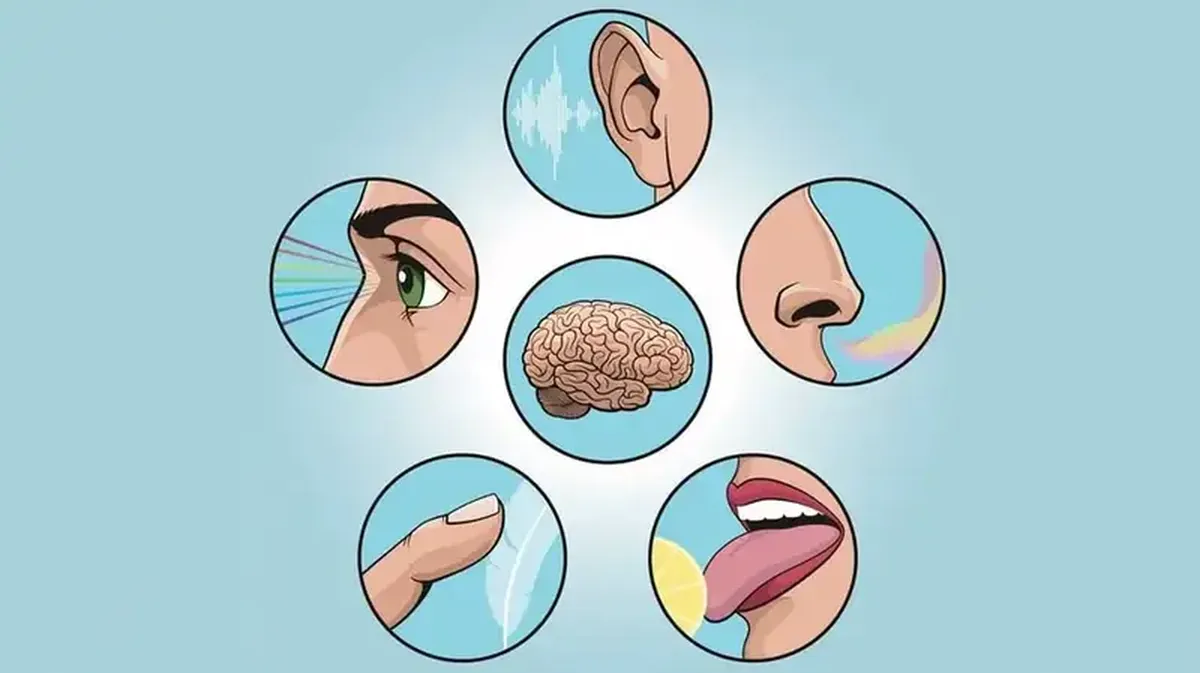
We learned in school that humans have five basic senses. However, modern philosophers and neurobiologists argue that we possess a whole spectrum of senses that help us understand the world around us, our place in it, and how our bodies function.
This means that the theory of five senses is hopelessly outdated. One of its earliest proponents was the ancient Greek philosopher Aristotle. In his work De Anima (“On the Soul”), he described the external senses of humans, which include sight, hearing, smell, taste, and touch. For centuries, scientists accepted that only those five exteroceptive senses provided information about the external world. But now many researchers regard that idea as an anachronistic myth.
There have long been claims of a so-called sixth sense—supposedly responsible for telepathy and precognition—but those ideas lack convincing evidence.
Why Was Aristotle Wrong?
The thing is, our bodies do not just sense the world around us; we also sense the world within us. That includes awareness of hunger, thirst, heartbeat, lung movements, stomach activity, and much more. These sensations are collectively called “interoception.”
They arise when the body sends signals to the brain, particularly to an area known as the insula. That region processes and interprets the signals. In many cases the signals never reach conscious awareness, but the brain constantly monitors them to maintain homeostasis—our bodily stability.
In addition to these internal sensations, we also have less-recognized senses that help us navigate space.
For instance, if we can maintain our balance while walking, stand on one leg, or walk a tightrope, we possess what is called equilibrioception. This sense of balance and orientation is controlled by the inner ear.
Then there is thermoreception—the ability to detect and differentiate hot and cold; nociception—the capacity to feel pain; and proprioception—awareness of how our bodies are positioned. Thanks to proprioception, we know, for example, where our hands are even without looking at them.
And that’s not all. Our ability to perceive the passage of time is known as chronoception. It is not governed by a single sense organ but by complex processes the brain interprets. Through chronoception we understand how long events last and how they unfold.
Conservative estimates put the number of human senses at 12 or 13, though some researchers count more than 20. The animal kingdom, meanwhile, has many additional senses that far exceed our own.
What Unique Senses Do Animals Have?
One example is magnetoreception, which allows many species of mammals, birds, insects, and fish to navigate over long distances. In humans this sense is underdeveloped.
Sharks and rays, on the other hand, possess electroreception, which helps them locate prey in murky waters.
Birds and certain fish are equipped with baroreception, enabling them to sense changes in pressure in the air and water. There is also chemoreception—the ability to detect pheromones or specific chemicals, which is characteristic of scent-tracking dogs.
In any case, the list of senses is far longer than the one we inherited from Aristotle.
