
 Gaby
Gaby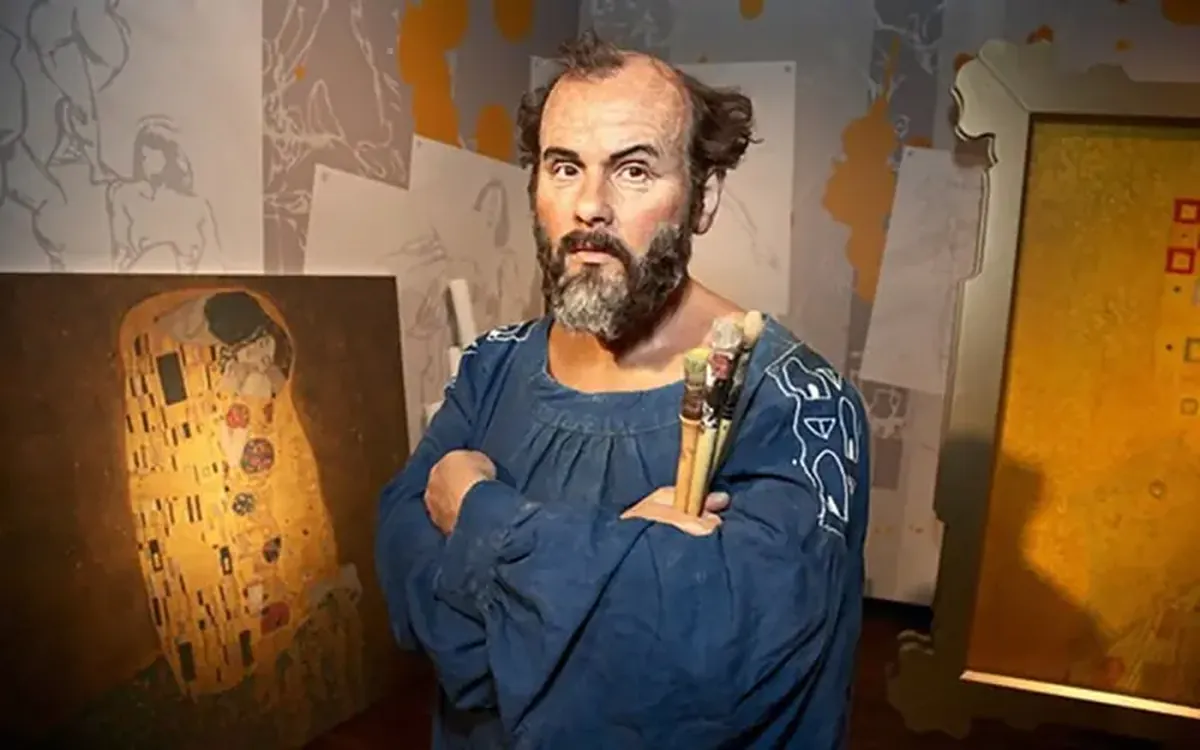
Contemporaries described the creator of the famous “Kiss” as “primitive yet sophisticated, simple yet complex, but always inspired.” That description came from his acquaintance, journalist Bertha Zuckerhandl, and captures the many facets of a man often called an “isolated leader without predecessors or followers.”
“The Company of Painters”
Gustav Klimt was born on July 14, 1862, in what was then the Viennese suburb of Baumgarten. He inherited his artistic talent from his father, Bohemian émigré Ernst Klimt, a graphic artist and gold engraver; his mother was native Viennese Anna Rosalia Finster. In a family of seven children (Gustav was the second), two younger brothers also became artists: Ernst became a painter, while Georg became a sculptor, woodcarver, metalworker, and medallist. Gustav’s artistic legacy was also carried on by his nephew, illustrator and calligrapher Julius Zimpel — the son of Gustav’s younger sister Johanna. Johanna was the Klimt family’s only daughter and later started her own family, while sisters Clara and Hermina lived with their mother and brothers and later with Gustav Klimt.
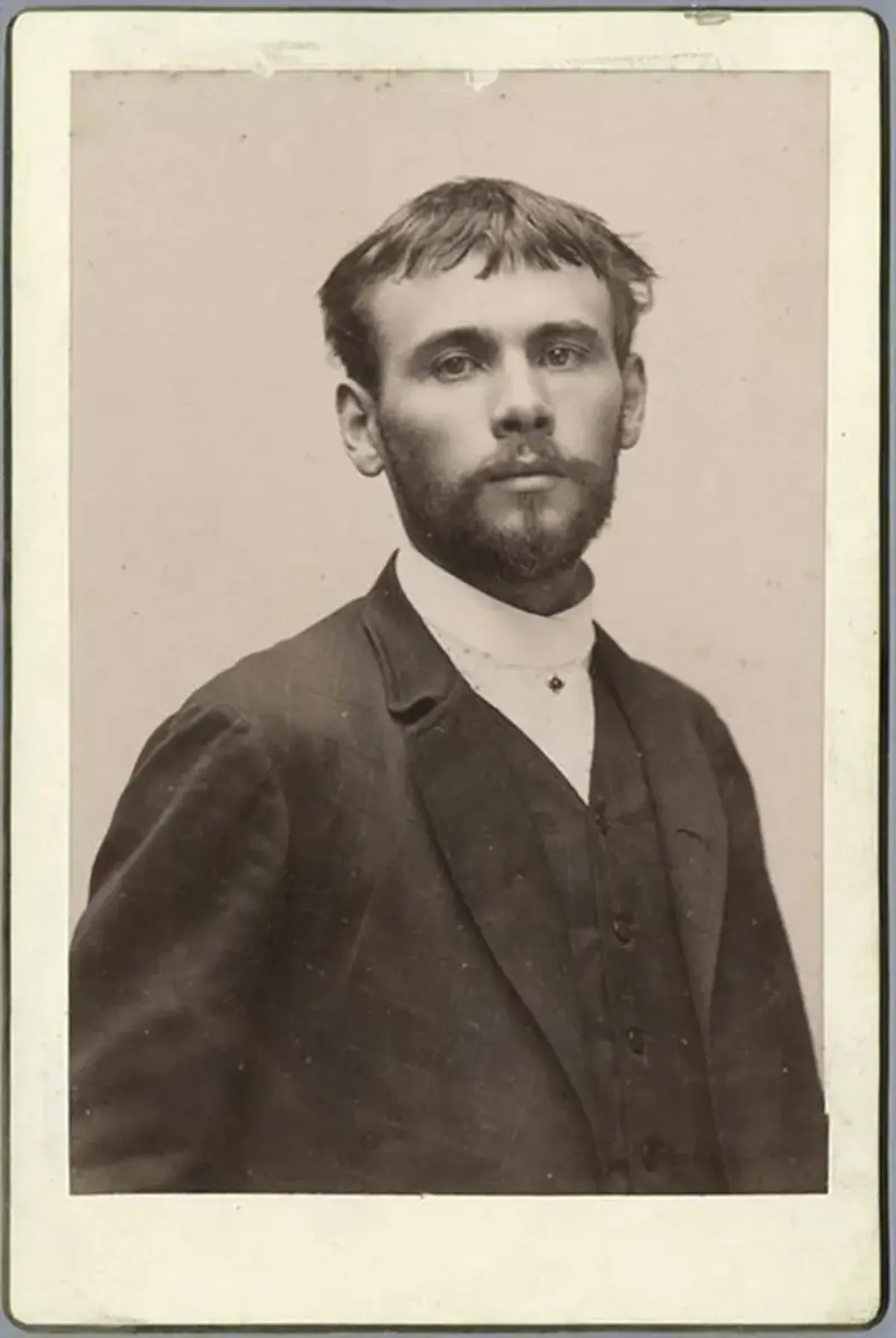
25-year-old Gustav Klimt (1887)
According to his daughters’ recollections, the children did not expect gifts for Christmas because even bread was not always available in their home. Historical documents reveal that their father could earn only 8 guilders over two months, about ten times less than the average worker’s wage. Financial strain eased when the sons began earning: Gustav, Georg, and Ernst received their education and first commissions at the Vienna School of Arts and Crafts—the most progressive school of its time, affiliated with the Museum of Art and Industry, which trained a new generation of versatile applied-arts specialists. The future founder of the Vienna Secession — an exhibition and creative association of young artists who rebelled against academic art at the turn of the 20th century — was shaped by a mix of fine-art training and hands-on craft education.
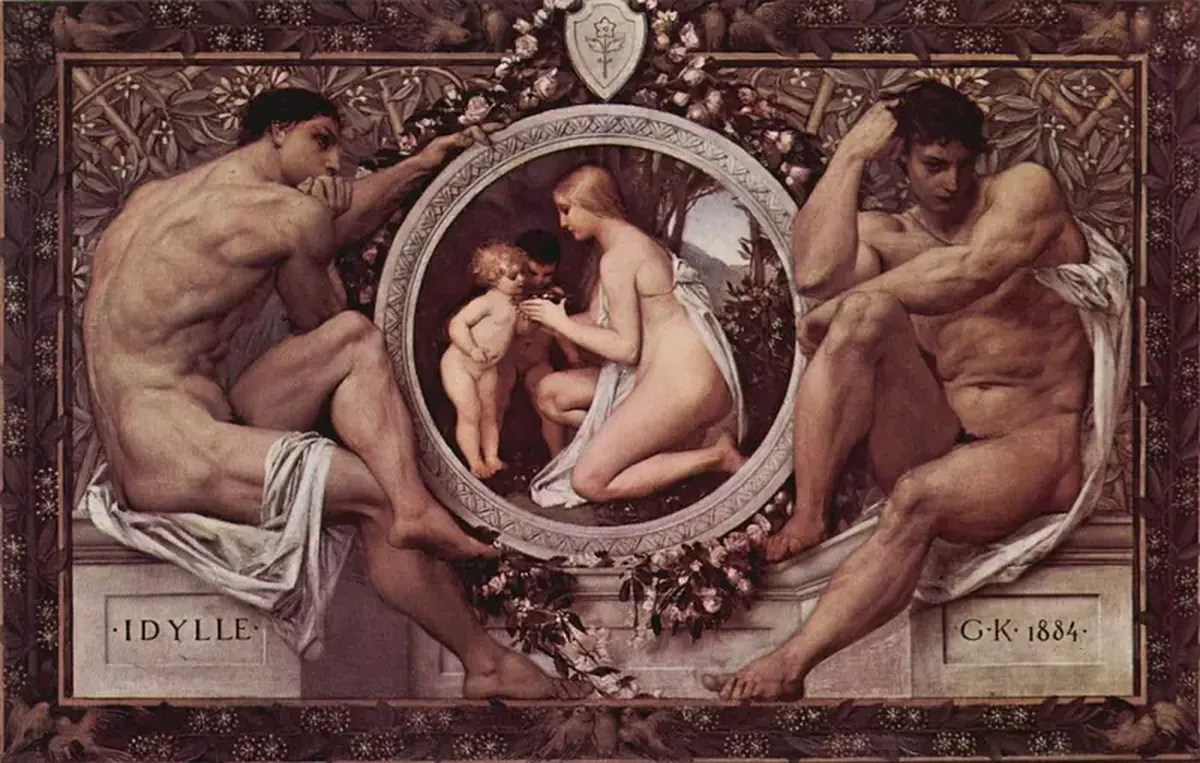
“Idyll,” 1884
From 1879 to 1892, brothers Gustav and Ernst Klimt teamed up with their colleague Franz Matsch to form a creative collective known as “The Company of Painters.” After finishing their studies, the friends opened a studio in Vienna. Gustav collaborated with his colleagues on church stained glass, painted the walls of historic buildings, and painted portraits based on clients’ photographs; photographic accuracy would later become a trademark, and Klimt even used a camera and a telescope to capture studies. Their similar painting styles let the friends substitute for each other on commissions: each proposed a set of sketches for clients to choose from, and all three took part in realizing the chosen project. Instructors approved of this student activity and even helped them find clients.
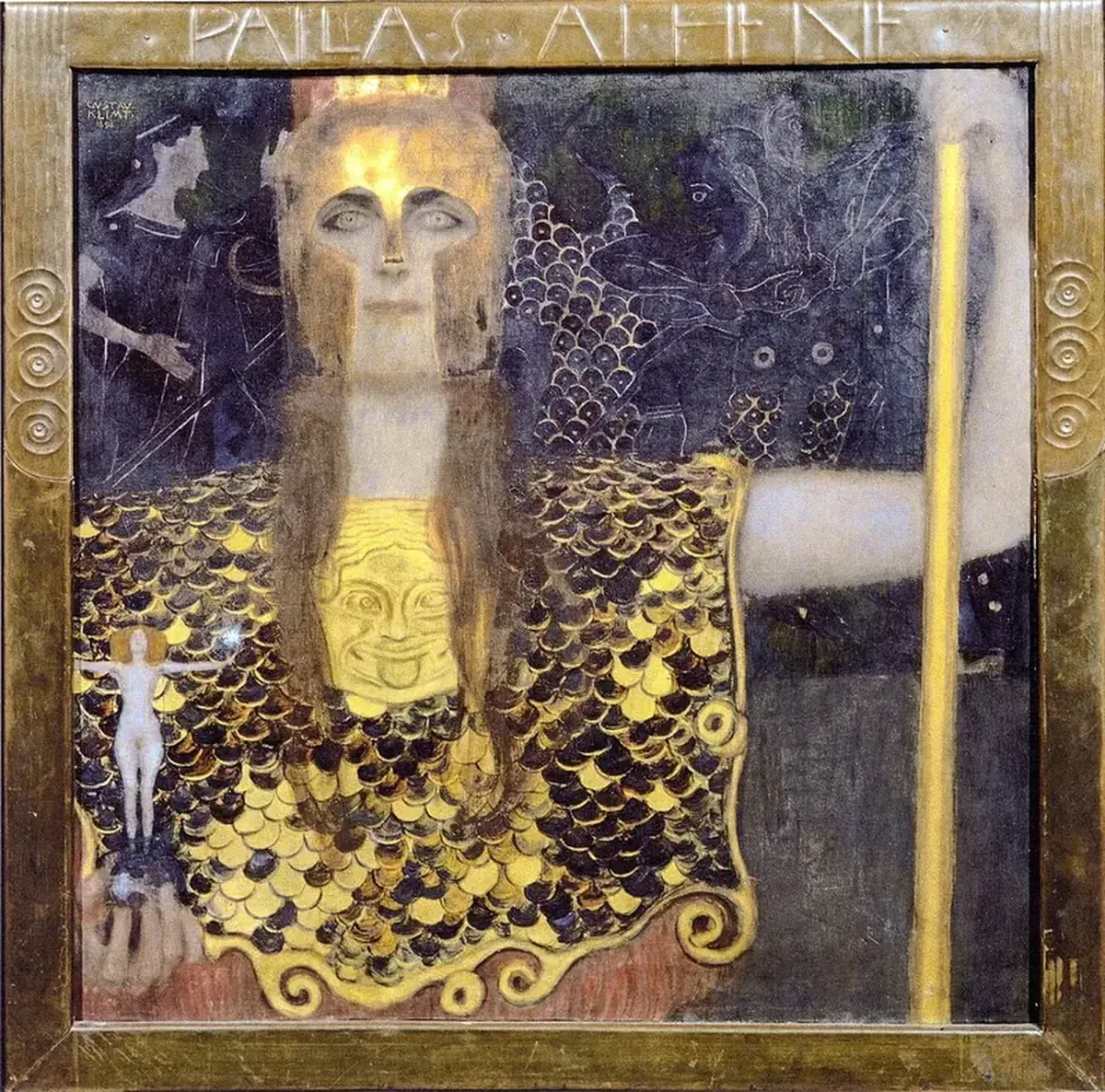
“Athena Pallas,” 1898
Gustav Klimt specialized in architectural painting and, with his company, worked on projects in the Sturany royal palace in central Vienna, the imperial villa “Hermes,” the mineral water pavilion in Carlsbad, and the new Burgtheater. For his work on the audience hall, Klimt received the imperial award of 400 guilders in 1890, and in 1893 he earned a small gold medal for his Burgtheater work. The collective was honored for that project with the “Golden Cross” from Emperor Franz Joseph, and all three artists were accepted into the Artists’ Association. The family’s improved finances allowed them to move in 1890 to a new home on Westbahnstraße, where Gustav would live for the rest of his life.
For the Sake of Art
In 1893 the successful trio moved to a new studio in an idyllic garden pavilion, but Gustav Klimt’s joy was overshadowed by heavy personal losses. In July and December 1892 both his father and his beloved brother—both named Ernst Klimt—died in the same year. For the next five years, Gustav sank into depression and a deep creative crisis. Although he concealed his vulnerability, he could not work as he had before without his brother. Creative differences later arose with his colleague Franz Matsch, and both men retreated into solitude.
Their last joint commission was the decoration of the assembly hall at the University of Vienna. Klimt was to paint three of the five works: “Philosophy,” “Medicine,” and “Jurisprudence.” The state client objected to replacing historicism with symbolism; at the time, any manifestation of modernism was seen as “an attack on the foundations.” The ensuing scandal drew public attention to the artist. At exhibitions where Klimt’s controversial works were shown, his new artistic language found both critics and supporters. The controversy even brought external recognition: at the World Exhibition in Paris, Klimt’s “Philosophy” was awarded a gold medal.
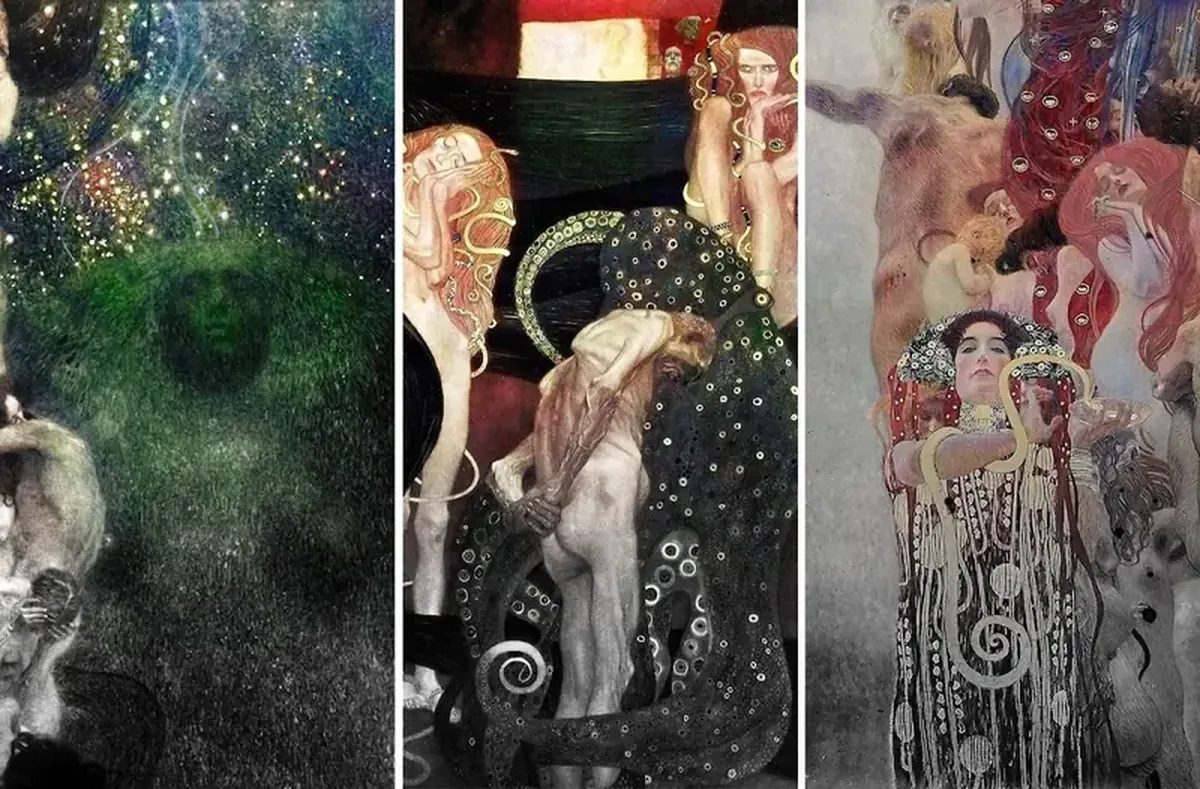
Scenes from “Philosophy,” “Medicine,” and “Jurisprudence” from the “Faculty Paintings” cycle, destroyed during World War II and known to art historians only through black-and-white photographs, were recreated in color by Google experts using AI.
“When submitting a completed work, the artist should not waste additional time on justifications,” Klimt wrote. “What matters is not how many people like my paintings, but who appreciates them.” Writer and journalist Bertha Zuckerhandl defended Klimt’s position and publicized the state commission’s refusal to accept the “Faculty Paintings” by publishing a letter from the disgraced artist to the Minister of Education. In that letter Klimt offered to return the 60,000 crowns advance he had received and promised never to work for the Austrian state again.
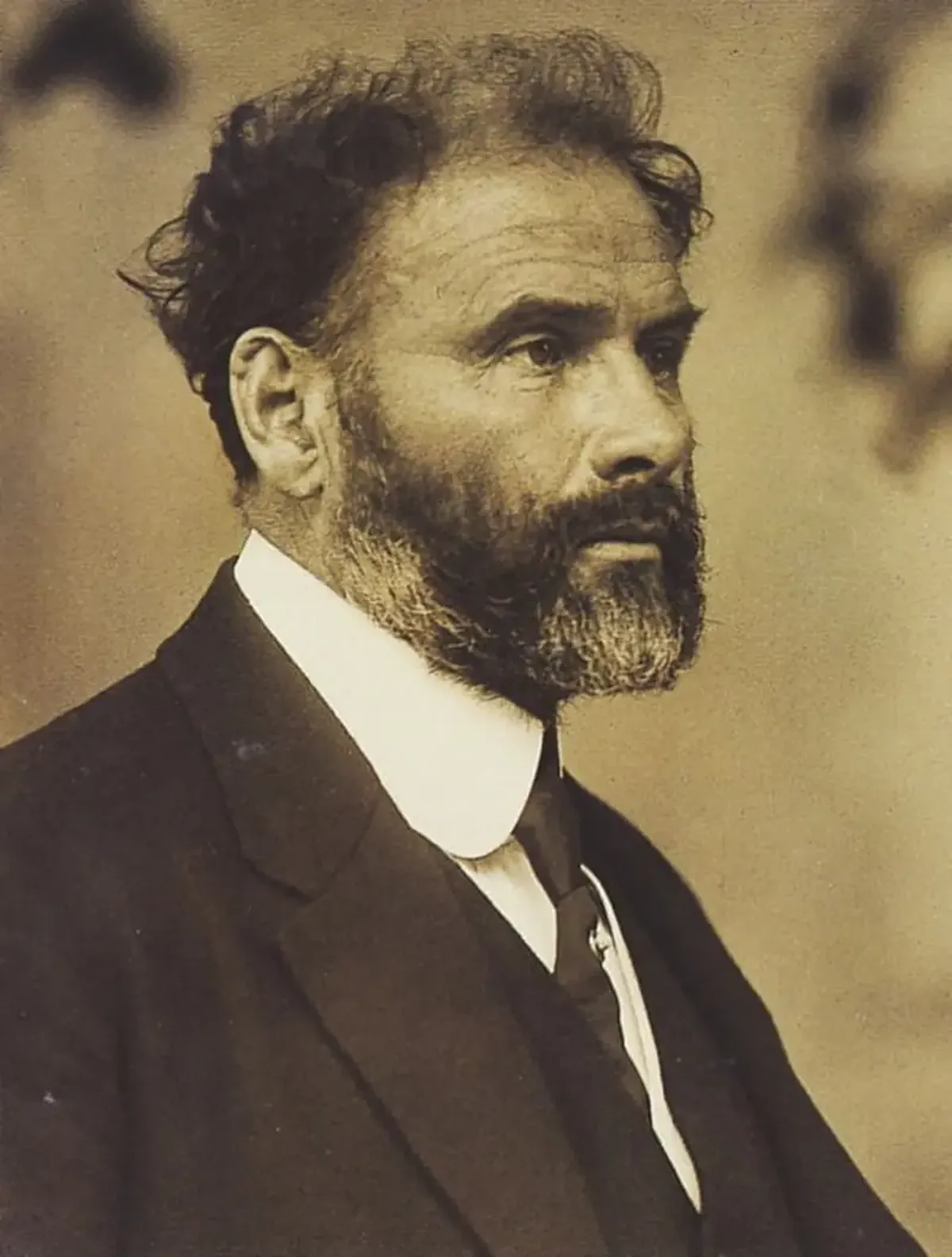
Gustav Klimt
Upon learning of the artist’s decision to keep the refused paintings, the government refused to accept the returned advance and demanded delivery of the commission. When transport workers arrived at the studio, no one answered the door. A wealthy industrialist and patron, August Lederer—an alcohol magnate—ended up owning all three, or at least two, of the canvases. Although the fate of “new art” would become tragic—Lederer’s private collection was nationalized in the 1930s, and on May 8, 1945, Klimt’s “Faculty Paintings,” along with 13 other works, were destroyed in a fire at Immenhof Castle—the artist’s principled stance added to his professional stature.
The First President
Gustav Klimt’s election as the first president of the Vienna Secession, which provided exhibition space for the Austrian avant-garde and brought foreign modernism to Vienna, tracked his ability to succeed without state backing. That independence was exactly what the informal artists wanted: an eccentric, singular leader who was also resolute and serious. His forceful take on the ancient theme in the application painting “Athena Pallas” announced a controversial new voice on Vienna’s art scene—one sensitive to “subtle feelings.” His “Beethoven Frieze” was so full of those delicate impressions that some viewers found it offensive and labeled it “pornography in painting.”
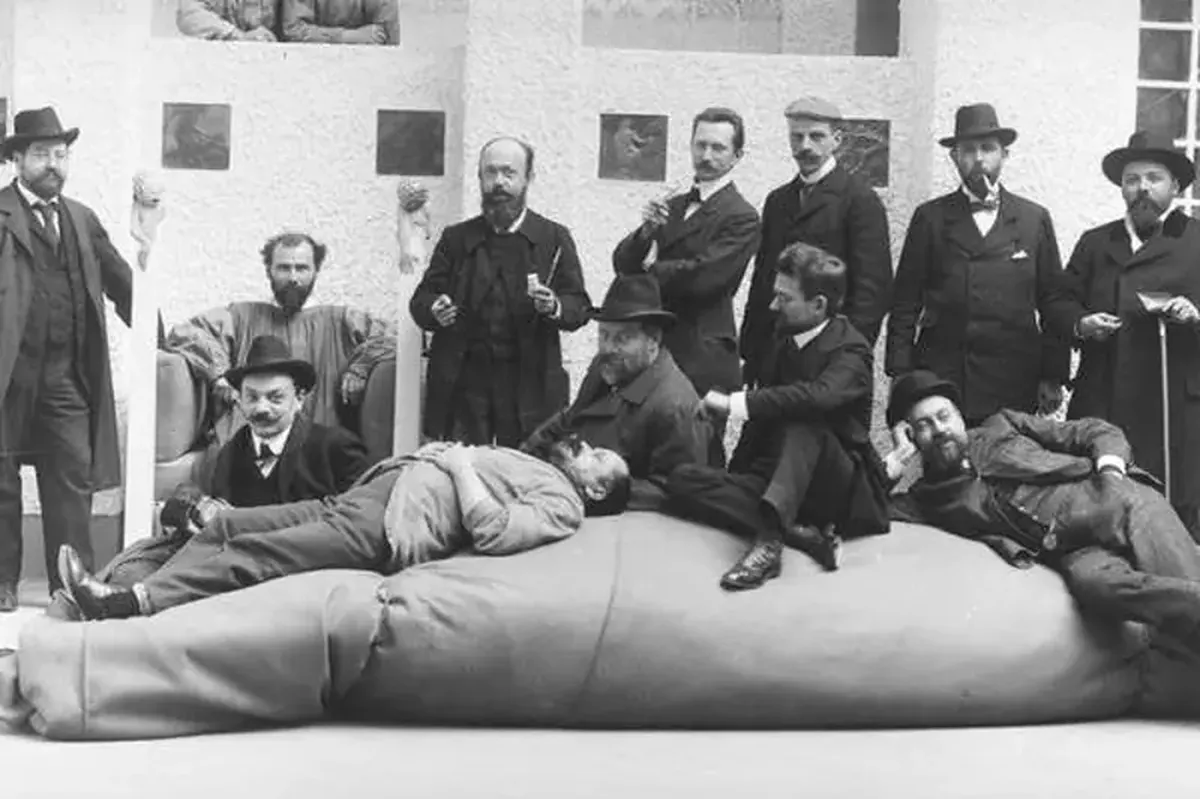
Artists representing the Secession in 1902 (Klimt is second from the left, seated in a chair)
Critics charged that his art was “worthy of pagan orgies” and argued it had no place in halls devoted to Viennese culture. Klimt is often credited with founding a “separate genre” centered on female sensuality: he produced a series of studies exploring female eroticism, which art historians generally accept as artistically significant. Colleagues were also unhappy with the Secession’s mix of fine art and applied design, where artworks were displayed and sold alongside household items. Despite the criticism, Klimt’s first solo exhibition at the Secession in 1903 was commercially successful, bringing in 36,000 crowns.
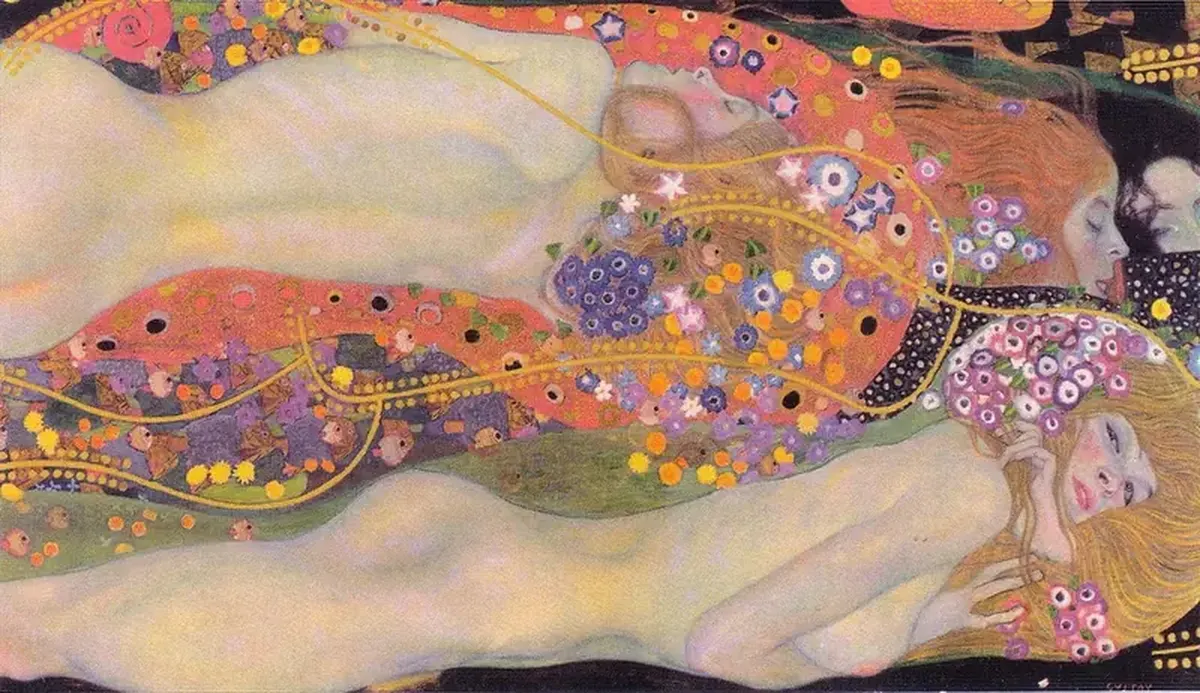
“Water Serpents II,” 1904-1907
Klimt valued materials as much as motifs: he worked with precious stones, marble, ceramics, mother-of-pearl, crystal, enamel, silver, and gold. Visits to the golden mosaics in the cathedrals of Venice and Ravenna strengthened his interest in gold leaf after trips to Italy in 1899 and 1903. Although Klimt, the son of a gold engraver, had used gold since his student days, the culmination of his “golden period” was “The Kiss,” notable for both its gold and its ornamental style. At the 1908 Vienna Art Exhibition the work was submitted unfinished and was immediately purchased by the state even in that condition.
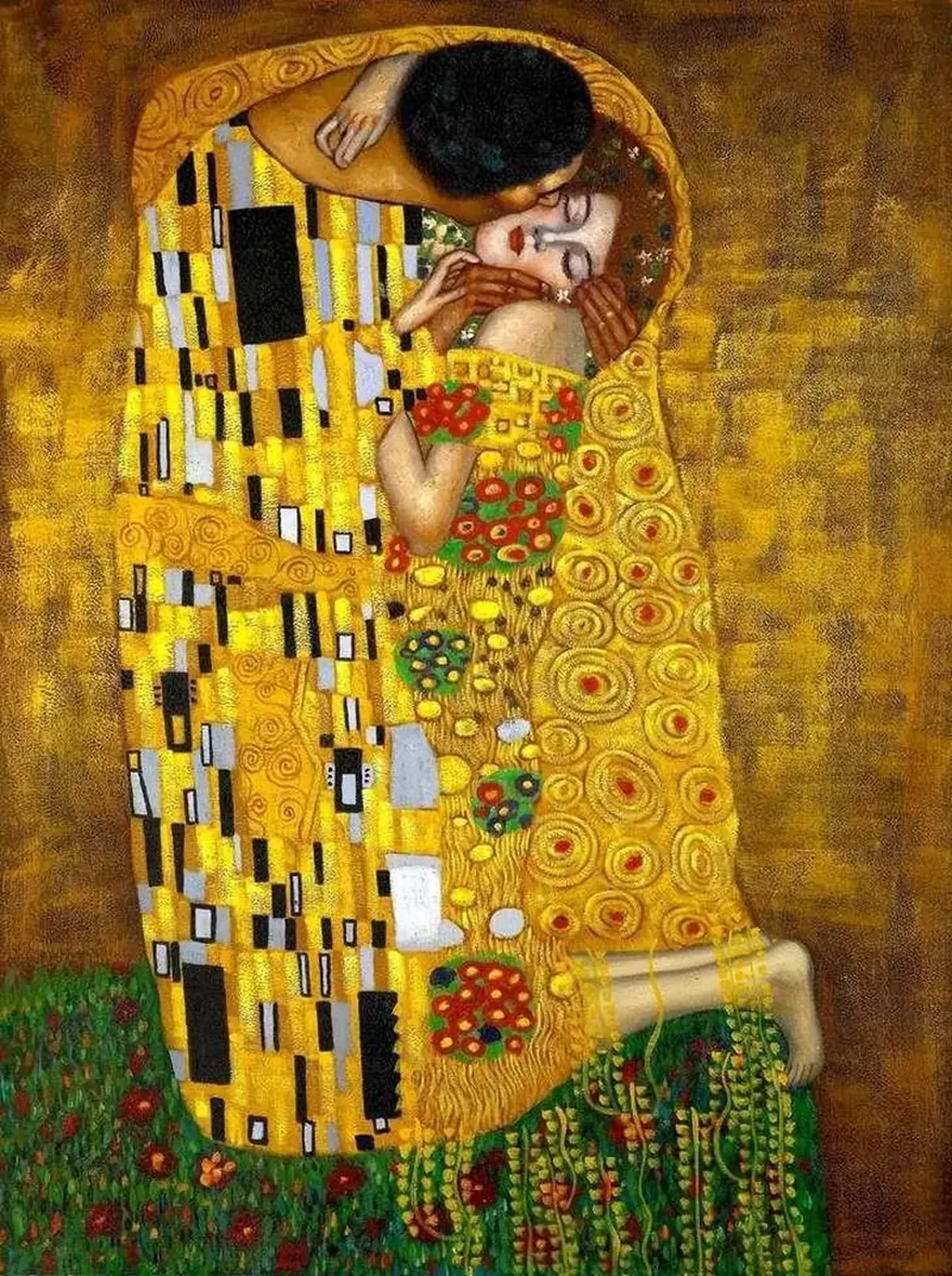
“The Kiss,” 1908
After “The Kiss” and “Judith I,” Klimt moved away from gold and strict geometric ornamentation. When the 1909 Vienna Art Exhibition displayed works by artists such as Vincent van Gogh, Paul Gauguin, and Henri Matisse, Klimt became fascinated with color experiments. He visited Paris for the first and only time, and over the years his style blended Victorian painting, Belgian symbolism, French Impressionism, mosaic techniques from the decorative arts, and Asian motifs.
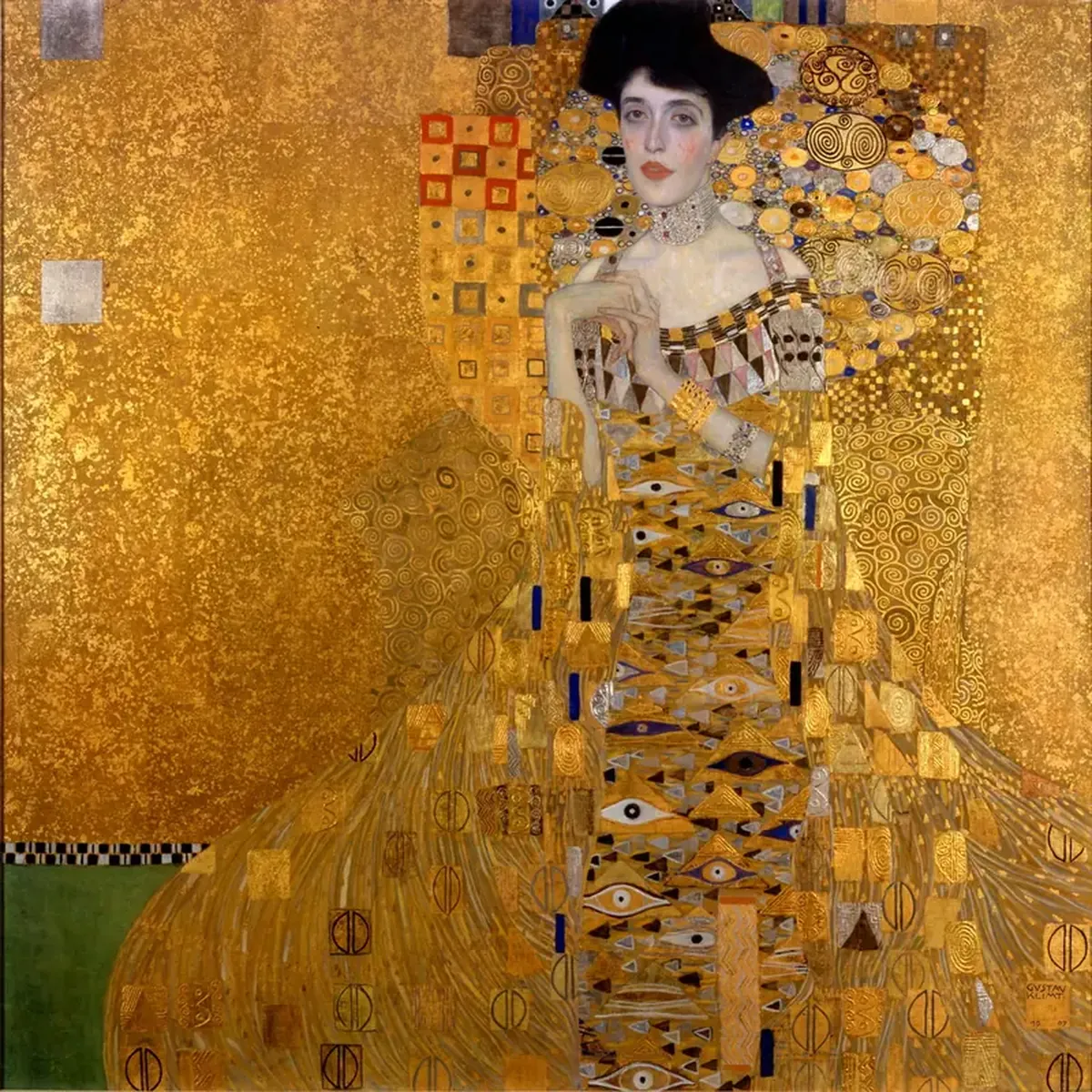
“Golden Adele,” 1907
Wine Heat and War
Although Klimt exhibited abroad, opportunities at home narrowed after he lost a leadership vote in the Secession by one vote; he and his group left the association, and for three years the artists had no place to exhibit in Vienna. Still, in 1908 and 1909—with financial support from the Ministry of Education—Klimt and his colleagues organized exhibitions on a scale Vienna had not seen before. About a thousand works were shown, and Klimt’s recent paintings (“The Kiss,” “Danaë,” “Golden Adele,” “Three Ages of Woman,” other female portraits, and landscapes) caused a sensation and even inspired a series of eight caricatures in the satirical magazine Die Muskete.
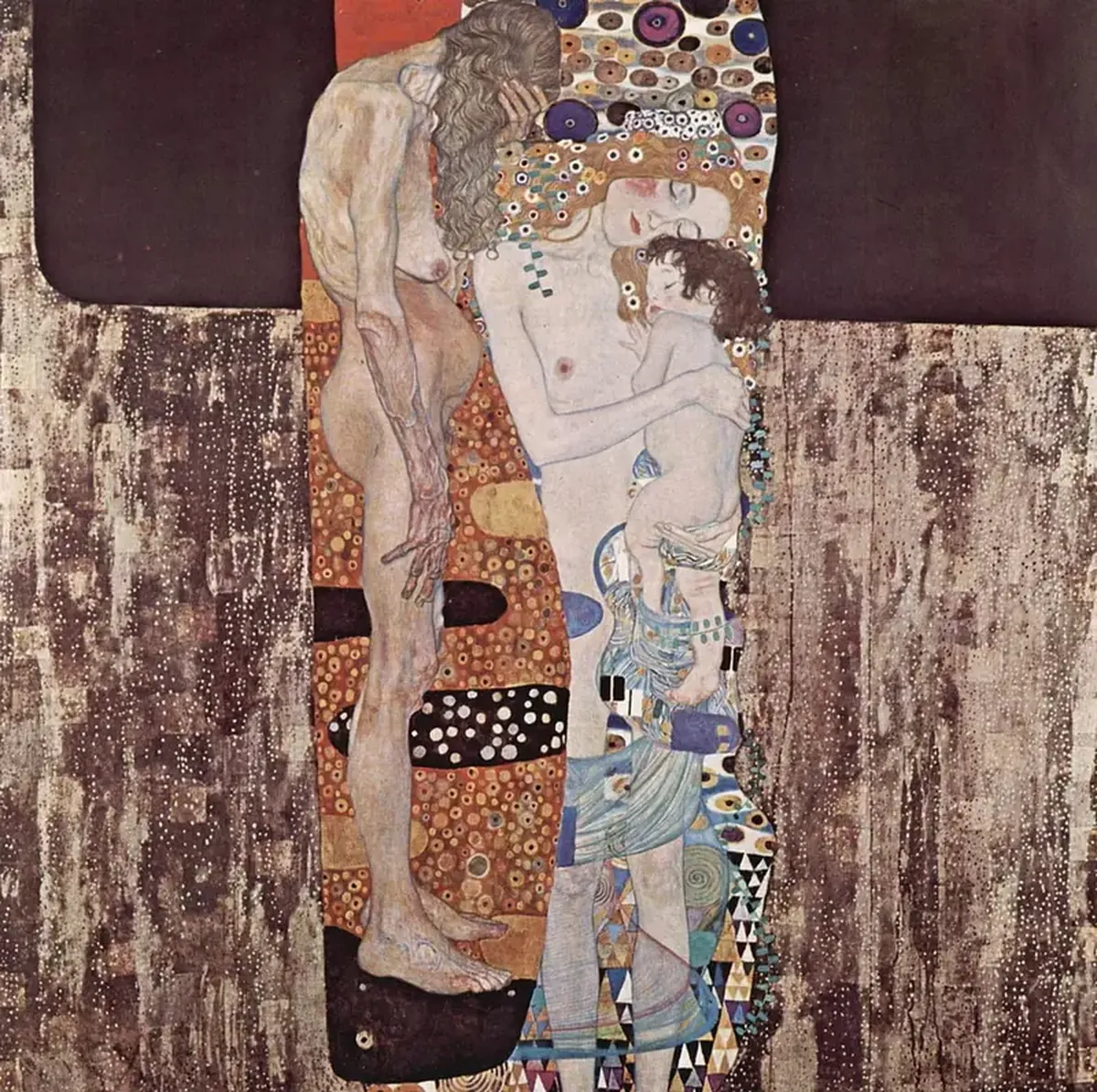
“Three Ages of Woman,” 1905
Contrary to expectations, the first exhibition did not recoup its expenses: sales were hurt by an unprecedented heatwave in Vienna during the summer of 1908. The show’s troubles were compounded by harsh criticism from one of Klimt’s former students, Oskar Kokoschka. Klimt, as mentor, saw something of himself in Kokoschka and supported the younger artist, but after those battles he stopped organizing exhibitions. Reclusive and focused on his work, he found that daily painting was the only thing that kept his mental balance. He was very attached to his family and hid from life’s storms at home. Klimt guarded his household from the outside world, rarely invited anyone in, and would not open the studio door without a specific knock.
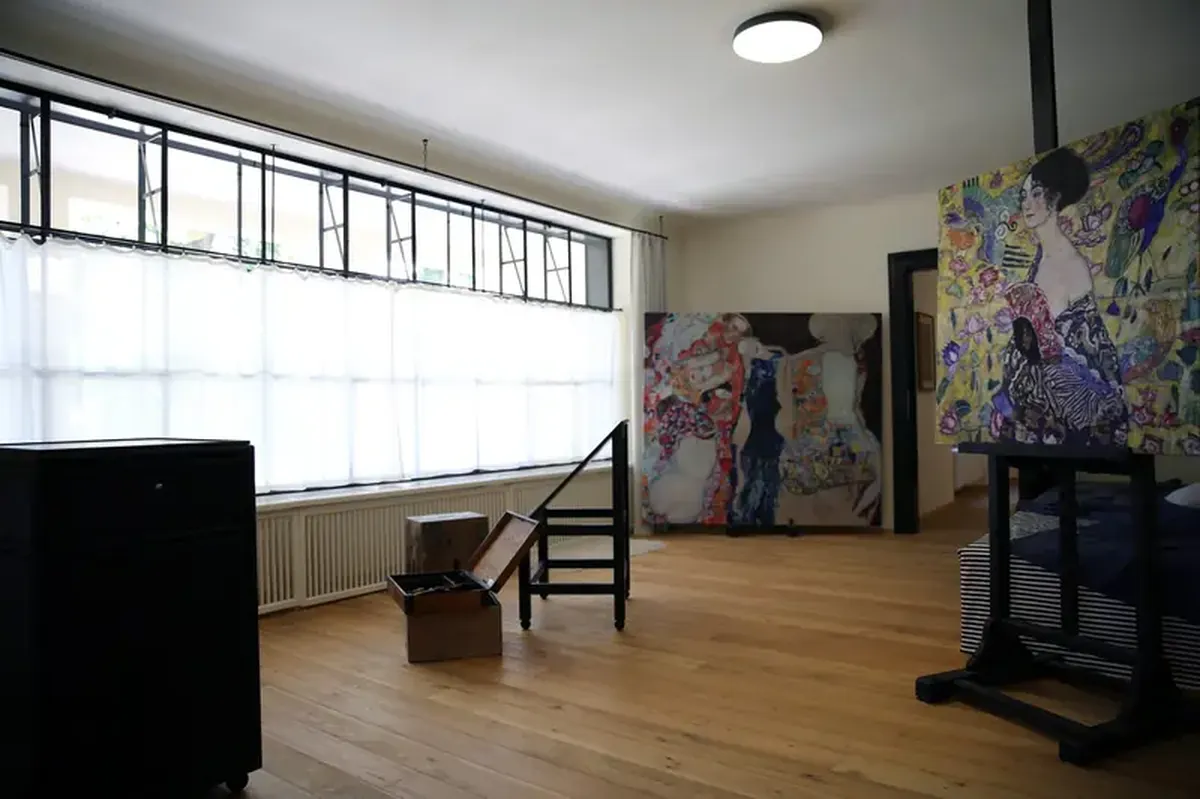
The studio of Klimt, reconstructed in 2013 at his villa. The exhibition features copies of the paintings “Woman with a Fan” and “The Bride” (both circa 1917-18).
As the primary breadwinner, Klimt cared for his mother, his sisters, and two Helens—the widow of his brother and his niece. For a time he was close to his brother’s wife’s younger sister, Emilia Flöge, a designer, gallery owner, and co-owner of a fashion salon. Researchers believe she may have been the woman depicted in “The Kiss,” originally titled “The Lovers.” Emilia did not become Klimt’s wife; the pair parted in 1899 when Klimt became infatuated with 19-year-old Alma Schindler, and two of his models (both named Maria, Uchytska and Zimmermann) became pregnant around the same time. Emilia Flöge remained his lifelong friend: she solved his problems, organized trips, arranged meetings, and planned vacations. Klimt, a lifelong bachelor, had numerous affairs, and 14 women claimed his inheritance for children they said were his.
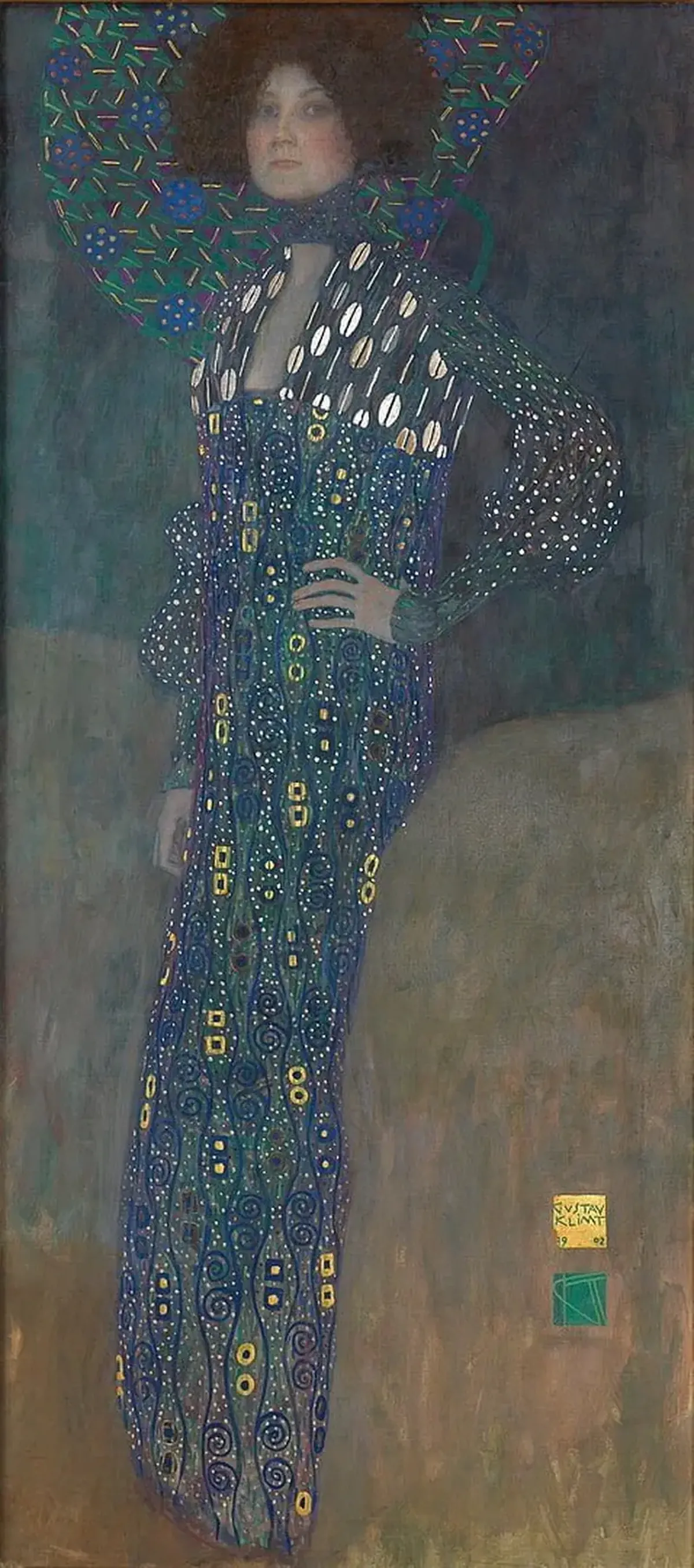
Portrait of Emilia Flöge, 1902
In the last six years of his life Klimt lived, in his friends’ words, “in splendid solitude.” He moved his studio closer to nature, into a single-story house in Hietzing next to Schönbrunn Park. The studio backed onto the same “pink garden” he painted in 1912. Klimt’s final gesture as a rebel was a retreat into beauty and harmony. Known as a “ladies’ painter,” he made a good living from portrait commissions based on photographs during the war years. That work helped him push World War I out of his consciousness as the anxiety of the times affected his style, disturbing his fragile emotional balance and adding a darker tone to some paintings. He moved away from depicting figures with closed eyes or wrapped in thoughts of death and the end of the world, and, surrounded by sculptures and Japanese woodblock prints, he sought to bring joy to viewers with bright colors. In 1912 Klimt headed the Austrian Artists’ Association; in 1915 he buried his mother; in 1917 he was elected an honorary member of the Vienna and Munich Academies of Arts; and on February 6, 1918, he died of a stroke.
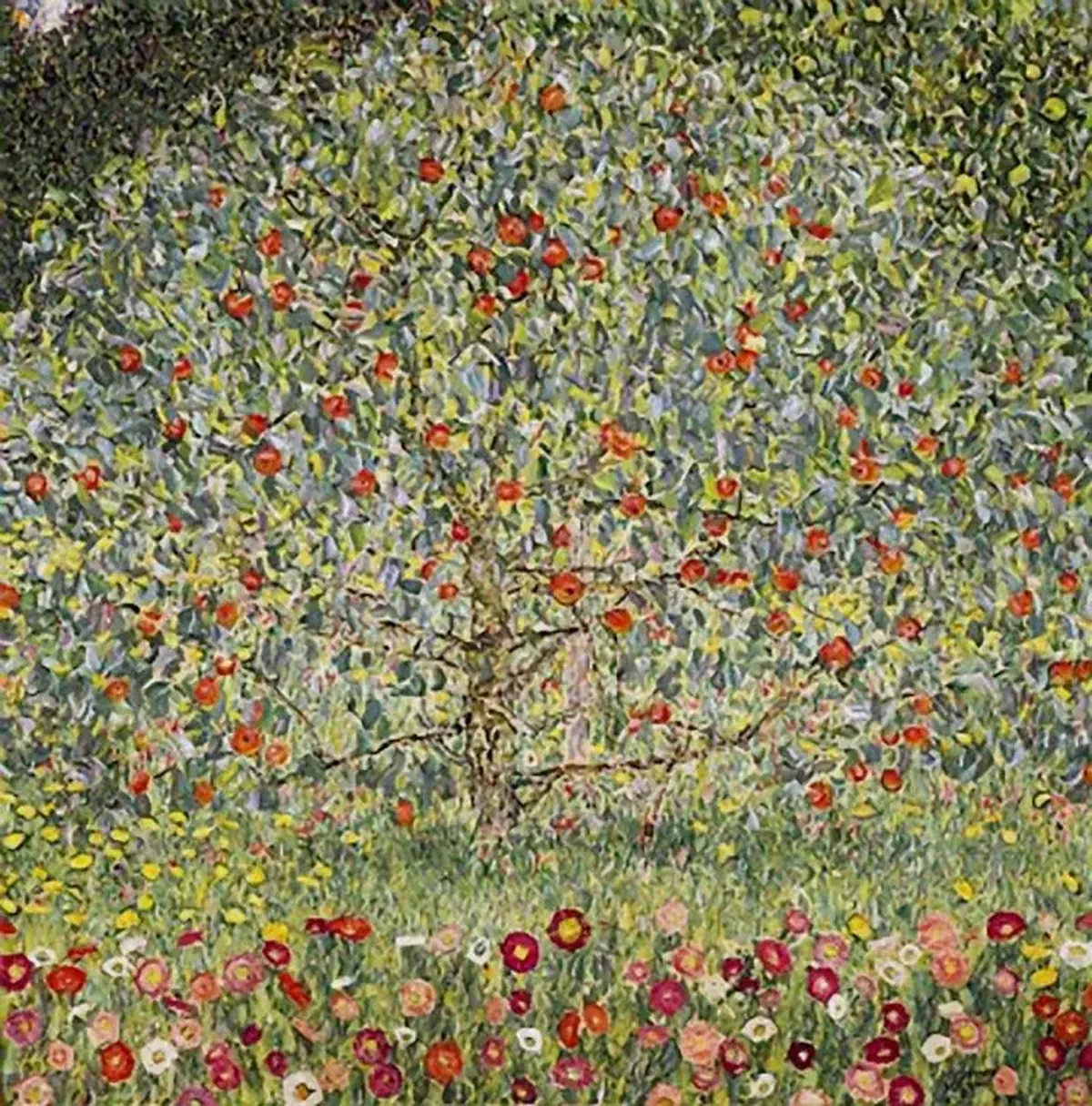
“Apple Tree I,” 1912
P.S. Biographers have mined Klimt’s life for facts, but the artist himself dismissed that curiosity: “If you want to know something about me, look at my paintings,” the reticent artist advised.
