
 Gaby
Gaby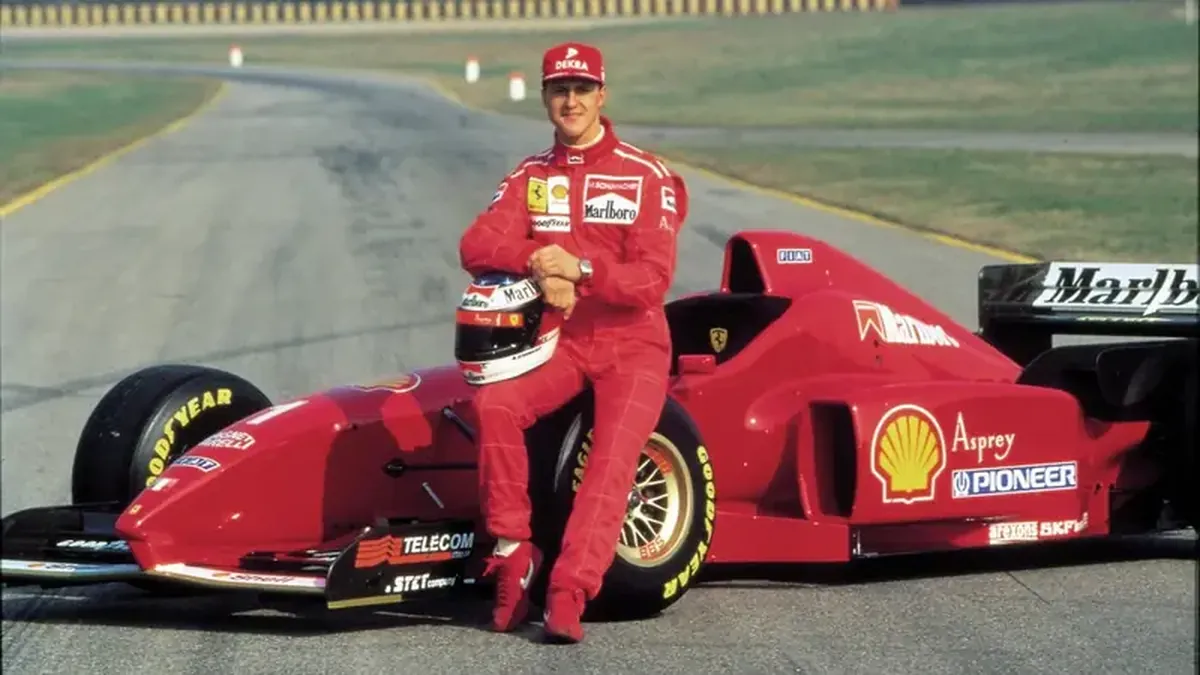
One of modern sports’ brightest personalities became a global brand and a symbol of resilience and relentless success. With fearless driving and exceptional skill, Michael Schumacher won seven world championships and earned nearly a billion dollars. Having mostly escaped serious injury on the track—his worst racing injury was a broken leg—he retired from racing in good health. The cruel irony was that his most severe injury came on a ski slope just before his birthday. The man who seemed protected on the racetrack proved vulnerable off it. For the past 11 years he has largely disappeared from public view, continuing to fight for his life while his family has spent more than 20 million pounds on his care.
A Familiar Name
Because of his dominance driving Ferrari’s bright red car, fans called him the “Red Baron,” while his grin and yellow race suit earned him the nickname “Sunshine Boy.” Even people who never followed motorsports know the name of the driver who started racing at five and competed until he was 44. For millions, the German racer from Hürt has long symbolized daring driving and the high-stakes risks that lead to champagne celebrations on the podium.
The result of an 18-year Formula 1 career for the Hürt-born driver included seven world championships, 91 Grand Prix wins, 155 podium finishes, and career earnings that outpaced his peers. Forbes once listed Michael Schumacher among dollar billionaires, and today his net worth is estimated at $800 million, keeping him among the wealthiest athletes in the world.
A Career That Started Early
When Kerpen officials decided in 2024 to demolish parts of the Mannheim district to expand a coal mine, only the church, Michael Schumacher’s childhood home, and the karting track where he learned to race were left standing. Born on January 3, 1969, to the owner of that karting track, Schumacher tried other sports as a child—including judo—but he turned his first passion into a profession. His racing career began in a kart his father Rolf built specifically for the restless boy.
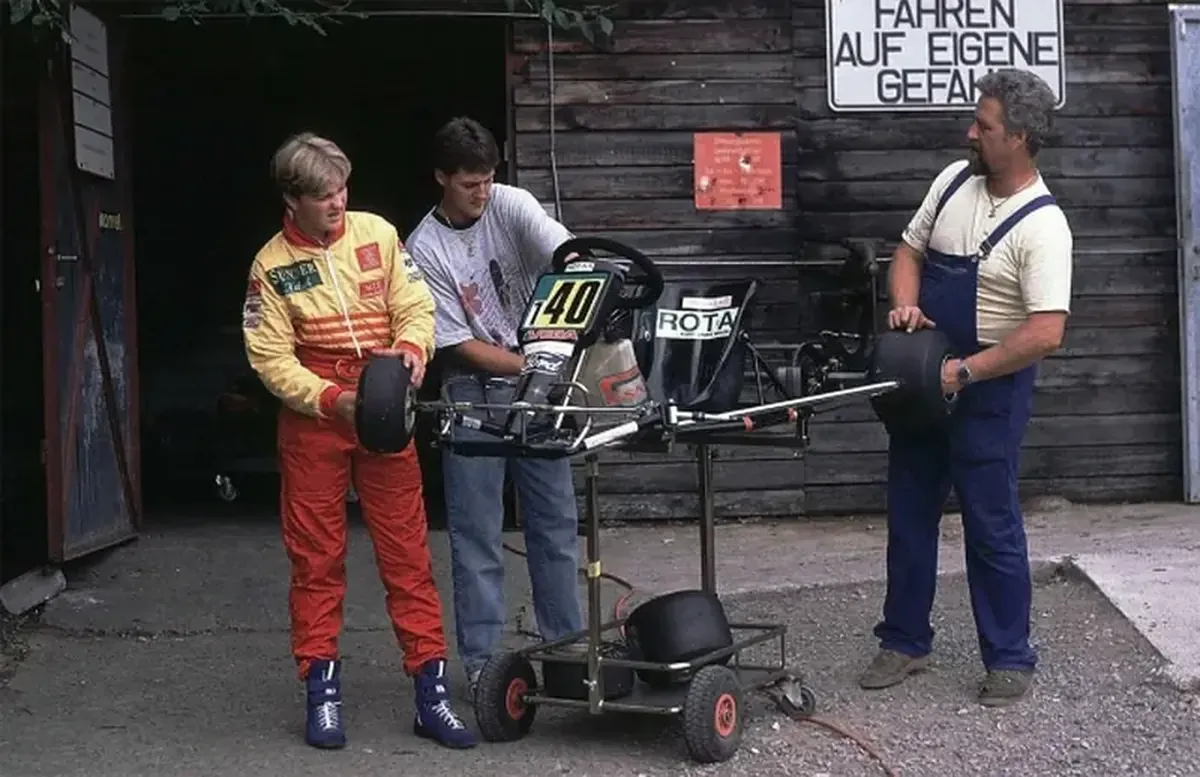
The Schumacher brothers with their father assembling a go-kart
Michael sat behind the wheel of his first speed machine at four, started kart races at five, and at 14 obtained a Luxembourg racing license where the age limit was lower, letting him enter official competition. A year later he won the German karting championship and then the European title when two rivals crashed on the final lap, clearing the way for his victory — one of many that followed in his career.
A Twist of Fate
In 1988 Schumacher moved from karting to open-wheel cars and won the Formula König title with nine wins out of ten. He finished third in German Formula 3 in 1989 and won the championship in 1990. That same year he took first place at the Macau Grand Prix. Racing in the world sports car championship under Mercedes’ junior program, he won stages in Mexico in 1990 and in Japan in 1991, and finished second in the Japanese Formula 3000.
After ten successful races in Japan, Schumacher was invited to drive in the Belgian Grand Prix for Eddie Jordan’s team. His manager negotiated his seat in the Jordan-Ford Formula 1 car when the regular driver was arrested following a dispute with a taxi driver. Schumacher’s impressive debut at Silverstone caught Benetton-Ford’s attention, and he switched teams for the next race. A contract quirk — a grammatical error in the canceled agreement — helped make that move possible.
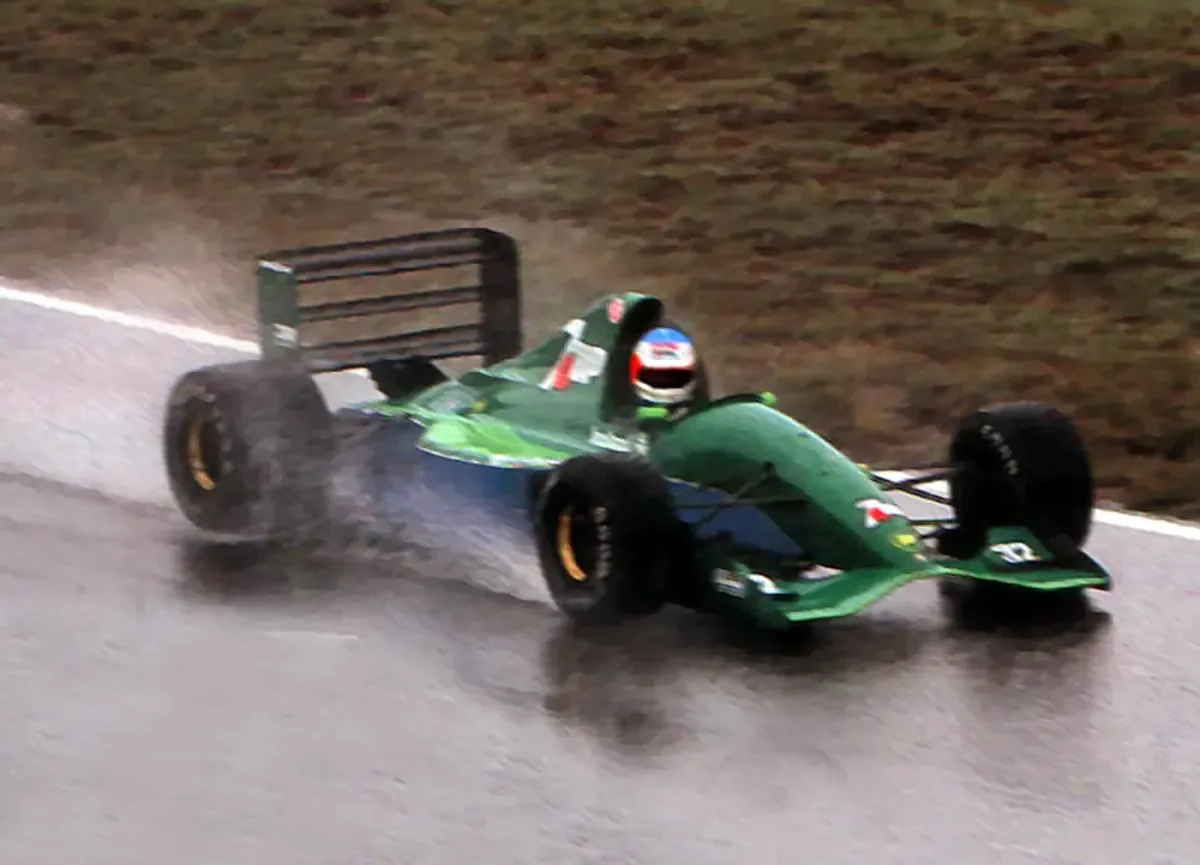
Schumacher tests the Jordan 191 at Silverstone
“Sunshine Boy” vs. “Rain Man”
Schumacher’s first race for Benetton at Monza was a breakthrough: he overtook three-time champion Nelson Piquet and, from 1992 on, consistently ran at the front, scoring podiums and taking his first win at the Belgian Grand Prix. He finished the championship third, ahead of three-time champion Ayrton Senna. Around this time Schumacher earned the nickname “Sunshine Boy” for his optimistic yellow suit and bright smile.
The rivalry with Senna, nicknamed “Rain Man,” lasted a couple of years. Schumacher accused Senna of deliberately slowing on track, though the Brazilian’s sudden braking was later blamed on an electronic failure in his McLaren. After a collision at the French Grand Prix and a rain stoppage, the rivals had a private chance to air grievances. Symbolically, Schumacher won his first title in 1994 — the same year Ayrton Senna was killed in a crash at Imola on May 1.
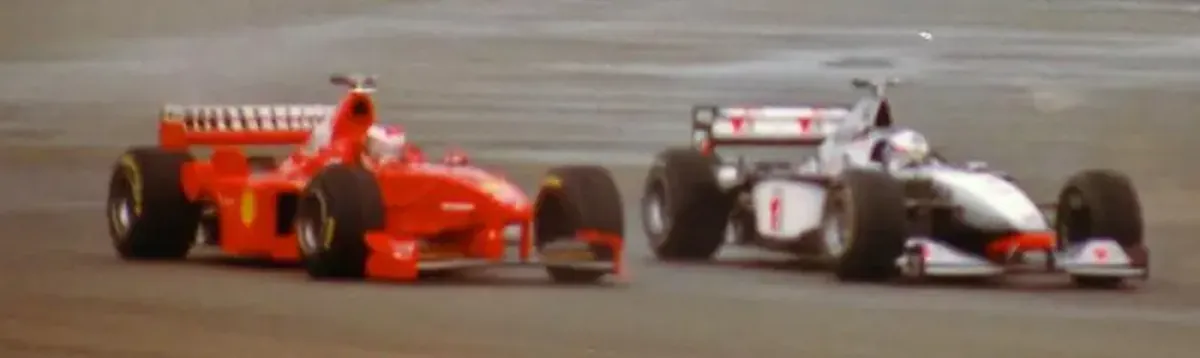
Schumacher battles with David Coulthard at the British Grand Prix in 1998
Rules and Competition
At the San Marino Grand Prix, Senna crashed into a concrete wall while trying to shake off Schumacher, who was closely following. Senna had criticized computer-aided dynamic stabilization systems; some colleagues suspected Benetton was gaining an advantage from technical developments. Schumacher’s Benetton had recent changes to traction control and engine tuning, and the exclusive Ford engine supply improved the car’s performance.
Those developments helped Schumacher’s competitiveness, and in 1994 he won the championship by a single point over Damon Hill. The FIA moved to ban dynamic stabilization systems to return more control to drivers. After the season, Schumacher was stripped of his Belgian Grand Prix victory for non-compliance with technical rules; the team maintained the stabilization system had not been used, but officials later discovered built-in ABS in his car.
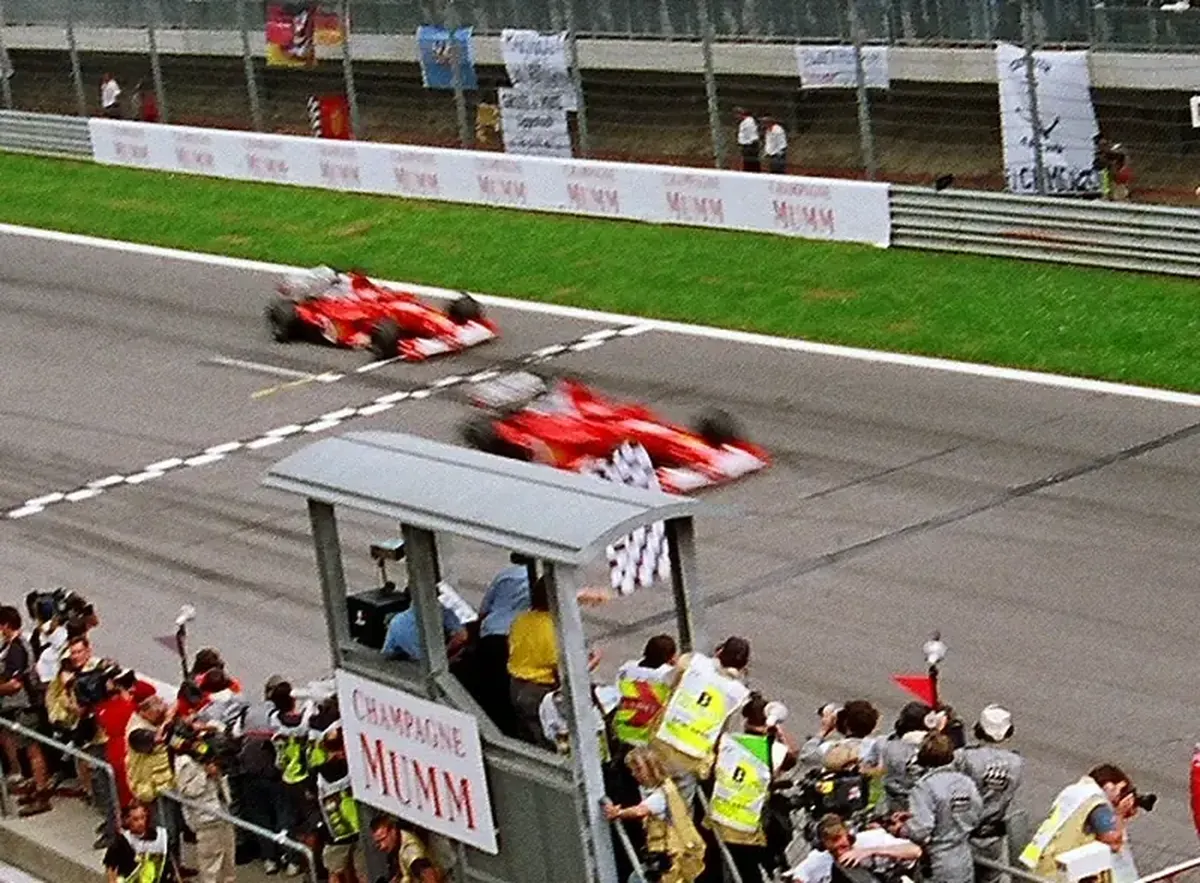
The controversial victory of Michael Schumacher, who overtook Rubens Barrichello at the finish line after a team order at the 2002 Austrian Grand Prix
Signature Style
Schumacher drew criticism for intentional collisions, stubbornness, and aggressive driving on the edge of the rules. He was disqualified for overtaking Damon Hill during the warm-up lap at the British Grand Prix, and a collision with Hill in Australia knocked both drivers out of the race. He ignored black flags at times and was banned from two Grands Prix. Schumacher’s driving often pushed limits, and his mistakes sometimes resulted in heavy crashes into the barriers.
His driving style also gave him advantages: in overtakes he frequently accelerated later into corners and braked much later than others, taking a steeper line. Schumacher said he let the car find its own line while exploring its limits. Those experiments did not always end well, but they often paid off.
Schumacher — A Unique Talent
In 1995 Schumacher signed with Ferrari, a team that had not won the drivers’ title in 17 years. He helped change Ferrari’s reputation for reliability and speed. In his first year with the team he finished third in the standings and won three races: Spain, Belgium, and Italy. Despite a controversial collision in 1997 that led to disqualification, Schumacher continued intense work: he did more than 160 laps a day in testing and as much as 30,000 kilometers a year.
The official Formula 1 site said no Ferrari driver had worked as closely with the team or earned their respect the way Schumacher did; he led them to six consecutive Constructors’ Championships. Colleagues praised his natural talent and race intelligence, which let him make the right calls under pressure. He adapted quickly to changing conditions, drove at the edge of performance, and maintained top physical fitness over many years. Schumacher often visited Ferrari’s Maranello factory to work with engineers and designers, bringing gifts as tokens of appreciation.
Champion Ahead of Time
In 1999 Schumacher suffered serious leg injuries at the British Grand Prix — fractures to the tibia and fibula in his right leg and a dislocation in his left knee — which kept him out of six races and cost him a shot at that year’s title. He returned in 2000 to win the drivers’ championship in Japan, giving Ferrari its first drivers’ title in 21 years. Schumacher defended the title in 2001 and set the record for most Grand Prix wins by a single driver. In 2002 he dominated the season, finishing on the podium in every race and taking his fifth title. He won again in 2003 and claimed a record seventh championship in 2004, sealing the title early.
After losing the championship the next two years, Schumacher initially retired to focus on family—his wife Corinna and their two children, daughter Gina-Marie (born 1997) and son Mick. He briefly pursued motorcycle racing and worked as a Ferrari test driver and consultant. In 2009 Ferrari announced Schumacher would return to the track; he tested at Mugello, but neck injuries from a motorcycle accident kept him out of that year’s races. He came back to Formula 1 in 2010, signing a three-year contract with Mercedes, where former Ferrari colleagues held leadership roles.
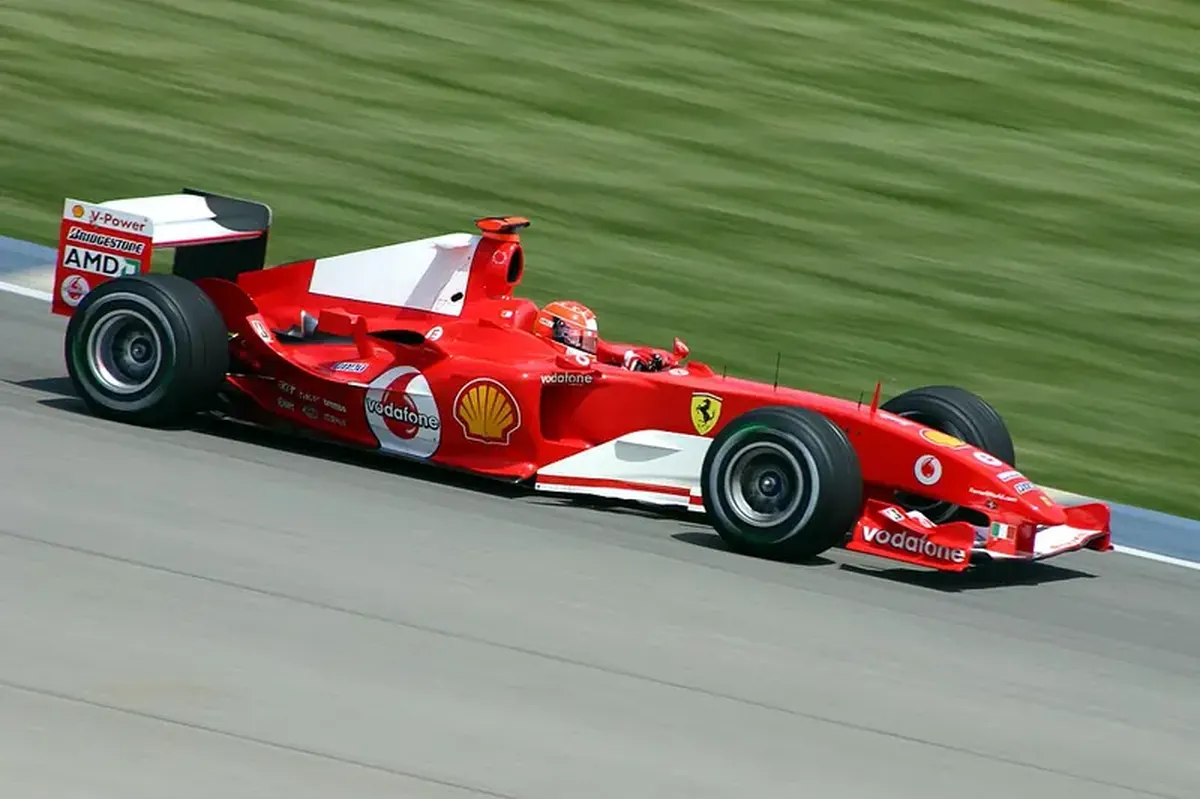
Schumacher at the 2004 U.S. Grand Prix
An Accident
Schumacher’s Mercedes car didn’t always suit his style, and stewards’ decisions also affected his 2010 season: he lost points at Monaco and received penalties in Hungary for aggressive driving. He reached the podium again in 2012 with a third-place finish, and at the end of that season he announced his second retirement.
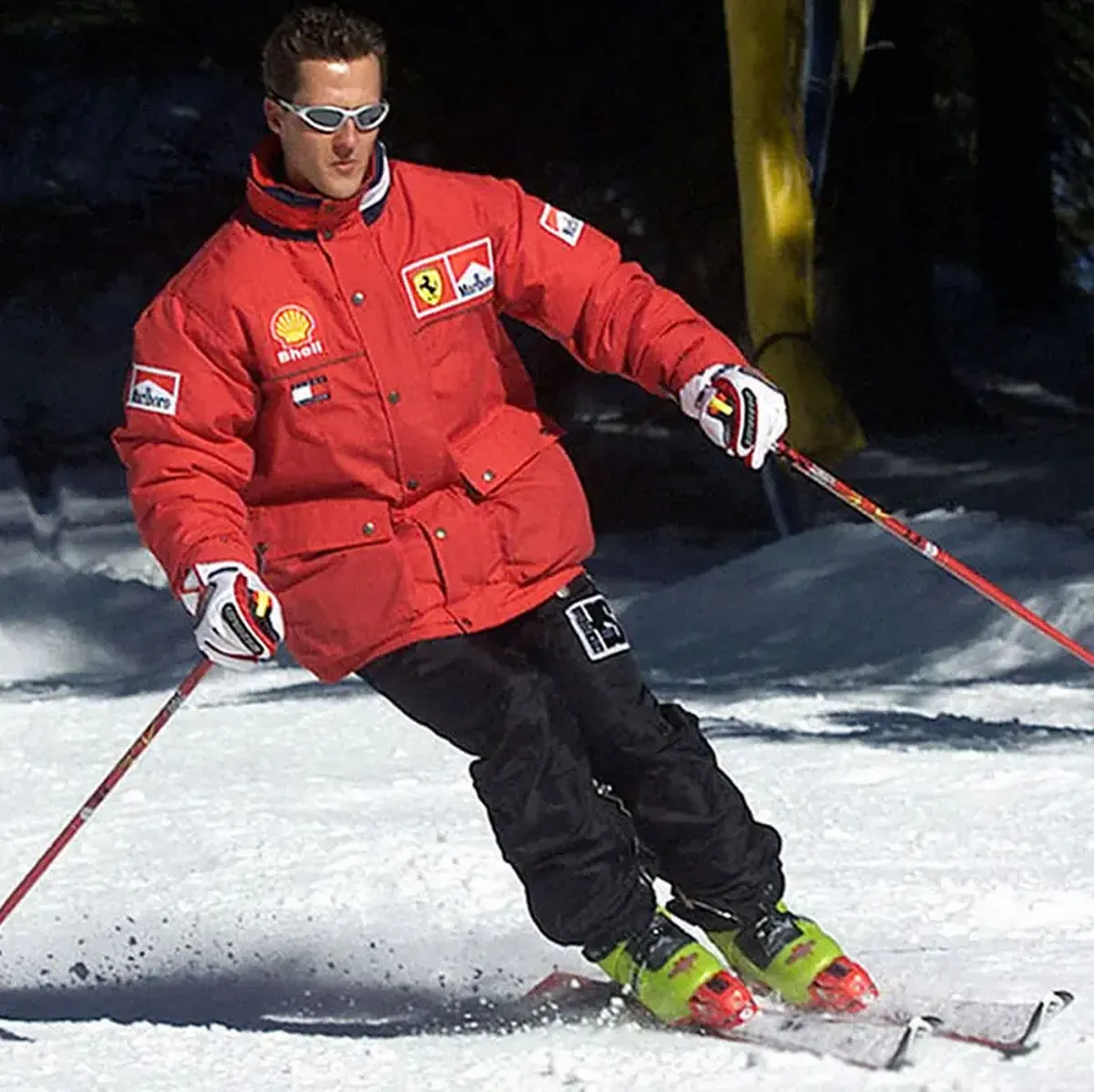
After stepping away, Schumacher planned to focus on his family. But on December 29, 2013—five days before his 45th birthday—he went skiing with his son and friends at the Méribel resort in the French Alps. Conditions were poor, and Schumacher skied about 20 meters off an unprepared slope, then fell and struck his head on a rock outcrop. One of his ski bindings did not release and his helmet cracked. Investigators later reviewed helmet-camera footage and witness statements and concluded the incident was an accident.
Away from the Public Eye
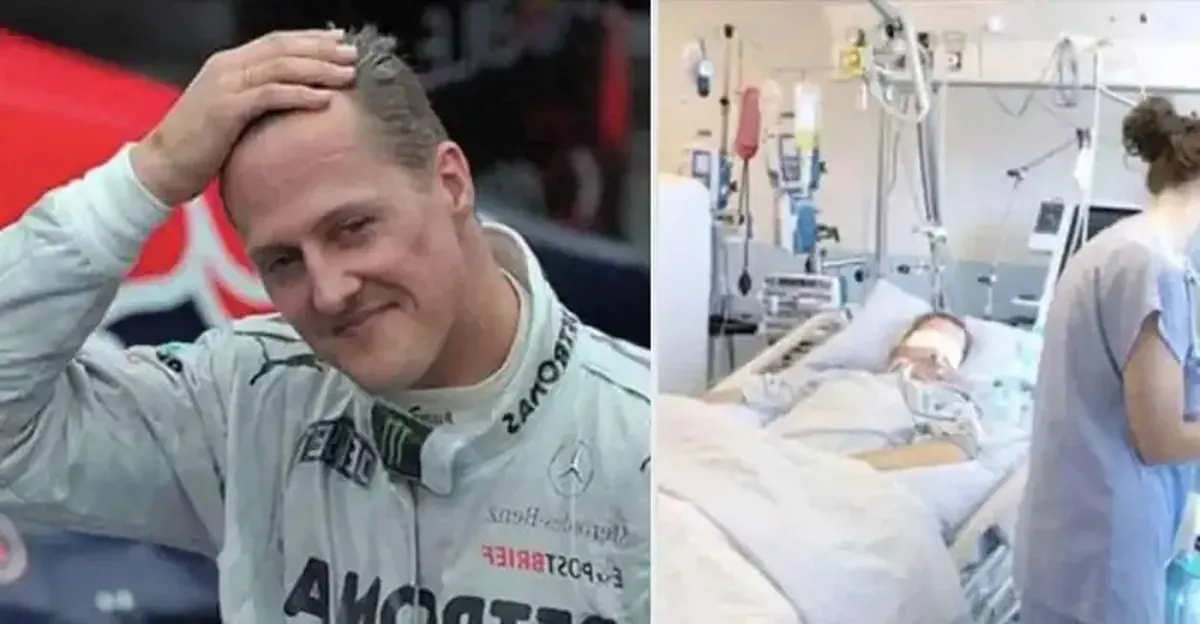
Schumacher was conscious when rescuers put him in the helicopter, but his condition deteriorated during the flight and medics had to make an emergency landing to connect him to a ventilator. Doctors induced a medically induced coma and performed two neurosurgeries, calling his condition critical. On March 7 officials said he was in the awakening phase, and on June 16 his manager announced Schumacher “was no longer in a coma.” The family moved him from the Grenoble hospital to continue long-term rehabilitation away from the public eye; the location of the next facility was not disclosed.
On September 9 it was reported that Schumacher had returned home to the family’s residence in Vufflens-le-Château near Lake Geneva. The family dismissed outside reports about his condition as unreliable. By the end of 2016 they had spent about €16 million on treatment. In 2018 FIA President Jean Todt said he visited Schumacher twice a month and wished the situation were different. In September 2021 Netflix released a documentary in which Schumacher’s wife and son said he could not move independently or communicate; reports said £20 million had been spent on his care.
Keep Fighting
Schumacher’s son Mick followed his father’s path into racing, and his brother Ralf also raced professionally. Mick rarely discusses his father’s condition in interviews. In the Netflix film he said he would give anything to have his “former father” back and that their relationship now would have been different. Gina-Marie has pursued equestrian sports; she reportedly married on September 28, 2024, at her parents’ villa in Mallorca, and guests were asked to surrender phones to prevent recordings.
Tabloid reports later claimed Michael was present at his daughter’s wedding, a surprising development given the family’s long-standing efforts to keep him private. The press is also watching whether Michael will attend Mick’s wedding and whether he will become a grandfather in the spring. The family has said he still needs round-the-clock medical care. For many, the exact details matter less than hope—hence the Schumacher family’s Keep Fighting fund, founded in 2017, and their rallying cry: “Keep Fighting!”
