
 Gaby
Gaby
Recent excavations at Chorazin may have uncovered the ruins of a long-lost synagogue where, according to the New Testament, Jesus preached and healed the sick.
Previously, archaeologists had found the remains of synagogues from the 3rd and 4th centuries in this ancient city. Until recently, there was no evidence of a synagogue from the time of Jesus. However, this discovery may confirm that a synagogue from Jesus’s time existed here.
Lead archaeologist Ahiya Cohen-Tavor, of Dagesh Tourist Archaeology, called the discovery one of the most significant of their career. Beneath the floor of the 3rd-century synagogue, their team discovered large boulders that were several centuries older than the synagogue itself. Archaeologists suggested that these stones could have been part of the foundation of another, even older synagogue.
While removing the boulders, the team found ceramics, coins, and kitchenware among the stones. The artifacts were dated to the 1st century CE, according to Arkeonews.
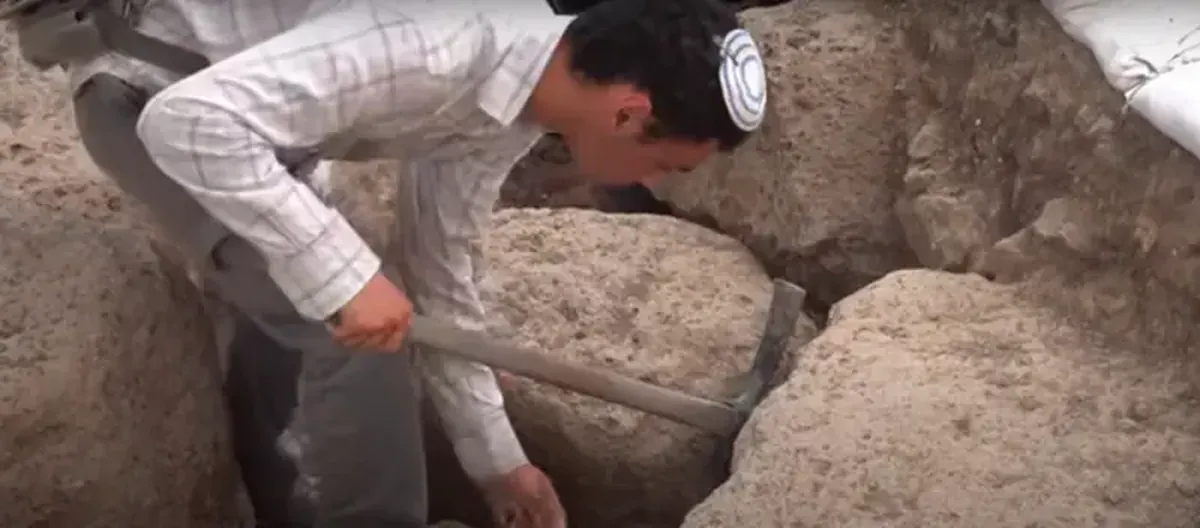
“We can’t date the stones, but we can date the items found between them,” Cohen-Tavor explained. Thanks to these items, researchers were able to date the site where the biblical-era synagogue likely stood. However, to confirm this hypothesis, archaeologists say further analysis is needed. The 3rd-century synagogue, discovered in 1905, was built from basalt and adorned with Jewish motifs. It had three entrances, and its facade faced south, toward Jerusalem, as was customary at the time.
https://www.youtube.com/watch?v=X778lBvf_mU&t=781s
A notable feature of this synagogue is the “Moses Seat,” where the Torah reader would sit. This stone seat is similar to others found in ancient synagogues, such as those on the island of Delos in Greece and in Hamat Tiberias near the Sea of Galilee. It’s likely that when Jesus preached in Galilean synagogues, he used a seat like this.
This discovery may indicate that the synagogue where Jesus preached and performed miracles stood in Chorazin. The team of archaeologists hopes to find even more compelling evidence.
