
 Gaby
Gaby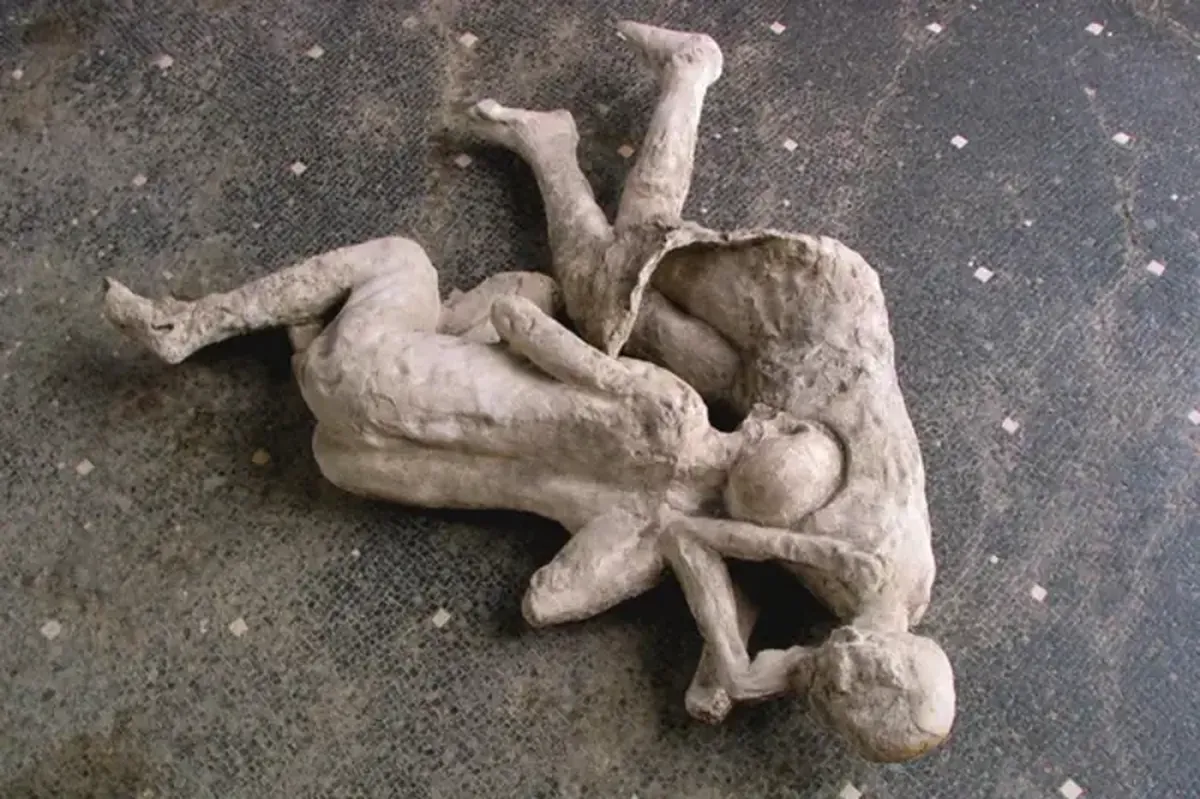
A new DNA study by American and Italian researchers suggests earlier conclusions about Pompeii’s victims may be wrong.
The team found some bodies had been misidentified. People who were assumed to be family members weren’t related, and several residents’ sex was misclassified in earlier work.
The authors say preconceived ideas about gender roles may have shaped those misreadings.
“This research highlights how unreliable narratives can be when based on limited evidence, which often reflects the worldview of researchers from a particular time,” said Dr. David Caramelli, a co-author of the study and a researcher at the University of Florence.
Overall, the study, published in the journal Current Biology, analyzed the remains of 14 victims.
What Did the Scientists Discover?
When Mount Vesuvius erupted in 79 AD in southern Italy, at least 2,000 people lost their lives, and the city of Pompeii was buried under three meters of volcanic material. That burial preserved the ancient Roman city and its inhabitants for future study.
In the second half of the 19th century, a team led by archaeologist Giuseppe Fiorelli made plaster casts to preserve the victims’ positions. The authors of the new study focused on those casts. They examined DNA from bone fragments embedded in plaster. That analysis helped determine the victims’ sex, genetic relationships, and geographic origins.
Because earlier researchers couldn’t study DNA, they had to base conclusions on the appearance of the casts alone.

A striking example involves a group of residents found in a grand house called the House of the Golden Bracelet (named for an ornament worn by the villa’s mistress). Archaeologists discovered the building, which is decorated with frescoes, in 1974 on the hillside, as reported by BBC Science Focus.
Before the recent study, researchers assumed the person holding a child was the child’s mother. DNA shows that person was actually a man. It was also assumed that all four people in the house were members of the same family; DNA analysis found they were not related.
Another discovery involved a pair previously thought to be a mother and daughter or two sisters. Genetic data revealed one of the figures was male.
The researchers hope applying new analytical methods to more of Pompeii’s remains will reveal additional details about this ancient tragedy.
