
 Gaby
Gaby
The world owes a debt to the author of nearly 800 inventions in electrical and radio engineering for kicking off the second phase of the industrial revolution. Most people can’t read his blueprints or formulas, but rumors about the “secrecy of his archives” have kept interest in Tesla’s work alive for almost a century. Myths of varying credibility still swirl around his name. Tesla’s life fascinates not just for his inventions but for his personal story: the solitary immigrant never married and left no descendants, having poured his energy into research.
Main Inventions
Tesla opened the door to the widespread use of electricity. Even if his achievements had been limited to the alternating-current generator built on rotating magnetic fields, that alone would have cemented his role in modern technology. No wonder historians call him “the inventor of the 20th century.”
He even flirted with the idea of a “perpetual motion” device: in 1931 Tesla reportedly installed a box with two rods in a Pierce-Arrow automobile in place of the gasoline engine, and the vehicle ran for a week without needing a recharge.
Among his other contributions were early work on wireless power transmission, remote control, fluorescent lighting, electric clocks, solar-powered engines, electric meters and frequency meters, improvements to steam turbines, and radio equipment. The so-called “Tesla drone,” shown at an electrical exhibition in 1898, was one of the first prototypes of a radio-controlled boat and an early example of remote-control technology. His last patent, granted in 1928, covered a vertical takeoff aircraft.
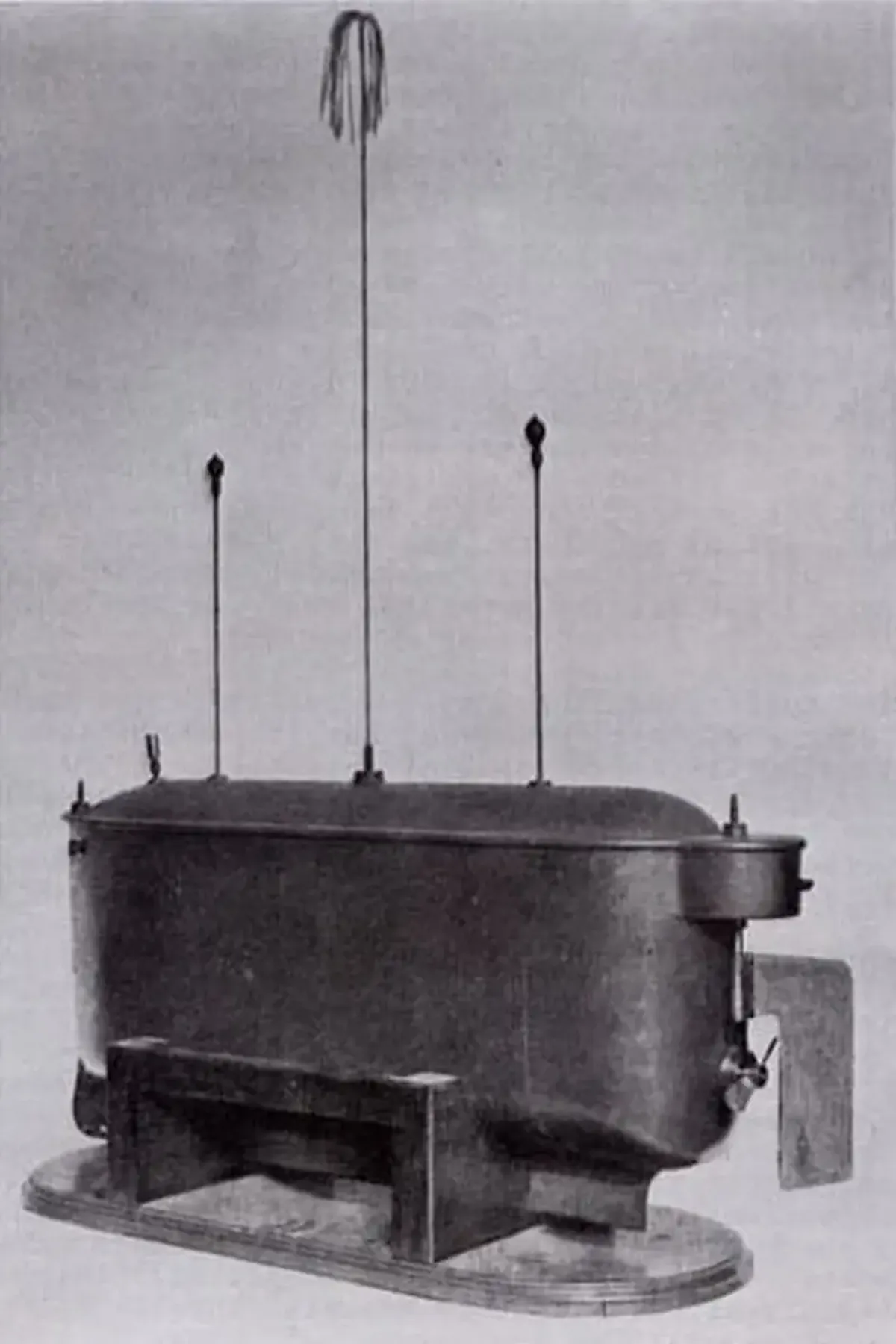
Nikola Tesla’s radio-controlled boat model, 1898
A Science Enthusiast
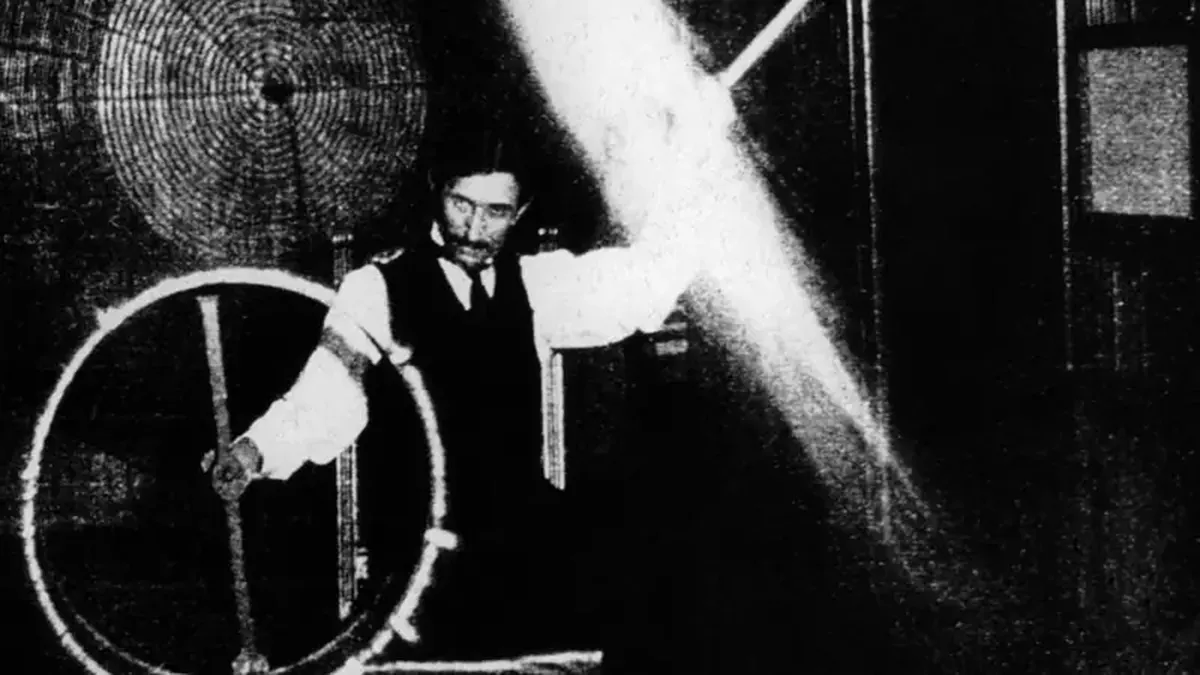
Tesla held more than 700 patents across 26 countries. He built the first high-frequency electromechanical generators and transformers, helping define a new branch of electrical engineering. He developed methods for applying high-frequency currents, even testing their effects on himself and exploring potential medical uses.
Tesla studied X-ray effects before Wilhelm Conrad Röntgen’s official discovery and likely preceded Guglielmo Marconi and Alexander Popov in work on radio. By 1893 he was actively working on wireless communication and had developed early versions of a radio mast.
Tesla came up with ideas that could have made him one of the richest people in the world. Instead he died in debt, prioritizing scientific exploration over wealth. His life included brilliant inventions but also deception by employers, bitter rivalries, and periods of scraping by—doing manual labor like digging ditches to survive.
Interesting Facts About Nikola Tesla
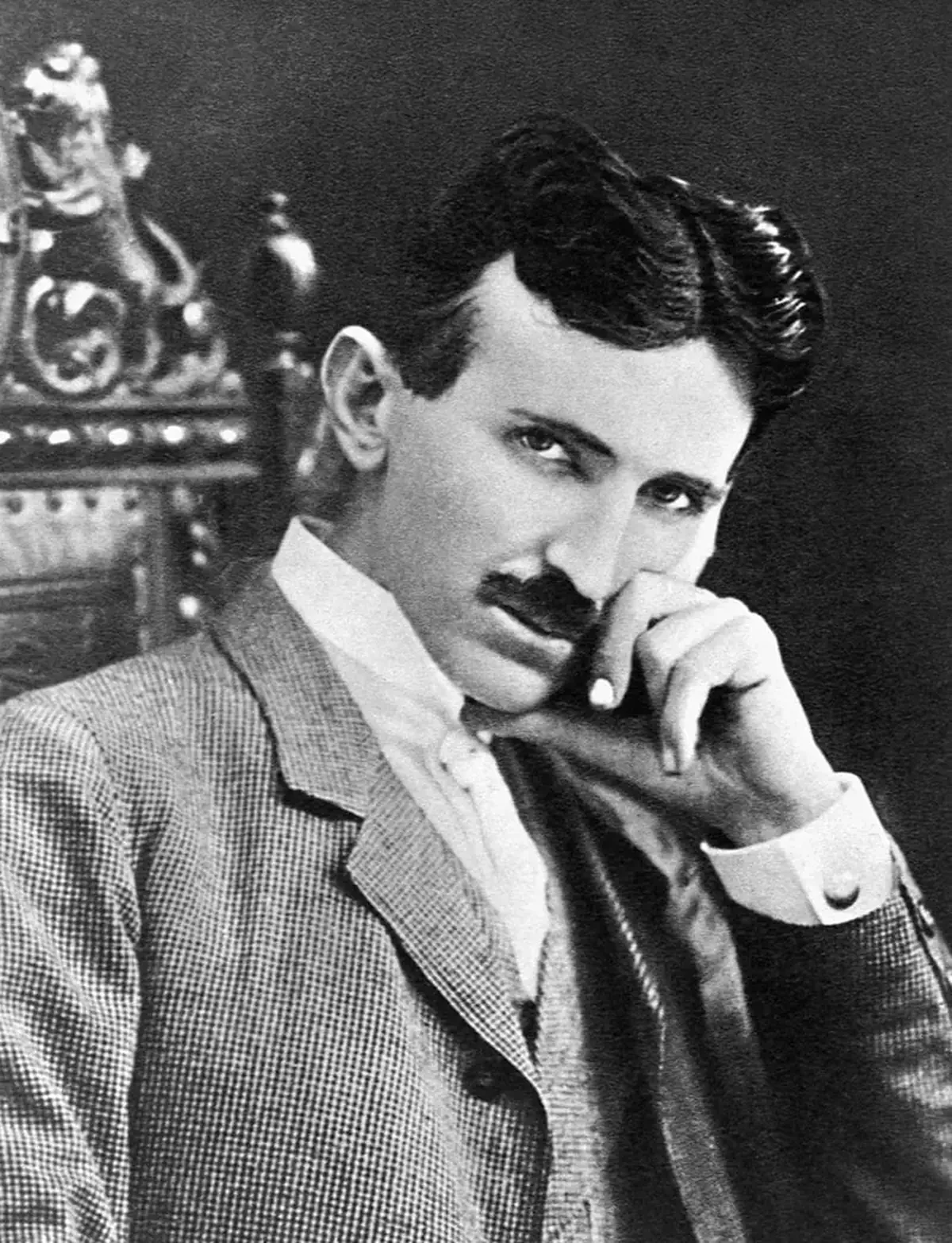
Some accounts say Tesla believed he could tap cosmic energy and even attempted to contact extraterrestrial intelligence. His “demonic” appearance—a tall, slender man with hollow cheeks and piercing eyes—matched his intense personality. From childhood he experienced flashes of light and vivid visions that he sometimes mistook for reality. He described light as the primary, eternal energy, at times equating it with God.
People who knew Tesla regarded him as a visionary: he reportedly advised a friend not to board the Titanic and persuaded another to cancel a train ticket that later ran into disaster. Tesla never had a romantic partner, believing family life would distract him from his work.
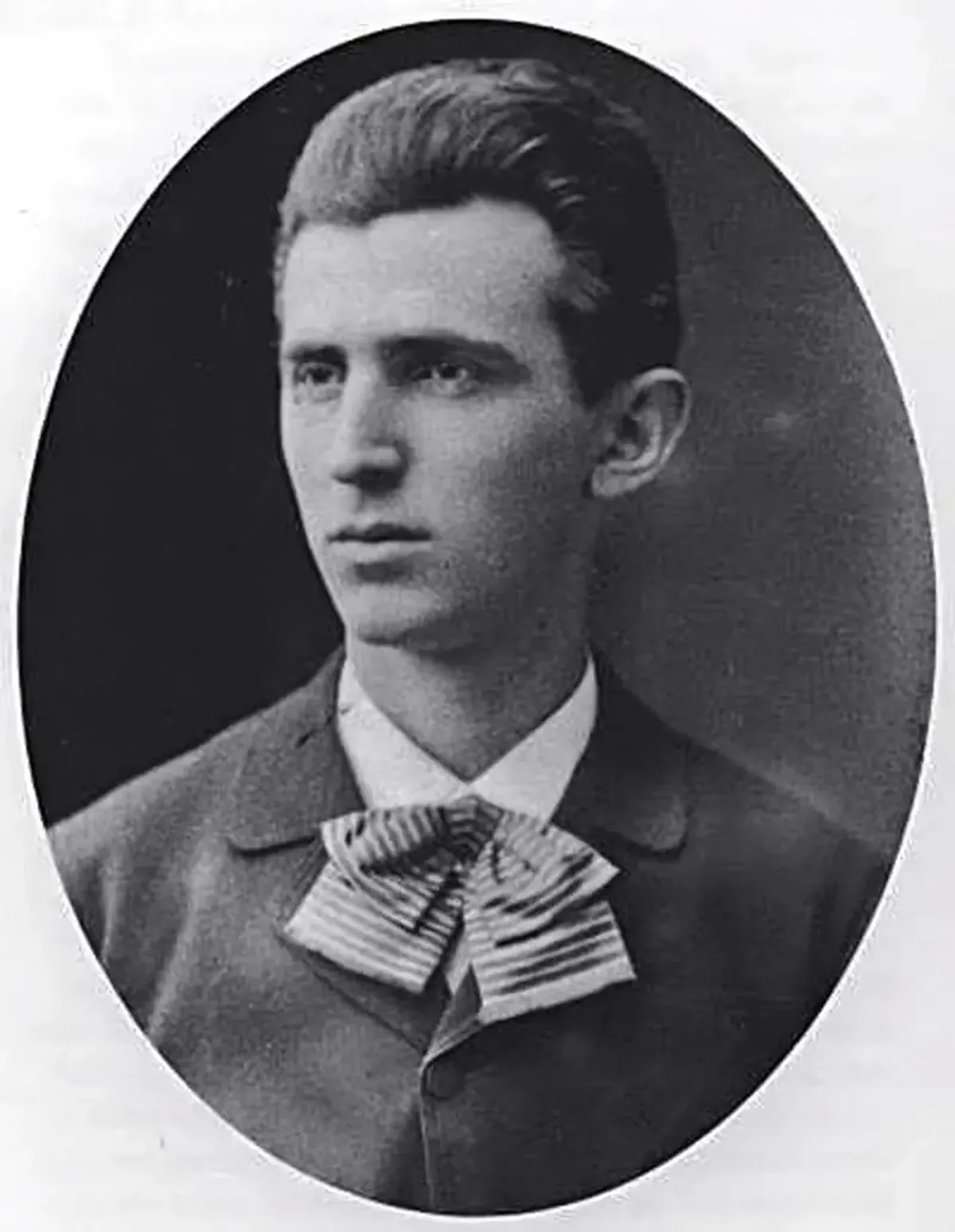
Tesla at the age of 23
Instead of a family, he had a beloved bird that he treated as his closest companion. Tesla fed pigeons near his hotel and grew especially attached to a “special white pigeon,” caring for it when it needed help. After the bird died, he was so heartbroken that he struggled to work for a long time. “She was my only love, and now my purpose in life is gone,” he said.
Quirks and Phobias
Throughout his life Tesla had many habits and fears that others found eccentric. He believed a diet of milk and honey would let him live to 150, though he died at 87 after refusing medical help when he fell ill.
After contracting cholera at 17, Tesla developed a lifelong fear of microbial contamination. His misophobia (fear of contamination) showed up as compulsive handwashing, cleansing rituals, and avoidance behaviors triggered by intrusive thoughts.
While traveling, he had his towels changed up to 18 times a day. He avoided handshakes and touching people or public surfaces, and he disliked railings, doorknobs, keys, and telephones. He would not use other people’s dishes, soap, or jewelry. Rumor has it he avoided women wearing pearls.
A Techie from the Countryside
The future electrical researcher was born on a stormy night, July 10, 1856. He was the fourth child of Milutin Tesla, an Orthodox priest, and Georgina (née Mandić), the daughter of an Orthodox priest. The Serbian family had five children: two sons and three daughters. Tesla’s homeland was the village of Smiljan near Gospić (now in Croatia), then part of Austria-Hungary.
His mother, who had little formal education, passed on folk songs, while Nikola pursued schooling at the gymnasium after the family moved to Gospić in 1862. He continued at the Higher Real School in Karlovac, and in 1875 enrolled at the Polytechnic School in Graz to study electrical engineering, physics, mathematics, and mechanics. Tesla did not complete a formal degree due to numerous absences from lectures.
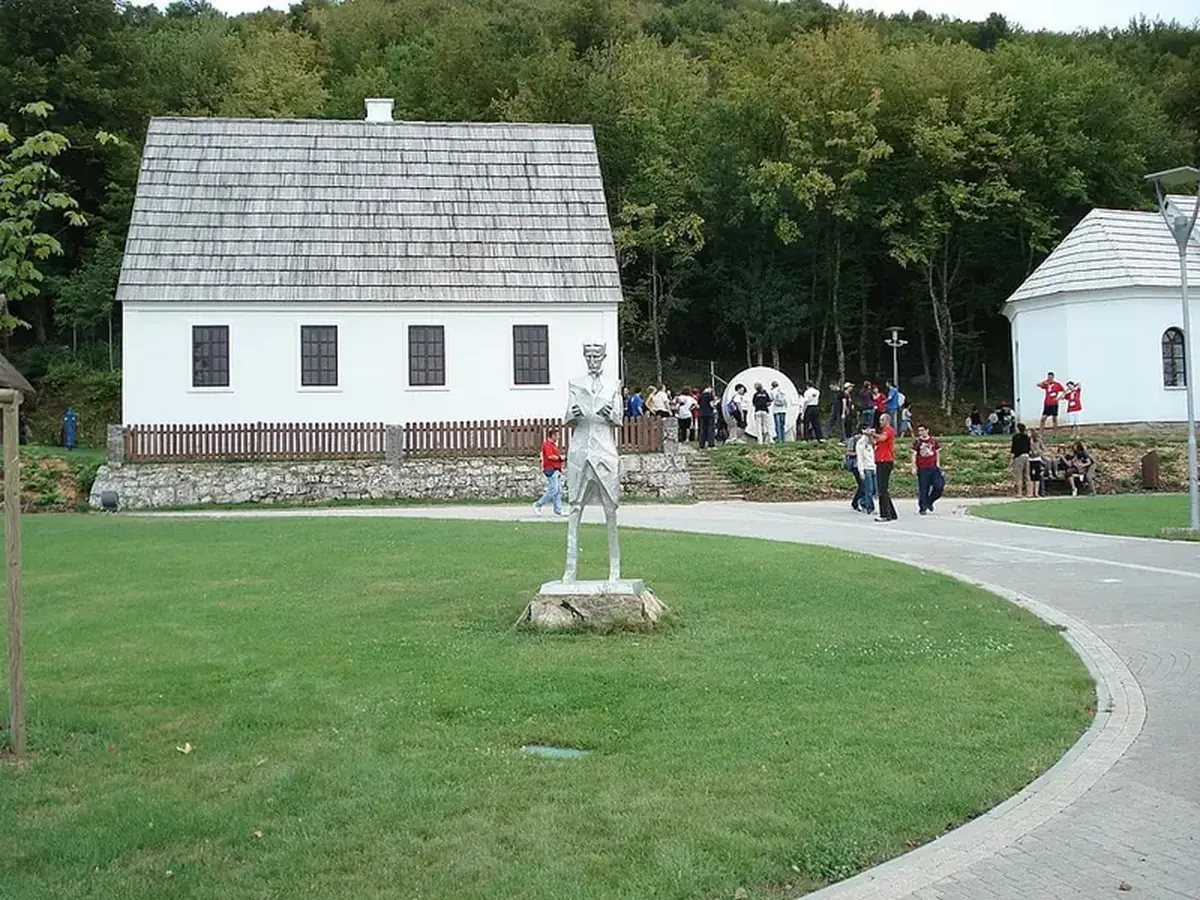
The restored house where Tesla was born in the village of Smiljan
Some biographers describe a studious young man who covered two years of coursework in one and who studied from early morning into the night. Financial troubles cut his formal studies short. In 1880 he studied at Charles University in Prague for a year, and in 1881 he moved to Budapest to work for a telegraph company.
American Humor
From 1882 to 1884 Tesla worked for Thomas Edison at Edison Machine Works—after earlier stints for Edison in Paris and Strasbourg—installing lighting and repairing motors. The company refused to pay a promised bonus of $50,000 (roughly a million dollars today).
Tesla’s improvements to direct-current motors and generators irritated Edison, who expected Tesla to focus on improving Edison devices for the company’s benefit. During his time there, Tesla made about 24 improvements to the equipment, creating new types of switches and regulators.
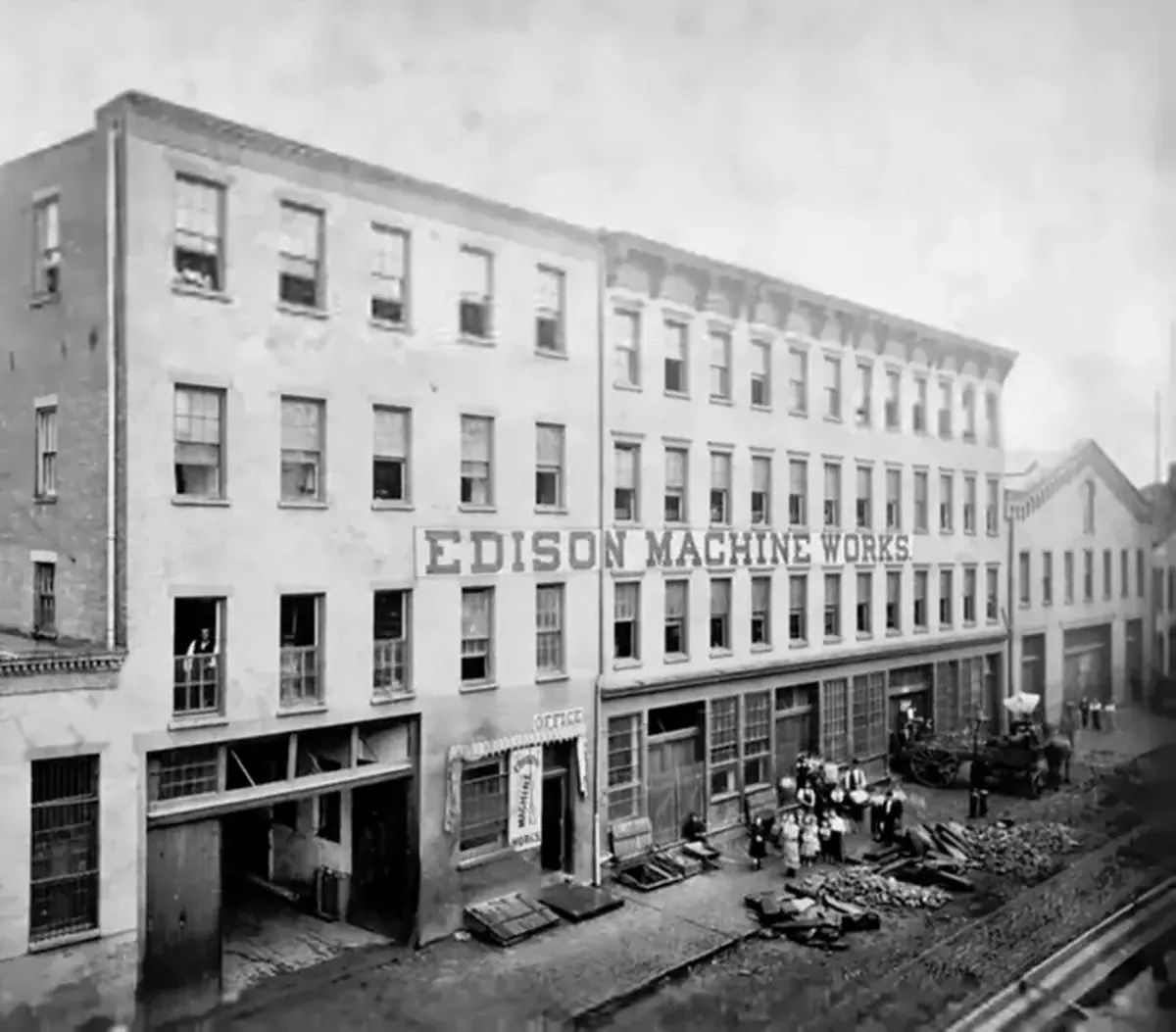
Edison Machine Works, where Tesla worked
When Edison suggested Tesla improve his English because he “didn’t understand American humor well,” Tesla quit in anger. He later refused to accept a joint Nobel Prize with Edison (Edison also declined). On another occasion, investors offered Tesla shares instead of payment for an arc-lamp idea; when he refused, they withdrew support and slandered him.
The War of Currents
In 1886–87 the young engineer survived by doing odd jobs, digging ditches and other manual labor through the winter. Eventually he found people who believed in him. Financial backing from acquaintances let him open a street-lighting installation company in 1887, and he helped light many American cities in the early 20th century.
A buyer appeared for forty of his patents: Tesla’s inventions significantly boosted industrialist George Westinghouse’s business, bringing Tesla an average of about $25,000 per patent. His partnership with Westinghouse gave him scientific and some financial support and helped bring his alternating-current induction generator into practical use.
With Westinghouse, Tesla opened an office on Fifth Avenue in New York next to Edison’s office. That proximity kicked off the fierce rivalry between Tesla-Westinghouse alternating-current systems and Edison’s direct current. The “War of Currents” ultimately ended with alternating current prevailing in power production and transmission—a dominance that continues today.
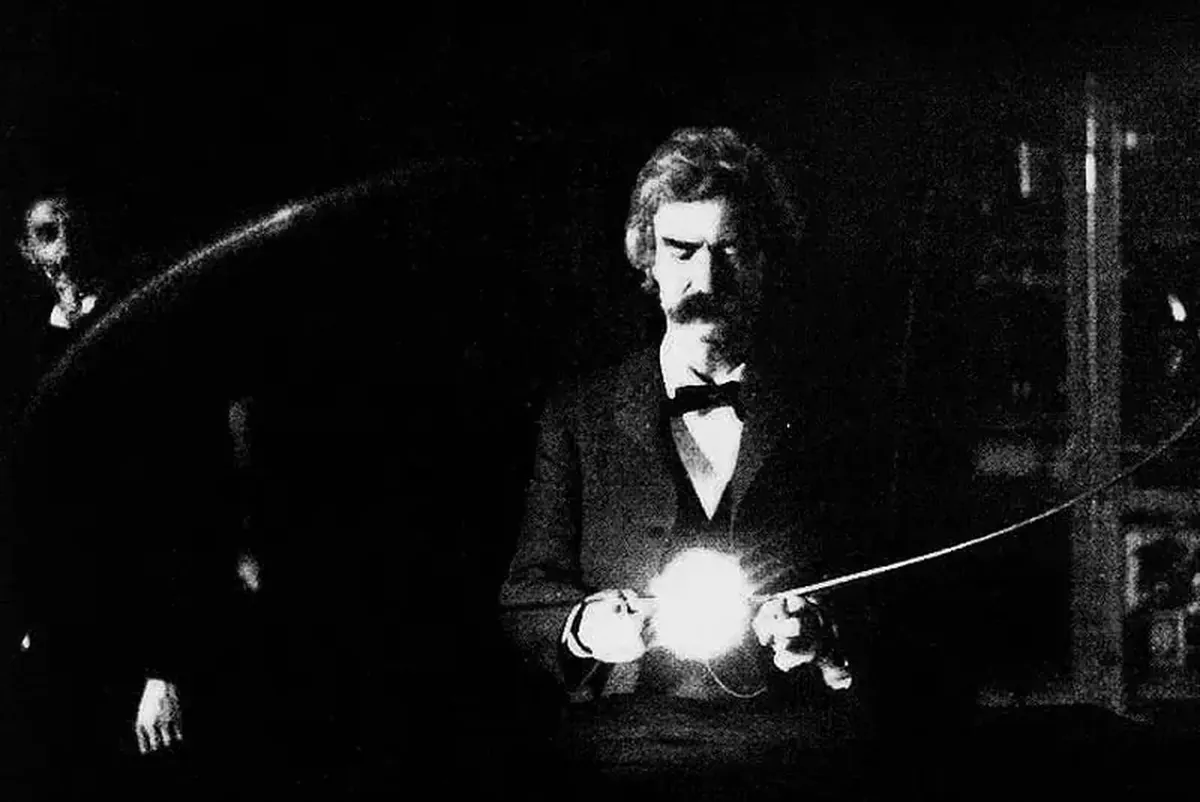
Mark Twain in Tesla’s laboratory, 1894
Energy Without Borders
In 1888 Tesla applied the rotating magnetic field concept to design a high-frequency electrical generator, and three years later he built a transformer to generate high-voltage, high-frequency oscillations. Tesla’s powerful multiphase alternating-current generators helped Westinghouse activate the world’s largest hydroelectric plant at Niagara Falls in 1895.
That same era brought disaster: Tesla’s Fifth Avenue laboratory burned on March 13, 1895, destroying many of his new inventions, including a mechanical oscillator, innovative lighting methods, research notes on electricity, and designs for wireless message transmission.
Tesla was able to rebuild much from memory. By autumn he had resumed experiments in a new Houston Street laboratory, from which he transmitted a radio signal about 30 miles (48 kilometers) in 1896. Three years later he set up a laboratory in Colorado Springs to study the Earth’s electrical potential and began exploring wireless energy transmission over long distances.
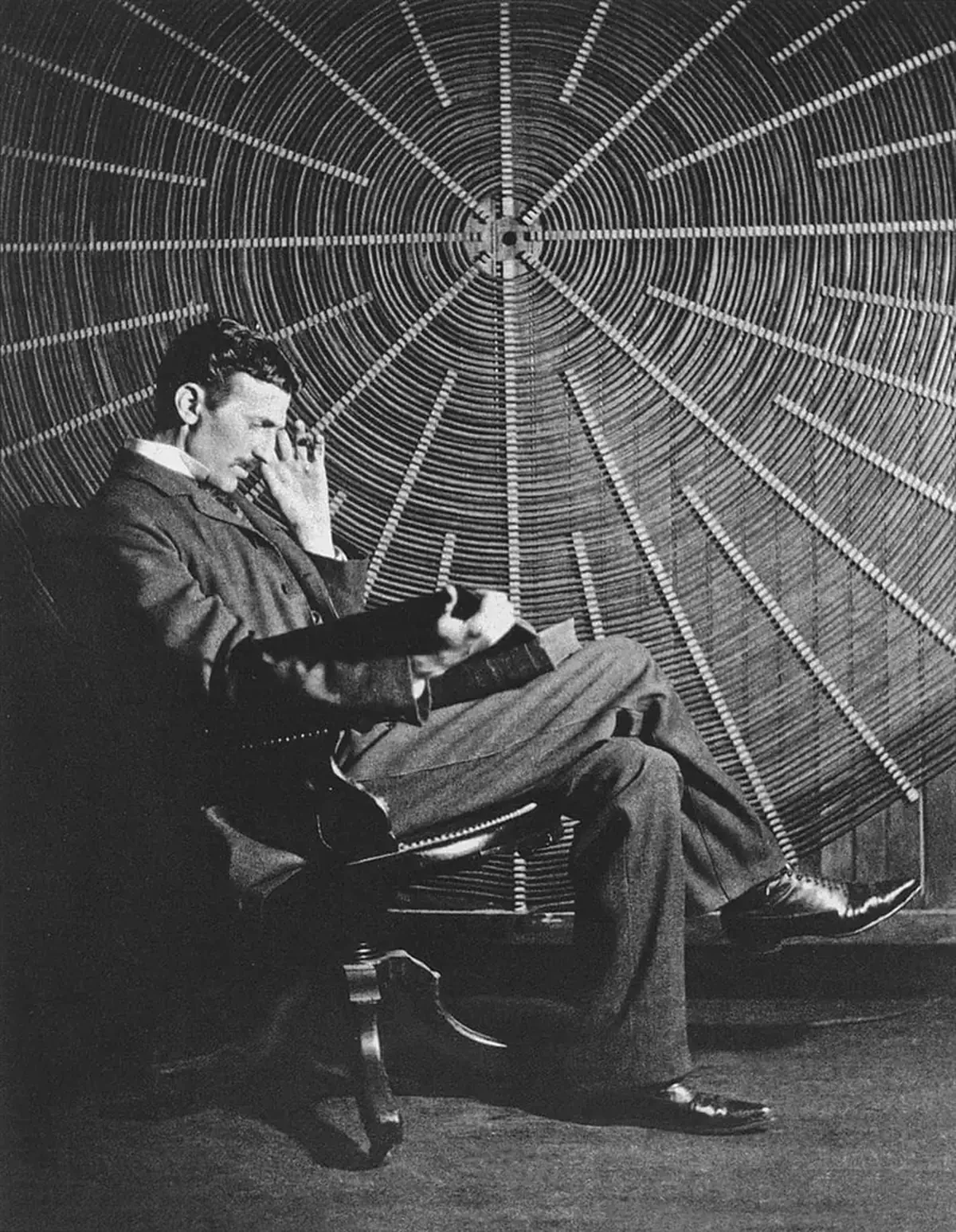
On the Edge of Fantasy
In 1899 he demonstrated gas-discharge lamps and electric motors that operated wirelessly on high-frequency current. He claimed experiments with standing waves showed spherical propagation from the transmitter, intensifying at diametrically opposite points on Earth. He modeled ball lightning, developed methods to create artificial thunderstorms, and even suggested theoretical ways to induce seismic activity remotely.
Some have linked Tesla’s experiments to the Tunguska event, noting that he once asked for maps of the most sparsely populated regions of Siberia. Between 1900 and 1905 he attempted large-scale wireless transmission experiments on Long Island, conducted in secrecy. After financiers learned of his plans to use powerful impulse methods to extract large amounts of energy, John Pierpont Morgan withdrew funding. That cut ended the Wardenclyffe project, and the tower was demolished in 1917 amid wartime security concerns.
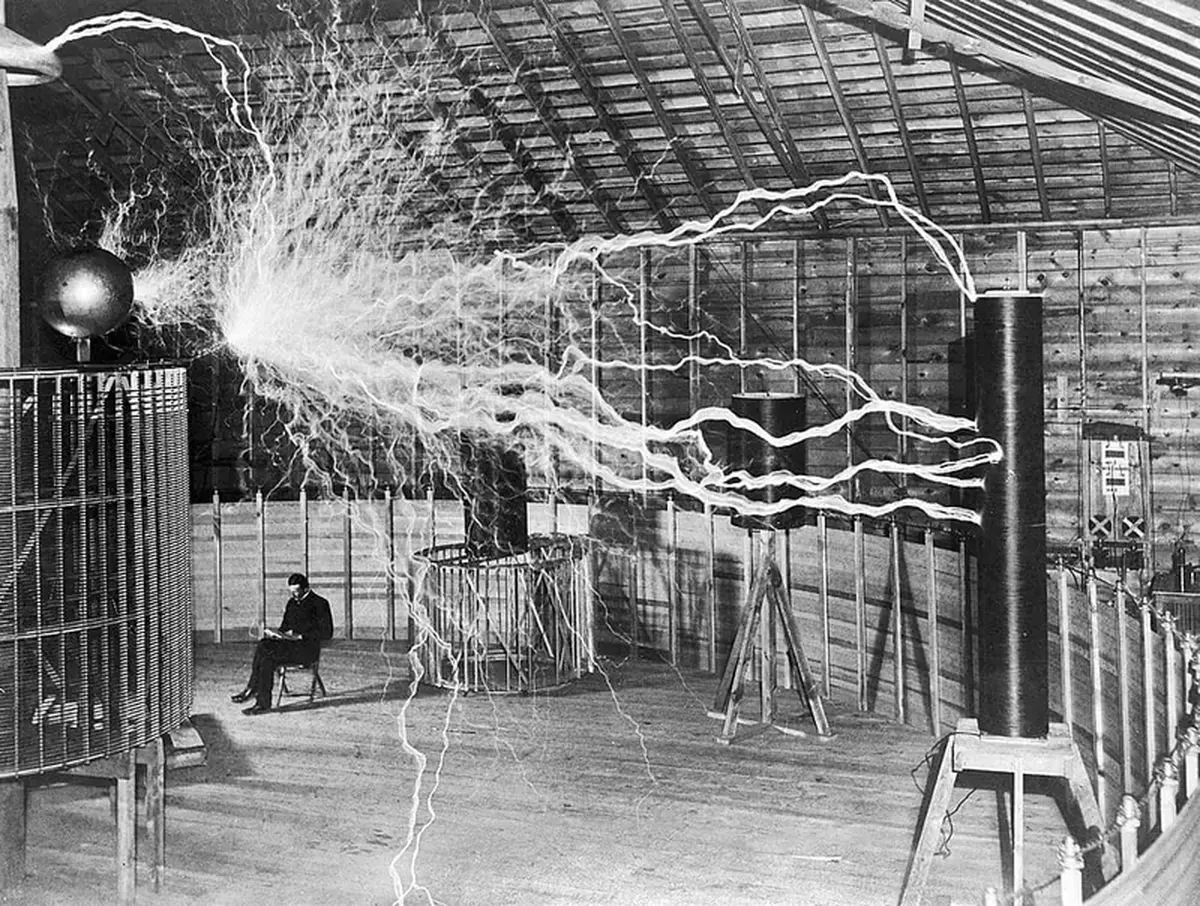
Tesla’s work could be imagined as either destructive or creative. He proposed ways to provide affordable electricity to everyone, but the ambitious Wardenclyffe plan collapsed without funding.
The “Secret Legacy”
In 1937 the elderly scientist was struck by a taxi in New York while crossing the street. He refused medical attention and spent his final years largely confined to hotel rooms in Manhattan. Tesla died at the New Yorker Hotel on the night of January 7–8, 1943, at age 87. Two days earlier his nephew visited him and was the last family member to see him alive. The housekeeper waited three days to enter because of a “Do Not Disturb” sign on the door. In 1957 the urn with his ashes was moved from New York to the Nikola Tesla Museum in Belgrade. A unit of magnetic induction (the tesla) and the car company Tesla are named in his honor.
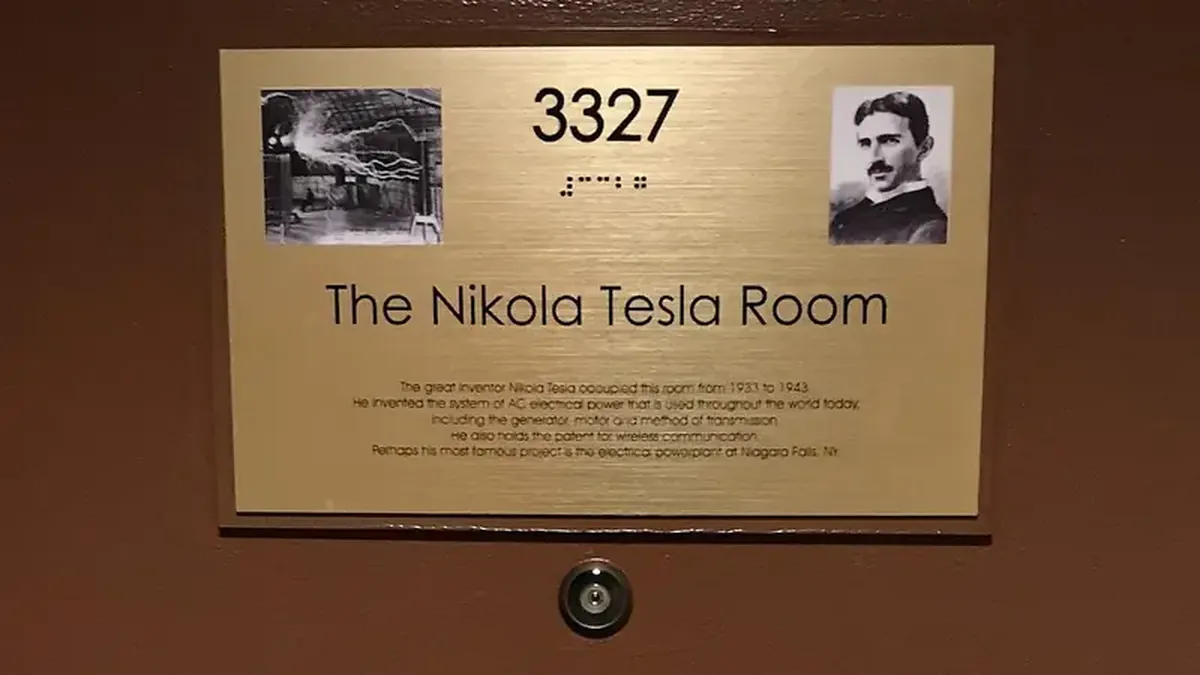
Room 3327 of the New Yorker Hotel, where Tesla died
According to writer Tim Swartz, after Tesla’s death FBI agents seized papers from his hotel room. Swartz alleges the agency feared some of Tesla’s drawings had been taken by German intelligence to build flying saucers, and that other documents were sold to pay the inventor’s debts.
Those sold papers, the author claims, contained descriptions of hostile extraterrestrials trying to control the human brain. Many other dubious speculations surround Tesla’s name: conspiracy theories tie him to weather weapons, secret tectonic devices, “death rays,” and airborne energy transmission. Such stories will likely always cling to the mysterious inventor who saw possibilities others could not.
