
 Carlos Solis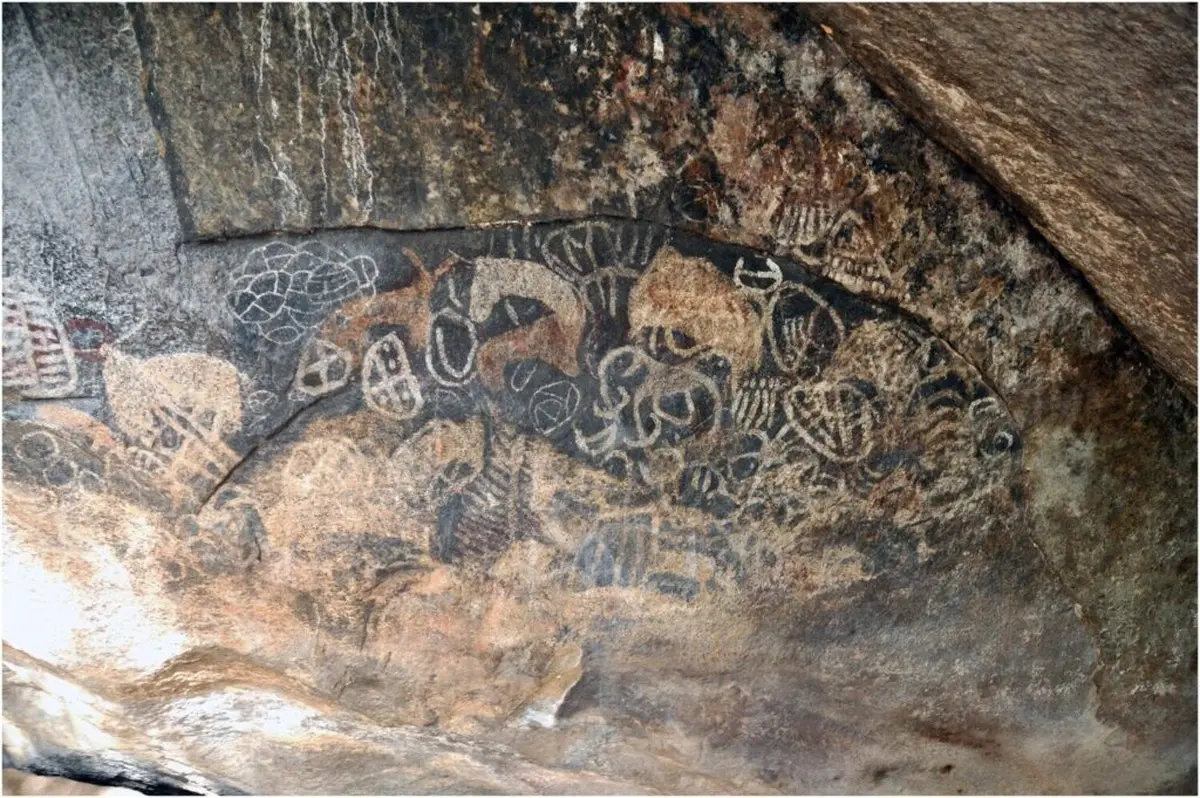
At the rock shelter Kakapel in western Kenya, researchers reconstructed a nearly 9,000‑year‑old visual archive—and, for the first time, linked individual layers of paintings to specific human communities.
A study published in the journal Azania combined high‑precision documentation of rock art, excavations, and analysis of ancient DNA. This allowed researchers to answer a question that had long lacked a clear response: who made these paintings and when did they do it?
Rock art is usually hard to date, and even harder to tie to particular human groups. At Kakapel, researchers had a unique advantage: the layers of paint on the rock could be directly compared with finds from the excavations and with genetic data from human remains recovered at the same site.
The result is one of the clearest chronological frameworks ever created for African rock art.
The oldest artists were hunter-gatherers
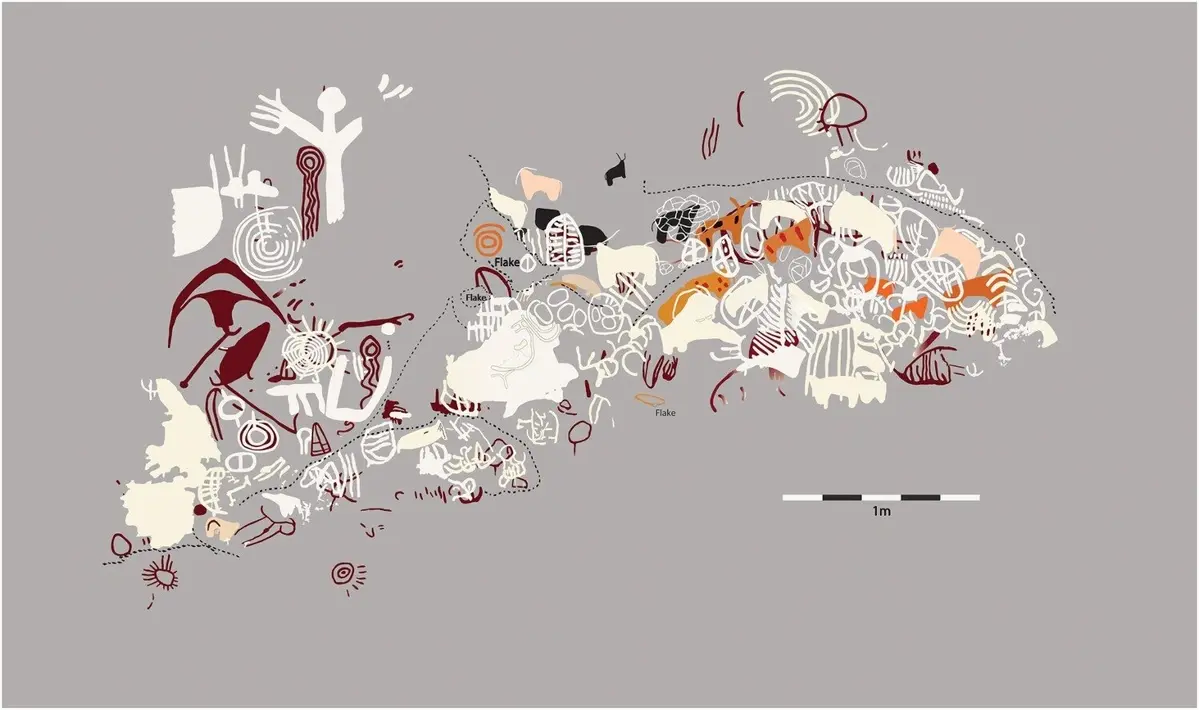
The team produced the first millimeter‑accurate drawing of the main panel, recording hundreds of figures that hadn’t been documented before. Analysis of the superimposed images revealed four separate painting phases—each corresponding to different cultural groups that used the shelter over millennia.
The oldest layer of Kakapel’s images dates to about 9,000 years ago. It consists of geometric motifs—circles, concentric patterns, and abstract symbols—executed in red and white pigments.
Archaeological evidence links these images to hunter‑gatherer communities that lived here roughly between 9,000 and 3,900 years ago. Genetic data back up this assignment: ancient DNA from a skeleton found at Kakapel shows a strong affinity with today’s Mbuti hunter‑gatherers of Central Africa.
So these geometric paintings are not just abstract ornaments; they are part of a long‑standing cultural tradition tied to the identity of Central African hunter‑gatherers.
When farming communities arrived
Thousands of years later, Kakapel’s visual language changed radically. The second layer of paintings includes long‑horned cattle with exaggerated horns and fully painted bodies. These motifs mark the arrival of agricultural communities, likely connected to Nilotic‑speaking groups that appeared in the region during the Iron Age.
Unlike the earlier abstract ornaments, these images reflect a society focused on livestock. The cattle resemble Sanga‑type breeds, which are still found among East Africa’s pastoral peoples.
This transition was not only artistic but economic: it reflects a broader shift in regional lifeways—from gathering and fishing to herding and crop cultivation.
The Kakapel panel wasn’t static—it was visited and repainted by different groups over time. Later layers include simplified geometric motifs painted in denser white pigment; these were likely symbolic markings—possibly connected to identity, ritual, or rights of cattle ownership. The final phase contains thin white linear designs, indicating even more recent additions—possibly made within the last few centuries.
Such layering is rare in archaeology: the same object was used continuously by cultures with different worldviews, each adding its own visual language and creating a cumulative record of cultural change.
Linking art, DNA, and migrations
By aligning the rock‑art layers with archaeological strata and genetic data, researchers were able to associate each painting phase with specific population migrations. Early hunter‑gatherers gave way to agricultural communities, which were then followed by Nilotic‑speaking pastoralists—all of whom left traces both in the soil and on the rock walls.
This integrated approach turns rock art from isolated images into a historical document about migrations, interactions, and cultural transformations.
The Kakapel study is more than a local discovery: it offers a methodological model for future work. By combining high‑precision documentation, excavations, and ancient DNA, researchers showed how to move from simple description to attribution—answering not only what was made, but who made it.
Based on material from Arkeonews
