
 Gaby
Gaby
Chewing gum, sucking on a mint, and a few exaggerated yawns—these tried-and-true tricks for relieving ear pressure are familiar to anyone who’s flown.
Travelers often resort to these methods to shake off the strange sensation that comes with changes in altitude. The good news is that ear pressure is a normal protective response.
“This is how the body naturally equalizes pressure,” says Professor Patricia Gaffney, president of the American Academy of Audiology. (Audiology is the branch of medicine that studies disorders of the auditory system.) Gaffney explained what happens in our ears during a flight.
What the Expert Said
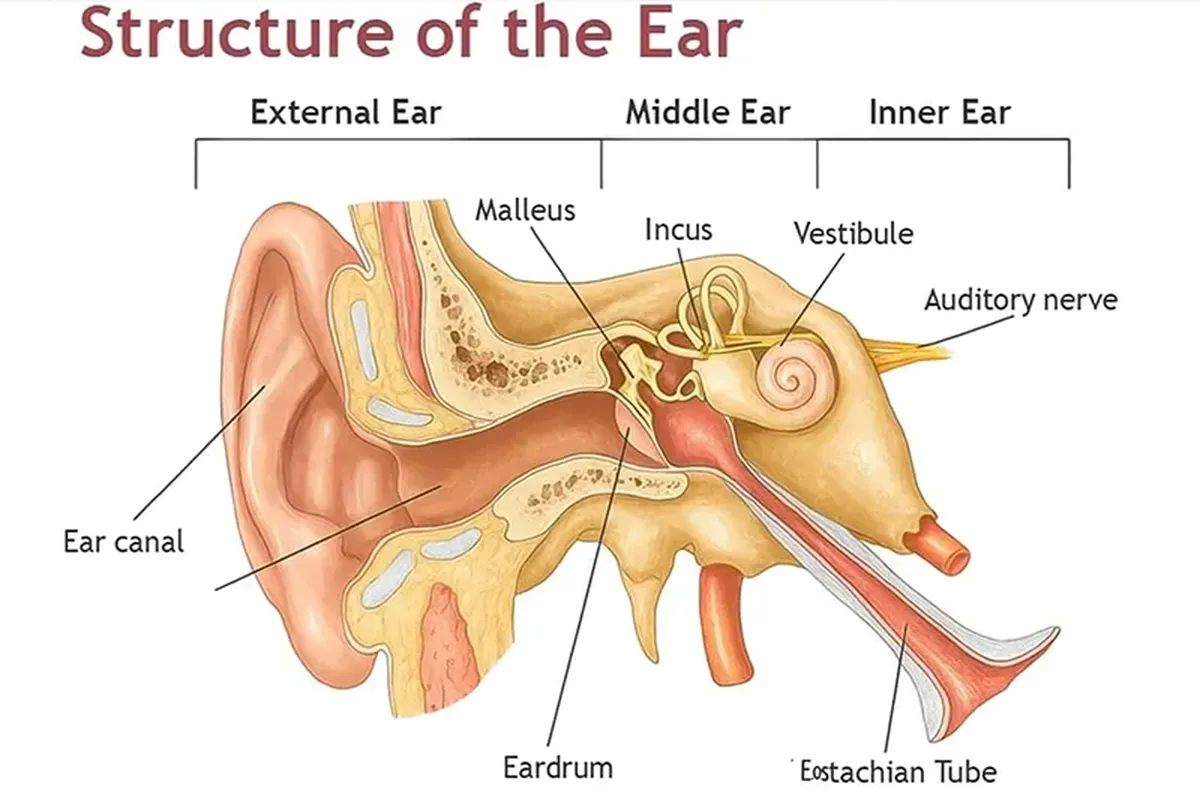
Our ear consists of three parts: the outer ear, the middle ear, and the inner ear. The outer ear includes the visible earlobe and the ear canal. The eardrum separates the outer ear from the air-filled middle ear, which contains three tiny bones and the Eustachian tube (a narrow passage that connects the middle ear to the throat). The inner ear houses the cochlea, the organ of hearing, and the vestibular system, which is responsible for balance.
The sensation of ear fullness comes from the Eustachian tube, according to Popular Science.
“The Eustachian tube’s job is to maintain equal pressure from the outer ear to the middle ear,” Gaffney said. Balancing air pressure between the middle ear and the external environment is crucial for normal hearing. When the pressure in the middle ear is lower than the pressure of the outside air, negative pressure can pull the eardrum inward. That reduces its ability to vibrate and muffles hearing until the pressure equalizes.
In everyday life, swallowing, yawning, or talking briefly opens the Eustachian tube, helping compensate for minor pressure changes. But a sudden change in altitude—during a flight, scuba dive, or mountain climb—can make external air pressure change faster than the pressure inside the middle ear. The Eustachian tube then forces open to equalize pressure, creating the familiar popping sound.
How to Deal with Ear Pressure?
Try the same simple remedies mentioned earlier: a lollipop for kids, or chewing gum for adults.
For little ones on a plane, sucking on a pacifier can help relieve ear pressure—especially during takeoff and landing. Adults can open the Eustachian tube using the Valsalva maneuver. Take a deep breath, close your mouth, pinch your nose, and exhale forcefully (or blow your nose).
Bring special earplugs that help equalize pressure.
When pressure gets too great, the imbalance becomes harder to manage. The lower part of the Eustachian tube, where it usually closes, can become inflamed during a cold or an upper respiratory infection. Inflammation makes it difficult for the tube to open and close. As a result, patients often complain of ear fullness or a lack of the characteristic popping sound.
In severe cases, when the pressure difference becomes extreme and the tube cannot open properly, the eardrum can rupture, Gaffney warned. “This happens very rarely and is usually associated with a cold or upper respiratory infection.” Patients with chronic Eustachian tube problems are often prescribed treatments such as nasal sprays to reduce inflammation.
