
 Carlos Solis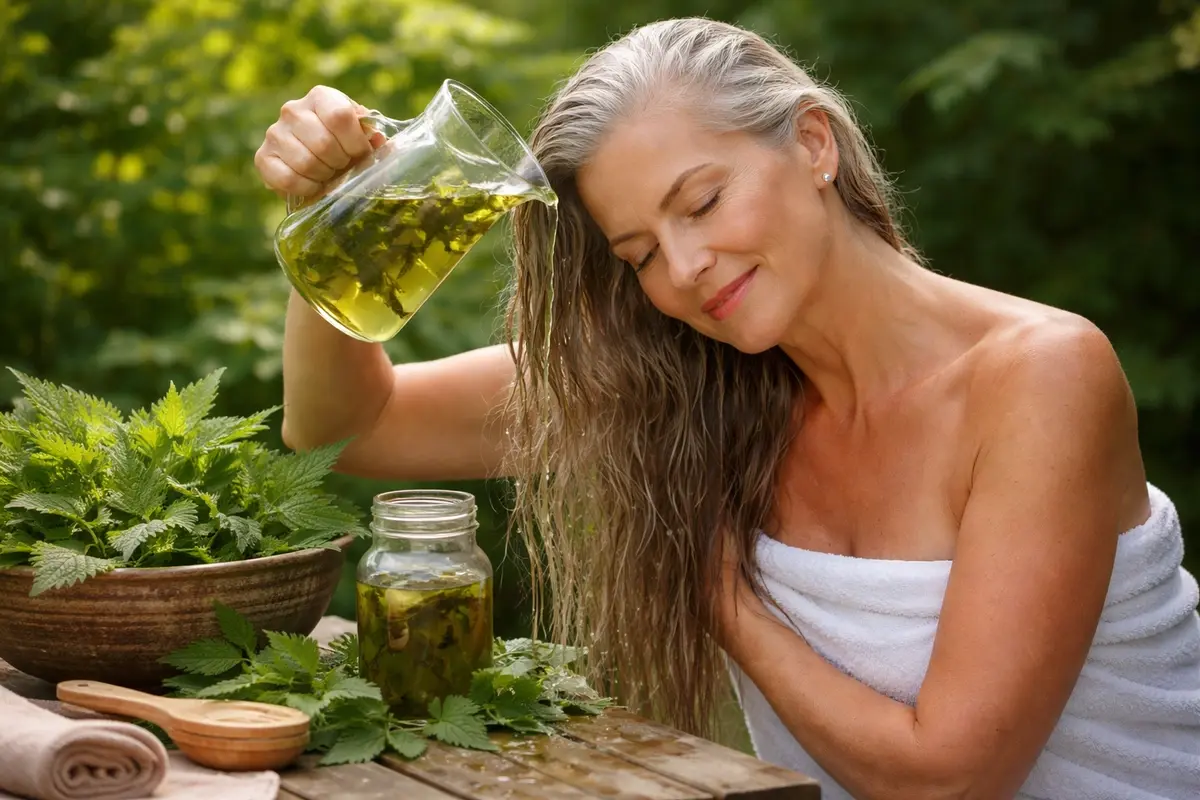
Stinging nettle is a longtime favorite in home hair care. Decoctions, infusions, and masks made from this plant strengthen hair, stimulate growth, and help fight dandruff and shedding. Here’s how to use nettle properly on your hair and which recipes actually work.
Why stinging nettle helps your hair
Stinging nettle nourishes hair follicles and speeds hair renewal and growth by improving scalp health: it restores regenerative processes and boosts microcirculation.
The plant contains vitamins C, A, K and B-complex vitamins; chlorophyll, which helps prevent hair loss; iron, calcium, silicon, manganese, and zinc; plus organic acids such as formic and pantothenic acids that make hair shiny and resilient and help normalize oil gland function. Pectins help remove dead skin cells and reduce dandruff. Essential oils strengthen hair and reduce scalp inflammation.
Vitamin A wakes dormant follicles, heals minor scalp damage, and activates hair growth. Vitamin C, a natural antioxidant, improves blood flow, oxygenates scalp cells, and accelerates hair growth. Vitamin K gives strands natural shine and helps preserve hair color.
Nettle works well for normal and oily hair, stops shedding, eliminates dandruff and itching, balances scalp oil, and moisturizes hair.
Fresh or dried: which nettle is better for hair
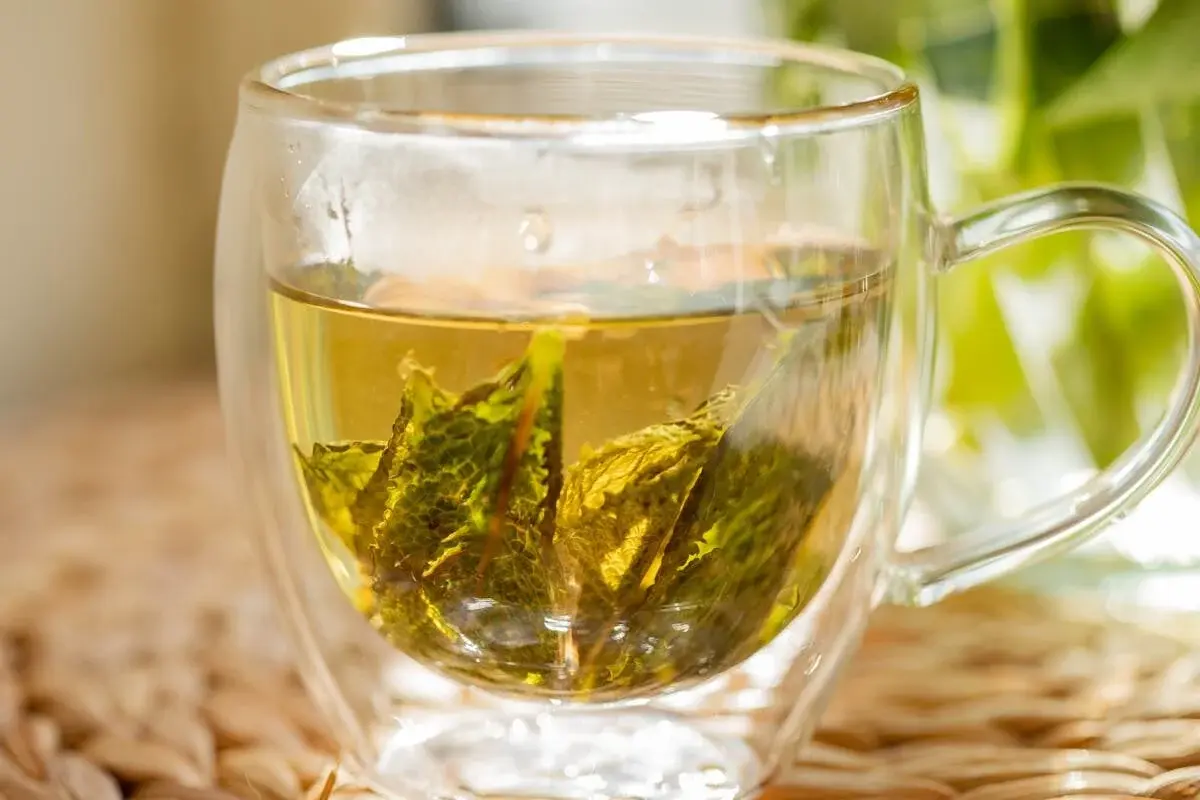
Both fresh and dried nettle work for hair preparations — the results will be similarly beneficial. Harvest fresh nettle in spring and early summer when the leaves are still young and tender. The young spring leaves are also great for cooking. You can buy dried nettle at a pharmacy or dry it yourself and use it year-round.
Handle fresh nettle carefully: harvest and wash it while wearing gloves. After a few hours off the stem, the plant stops stinging, and then you can easily strip the leaves for use. Use any remaining fresh nettle in cooking.
One important point: with regular use, nettle can give light-colored hair a greenish tint. To avoid that, add one tablespoon of fresh lemon juice or one tablespoon of chamomile decoction to any prepared mixture.
Nettle decoction for strength and shine
This is the simplest and most versatile remedy — it suits every hair type.
Recipe: Put 200 g of chopped nettle leaves into 1/2 liter of vinegar and 1/2 liter of water, simmer for half an hour, cool, and strain. Use the strained liquid to rinse your hair after washing.
For an easier version: pour 1 tablespoon of crushed dried nettle leaves into 2 cups of boiling water, cover, and steep for 30 minutes, then strain. Pour the infusion over freshly washed hair and do not rinse it out. Your hair will gain shine and silkiness.
Use the decoction 2–3 times a week for a course of 30–40 days.

Nettle infusion to reduce hair loss
If hair loss is heavy, first rule out external causes like poor care before trying folk remedies. Regular nettle rinses are one of the most effective ways to curb shedding. To see results, use nettle for several months. This is especially helpful when stress is a major factor: nettle supports the follicles while the body recovers.
Recipe: Pour 1 tablespoon of nettle leaves into 1 liter of boiling water, let the mix steep for an hour, and strain. Rub the infusion into your scalp after washing, or use it to rinse your hair after every wash. Do not rinse it out — just blot dry with a towel.
If you use fresh nettle: wash the leaves, place them in a small pot, pour 200–250 ml of boiling water over them, and put the pot in a double boiler for 15 minutes. Remove from heat, cover, and leave for 45 minutes. Strain and dilute the resulting infusion with one liter of water before use.
Nettle for dandruff: an herbal recipe
For treating dandruff, combine nettle with other medicinal herbs for a stronger effect.
Recipe: Take equal parts nettle leaves, coltsfoot herb, and burdock root so the total weight is 100 g. Pour 1 liter of boiling water over the mixture, simmer for 10 minutes, let it steep for an hour, cool, strain, and use this decoction to wash your scalp.
A therapeutic effect usually appears after two weeks of regular use: dandruff disappears and hair becomes stronger.
For oily hair, make an alcohol tincture and rub it into the scalp. Wash fresh leaves thoroughly, chop them, cover with vodka or 45% ethanol, place in a closed glass container, and let steep for 10 days.
Nettle hair mask for deep nourishment
Nettle masks give the most noticeable results, especially for weakened and dry hair. Nettle tends to show its strongest strengthening effects when used in masks.
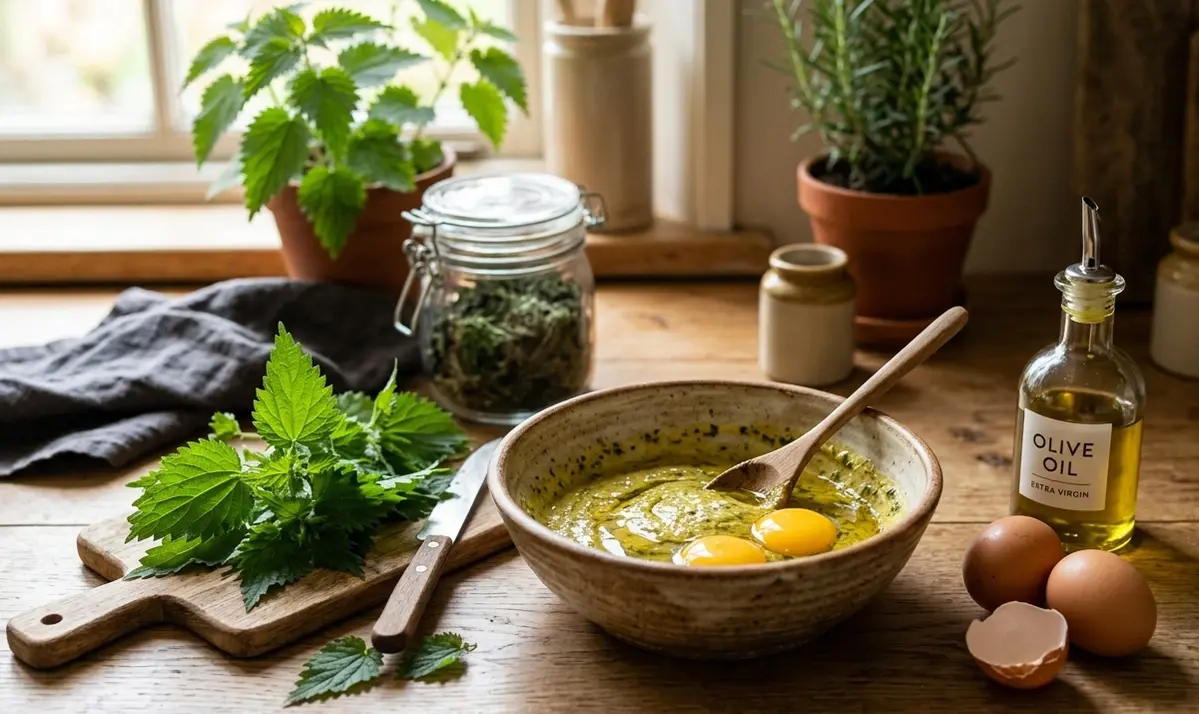
Nourishing mask recipe: Blend 2 tablespoons of fresh nettle leaves into a puree. Mix the puree with 1 tablespoon of olive oil and 1 tablespoon of egg yolk. Apply the mask to clean, damp hair for 15–20 minutes, then rinse with warm water.
Chamomile mask recipe: Use equal parts chopped nettle leaves and chamomile flowers (about 2–3 tablespoons each), and mix with an egg white. Apply to hair for 5–7 minutes and then rinse.
Use masks at least 1–2 times a week. Test for an allergic reaction before applying nettle to your scalp or hair.
Warnings and rules for use
Keep in mind that if the problem is systemic, folk remedies will not fix it, because hair condition reflects overall body health. Herbal therapy does not give instant results. To notice an effect from nettle, use it for several months — be patient.
Remember that nettle can make dry, damaged strands even drier. In that case, always pair nettle rinses with nourishing masks.
As mentioned above, regular use of nettle can give light hair a greenish tint — add lemon juice or chamomile decoction to neutralize that effect.
Harvest nettle in clean environments — away from roads, factories, and other pollution sources — because the plant absorbs what’s in the soil and air. Store dried nettle in cotton bags in a warm place.
