
 Carlos Solis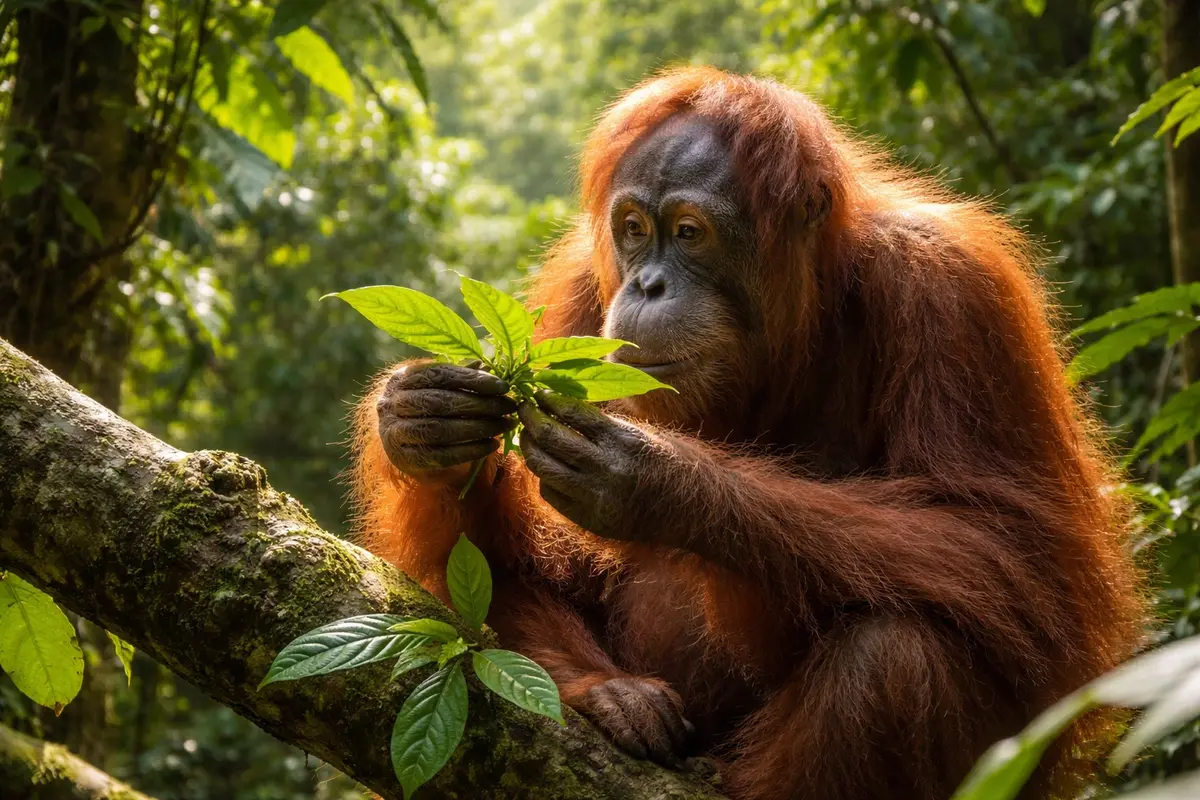
Orangutans don’t just chew the first leaf they find. After a 20-year field study in the Sebangau peat swamp in Central Kalimantan province, researchers concluded that the apes consistently select with medicinal properties.
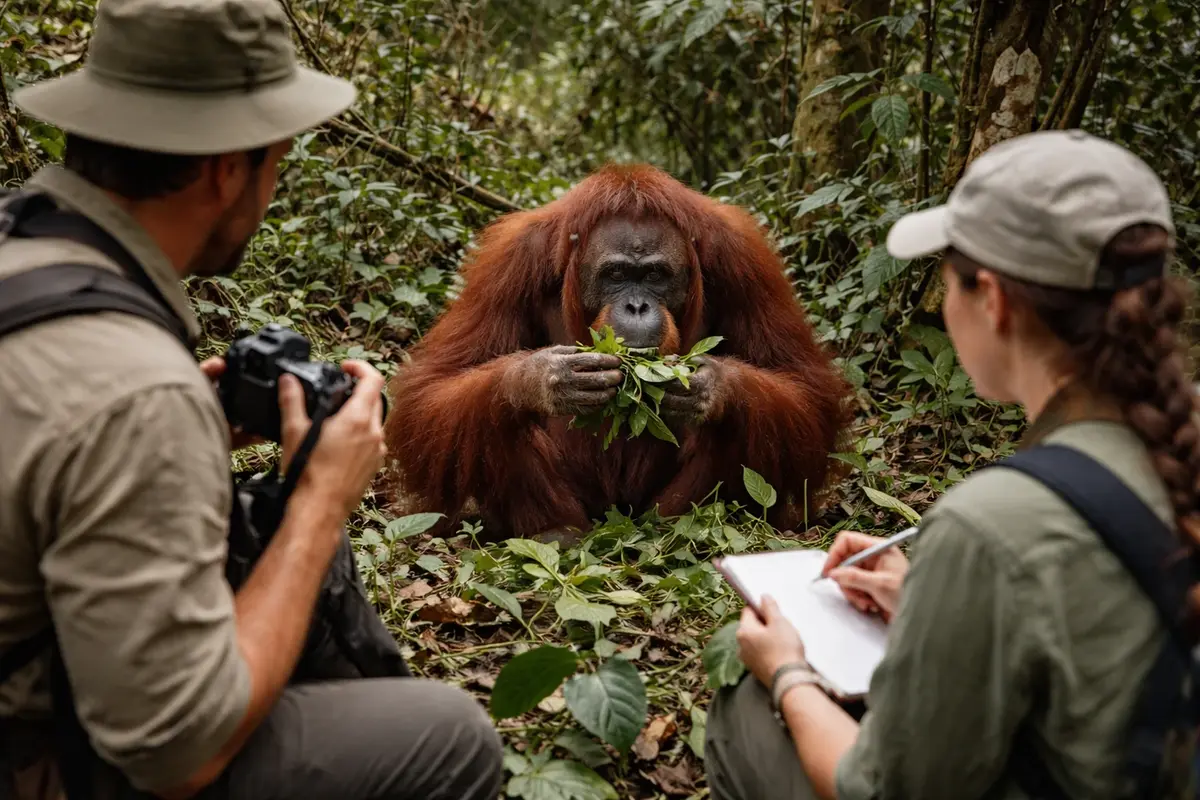
The team analyzed long-term observations of the animals’ feeding behavior to identify nonrandom patterns of plant use. They compared how often the orangutans ate species known for therapeutic qualities with how frequently those species appear in the apes’ overall diet.
Certain plants showed up in feeding sequences far more often than chance would predict. That pattern was strongest for species that contain compounds with antimicrobial, anti-inflammatory, or wound-healing effects.
Instinct, Learning, or Tradition?
Researchers can’t claim that orangutans diagnose themselves the way humans do, but the feeding patterns point to selective use of medicinal plants that goes beyond basic nutrition.
Many of the identified species do not serve as staple foods for the apes. That fact suggests the animals consume those plants for specific therapeutic effects rather than for daily calories.
The origin of this behavior remains unclear. The team cannot yet determine whether orangutans pick up these feeding sequences instinctively or learn them and pass them down through social memory.
Similar self-medicative behavior appears in other primate species. For example, chimpanzees eat certain plants that reduce internal parasite loads, and comparable actions have been observed in bonobos, gibbons, and gorillas.
Some of the plants the team identified overlap with species that local indigenous communities use in traditional medicine.
Based on BBC Science Focus
