
 Carlos Solis
Once, launching a satellite required a massive program and a huge budget. Satellites used to be van- or bus-sized; national space agencies and aerospace giants built them and sent them into space for enormous sums. Those large spacecraft could operate for years, relay phone calls, monitor weather, map the planet, or conduct reconnaissance. That world still exists, but it no longer stands alone—nanosatellites have joined the scene.
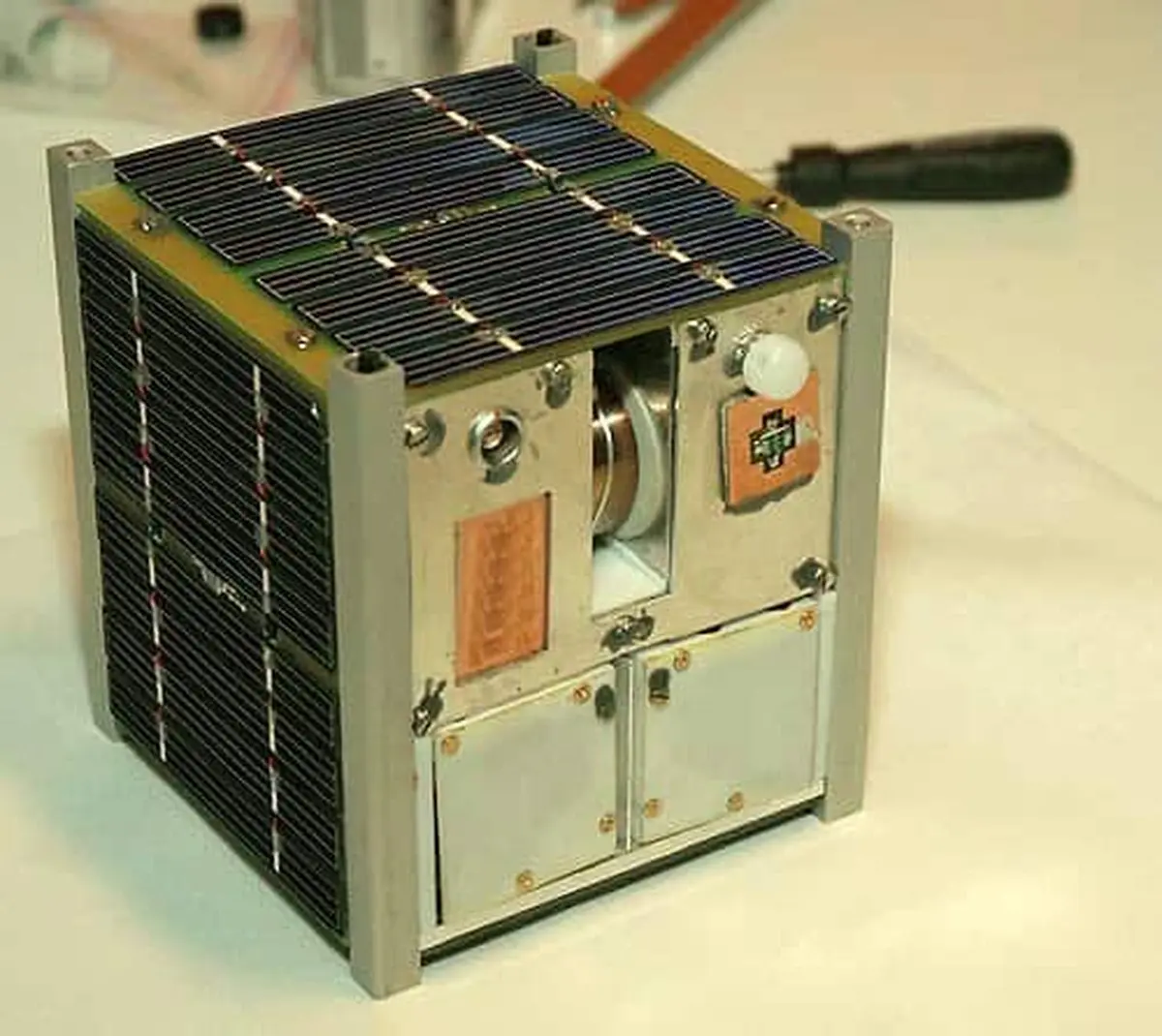
The name “nanosatellite” can be misleading: these spacecraft are not “nano” in the literal sense. They typically measure about 10 cm × 10 cm × 10 cm and weigh no more than a kilogram. Engineers pack sensors, solar panels, radios, batteries, processors, and software into that compact chassis to perform a single, focused task.
Some nanosatellites observe Earth, and others test new technologies. Many serve as hands-on student projects, and a few have even traveled beyond Earth orbit.
Space Has Become More Accessible
The Nanosats Database shows that by January 1, 2026, launches had placed 3,209 nanosatellites into space. Nearly 3,000 of those are CubeSat-format modules. Some of those launches began as simple student efforts: radio beacons, tech demonstrations, experiments, and missions designed to test ideas in orbit.
That approach worked. CubeSats turned space engineering into a practical, hands-on discipline for universities: students could design, build, test, launch, and operate a spacecraft themselves. Young engineers got to see a mission move from concept to orbit.
Miniaturization of Components
Progress in electronics and materials kept moving forward. Cameras, radios, batteries, processors, solar panels, attitude-control systems, and miniature thrusters became smaller and more powerful. The same advances that shrank phones and cameras made it possible to pack serious computing power into a chassis that weighs only a few kilograms.
Where a small satellite once could only send a basic signal from orbit, they can now monitor crops, track coastlines, test new communications channels, study space weather, or demonstrate propulsion systems.
Launches Have Gotten Cheaper
Technology explains part of the shift, but launch economics changed too. Previously, launching a satellite meant building an expensive dedicated rocket and finding a rare launch slot. CubeSats changed that dynamic because operators can ride as secondary payloads alongside larger spacecraft. The rise of reusable rockets made vehicle recovery routine and pushed launch prices down further.
Those economic changes triggered a wave of experiments: startups and research teams that once struggled to reach space suddenly gained opportunities to test hardware and ideas on orbit.
Nanosatellites lowered the barrier to entry. They let small countries train engineers, test instruments, join international projects, and assert their interests in the orbital economy. Data show that 94 countries now have nanosatellites in space, but most of the spacecraft still belong to the United States.
The satellites themselves have grown more capable. The original single unit, 1U, is a 10 cm cube. Modern designs often combine multiple units—3U, 6U, 12U, and larger. Those larger modules can carry more power, better antennas, stronger instruments, and propulsion, so they can do far more than just beam a signal from low orbit.
Orbital Clutter Is a Serious Challenge
Along with new capabilities comes a new problem. We increasingly treat Earth’s orbit as an endless resource, and that assumption is dangerous. Most nanosatellites are designed for lifetimes of five years or less. Some re-enter and burn up within weeks or months; others can stay in orbit for years before gravity and atmospheric drag bring them back to Earth.
The space debris problem predates the nanosatellite boom, but the boom has made that problem more urgent. Even tiny objects occupy real space; when their numbers climb, collision risk increases and orbital operations become more complex. We need solutions that ensure satellites do not become long-term pollutants after they fail or after missions end.
A Big Future for Small Spacecraft
CubeSats will not replace large satellites. They cannot carry the same instruments, power sources, or shielding. Powerful telescopes, weather platforms, and interplanetary probes will continue to perform tasks that small modules cannot achieve.
The value lies elsewhere. Nanosatellites have made space more accessible: space stopped being only a grand ambition and became a hands-on workshop and testing ground. They opened a different kind of race—one focused on trying unconventional and risky ideas. At the same time, they have formed swarms that complicate orbital use.
The next challenge is not just to launch more modules but to learn to launch them smarter. Nanosatellites have shown that space can be for more than the biggest players. Now it is time to prove that wider access and responsibility can go together.
Based on reporting from ZME Science
Photo: NASA
