
 Gaby
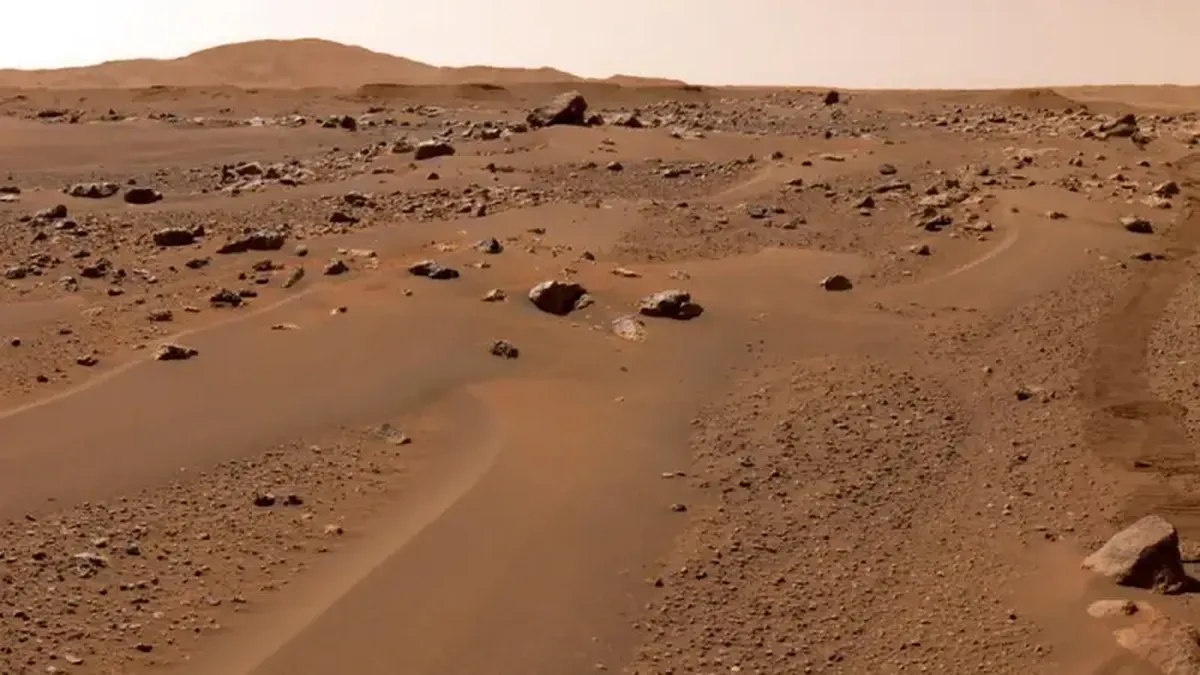
GabyA new study shows that toxic dust on Mars could make future missions to the Red Planet dangerous. Specifically, the silicon, gypsum, perchlorates, and nanophase iron oxides in Martian dust pose health risks to astronauts.
Those conclusions come from a team of researchers at the Keck School of Medicine at the University of Southern California (USC) and several other U.S. institutions. The study was led by Dr. Justin Van.
What did the scientists find?
“The greatest danger is the risk to the lungs. Since the dust is extremely fine, it is expected to remain in the astronauts’ lungs, and some of it will enter the bloodstream,” said Dr. Justin Van.
“Astronauts are already at risk of pulmonary fibrosis due to radiation exposure during spaceflight; many other hazardous factors, such as silicon and iron oxides, can also cause lung diseases,” he added.
The lead researcher emphasized that perchlorates — chemical compounds found at toxic concentrations in Martian soil — can cause thyroid dysfunction and aplastic anemia, a condition in which the body stops producing enough blood cells.
Because of long return times from Mars to Earth and delays in communication with Earth, researchers say it’s crucial to counter these effects with dust filtration, cabin cleaning, and electrostatic dust-repelling devices.
Despite the risks, Dr. Van remains optimistic: he believes that toxic dust will not make missions to Mars impossible.
“Although the dust on Mars is not the most dangerous part of the mission to the Red Planet, it certainly poses a risk to astronauts, but it can be easily avoided if we are properly prepared for it,” said Dr. Van.
Meanwhile, Brian Hynek, a co-author of the study and a professor of geological sciences at the University of Boulder, emphasized the broader effects of Martian dust.
“It constantly falls from the sky and covers everything. Every few years, storms occur that engulf the entire planet, covering it with a thick layer,” he said. He told CNN that spacecraft, vehicles, solar panels, and other equipment “require constant attention to continue functioning.”
Our rovers have already encountered situations where scientific instruments or entire missions were lost because solar panels became too dusty to charge the batteries. “Such secondary factors will also affect people,” he noted.
What do other scientists think about this?
Julia Cartwright, a research associate at the University of Leicester (United Kingdom), says that combating dust is a major challenge for space exploration.
“As the authors emphasized, dust penetrates everywhere and behaves differently than dust on Earth, where particles tend to follow their own transport paths, are rounder, and wear down over time,” the expert said.
“On the Moon and Mars, particles are very sharp and jagged; they don’t wear down in the same way. That’s a problem if they’re in the air you breathe—sharp particles are more likely to cause lung problems,” Julia Cartwright said.
She compared the risk to asbestos — a fibrous mineral once used in building materials that was later linked to lung cancer, mesothelioma, and respiratory failure. She also pointed to problems with using filters to remove toxic elements and compounds such as chromium, arsenic, and cadmium from the air.
“Even if you can filter them out, you still need a plan for replacing all the filters that you have to breathe through, and you’ll need many such filters on board the spacecraft,” Cartwright said.
Jonathan Eastwood, a professor of space physics at Imperial College London, agreed that complex solutions will be needed to meet the dangers posed by Martian dust. He said the distance from Earth to Mars is so great that a quick evacuation is impossible, so “a full range of medical services is necessary.”
The results were published in the journal GeoHealth.
