
 Gaby
Gaby
Known as the “Chief of French Romanticism,” Victor Hugo left his mark as a brilliant writer, passionate lover, and controversial politician. For nearly 20 years, this champion of social justice lived in exile. He saw his contribution to his contemporaries’ ideological landscape as restoring human rights for “the lackey, the convict, the jester, and the prostitute.”
Hugo’s democratic ideals did not go unnoticed amid Europe’s revolutions. France hailed him as a national hero in his lifetime; he was the only person in Paris to spend his old age living on a street that bore his own name.
The Birth of a Reformer
The future novelist, poet, playwright, academic, and politician was born on February 26, 1802, in the French city of Besançon. Because his father served as a general in Napoleon’s army, Hugo spent much of his childhood away from home. From birth the youngest of three sons traveled with his family: his first three years were in Marseille, Corsica, and Elba; from age five the family lived in Italy; and from nine they lived in Madrid. Those constant moves left vivid impressions on the boy and helped shape his romantic view of the world.

The house where Victor Hugo was born
Hugo’s mother had an affair with General Lahorie, which led the daughter of a Nantes shipowner to leave her husband. After his parents’ divorce, the 14-year-old student at the Lycée Louis-le-Grand moved to Paris to live with his mother, to whom he dedicated his first unpublished works—tragedies like “Yrtatine,” “Athelie ou les Scandinaves,” the drama “Louis de Castro,” and translations of Virgil. He also dedicated several early works to his father during his lifetime. From a young age Hugo wrote odes and poems that won awards. For his first poetry collection, “Odes and Various Poems,” the 20-year-old poet received a royal pension from King Louis XVIII.
Hugo was destined to reform French verse: his lines flowed more naturally than those of his predecessors. His literary and social views were shaped by his mother, who was an atheist, a free thinker, and a royalist with Voltairean leanings. His early publications, including the satires “Telegraph” and “Ode to the Death of the Duke of Berry,” initially cast him as a monarchist. His 1827 play “Cromwell” sparked heated debate by laying the foundations for romantic drama and rejecting the classical rules of unity of place and time.

Victor Hugo in his youth
Attention to Slavery
Hugo wrote his first book at 16—and it was not about love but about struggle. In just two weeks, winning a bet, the young man wrote an account of a rebellion by enslaved Africans on the island of Haiti. Later he devoted much of his work to calls for brotherhood and compassion, focusing on the struggles of ordinary people. “In my works, I have always defended the unfortunate and the poor, pleading with the powerful and relentless,” Hugo wrote. He was among the first major writers to empathize with those at the bottom rungs of society, becoming a defender of the downtrodden and the despised. Born in an era of imperial glory, he also witnessed uprisings in the name of liberation. His popularity rested not only on his literary achievements but on his advocacy for democratic values and his fight for the republic. As a leader of republicanism, he played a significant political role and suffered for his beliefs.
Hugo lived out the truth of his aphorism: “If you have no enemies, you have never stood up for anything.” His play “Hernani” set off clashes between defenders of old and new art. His plays “Marion Delorme” and “The King Amuses Himself” were banned after their premieres (the latter was only revived at the Comédie-Française half a century later). Hugo called the government’s ban in a letter to Le National “an unheard-of act of tyranny.”
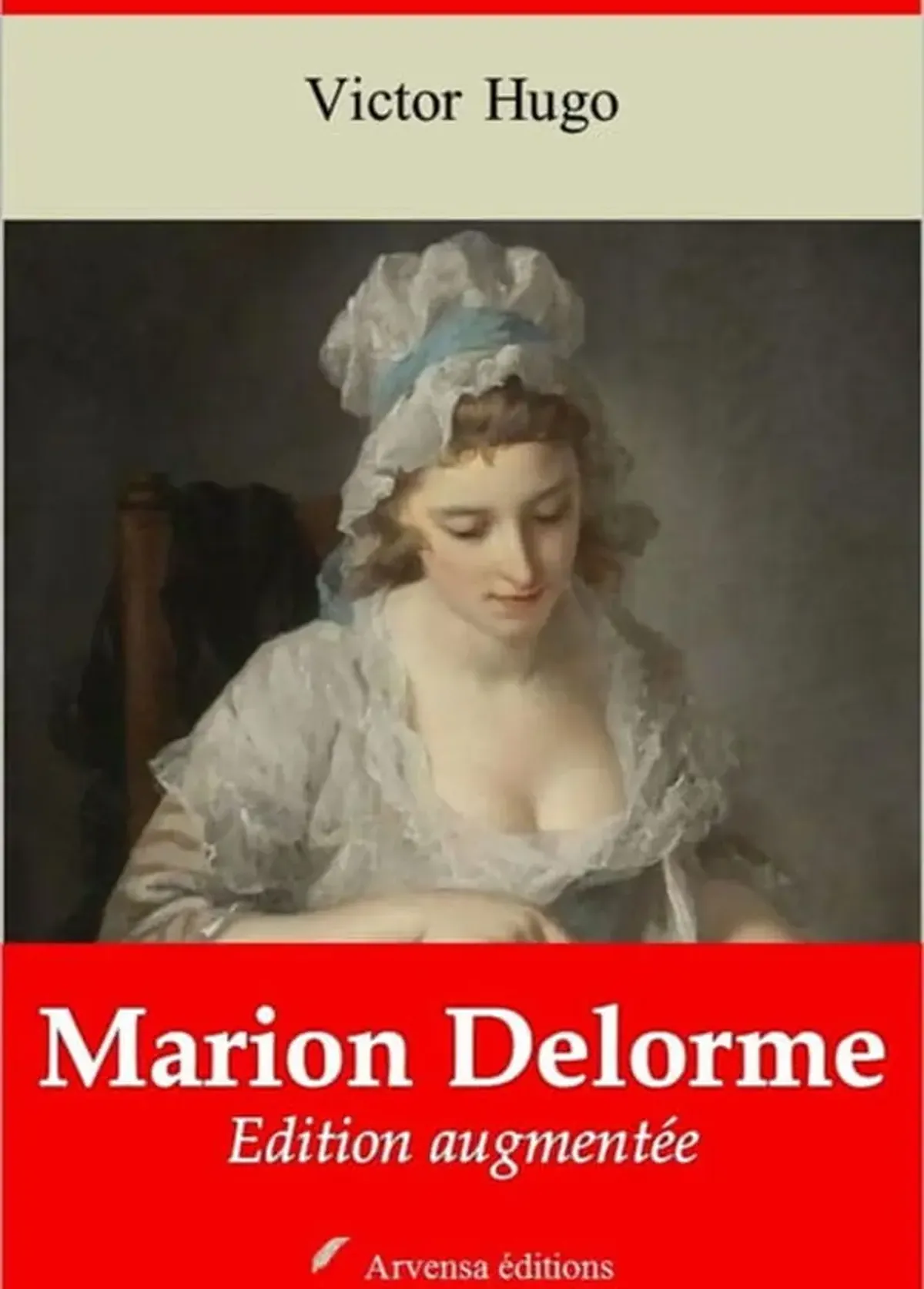
In Hugo’s dramas, the central conflict usually pits a titled despot against an oppressed commoner. In “Hernani,” that conflict appears in the clash between the exile Hernani and the Spanish king Don Carlos. In “Marion Delorme,” it plays out between the unknown youth Didier and the powerful minister Richelieu. In “The King Amuses Himself,” the antagonists are the powerful, carefree King Francis and the fate-wracked hunchback jester Triboulet. “Misfortunes make a man human, while prosperity creates monsters,” the writer observed.
Life Is Struggle
Around the turn of the 1820s and 1830s, Hugo published the novellas “The Last Day of a Condemned Man” and “Claude Gueux,” both protests against public executions. These early mature works revealed his acute social conscience and foreshadowed the epic novel “Les Misérables.” “Notre-Dame de Paris” became a landmark historical novel in French. The story, with the hunchback Quasimodo and the beautiful beggar Esmeralda, drew attention to the lives of people often overlooked and to the grandeur of the past.
Although caricaturists mocked him with the slogan “The ugly is beautiful,” Hugo achieved a lasting cultural impact. His initial purpose in writing “Notre-Dame” was to save Paris’s great Gothic cathedral, which city authorities were planning to demolish or “modernize.” After Hugo popularized the issue, a preservation movement arose in France and across Europe to protect historic buildings and architectural monuments. “We are the children of our actions,” Hugo said. “Our deeds can plunge us into the abyss or lift us to the heavens.”

Victor Hugo (1835)
In 1841 Hugo was elected to the French Academy, and four years later he became a peer. After the February Revolution of 1848, he was elected to the Constituent Assembly. Hugo, who founded the anti-radical newspaper L’Événement, demanded universal suffrage, opposed national workshops, defended freedom of the press, and advocated for copyright. In 1851 he fought on the barricades; after the defeat he fled to Belgium and from there went into exile on the Channel Islands. In exile he opposed Napoleon III and helped raise funds for Garibaldi. After returning to France in 1870, Hugo was elected to the National Assembly but resigned in protest against the peace treaty with Prussia. In 1876 he was elected senator. People sent letters to him at the famously short address: “To Victor Hugo on his avenue.”
Under Church Ban
Until 1959 the Roman Catholic Church listed Victor Hugo on the Index Librorum Prohibitorum alongside the likes of Galileo Galilei, Nicolaus Copernicus, and Giordano Bruno. In 1834, because of Hugo’s anti-religious sentiments and a plotline about the priest Frollo—who breaks his vow of celibacy over a seductive beggar—the Catholic Church put “The Hunchback of Notre-Dame” on the Index of Forbidden Books. Those caught reading, publishing, or distributing the book risked excommunication. Church censors were outraged by lines about “the cries of a prophet who hears the roar of humanity breaking free and foresees the time when reason will shake faith, free thought will dethrone religion, and the world will shake off the yoke of Rome.”

“Les Misérables” ended up on the censorship list in 1864. Hugo, a republican who had taken part in the 1848 revolution, defined monarchy as the opposite of freedom. The Church argued that his hostility to absolute power targeted both king and pope, even calling “Les Misérables” the work of Satan. Clergy were especially incensed by Hugo’s description of monastic life as “a drought for civilization.” He compared monastic vows to castration and called monastic imprisonment “the burial of souls alive,” speaking of “the imprisonment of minds” and “the vow of silence” imposed on dissenters.
In a sign of change, the Second Vatican Council abolished the Index and moved the Church toward engaging with modern realities instead of clinging to outdated dogmas. Hugo forced the Church to confront the idea that atheism “often contains a protest against the prevailing evil in the world.” He envisioned a Europe transformed: “By creating the United States of Europe, we will transform the spirit of conquest into the spirit of discovery. In place of the fierce brotherhood of emperors will come the noble brotherhood of peoples. The future belongs to a homeland without borders, a budget without parasitism, trade without customs, education without intoxication, youth without barracks, justice without the scaffold, the plow without the sword, word without a gag, God without a priest.”

Victor Hugo with political figures of France
C’est la vie
Hugo’s personal life was anything but simple. After his wife Adèle Foucher had a five-year affair in 1832 with Hugo’s friend, the literary critic Charles-Augustin Sainte-Beuve, Hugo began a long relationship with the actress Juliette Drouet. Eventually Hugo, his wife, and his mistress all lived on Guernsey, where Adèle and Juliette became close friends.

Victor Hugo and Adèle Foucher
Hugo and Adèle had five children, four of whom he outlived. His son Léopold died in childhood. His 19-year-old daughter Léopoldine drowned with her husband during a river outing. His son Charles died of a stroke at 44, and his son and writer François-Victor died of tuberculosis at 45. His youngest daughter, Adèle, suffered a tragic fate: a talented pianist, she descended into madness after an unrequited love for an English officer and spent her final years in an asylum. After the death of an 85-year-old patient, doctors found a stack of undelivered letters from her to Lieutenant Albert. Director François Truffaut adapted her story into the film “The Story of Adèle H.” Psychiatrists later referred to the condition as “Adèle’s syndrome.”
Few people know that Hugo was also a prolific artist and illustrator who embellished his writings with satirical caricatures and gloomy landscapes. He made nearly 4,000 drawings of fantastic fortresses, turbulent seas, and more. His artistic gift continued in his family through his grandson Georges, great-grandson Jean, and great-great-granddaughter Marie.

The funeral of Victor Hugo
Victor Hugo died on May 22, 1885, at the age of 83. He had refused an elaborate funeral, left 50,000 francs to the poor, and asked to be taken to the cemetery in a pauper’s hearse. Authorities could not honor that wish: nearly a million people wanted to pay their respects, and the funeral stretched over ten days. For one day his coffin stood under the Arc de Triomphe, draped in mourning colors. After a national farewell, his remains were laid to rest in the Panthéon.
