
 Carlos Solis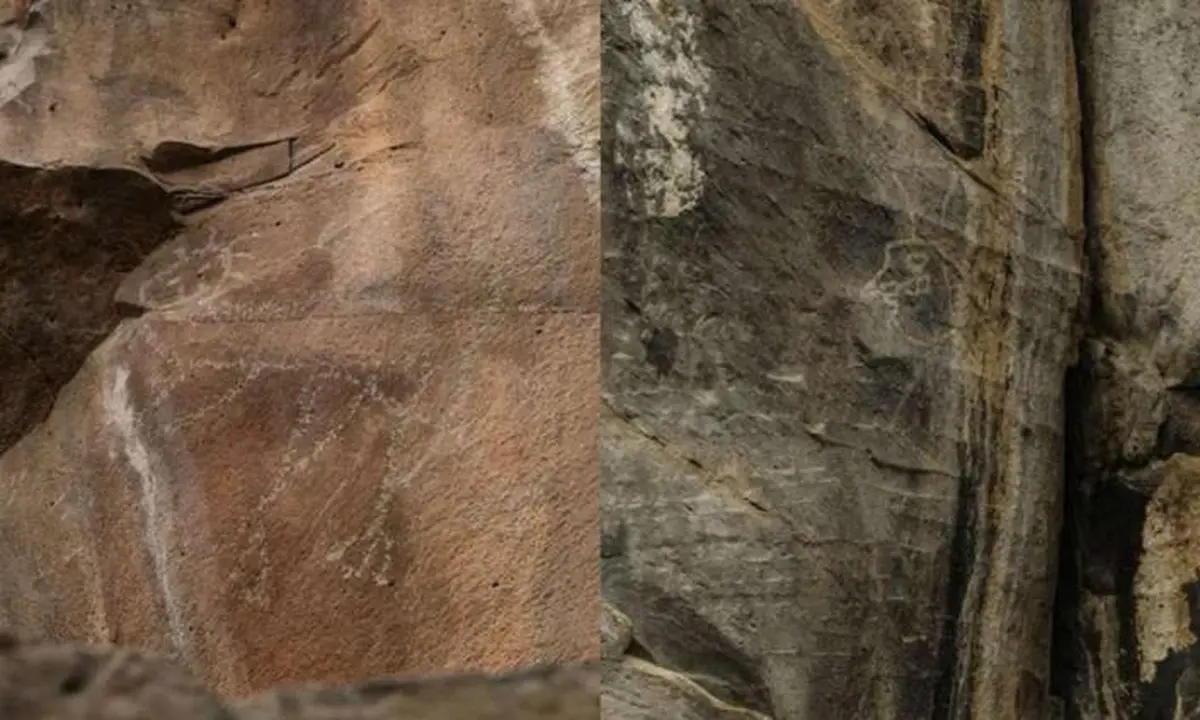
Researchers from the National Institute of Anthropology and History (INAH) have uncovered 16 previously unknown images at a site known as El Venado in the state of Hidalgo — near the cultural sphere of ancient Tula.
Art spanning ancient prehistory to the Postclassic
Stylistic analysis suggests the images cover a wide chronological range — from prehistoric periods more than 4,000 years ago to the Mesoamerican Postclassic (900–1521 CE).
Among the most striking motifs are anthropomorphic figures with elaborate headdresses, shields, and symbolic body markings. Specifically:
- a figure in profile with a stepped geometric pattern on its chest, holding a chimalli (a traditional Mesoamerican shield);
- another figure with circular elements around the eyes reminiscent of the rain god Tlaloc, alongside a possible macuahuitl — the weapon of pre-Columbian warriors;
- a stylized quadruped — likely a deer, which gave the site its name (venado — Spanish for “deer”);
- abstract motifs, anthropomorphic faces, and a red painted image that could symbolize a snake or lightning.

Symbolism, ritual, and the landscape
Archaeologists believe the placement of the images was not random: cliffs overlooking water often carried mythological or sacred significance and could be linked to astronomical cycles or seasonal rituals. This pattern matches broader Mesoamerican models, where rock art served as a visual language connecting communities to sacred geography.
El Venado’s proximity to Tula — the former Toltec capital — strengthens that interpretation. Tula flourished between the 10th and 12th centuries CE and played a key role in shaping later Mesoamerican cultures, including the Aztecs, who regarded the Toltecs as cultural ancestors.

Layers of history
Not all the images date to deep antiquity. One of them — an anthropomorphic face with four animal-like limbs — may date to the early colonial period after the Spanish conquest in the 16th century.
Beyond their aesthetic value, the discovery serves as a reminder that many of Mesoamerica’s cultural histories are encoded in the landscape itself and often hide in plain sight. Each recorded image adds a piece to our understanding of how ancient communities imagined the world, expressed their beliefs, and interacted with their environment. El Venado tells not a single moment but thousands of years of human presence, belief, and adaptation.
From Arkeonews
Photo: Gerardo Pena – INAH
