
 Gaby
Gaby
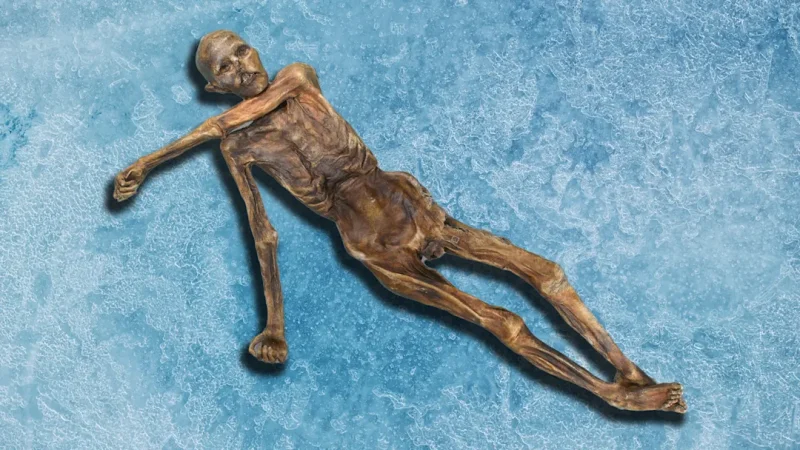
Ötzi, or the Iceman, is the most famous ice mummy in the world, dating back to the late Neolithic period. However, recent research has revealed that the Iceman looked nothing like what was previously imagined. Modern technology has helped dispel misconceptions about Ötzi’s appearance.
What the Iceman actually looked like
In 1991, tourists stumbled upon the remains of Ötzi, a 5,300-year-old mummy, in the Alps near the Italian-Austrian border. The natural conditions in the mountains acted like a natural freezer, preserving his body remarkably well and making it a constant source of scientific study.
Researchers have already learned details about Ötzi’s health and habits during his lifetime, including hardened arteries, tattoos, and what he ate for his last meal. Additionally, an arrow was lodged in his back at the time of death, and it may have been the cause of his demise.
A new study suggests Ötzi’s skin may have been darker than previously thought, perhaps among the darkest of his European contemporaries.
Anthropologist Albert Zink, one of the study’s lead authors, says researchers previously believed Ötzi’s skin darkened while preserved in ice. But he believes the color is actually the Iceman’s original skin tone.
The publication Interesting Engineering reports that the research also overturns misconceptions about Ötzi’s hair. Contrary to popular belief, the man had at most sparse hair and carried genes linked to baldness. This may explain why his mummy was found with so little hair.
Ötzi’s genome also carried genetic markers associated with increased risk of obesity and type 2 diabetes. The researchers suggest his active Neolithic lifestyle may have offset those risks.
Misconceptions about Ötzi’s origins
The genetic makeup of modern Europeans resembles a mosaic made up of three main ancestral groups: Western hunter-gatherers, early Anatolian farmers who migrated around 8,000 years ago, and steppe herders from Eastern Europe who joined the mix around 4,900 years ago.
Early analyses of Ötzi’s genome suggested traces of steppe herder ancestry. But refined results from the new study challenge that finding after researchers detected contamination in the original sample from modern DNA.
Since that research, advances in DNA sequencing and a flood of ancient genomes have changed the field, allowing direct comparisons between Ötzi’s DNA and that of his contemporaries.
The latest findings indicate Ötzi came from a relatively isolated population with minimal interaction with other European groups. Surprisingly, there were no traces of Eastern European steppe herder ancestry in his genome, and his share of hunter-gatherer ancestry is very low.
As co-author Johannes Krause explains, Ötzi’s genetic ancestors appear to have come directly from Anatolia and did not mix with local hunter-gatherer groups. This research not only changes our perception of Ötzi’s physical traits but also highlights the central role modern technology plays in reshaping our understanding of the past.
