
 Gaby
Gaby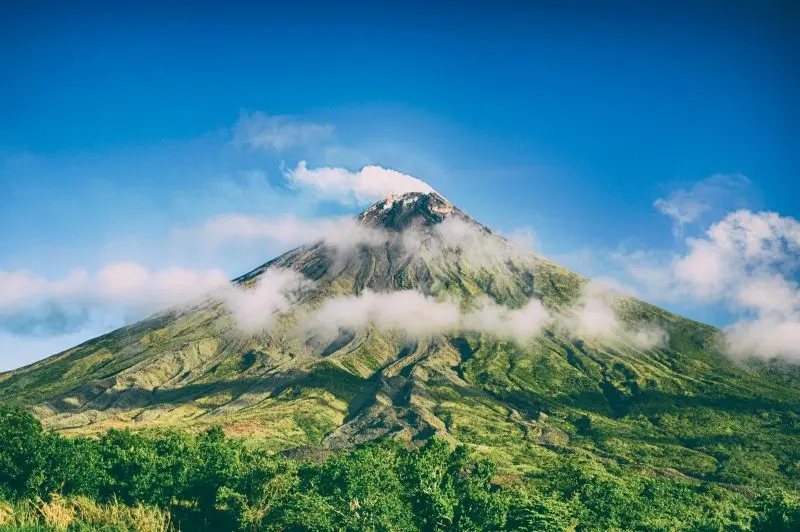
Scientists can now tell when a volcano is gearing up to erupt by watching how green nearby trees get. Brighter leaves can indicate an imminent eruption. Until recently, those subtle color shifts could only be spotted from the ground, but volcanologists have started tracking them from space. This comes from a recent collaboration between NASA and the Smithsonian Institution. NASA said the discovery could be a game changer for spotting the earliest signs of eruptions. That could help protect people from lava flows, falling rocks, landslides, and clouds of ash and toxic gas. Florian Schwandner, a volcanologist and head of the Earth Sciences Division at NASA’s Ames Research Center in California, said the researchers’ goal is to improve early warning systems for volcanic eruptions.
Satellites to the Rescue
Signs of an impending eruption visible from space include seismic activity, surface elevation changes, and sulfur dioxide emissions. Scientists also monitor carbon dioxide (CO2) emissions tied to magma activity. However, satellites find it harder to detect CO2 than sulfur dioxide because CO2 is widespread in the atmosphere. “The release of a small amount of carbon dioxide that could signal an eruption won’t be visible in satellite images,” said graduate student volcanologist Robert Bog. Still, researchers are eager to detect CO2 emissions because those emissions are one of the earliest signals of an approaching eruption. To help, scientists developed a way to monitor carbon dioxide by watching trees around volcanoes, according to Live Science. That’s because CO2 clouds from soon-to-erupt volcanoes can boost nearby plants’ health, making leaves greener and lusher.
Previously, scientists had to travel to volcanoes to measure CO2. Now they don’t have to visit these remote, potentially dangerous locations. Researchers can use satellites to measure the brightness of tree foliage—a proxy for volcanic gas concentration. A study in the journal Remote Sensing of Environment found a strong correlation between carbon dioxide levels and the intensity of tree color around Mount Etna in Italy. Using Earth observation images from 2011 to 2018, the authors observed 16 distinct CO2 spikes and matching increases in greenery that coincided with magma migrations inside the volcano.
To expand the method, researchers recently launched the Airborne Validation Unified Experiment: Land to Ocean (AVUELO). During AVUELO, teams will compare satellite images of trees near volcanoes with ground observations to improve data accuracy and better calibrate space instruments. Measuring greenness from space isn’t a universal eruption predictor: not all volcanoes have nearby trees or enough vegetation for satellites to see. And trees affected by fire, disease, or extreme weather may not respond to elevated CO2 the way researchers expect.
