
 Gaby
GabyResearchers say the color purple doesn’t exist in the spectrum — it’s created by the brain. When we see red and blue wavelengths at the same time, it can be confusing for the eyes and the brain, because those colors sit at opposite ends of the visible light spectrum. To compensate, the brain bends the spectrum into a circle, connecting blue and red to create purple.
Although this color is “real” in the sense that we see it, it arises from the brain’s attempt to resolve the confusion between two opposing wavelengths of light.
The well-known acronym ROYGBIV describes the colors of rainbows (the visible light spectrum): red, orange, yellow, green, blue, indigo, and violet. Each of these colors is associated with a specific wavelength of light. Violet has the shortest wavelengths in the spectrum, the Daily Mail reported.

Our eyes have specialized cells for color perception called cones. There are three types: S cones for short wavelengths that detect blue and violet; M cones for medium wavelengths that detect green and yellow; and L cones for long wavelengths that detect red and orange.
Each type of cone responds to a specific part of the visible light spectrum. When light of a certain color enters the eye, the corresponding cones are activated. Then other cells send signals through the optic nerve to the brain.
First, the thalamus, which processes sensory signals, receives those signals and begins the process of determining what you are seeing. Then the signals are sent to the visual cortex, where the brain analyzes which cones have been activated and to what extent. In other words, the brain uses this information to determine the exact color.
If light falls between two colors, for example between blue and green, it can activate both S- and M-cones. The brain compares how active each cone is to determine the final color.
This system allows us to see not only the primary colors but also their shades, such as blue-green or turquoise. In general, our eyes and brain can recognize over a million different colors.
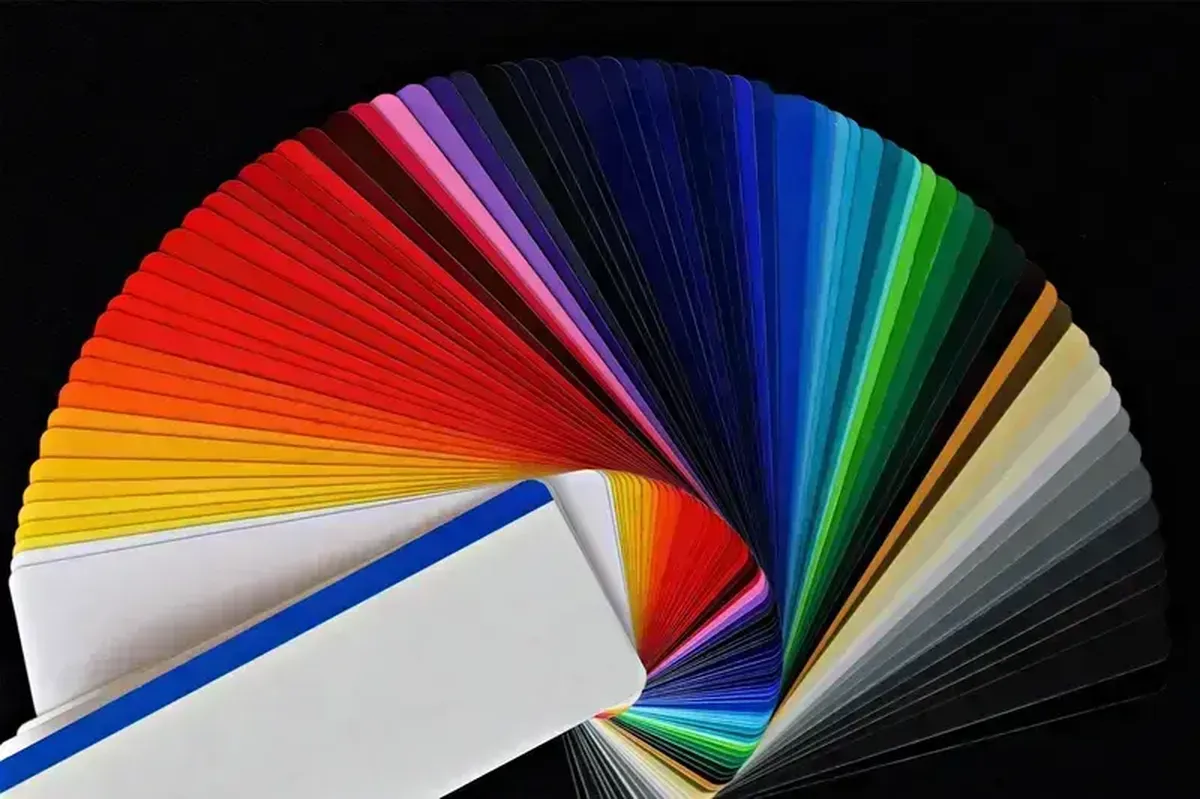
One might think that the brain processes the color purple in a similar way. After all, isn’t it just a mixture of red and blue wavelengths?
However, researchers say red and blue lie at opposite ends of the visible light spectrum. Therefore they can’t mix in the usual way to form a new wavelength-based color — at least, that’s how the human brain treats them.
As a result, when S-cones (sensitive to blue light) and L-cones (sensitive to red light) are activated together, it confuses the brain. To resolve that confusion, the brain effectively bends the spectrum into a circle so red and blue can meet, producing the sensation we call purple.
Thus, the brain convinces us that we see a color that doesn’t exist in the spectrum itself. Despite that, purple has played an important role in human culture: it symbolizes power, luxury, mystery, magic, fantasy, and more.
So, if your favorite color is purple, thank your brain for creating it for you.
