
 Gaby
GabyThe company plans to complete the demonstration version of BlackBird, with the CycloRotor electric drive system, by the end of this year. The inaugural flights are scheduled for early 2025. If the tests succeed, the designers will create a flying car based on the prototype — the electric air vehicle CruiseUp.
What is known about the BlackBird prototype and its CycloRotor?
The Austrian aviation company CycloTech aims to demonstrate a new flight propulsion system using CycloRotor electric drives.
Company engineers say the new motor is suitable for all flying cars because the system can control thrust magnitude and direction across a full 360-degree range.
The BlackBird prototype, measuring 4.9 meters in length, 2.3 meters in width, and 2 meters in height, will be equipped with six CycloRotor rotors. The vehicle will be capable of vertical takeoff and landing, parallel parking, and hovering. With a maximum takeoff weight of 340 kg, it will reach speeds of up to 120 km/h.
Thanks to its cyclorotor configuration, the vehicle is expected to be highly maneuverable and able to hover when needed. Developers say passengers of the electric air vehicle can expect smooth rides, and the engines will allow precise maneuvering and comfortable flights even in challenging conditions.
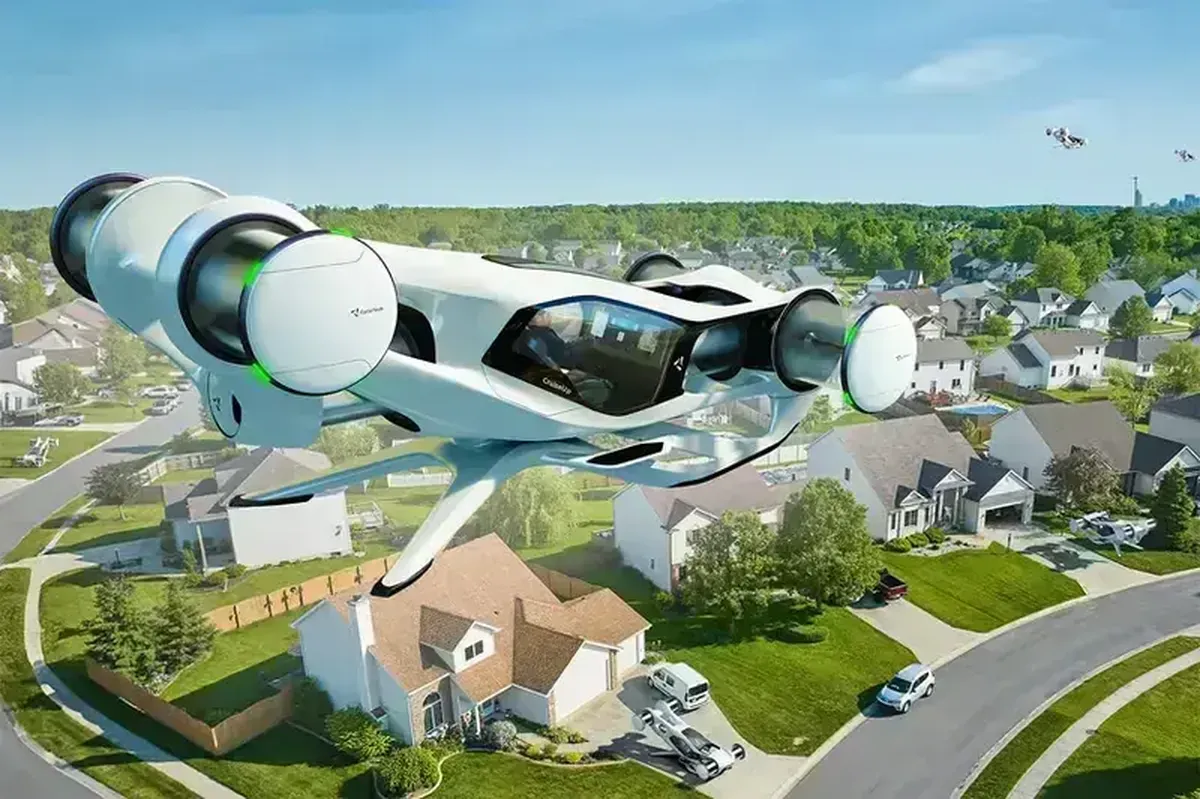
CycloTech is rushing to release a demonstrator before the New Year.
Since 2021, the company has flown 800 test flights with a first-generation demonstrator, which was equipped with four CycloRotors and weighed 83 kilograms, according to New Atlas.
This year CycloTech raised more than 20 million euros to build BlackBird. The company expects total funding to exceed 50 million euros by the end of the year.
So far, CycloTech has not specified the cabin’s seating or the battery range. Meanwhile, the planned CruiseUp is expected to be a two-seat vehicle with a relatively short range of 100 km. That makes it more like a personal car than an air taxi.
CycloTech says the new model will compete with other companies racing to make flying cars a reality in the coming years.
