
 Gaby
GabyIndependent researcher Marinus Anthony van der Sluys (Canada) and Hisashi Hayakawa from Nagoya University (Japan) have deciphered an ancient document that likely describes the aurora borealis.
According to the authors of the study, the text refers to an event from 977 or 957 BC. It was found in the Bamboo Annals, a chronicle of ancient China preserved on bamboo strips.
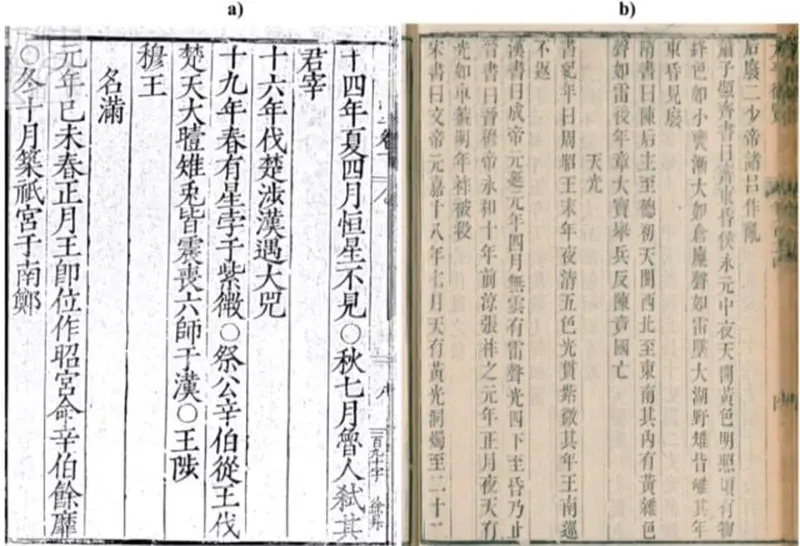
It was previously believed that the oldest description of the aurora borealis came from Assyrian cuneiform tablets dated to 679–655 BC.
What scientists have learned
The northern lights—the kaleidoscopic ribbons of color—happen when charged particles from the Sun are hurled into Earth’s magnetosphere and collide with oxygen and nitrogen molecules. Those collisions excite the atoms and make them glow, producing flickering, multicolored curtains in the sky.
A Canadian-Japanese team deciphered what may be the oldest text describing “five-colored light.” The researchers say the phenomenon was seen in the northern part of the night sky at the end of King Zhao’s reign in the Zhou dynasty. Ars Technica reported that the team estimates Earth’s northern magnetic pole was about 15 degrees closer to central China in the 10th century BC, which would have made auroras visible there.
It’s impossible to confirm definitively that the bamboo strips describe the aurora borealis. But the study’s authors argue the phrase “appearance of a colorful phenomenon in the northern sky at night” fits how auroras appear in mid-latitude regions. A 16th-century translation described the event as a “comet” rather than “five-colored light,” so earlier readers didn’t interpret it as an aurora. The new reading likely corrects that earlier misidentification.
