
 Gaby
Gaby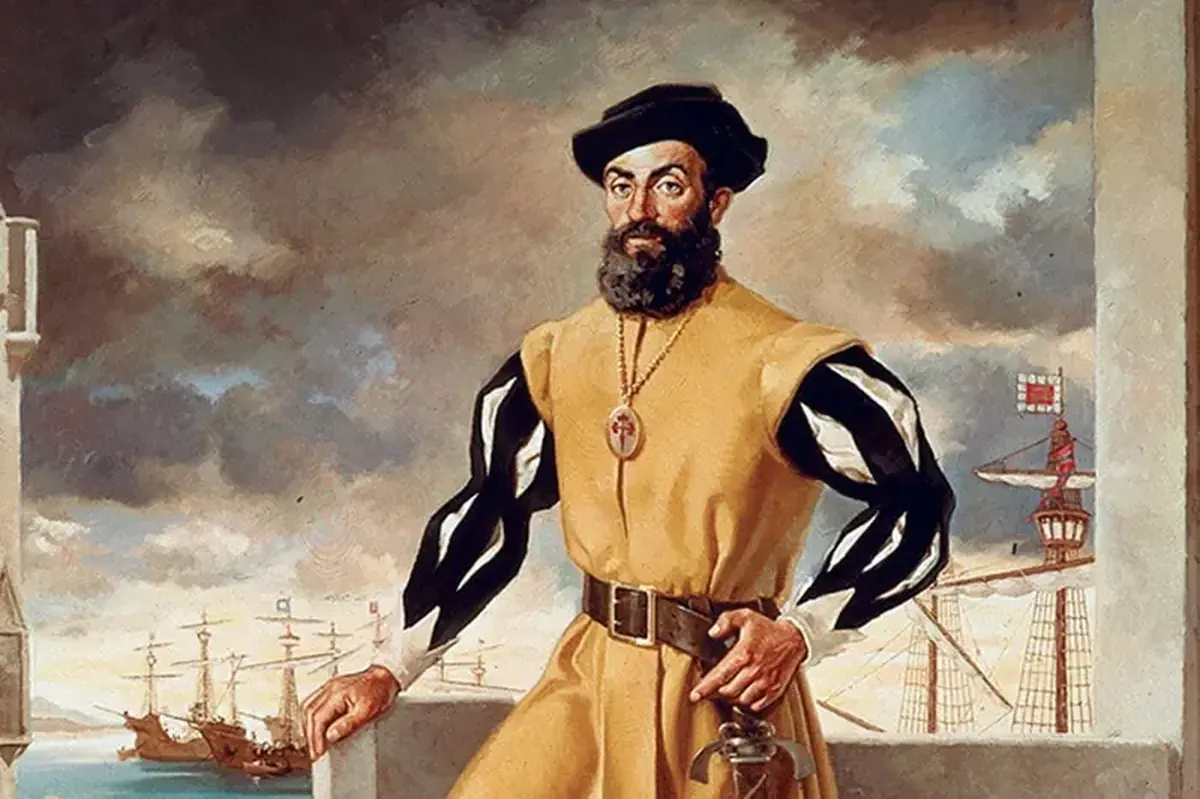
If you know one name from the age of exploration, it’s probably Ferdinand Magellan. This Portuguese navigator dreamed of the sea from a young age and went down in history as the leader of the first voyage to circumnavigate the globe. He wasn’t certain the journey would succeed, and for him the Earth’s roundness remained more of a hypothesis than a proven fact. The expedition ultimately showed the planet was round, but Magellan did not live to see the fleet back home; he died during the voyage.
Ferdinand Magellan: Biography
The exact date and place of Magellan’s birth are uncertain, and many details of his early life come from later historians piecing together fragmentary records.
Childhood and Youth
Most historians place Ferdinand Magellan’s birth in 1480, though sources disagree about the exact day—some say October 17, others October 20.
Accounts also differ on where he grew up: some point to the village of Sabrosa, others to the city of Porto in Portugal. Little is known about his parents beyond their noble status and modest means. His father Rodrigo served as an alcalde (a local magistrate with judicial, financial, and administrative duties), and his mother was Alda de Mesquita.
Magellan had four siblings. At 12 he was sent to serve at the court of Queen Leonor of Aviz, where he stayed until he was 24. Rather than focusing on courtly ceremonies or fencing, the young page immersed himself in the exact sciences, sneaking off to study cosmography, astronomy, and navigation.
Ferdinand Magellan: The Years of Exploration
By the time Magellan was 25, Portugal had opened a sea route to India in 1498, and he left the royal court to volunteer for naval service.
After five years at sea he remained in India because circumstances kept him there. His commanders promoted him to officer for his bravery, and he earned respect among the military.
When he finally returned to Lisbon in 1512 he did not receive the recognition he expected. While suppressing a rebellion in Morocco he suffered a severe leg wound that left him with a permanent limp and led him to leave naval service.
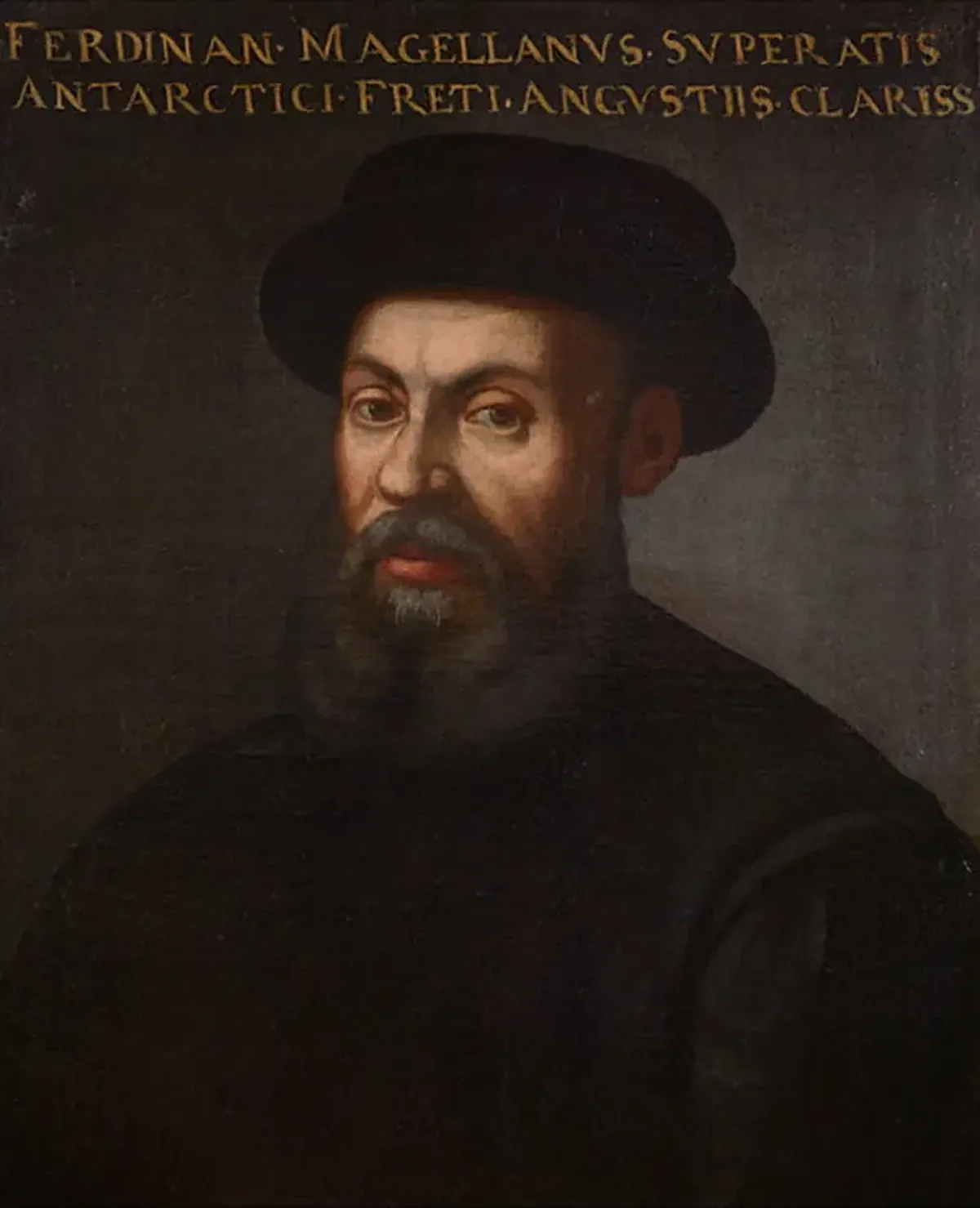
Portrait of Ferdinand Magellan by an unknown artist, 16th-17th century
Ferdinand Magellan — Circumnavigation
After leaving service, Magellan studied the royal archives and found an old map by Martin Waldseemüller that caught his attention. The map suggested a strait connecting the Atlantic to a then-unknown South Sea, and the idea of exploring the blank spots on the map fired his imagination.
He asked the Portuguese king for permission to lead an expedition, but the king refused, partly because Magellan had joined the suppression in Morocco without authorization and partly because Portugal was already profiting from the route around Africa.
Offended, Magellan moved to Spain and bought a house there, but he kept pursuing his plan. At the time, spices were enormously valuable in Europe—worth their weight in gold. They weren’t grown locally, and Arab middlemen charged steep prices. Wealthy people were even jokingly called “bags of pepper.” Magellan built his proposal around finding a shorter sea route to the spice islands.
He petitioned the Casa de Contratación (Spain’s trade and navigation authority) and at first faced resistance. A local con man named Juan de Aranda offered unofficial help in exchange for 20% of the profits, but Magellan refused. With the help of his friend Rui Faleiro, an astronomer and cartographer, he negotiated a deal that promised only 8% of the profits. The agreement was notarized, and the King of Spain granted permission for the voyage, eager to prove the spice islands belonged to Spain rather than Portugal. The official contract was signed on March 22, 1518.
Five ships were prepared, each stocked with provisions for two years. Their names were:
- Trinidad;
- San Antonio;
- Concepción;
- Victoria;
- Santiago.
The flagship was Trinidad, commanded by Magellan. João Serrão captained Santiago. Rui Faleiro, Magellan’s friend, suffered a mental breakdown and could not join the expedition. The other three ships were led by Spanish nobles who resented taking orders from a Portuguese captain; they often refused to follow Magellan, provoking conflicts on board. Magellan kept his route and plans secret, which increased their suspicions. Despite orders from the Spanish king to obey him, some officers plotted to remove Magellan at the first opportunity.
The fleet set sail on September 20, 1519, with 256 sailors, leaving Sanlúcar and heading for the Canary Islands.
The expedition touched Tenerife, then crossed to Brazil and reached the bay of Rio de Janeiro. By late March they arrived at the port of St. Julian, where a major quarrel erupted between the Portuguese and Spanish captains. Magellan relieved one captain of his command and sent another ashore. On August 24, 1520, Santiago was wrecked.
The remaining ships hugged the eastern coast of South America searching for the South Sea. Magellan’s crew became the first Europeans to record the Tierra del Fuego archipelago at the continent’s southern tip. Magellan believed the islands belonged to a southern continent. They looked uninhabited by day, but at night sailors saw lights. Magellan assumed volcanic fire and gave the islands their fiery name; in reality the lights came from indigenous fires tended by local people.
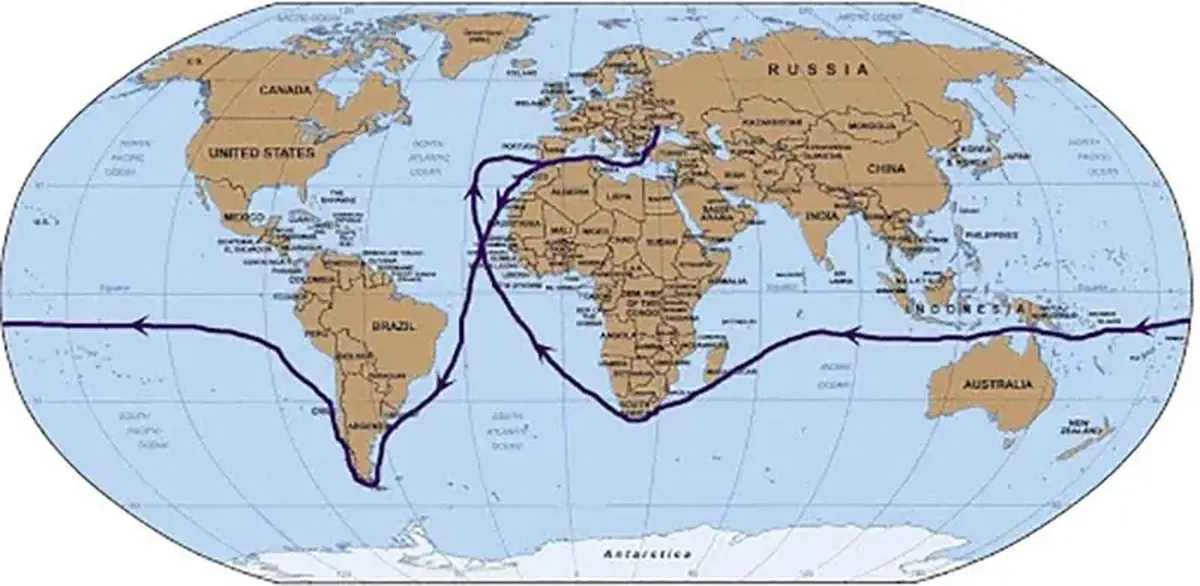
Map of Magellan’s journey and its conclusion 16 months after his death by the ship “Victoria,” one of the five vessels that began the voyage
The fleet then passed between Patagonia and Tierra del Fuego and entered the Pacific through the strait that now bears Magellan’s name. During the passage, San Antonio deserted the fleet, leaving three vessels.
They entered the Pacific on November 28. Conditions aboard grew dire: freshwater ran low, food spoiled or was eaten by rats, and sailors were reduced to chewing leather from the ship’s rigging. The fleet sailed along the coast of Chile before turning northeast, and on January 24, 1521, they made landfall in the Mariana Islands.
On March 9 the expedition sailed toward the islands that would later be called the Philippines. Two months later, Magellan was killed. The remnant crew—18 sailors—returned to Spain aboard Victoria after 1,081 days at sea.
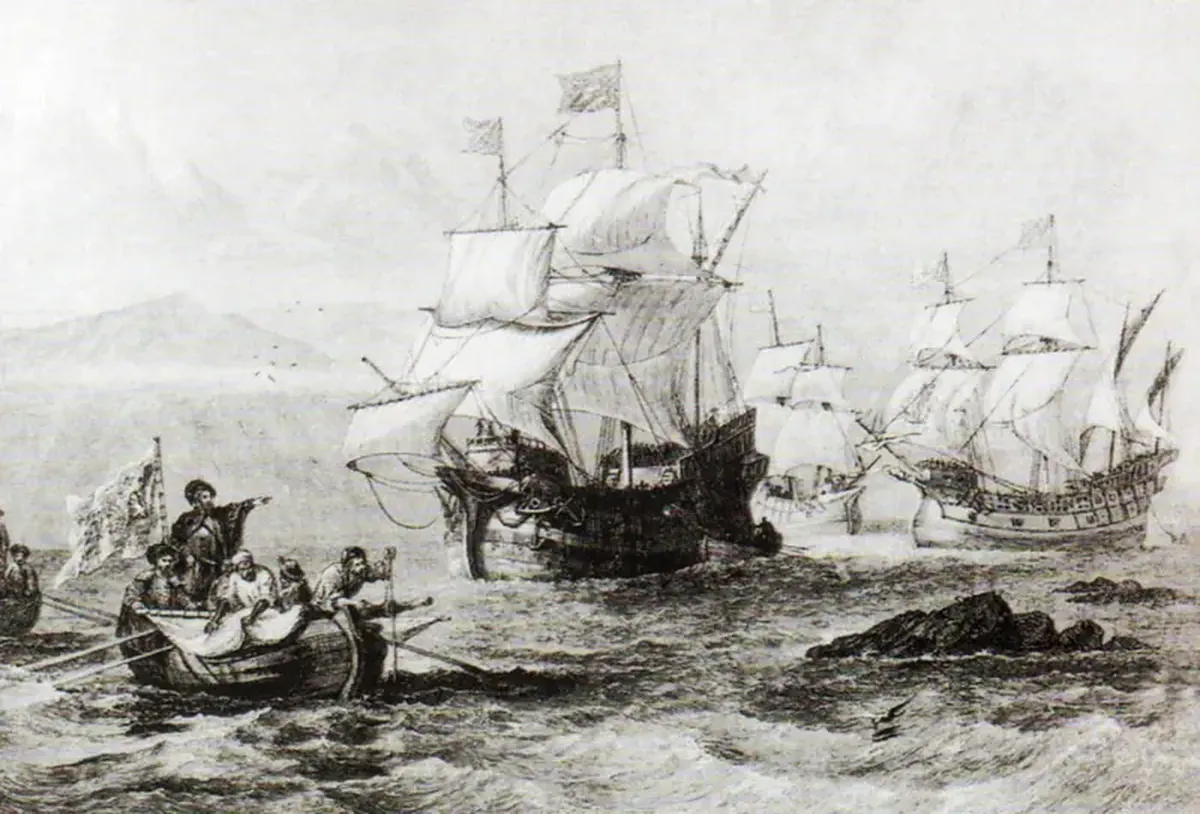
Magellan in the strait that would later bear his name
How Ferdinand Magellan Died
Magellan and his crew were the first Europeans to land on the island of Homonhon. Their initial contact was peaceful, and over time Magellan converted the island’s ruler and the ruler’s wife to Christianity. The ruler then ordered his vassals to supply the expedition and to accept Christianity.
Most local chiefs complied, but one—Lapu-Lapu, ruler of the nearby island of Mactan—refused. The Homonhon ruler suggested Magellan go to Mactan and force Lapu-Lapu to submit.
Magellan agreed, believing he could persuade Lapu-Lapu by words. When the chief resisted, Magellan tried to intimidate him and burned several houses. The islanders ambushed him in the thicket; when his pistol powder ran out, they wounded him with poisoned arrows and spears. The sailors offered whatever goods the islanders demanded for his body, but the islanders never returned it.
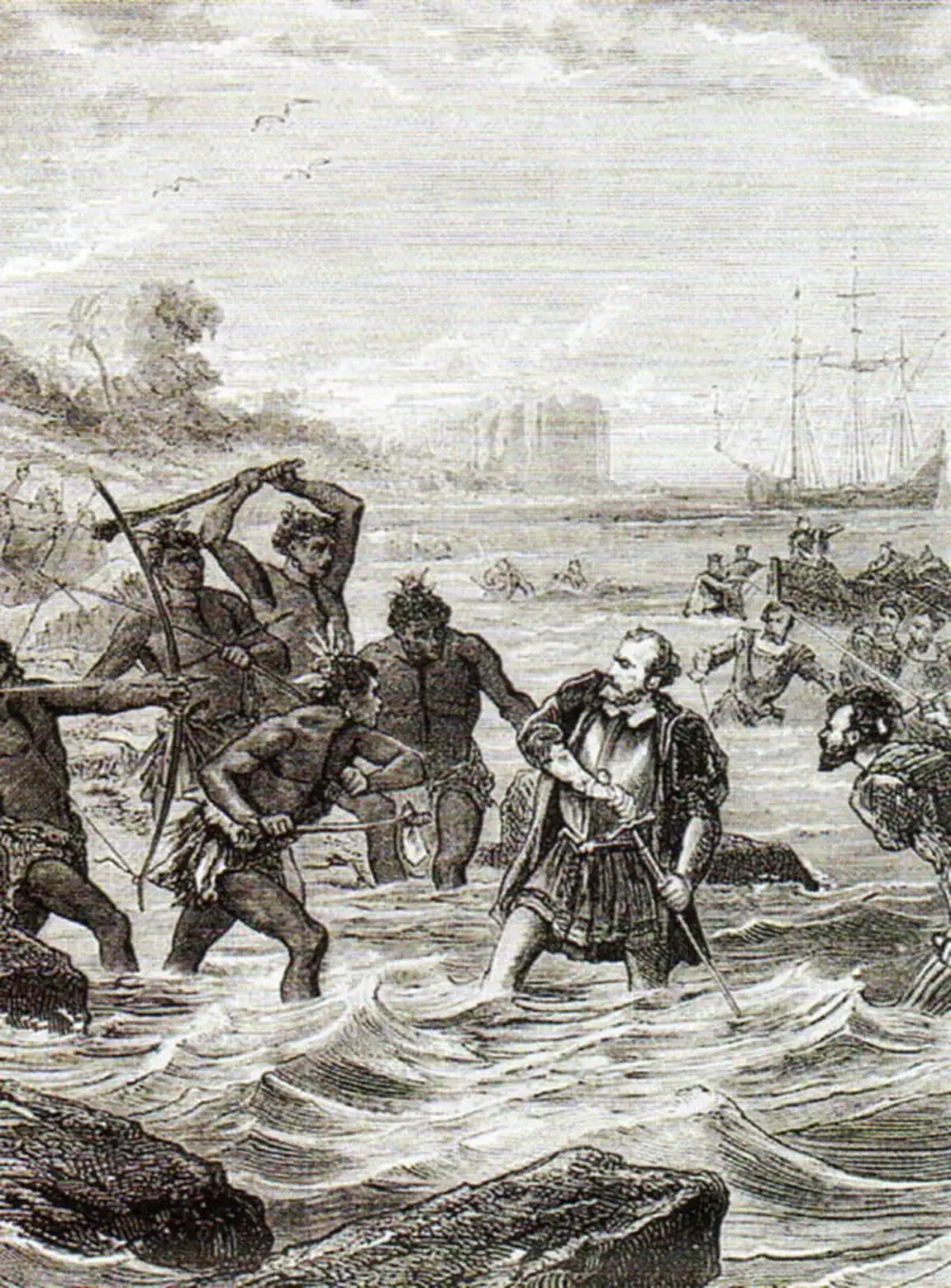 The death of Magellan on the island of Mactan
In conclusion, here are some of Ferdinand Magellan’s greatest achievements:
- He discovered the strait that now bears his name.
- He was the first European captain to lead a fleet from the Atlantic into the Pacific Ocean.
- He helped bring the Philippine islands to European attention.
- He led the expedition that achieved the first circumnavigation of the globe.
Ferdinand Magellan: Interesting Facts
- In about five years Magellan rose from a common soldier to an officer whose opinions were respected by senior officials.
- He named the Pacific Ocean—his fleet crossed roughly 17,000 kilometers of it without encountering a major storm.
- Magellan called the Mariana Islands “thieving” because he and his crew experienced theft from locals posing as traders.
- A Portuguese by birth, Magellan made his discoveries under the Spanish flag because the Portuguese king refused to support his plan.
- He left no descendants: his son died before his first birthday, and his wife later died in childbirth.
- His name lives on in a lunar crater, a spacecraft, and two galaxies.
There’s a saying that the brave rarely die in their warm beds, and they often don’t live long—Magellan was only 41. Imagine how different history might look if he had never existed. Someone else might eventually have found the strait, but that is the lure of the butterfly effect.
