
 Carlos Solis
 The Bible recounts how Jesus restored the sight of a blind beggar by sending him to wash in the Pool of Siloam.
Recently, a team of archaeologists discovered a monumental dam in the historic center of the city, marking the site of the ancient pool. Scholars believe this structure was built around 2,800 years ago.
Itamar Berko, the excavation leader from the IAA, said the discovery could be linked to the site of the blind man’s healing in the Scriptures.
According to Berko and his colleagues, Nachshon Santon and Filip Vukosavovich, the structure measures more than 11 meters tall, over 8 meters wide, and 21 meters long.
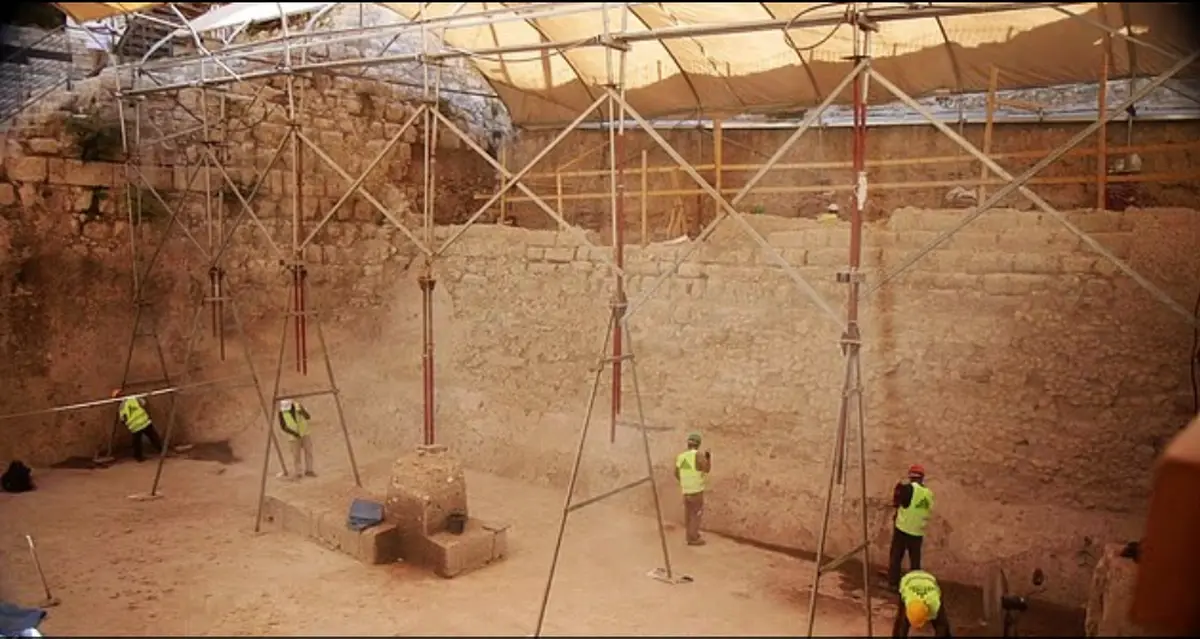
Berko noted that high-precision scientific dating now lets archaeologists confidently identify the structure that underlies the Pool of Siloam — something previously known only from the Bible and historical sources.
Dr. Santon emphasized, ‘This is the lowest point of ancient Jerusalem. All rainwater essentially flowed here, into this large central reservoir of the city. Without this dam, the water flowing through this channel would simply have gone into the valley — straight into the Dead Sea.’
The Pool was built in response to climate change
‘Until now, the Pool of Siloam could only be read about in biblical texts; now we see its remains,’ Berko said. He clarified that the dam’s monumental wall ‘is dated to the period of the First Temple, during the reigns of Kings Joash and Amaziah.’
Experts studying the find said the wall’s unusual construction allowed very precise dating, so establishing the structure’s age posed no problems, the Daily Mail reported.
Researchers believe the pool was built in response to climate change based on a climate reconstruction that used dating and climatic data.
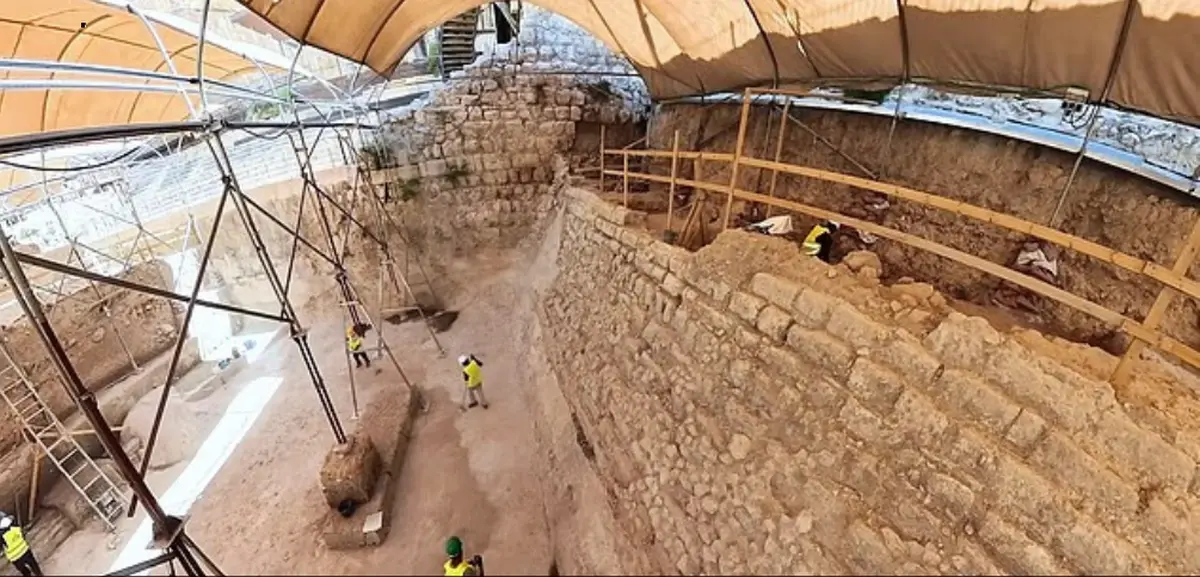
All the data point to periods of low precipitation followed by short but intense storms that could cause flooding. They say the construction of such large-scale water systems was a direct response to climate change and arid conditions.
IAA Director Eli Escudido called the dam ‘awe-inspiring’ and one of the most striking and significant First Temple–period structures in Jerusalem, remarkably well-preserved. ‘The discovered dam opens new horizons for research,’ he said.
