
 Carlos Solis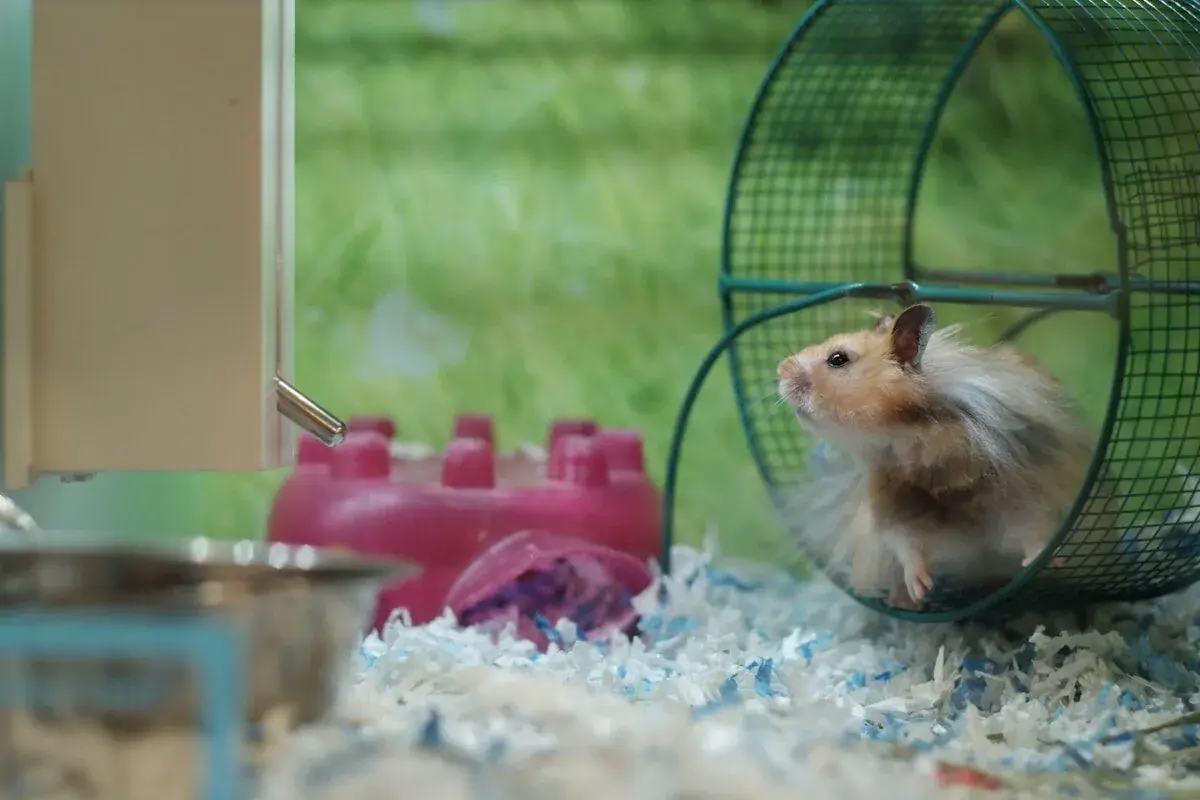
For decades researchers assumed wheel-running meant one thing: cage neurosis. They often compared it to doing push-ups in a prison cell. But recent studies show we were wrong about what drives these rodents.
An experiment in the wild
Researcher Johanna Meyer set out to test whether wheel-running really is only a consequence of captivity. She and her colleagues placed running wheels in two spots: a leafy city park and a human-free wild area. For more than three years, cameras recorded the behavior of wild animals.
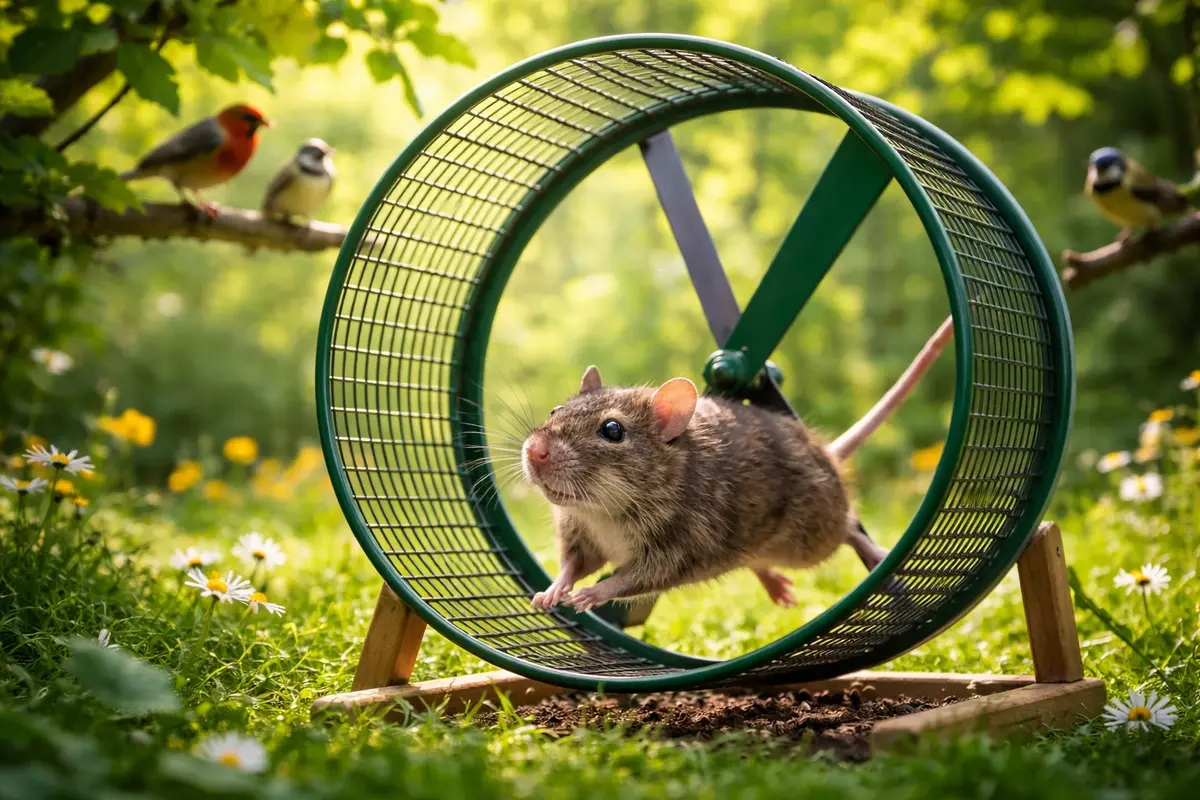
The results were surprising. Wild mice, free to roam and with plenty of other things to do, started using the wheels actively. Their “workouts” lasted almost as long as pet hamsters’ runs — sometimes a wild mouse ran nonstop for up to 18 minutes.
At first, the team suspected that bait left near the wheels had attracted the mice. But even after they removed the food, the rodents kept coming and running the wheel voluntarily, with no external reward.
The wheels drew more than just mice: shrews and even slugs checked out the attraction (snails were excluded from the analysis because their movement was too erratic). Still, mice were the main fans — they accounted for 88% of all runs.
The secret: dopamine and pure joy
Physiology explains only part of the story. The key question is why they do it voluntarily. Garland argues the answer lies in the brain’s reward centers.
Every time a rodent runs, its brain releases dopamine — the neurotransmitter that creates feelings of pleasure. It mirrors the “runner’s high” people feel during a workout.
Sometimes mice intentionally slow down during a run, spin a full 360 degrees with the wheel like a roller coaster, and then keep going. The behavior serves no practical purpose — except one: they enjoy it.
You can compare this to dogs or foals that sometimes race across a field for no reason, burning off energy purely for the joy of movement.
So when your hamster keeps you awake with the wheel’s squeak, you don’t need to worry. It’s not suffering in captivity or trying to escape. It’s simply getting its rightful dopamine hit.
Better yet, you can put that movement to work: recently a clever YouTuber hooked a hamster wheel to a generator and charged a phone. No hint of exploitation — the furry athlete was just doing what comes naturally.
Lessons for humans: healthy habits start young
The study revealed another pattern that applies to people: the habit of running takes root early in life.
Mice that got wheel access immediately after weaning (at three weeks old) ran far more as adults than mice that didn’t have a wheel in childhood. Their brain reward systems were effectively rewired toward physical activity for life.
From this, Meyer concludes: cutting physical education in schools is a disaster for public health. If a child doesn’t get used to active play in childhood, sports simply won’t appear on their “radar” as an adult.
This article is based on reporting from Popular Science
