
 Carlos Solis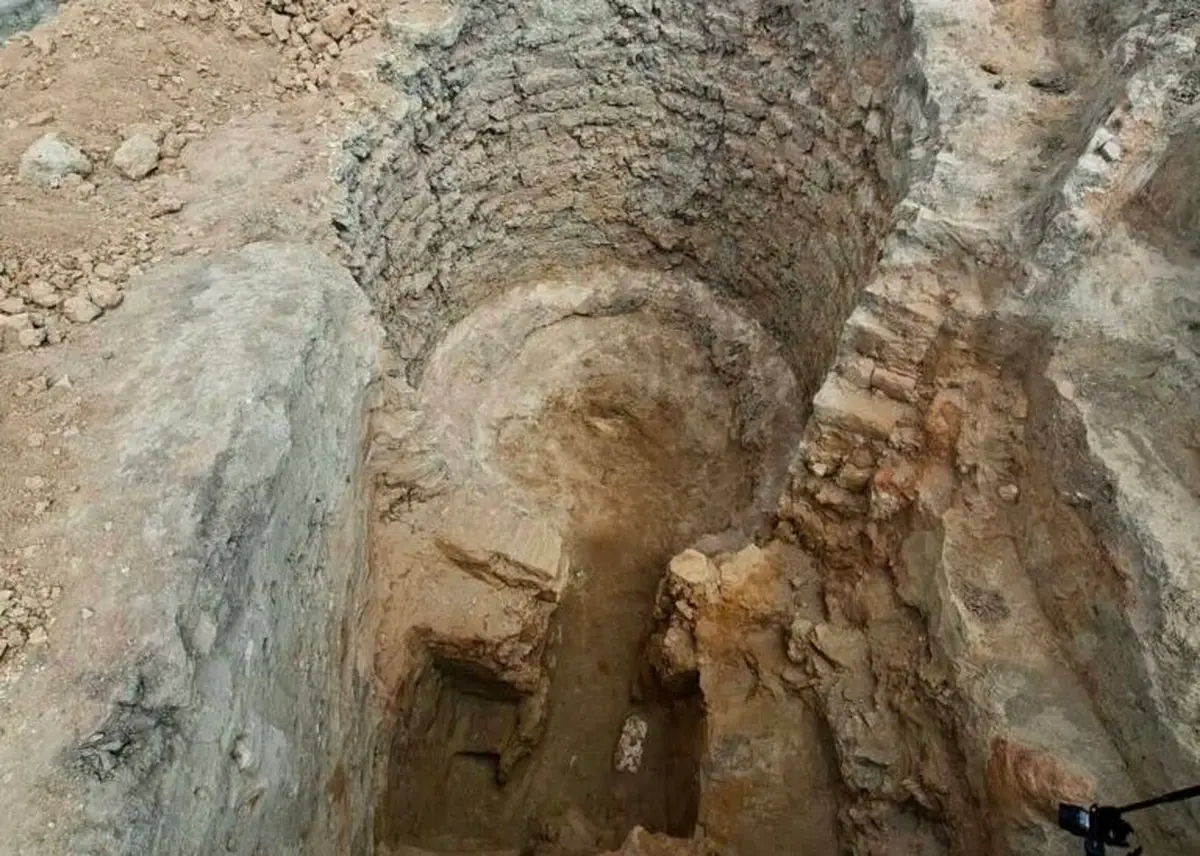
This find offers a rare window into the industrial side of everyday life in ancient Pannonia. Archaeological materials show the area around Bicske was active across multiple historical periods. Past research has already turned up fragments of Árpád-period occupation and three child burials from the Roman period. This spring’s campaign added evidence of early Roman and late Árpád layers, storage pits, and other sunken structures dating to the late medieval and Ottoman periods.
The sequence of layers shows the land remained attractive for settlement, production, and storage through very different political and cultural eras.

A Kiln for Construction
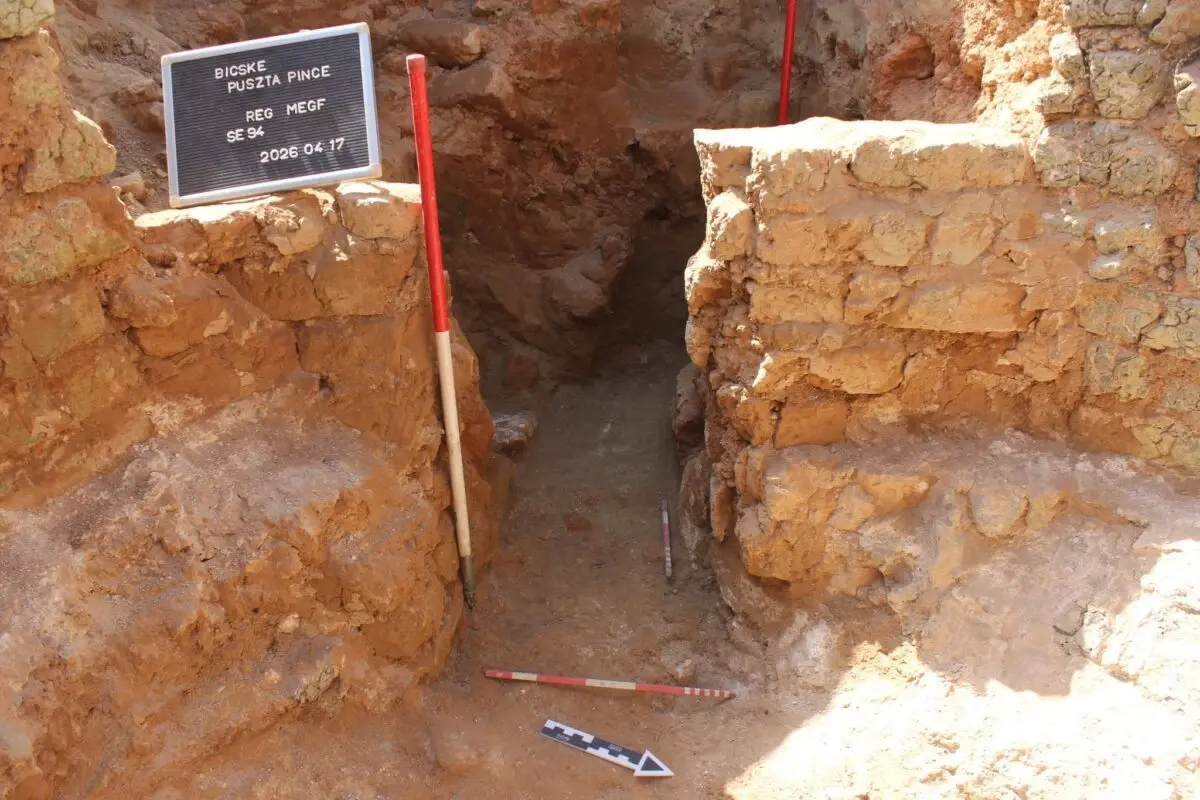
The most important discovery is a Roman-period lime kiln built into the natural slope of a hillside. The circular structure measured about 230 centimeters in diameter and extended roughly 3 meters deep.
Rammed-earth bricks coated with clay plaster formed the kiln’s walls. Archaeologists recorded a furnace opening facing west and a ledge around the base of the wall where the limestone sat during firing.
The lower part of the kiln is remarkably well preserved: a thin layer of lime still coats the floor and side walls, a direct trace of its original use. Fragments of Roman roof tile (tegula) and a gray bowl with an S-shaped profile found in the lower fill helped refine the dating.
Lime kilns played a key role in Roman construction. Fired limestone produced quicklime, which builders used in mortars, plasters, and other building tasks. Finds like this point not just to settlements but to the practical infrastructure that supported Roman building activity.
A Valuable Find
The kiln’s state of preservation makes it especially valuable. The museum reports that a Roman lime kiln this well preserved was last found in Hungary during Bálint Kuzsinszky’s early 20th-century excavations at Aquincum.
Aquincum, in today’s Obuda in Budapest, was one of Pannonia’s principal Roman centers. It grew from a military and civilian settlement on the Danube frontier into an important urban center in Lower Pannonia.
Bicske wasn’t Aquincum, but it lay within the broader Roman sphere of Transdanubia. Fejér County lay in the inland provincial part of Pannonia, where rural settlements, roads, production sites, and necropolis sites formed the economic backbone for the better-known military and urban centers.
So the kiln adds another clear piece to that picture, showing how local landscapes supported Roman building and daily life far beyond the major towns and forts.
This report is based on reporting from Arkeonews
