
 Gaby
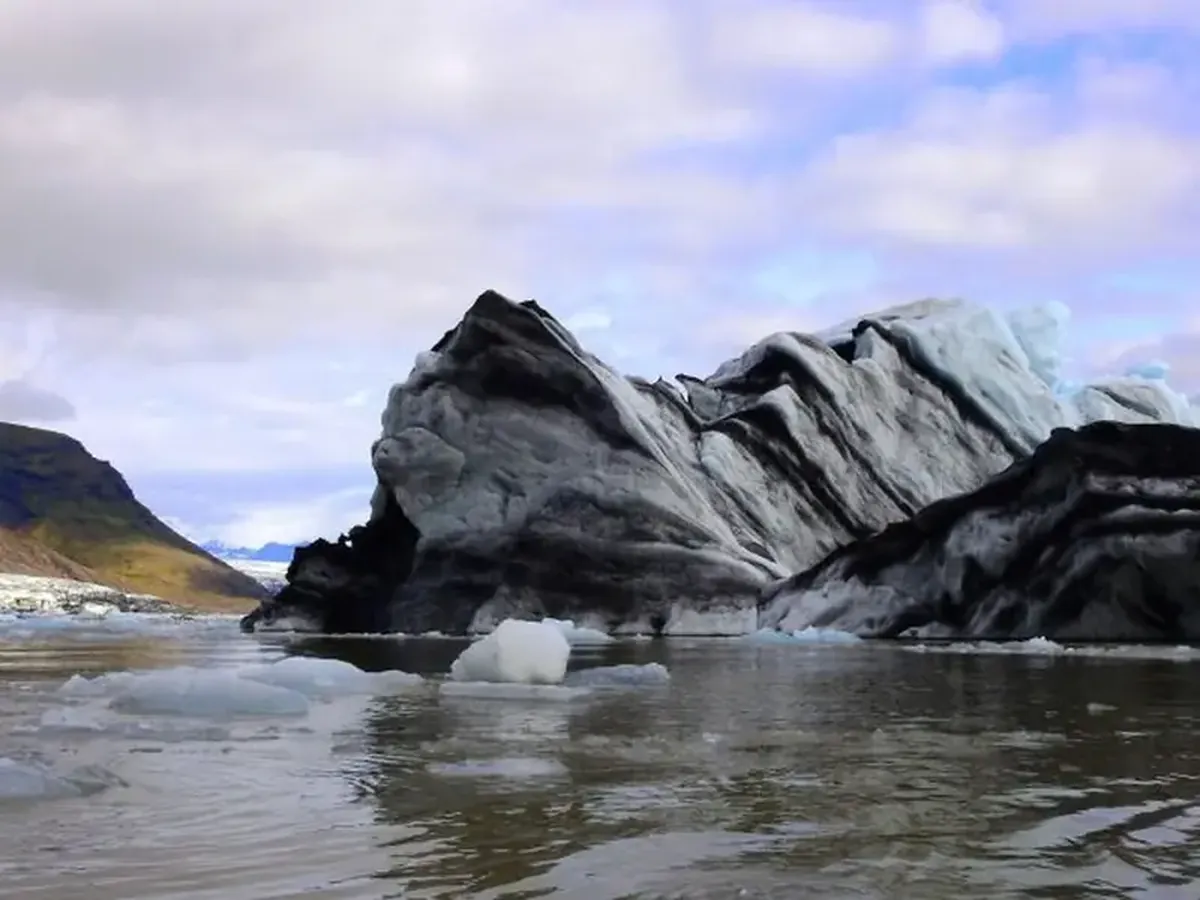
GabyHalur Antoniussen, a fisherman aboard the trawler Saputi, spotted a rare black iceberg off the coast of Canada and posted a photo that stunned glaciologists. He shared the image on social media — a sight few people see even once in a lifetime. Antoniussen said he was amazed by the iceberg’s color and shape. The photo quickly drew interest from glaciologists at Memorial University of Newfoundland, who offered some explanation for the unusual berg.
Icebergs Come in More Colors Than White
When we think of icebergs, we typically picture pristine white chunks floating in frigid water. They can also show delicate pale blue or bluish‑green hues. But icebergs can be very dark, as reported by ScienceAlert. Icebergs look white because tiny air bubbles scatter all wavelengths of light. As a piece of ice ages, it becomes denser, the air is pushed out, and more light penetrates, making the ice more transparent like glass. Longer red wavelengths are absorbed while blue wavelengths are scattered, which gives the ice a bluer appearance.
Icebergs are not always just frozen water. Other materials can mix into the ice as the chunks form. For instance, greener icebergs contain yellowish iron oxides. When those oxides mix with blue ice, they create a green color.
What Causes the Black Color?
An iceberg takes on a black or dark gray hue when dirt or other dark material becomes bound with the ice, for example when the glacier rolls over a dark surface. Glaciologists explained that this black berg may once have been part of a large glacier that calved into the ocean. Glaciers slide over land as they advance toward the ocean, picking up debris and mixing it into the ice. It takes a long time for debris to distribute as evenly as it appears in Antoniussen’s iceberg. Therefore, it’s likely that the chunk of ice the fisherman spotted is quite old, possibly between 1,000 and 100,000 years.
Another theory suggests the ice mixed with soot after a powerful volcanic eruption. The black color could also come from meteorite fragments embedded in the ice. There is no definitive answer yet about the iceberg’s coloration.
