
 Gaby
GabyAccording to the World Health Organization, cardiovascular diseases are the leading cause of death worldwide. Eighty percent of deaths caused by these ailments occur in low- and middle-income countries.
Fourteen-year-old Siddhartha Nandyala, a prodigy of Indian descent, invented a mobile app called Circadian AI that can detect heart anomalies at early stages. This innovative diagnostic system, powered by artificial intelligence, is convenient to use and effective. It will be especially in demand in low-income countries where there is a shortage of qualified medical professionals.
“My main goal was to create a tool that, through a non-invasive screening procedure, could potentially save the lives of many people,” explained Nandyala, a freshman at the University of Texas at Dallas, majoring in computer science.
This isn’t his first achievement.
Siddhartha Nandyala has been interested in technology, coding, and engineering since childhood. He is currently the youngest certified specialist in AI, the publication Smithsonian Magazine reported. In 2022, Siddhartha created a prosthetic arm that costs only $150. A year later, he founded STEM IT, an educational startup that offers students training programs in science, technology, engineering, and mathematics.
The Frisco Chamber of Commerce named Nandyala “Innovator of the Year – 2023.” He also received a Certificate of Recognition from the U.S. House of Representatives and a congratulatory letter from then-President Joe Biden. In 2024, Nandyala invented a bracelet that detects the likelihood of falls in elderly citizens with an accuracy of 96.1 percent.
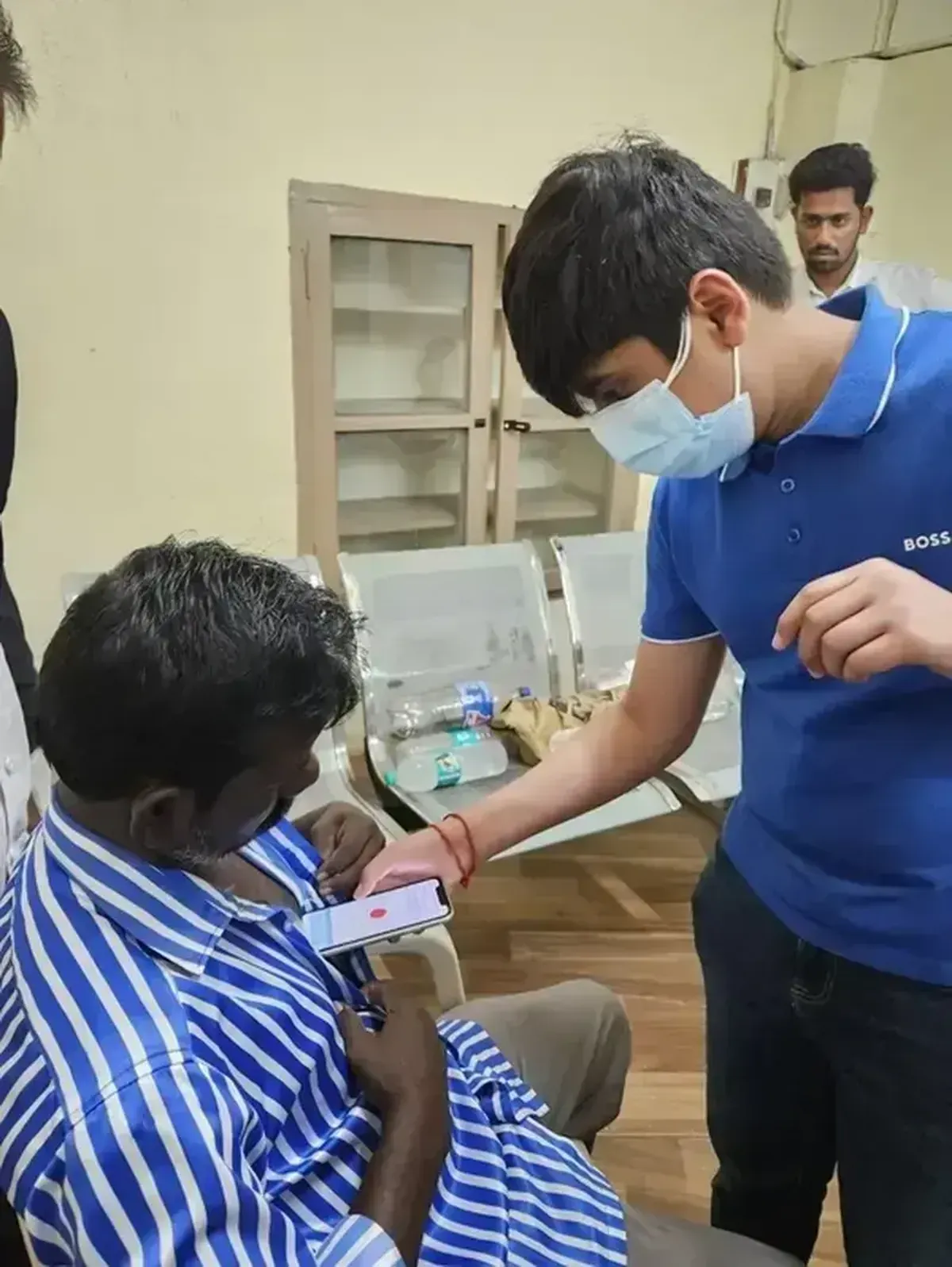
How does the heart disease diagnostic program work?
The teenager tested the application in various medical institutions in the USA and India. In the States, the testing involved about 15,000 patients, while in India, it included 3,500.
As Siddhartha Nandyala explained, “clinical trials were conducted not only to detect diseases but also to test the effectiveness of the tool. And it showed an accuracy of over 96 percent.” Later, the results were confirmed through clinical testing, electrocardiograms, and two-dimensional echocardiograms.
To use the application, the user places a smartphone near their heart. The system records heartbeats and uses improved methods for suppressing surrounding noise. This allows for accurate data collection even in noisy conditions. The program detects arrhythmias and irregular heartbeats, early signs of heart failure, and indicators of ischemic heart disease. It also identifies structural heart problems and abnormalities of the heart valves.
Nandyala is currently waiting for the necessary permit documentation for his invention. After that, Circadian AI will begin rapid screening at primary healthcare centers and hospitals in the USA, India, and other countries. Nandyala noted, “It’s not about replacing other technologies, such as the electrocardiogram. It’s simply a preliminary screening tool that determines whether users have any heart issues.”
