
 Gaby
Gaby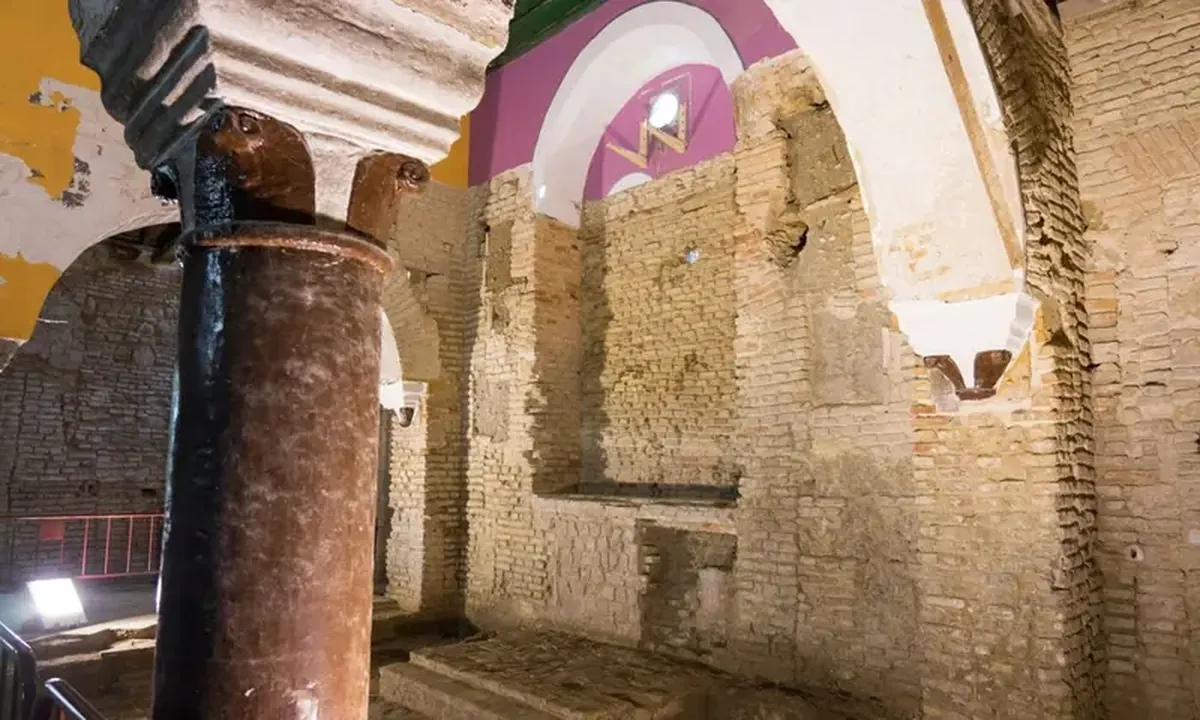
Archaeologists in the Andalusian city of Utrera have uncovered the ruins of a 14th-century synagogue beneath a former disco bar.
Researchers say the structure is one of a rare group of medieval synagogues that survived the 1492 expulsion of Jews from Spain.
Until now, Spanish scholars knew of only four surviving medieval synagogues: two in Toledo, one in Segovia, and one in Córdoba.
The recently discovered fifth synagogue served as a house of worship for seven centuries. It was later converted into a church, a hospital, an orphanage, and eventually a disco bar.
References to the lost Jewish temple date back over 400 years. A local priest, historian and poet, Rodrigo Caro, wrote in 1604 in his chronicles of Utrera: “In that place lived only foreigners and Jews, who had a synagogue where the Misericordia hospital now stands.”
In 2016, the Utrera city council decided to purchase the building for nearly half a million euros. The high price sparked controversy among locals, according to Arkeonews. But the discovery of the synagogue’s ruins beneath the former hospital, orphanage and disco bar provided a compelling argument for buying the historic structure.
No maps or official records with information about the medieval Utrera synagogue have survived. Before the expulsion, Jewish communities in Spain had significant autonomy, with their own courts and tax systems. The expulsion was often accompanied by brutal pogroms, so the synagogue may have been destroyed. Rapid economic development in the 20th century also destroyed much of the medieval city.
So the city council approved the acquisition and commissioned archaeological research. Archaeologists confirmed Rodrigo Caro’s account by identifying the prayer hall, benches around the perimeter, and a niche for storing the Torah.
The excavation leader, Miguel Ángel de Dios, said, “The first thing we needed to confirm was the existence of the prayer hall.” He added, “The main elements of the synagogue — the vestibule and the benches around the perimeter — discovered during this research now confirm that we are indeed in a prayer space.”
Now he and his team hope to identify the pulpit and the ritual bath — the mikveh.
