
 Carlos Solis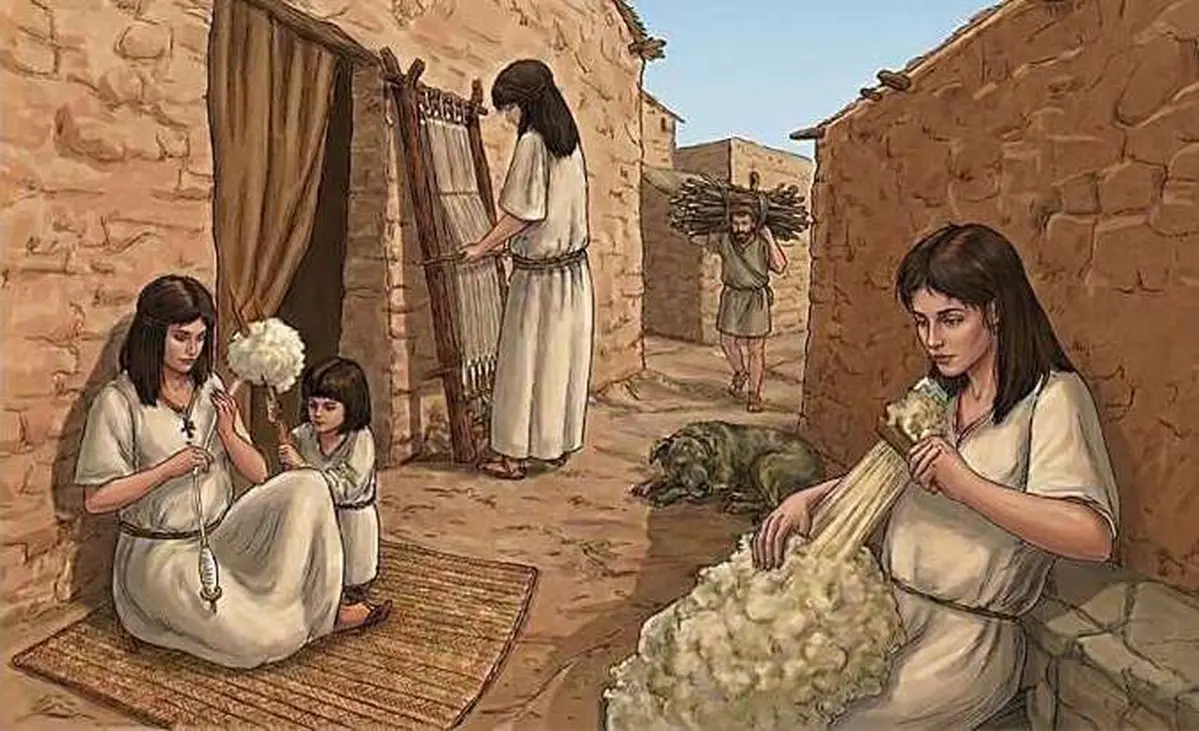
Archaeologists at the University of Granada unearthed and reconstructed a remarkably well-preserved Bronze Age loom.
It’s a vertical wooden loom with clay weights, found at the Cabezo Redondo archaeological site. The discovery gives researchers an unprecedented view of how textile technology developed in the western Mediterranean—especially how fabric production grew more complex in the 2nd millennium BCE.
The charred components of the loom survived against the odds, even though the device was made of wood and organic fibers.

What archaeologists learned about Bronze Age weaving
Vertical looms with weights were widely used in prehistoric Europe to produce cloth. The weights—made of clay or stone—kept the warp threads under tension. Those weights also helped archaeologists infer a shift from one stage of textile production to another.
“Textile production in southeastern Iberia during the Bronze Age is well known, particularly from studies of loom weights and spindle whorls. However, wooden components rarely survive, which seriously limits our ability to study loom morphology, their spatial organization, and weaving techniques,” said Dr. Ricardo E. Basso Rial, the study’s lead author.
He said this well-preserved ancient loom gave the team a rare chance to deepen their understanding of how textile production evolved during the Bronze Age.
By analyzing the wooden fragments and clay weights, the researchers reconstructed the loom’s appearance. The archaeologists found that the wooden parts were made from local Aleppo pine. The real surprise was the weights: they were significantly lighter than other examples previously found in Mediterranean Iberia.
The team concluded that this difference likely reflects a shift toward producing finer and more varied fabrics.

Why this textile transition matters
“Based on the loom weights, we can infer that the loom could produce not only plain-woven textiles but possibly denser, more technically complex weaves, even twills,” Dr. Basso Rial said. He argued that this represents a major step forward in understanding Bronze Age textile technology on the Iberian Peninsula. The most common textiles at the time were plain-woven fabrics made from plant fibers such as flax. Twill weaves didn’t become widespread until the early 1st millennium BCE.
Twill fabrics were usually made from wool. The team suggests that Cabezo Redondo was an important site in a “textile revolution”—a technical diversification of textile production associated with the adoption of wool.
“This find gave us a rare chance to see a loom used about 3,500 years ago and to peek into the daily craft of Bronze Age weavers,” Dr. Basso Rial summed up. The results were published in the journal Antiquity.
