
 Gaby
Gaby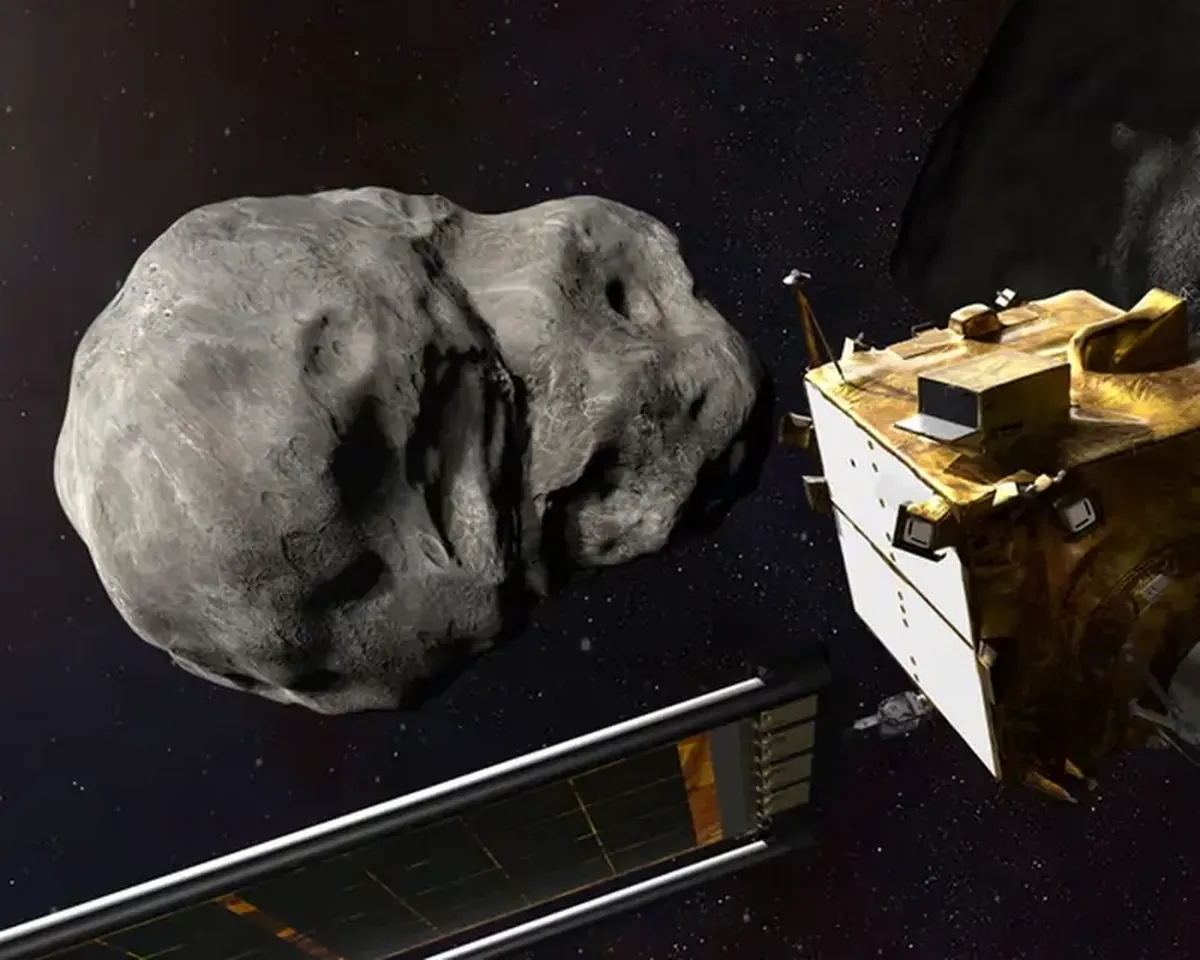
A new study by Canadian researchers finds that if the asteroid 2024 YR4 hits the Moon in 2032, fragments could head toward Earth. That debris could threaten satellites and spark a rare, extremely bright meteor shower.
What do we know about this potentially dangerous cosmic event?
At the start of 2025, astronomers were worried about asteroid 2024 YR4, which is estimated to be roughly 53 to 67 meters across. Early telescope observations suggested about a 3 percent chance it could hit Earth in December 2032, earning it the nickname “city killer.”
Later observations revised the chance of an Earth impact down to about 0.0017 percent. But the Moon is still at risk: data from the James Webb Space Telescope put the chance of 2024 YR4 striking Earth’s natural satellite at roughly 4.3 percent.
Recently, Canadian scientists modeled a scenario in which the asteroid hits the Moon. Their data suggest the impact could create a crater about 1 kilometer wide on the lunar surface and eject millions of kilograms of material into space, some of which could head toward Earth and arrive in a matter of days.
The team says that if 2024 YR4 strikes the Moon in 2032, it would statistically be the largest lunar impact in about 5,000 years. The resulting meteor shower would be a spectacular sight.
Many lunar fragments, millimeters to centimeters across, would burn up in Earth’s atmosphere and pose little risk to people. But some material could be captured into Earth orbit, threatening satellites, spacecraft, and astronauts, The Guardian reports.
https://www.youtube.com/watch?v=Rtg9d3zOSC8
Lead author Dr. Paul Wiegert of the University of Western Ontario said the asteroid’s impact on the Moon would be like “a large nuclear explosion,” given the amount of energy released.
He added, “A rock the size of a centimeter traveling at tens of thousands of meters per second is very much like a bullet.”
The study also argues that “planetary defense considerations” should extend well beyond near-Earth space.
NASA and other space agencies have long tracked asteroids and comets that could threaten the planet and are developing technologies to prevent potential collisions.
In 2022, NASA tested asteroid deflection by crashing the Double Asteroid Redirection Test (DART) spacecraft into the asteroid Dimorphos, successfully changing its orbit.
2024 YR4 orbits the Sun and is currently too distant for detailed observation. It won’t be visible again until about 2028, when scientists can reassess its size and trajectory.
Despite initial concerns that a collision with the Moon could alter the Moon’s orbit around Earth, NASA ruled out that possibility in April after conducting new measurements.
