
 Gaby
Gaby
A ship carrying around a hundred bottles of champagne, along with mineral water, wine, and porcelain, likely sank in the 1850s or 1860s.
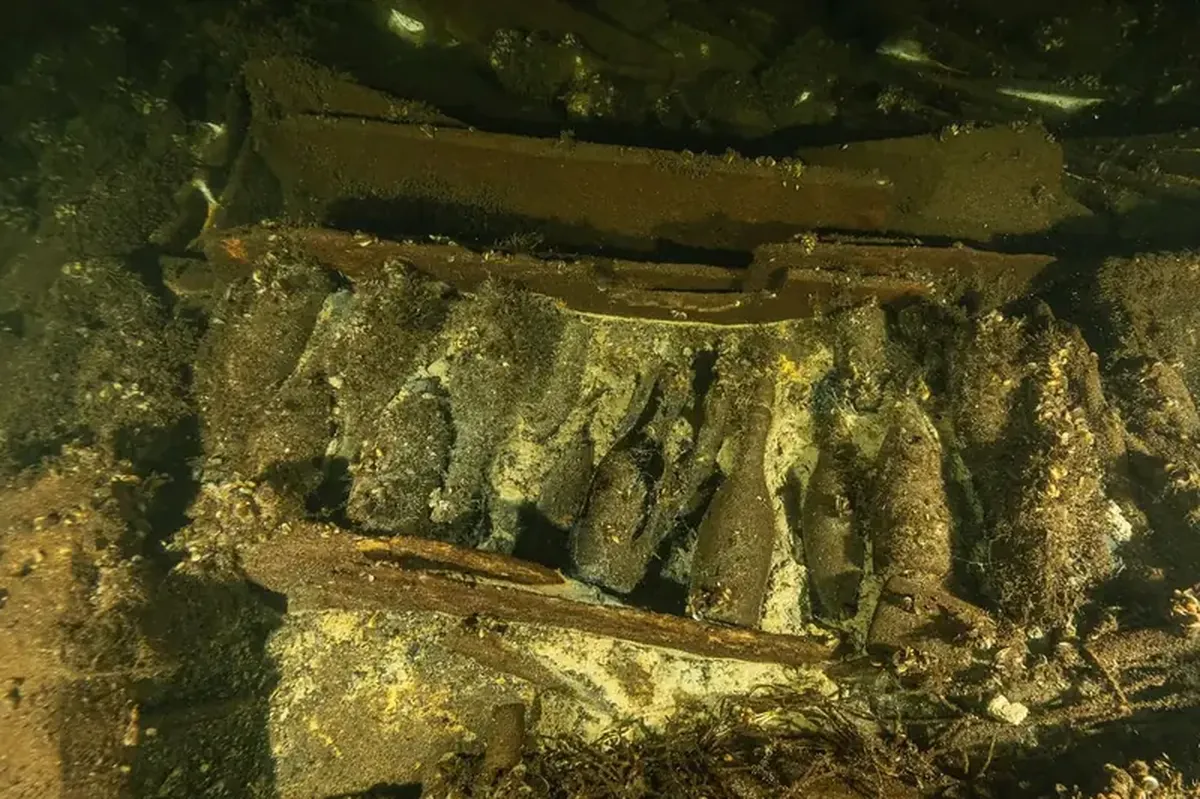
The remains of the sailing vessel rest at a depth of about 190 feet off the coast of Blekinge County in southern Sweden. Divers from the Polish company BalticTech discovered the wreckage 23 miles from the Swedish island of Öland while surveying uncharted areas of the Baltic Sea floor.
Experts suggest that the champagne and water from the German producer Selters—known as seltzer—might still be drinkable today. But tasting these beverages is impossible for now, because approaching the sunken ship is off-limits. Swedish authorities have classified the find as an “ancient relic” and do not allow it to be studied without special permission.
Some clarification: the Swedes had known about the sinking site since 2016. It was registered as a cultural heritage site with the National Heritage Board. But what the ship actually held at that depth remained a mystery until now.
What Experts Have Revealed
The mystery was unveiled by the team of divers from BalticTech. Using a sonar device, they stumbled upon what appeared to be an old fishing boat.
“At first, there were doubts about whether anyone would want to dive down,” the underwater explorers shared on their website. However, two divers decided to take the plunge and investigate the wreck, as reported by the Independent.
When the two did not return after two hours, their colleagues suspected “there’s something very interesting down there.” And they were right. According to the divers’ report, they found the sailing vessel “in very good condition, loaded to the brim with champagne, wine, mineral water, and porcelain.”
According to the dive team leader, Tomasz Stachura, wine and water experts quickly contacted the diving company and raced to conduct laboratory tests on the contents of the bottles.
However, the Swedish authorities took a firm stance, insisting that archaeological treasures on the seabed remain untouched.
“You cannot remove items from a shipwreck site, such as champagne bottles, without the county’s permission,” noted Magnus Johansson, an official from Blekinge County.
At the time the ship sank, mineral water was considered as valuable as champagne (if not more so). Only the nobility could afford it. Marine archaeologists have speculated that the vessel was delivering expensive drinks and tableware to a royal household.
