
 Gaby
Gaby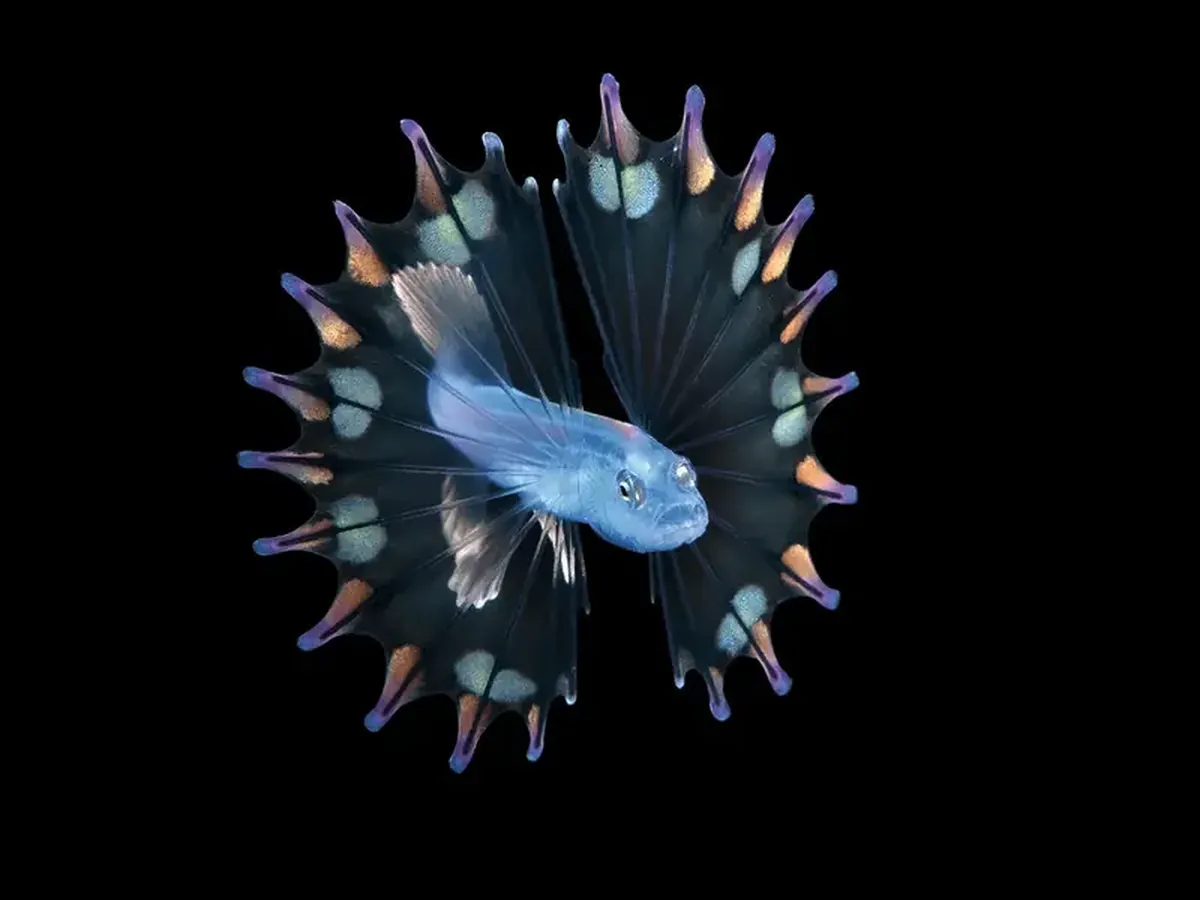
Few things are more beautiful than tiny sea creatures shimmering in dark water in every color imaginable.
As the sun sets over Florida and the sky and sea go black, 55-year-old Palm Beach County dentist Steven Kovach grabs his camera, meets friends, and heads out to the open ocean by boat.
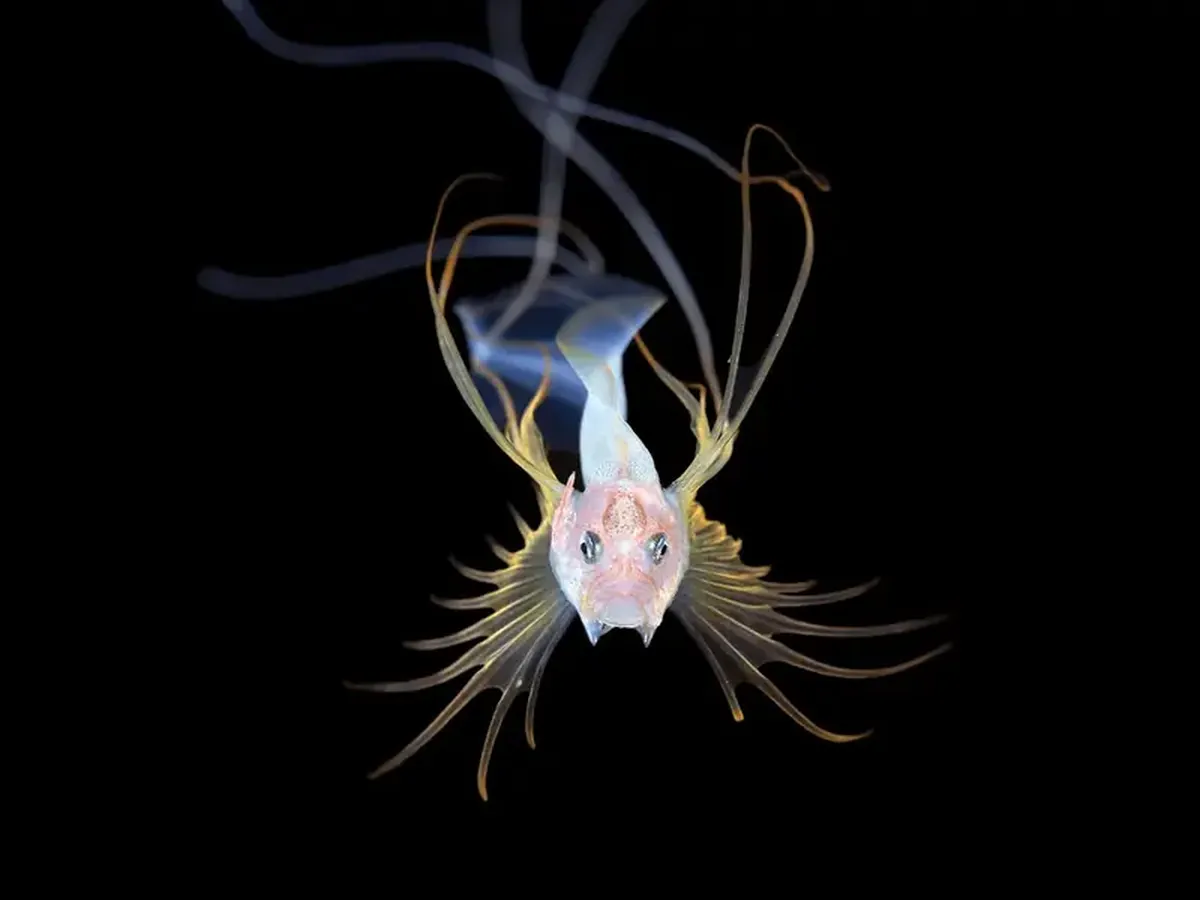
Gargoyle Fish
Kovach then dives into the inky Atlantic, dropping to about 15 meters and waiting for the new stars of his underwater stories to appear. Massive hammerheads and swordfish glide past. Interacting with those predators isn’t always comfortable, but it’s incredibly fascinating.
But those giants aren’t his favorite subjects. Kovach hunts for tiny creatures—mostly rare, deep‑sea species. His models are often in their larval stage, and their size usually doesn’t exceed that of a dime.
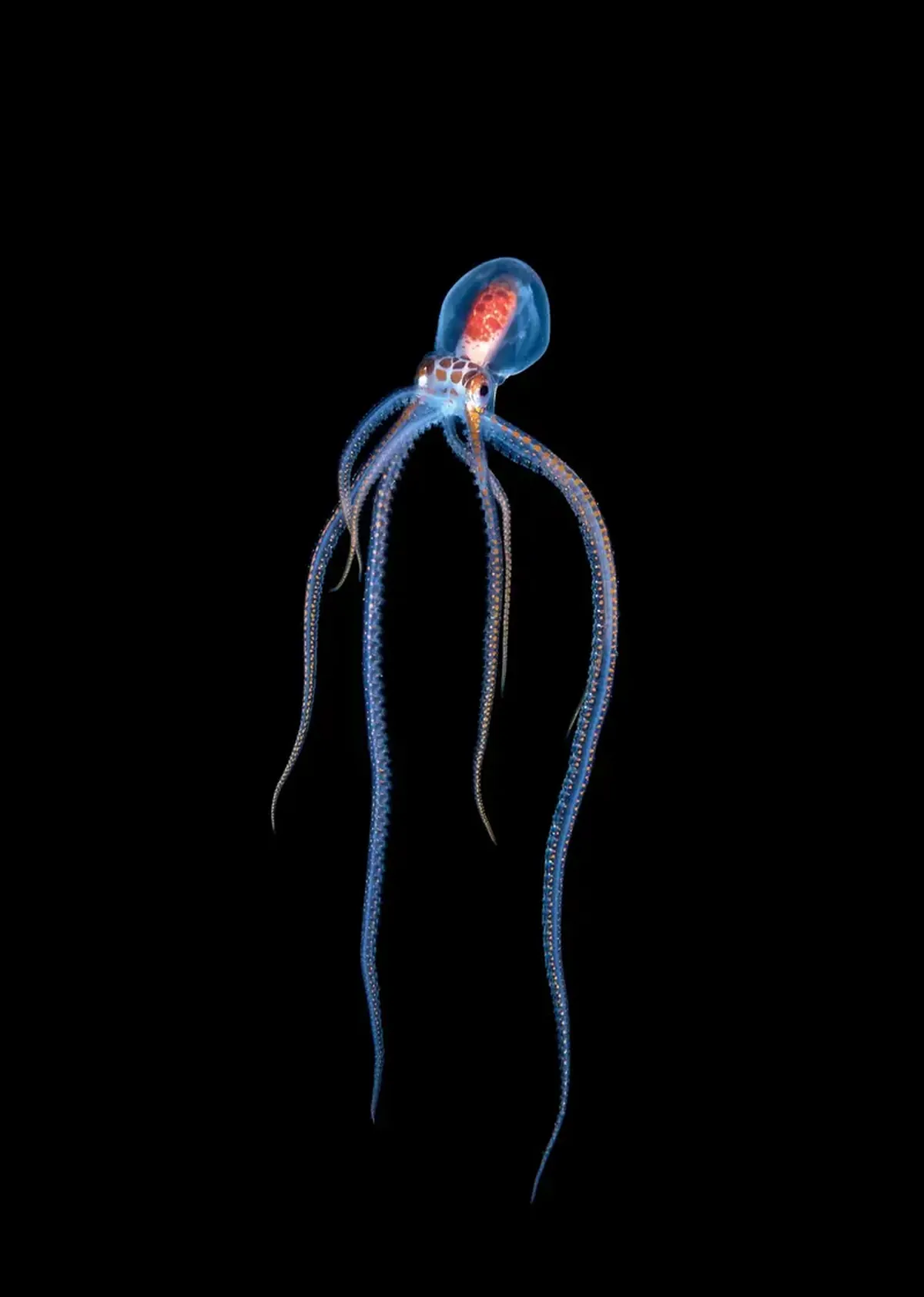
Baby Long-legged Octopus
They migrate through the darkness over long distances. To capture them in stunning detail, Kovach uses a camera with a macro lens and strobes. He became a certified diver in high school, but it took him years to afford professional underwater photography gear.
Smithsonian Magazine calls the technique of photographing animals in the deep night ocean “black water photography.”
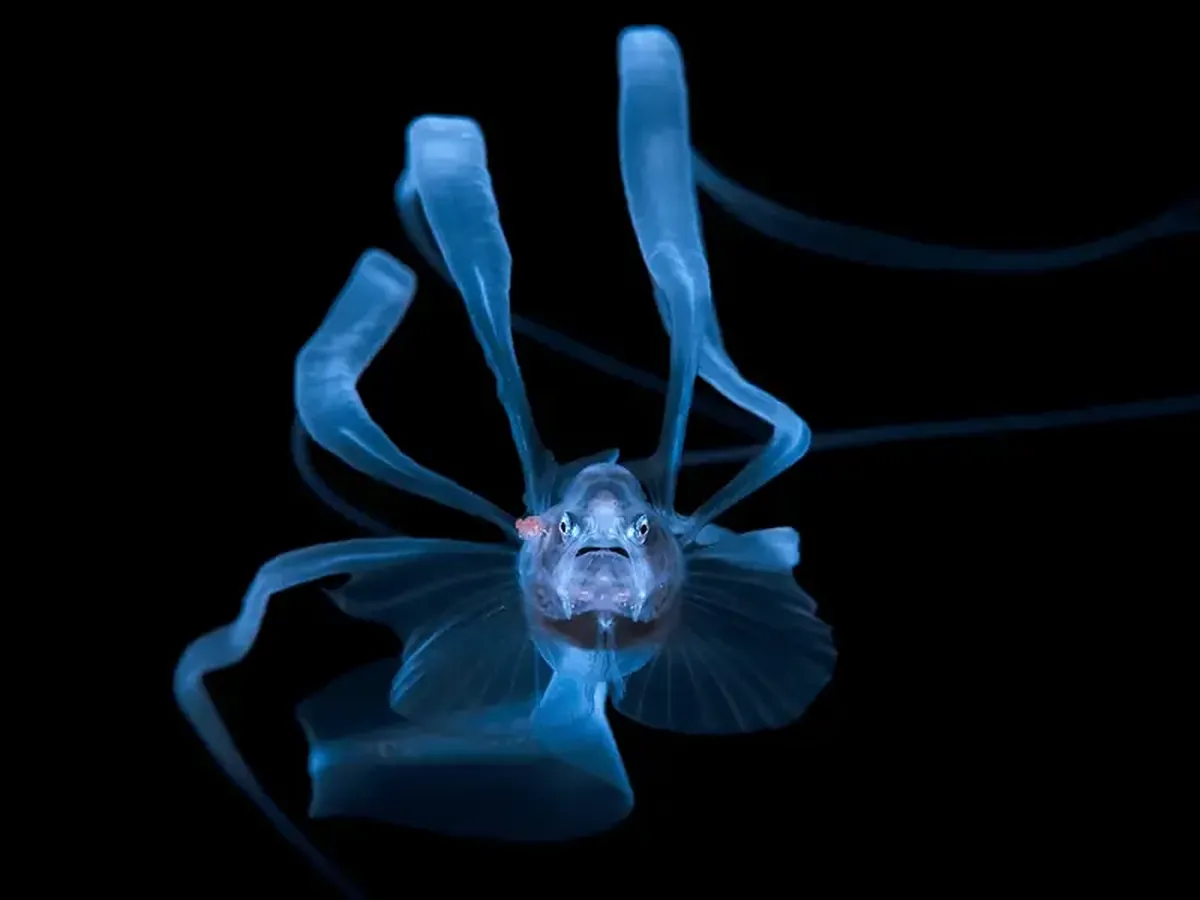
Bumphead Parrotfish
Kovach adds to his chronicle of miniature creatures not only off Florida but also near Hawaii and the Cayman Islands, and around Indonesia, the Philippines, Japan, and Mexico.
Kovach’s photographs are notable not just for their beauty. They also matter to science. Whenever he spots a creature he’s never seen before, he photographs it and sends the images to researchers at the Smithsonian Institution in Washington. Occasionally he preserves a larva in alcohol and ships it to scientists. They say this doesn’t harm the ecosystem, since more than 99 percent of many species’ larvae never reach adulthood. Kovach has even received a permit that lets him keep rare specimens for scientific study.
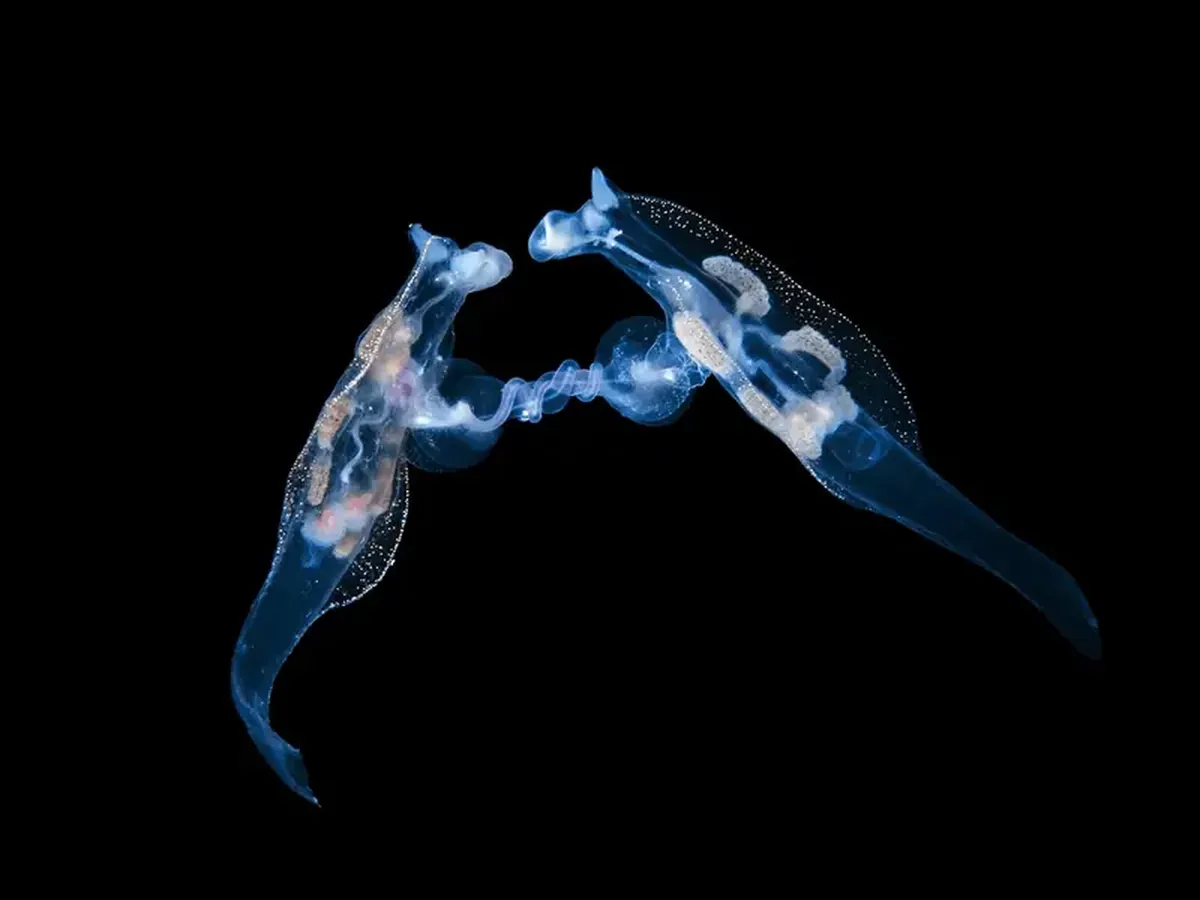
Mating Pelagic Sea Slugs
Smithsonian Magazine journalists interviewed Kovach about his passion, which has become a second career for him.
What challenges does someone working in black water photography face?
First and foremost, you’re suspended in the depths and can’t see the bottom. The animals are not happy to see you; they flee and try to hide. Technically, this is much more complicated than standard macro photography on reefs.
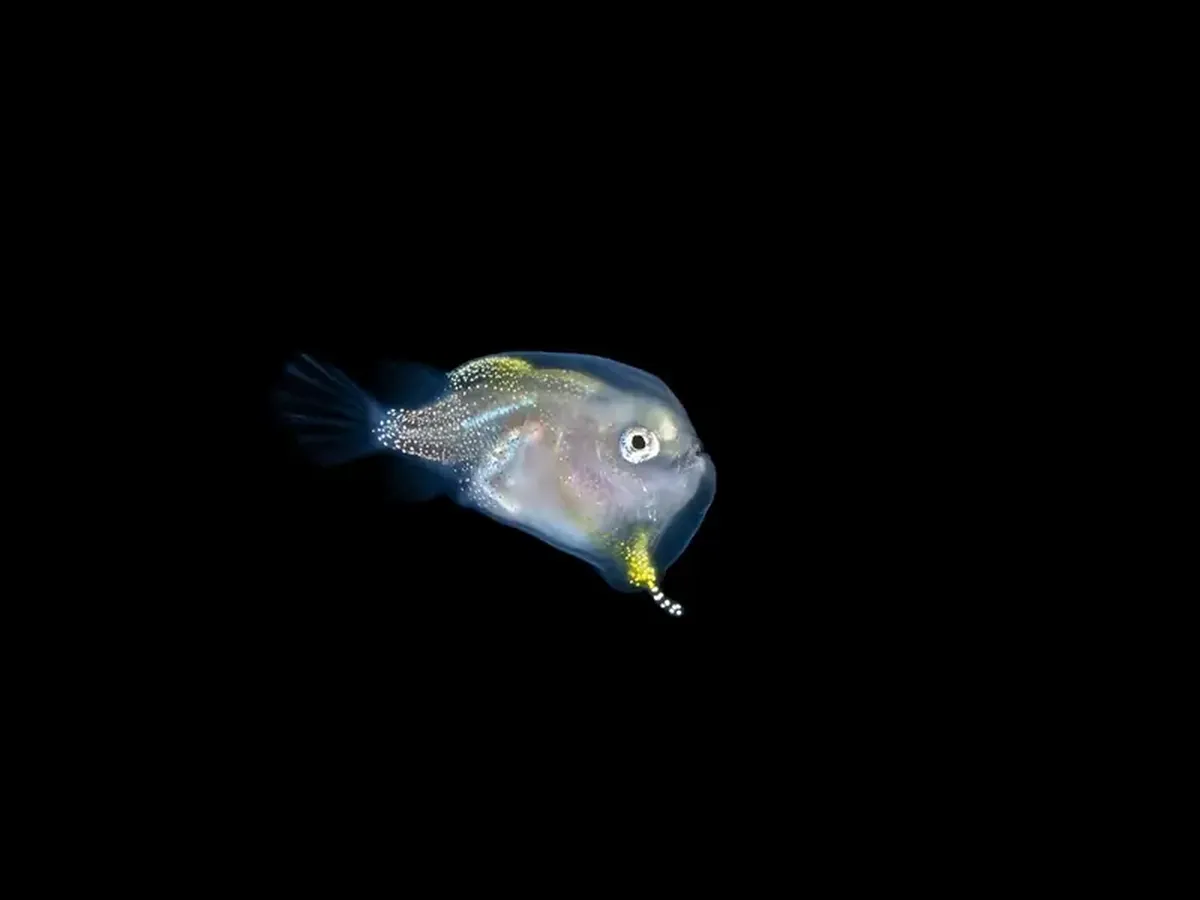
Juvenile Spiny Sea Devil
What is the greatest reward for such a master?
The greatest reward is encountering animals I’ve never seen before. Just a few weeks ago on Kona Island, we found a deep‑sea anglerfish that had never been photographed before. For me, that was pure bliss.
What is your favorite image captured from the black water?
Oh, that’s a tough question. I have far too many favorites. One is the bony‑eared assfish (Acanthonus armatus), which is often found off the coast of Florida. It’s one of the most beautiful creatures I’ve ever seen underwater. It’s unusual and rare—adult specimens live at great depths, so seeing one is a real stroke of luck.
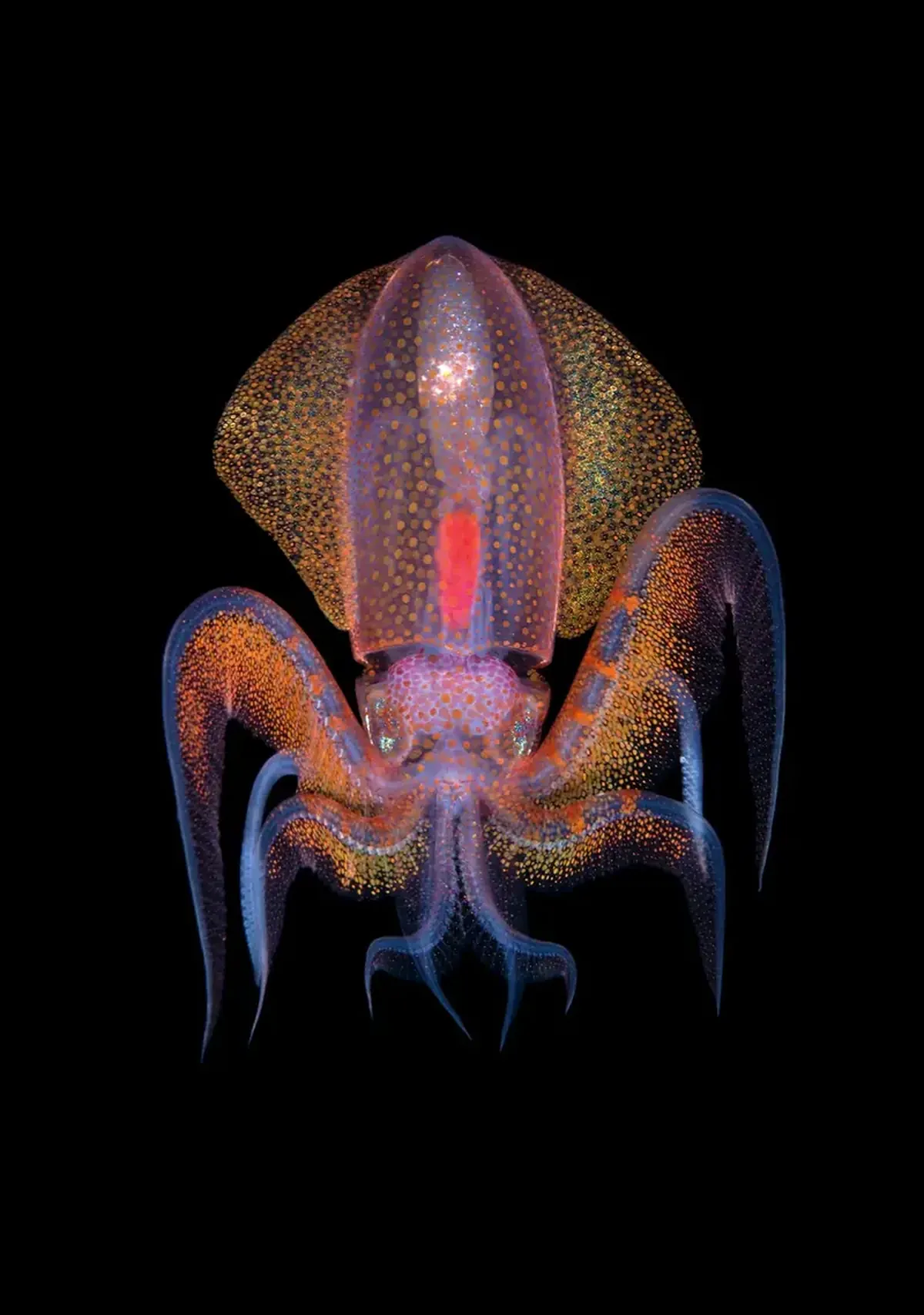
Diamond Squid
What is the most challenging aspect of this creative work?
It’s not so much that taking the picture is difficult as finding the subject. It’s like a treasure hunt. Some of these animals I’ve been searching for for years. Sometimes it’s just a game of patience—the biggest challenge is not giving up until they appear. Some of the creatures in these photos took me five to eight years to find.
It’s also hard to get the perfect shot. Capturing a lobster riding on a jellyfish is a real challenge. The key is not just to photograph the scene but to make it look beautiful. Lobsters, like jellyfish, are in constant motion. To catch them in the perfect pose takes a lot of time and many shots.
Other temperamental subjects are deep‑sea anglerfish. Their larvae are only five to eight millimeters long; they hang upside down and are constantly moving. Photographing them is quite a task.
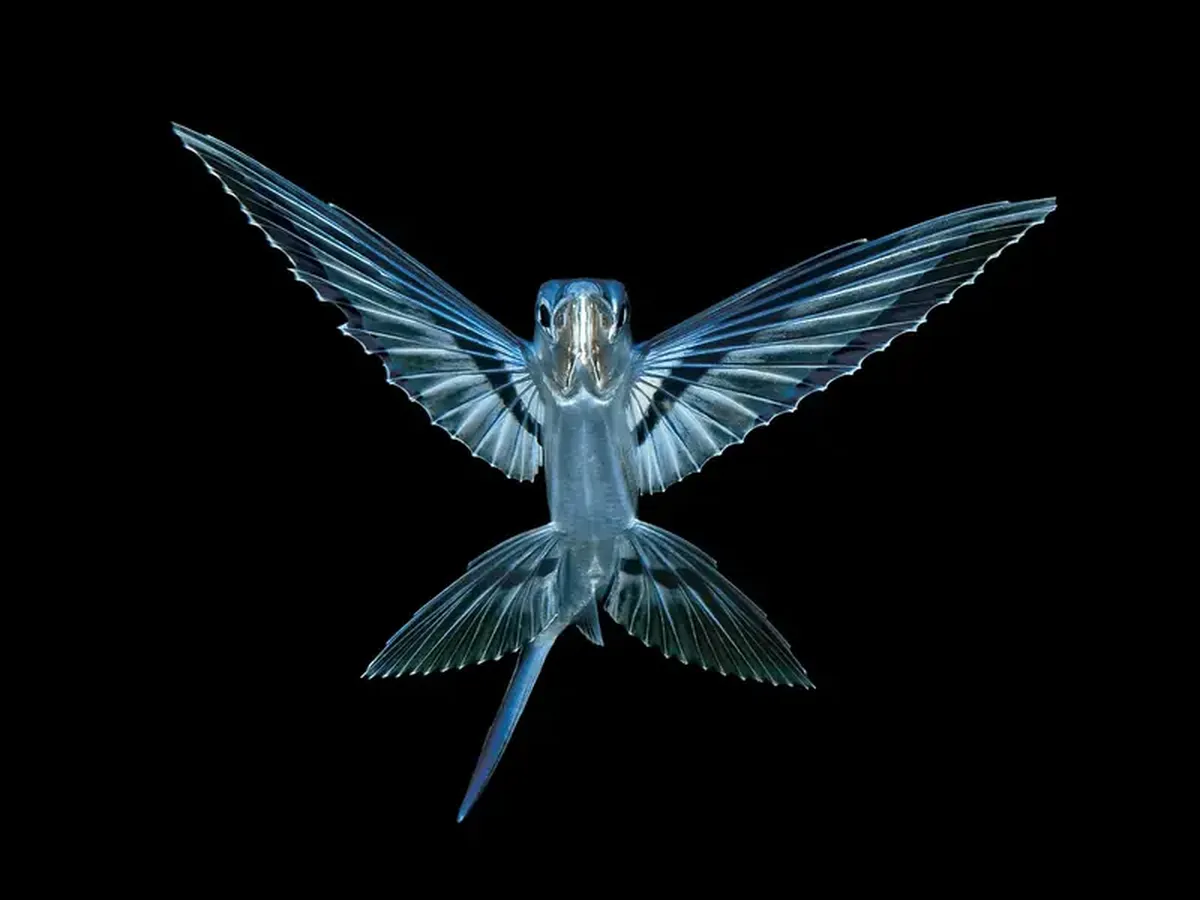
Adult Flying Fish
Which of your photographs attracts the most public attention?
People generally love colorful photos. One favorite is the lobster‑on‑a‑jellyfish shot.
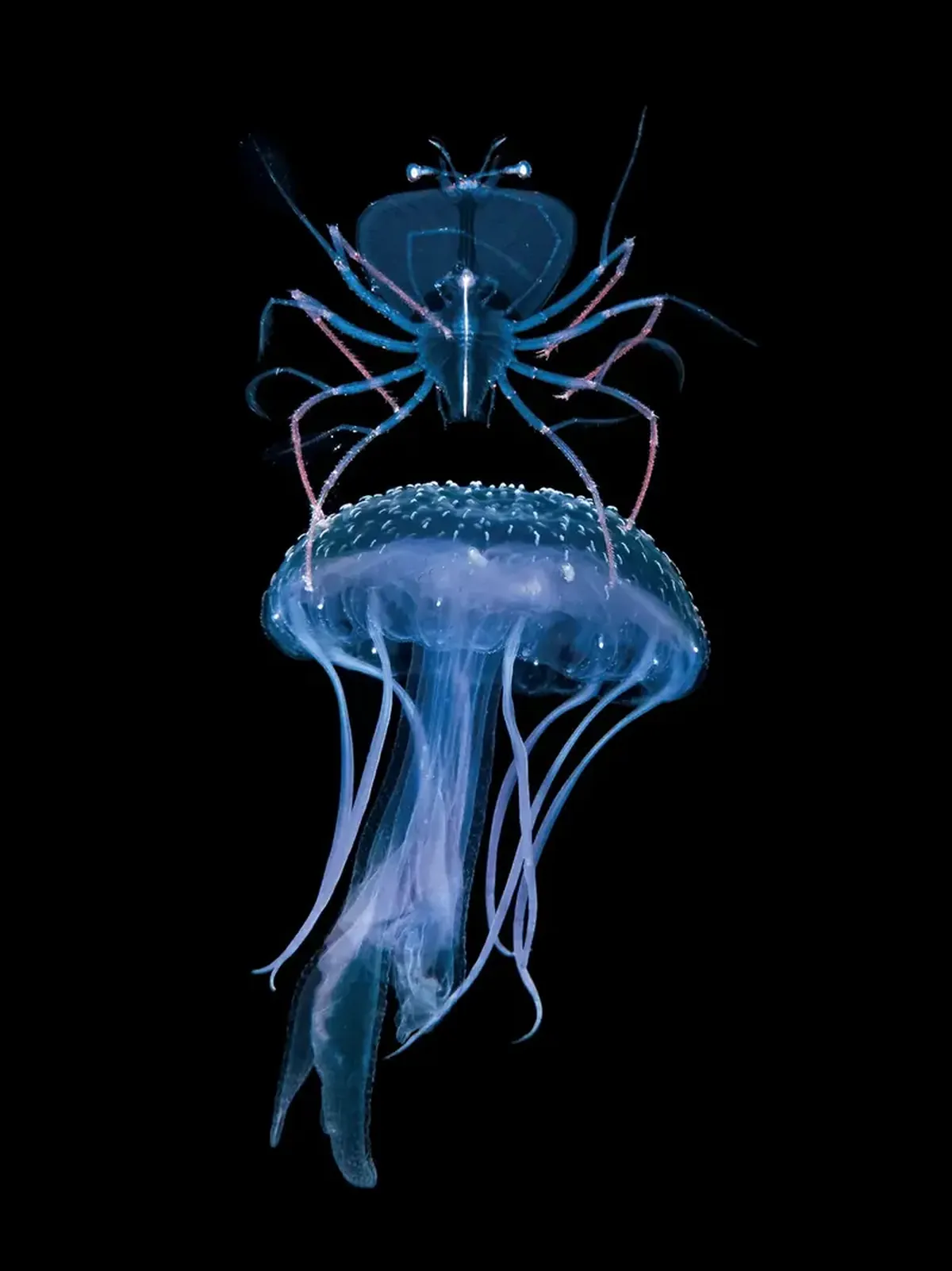
Lobster Riding on a Jellyfish
Have you encountered marine debris or plastic during your photo hunts?
When I go to places like the Philippines or Indonesia, I encounter a lot of trash in the water. There’s less in Hawaii. Sometimes I see it off the coast of Florida, but the amount here isn’t critical. I have many images on my Instagram showing animals and trash, including a nautilus riding packaging debris and a fish hiding in plastic.
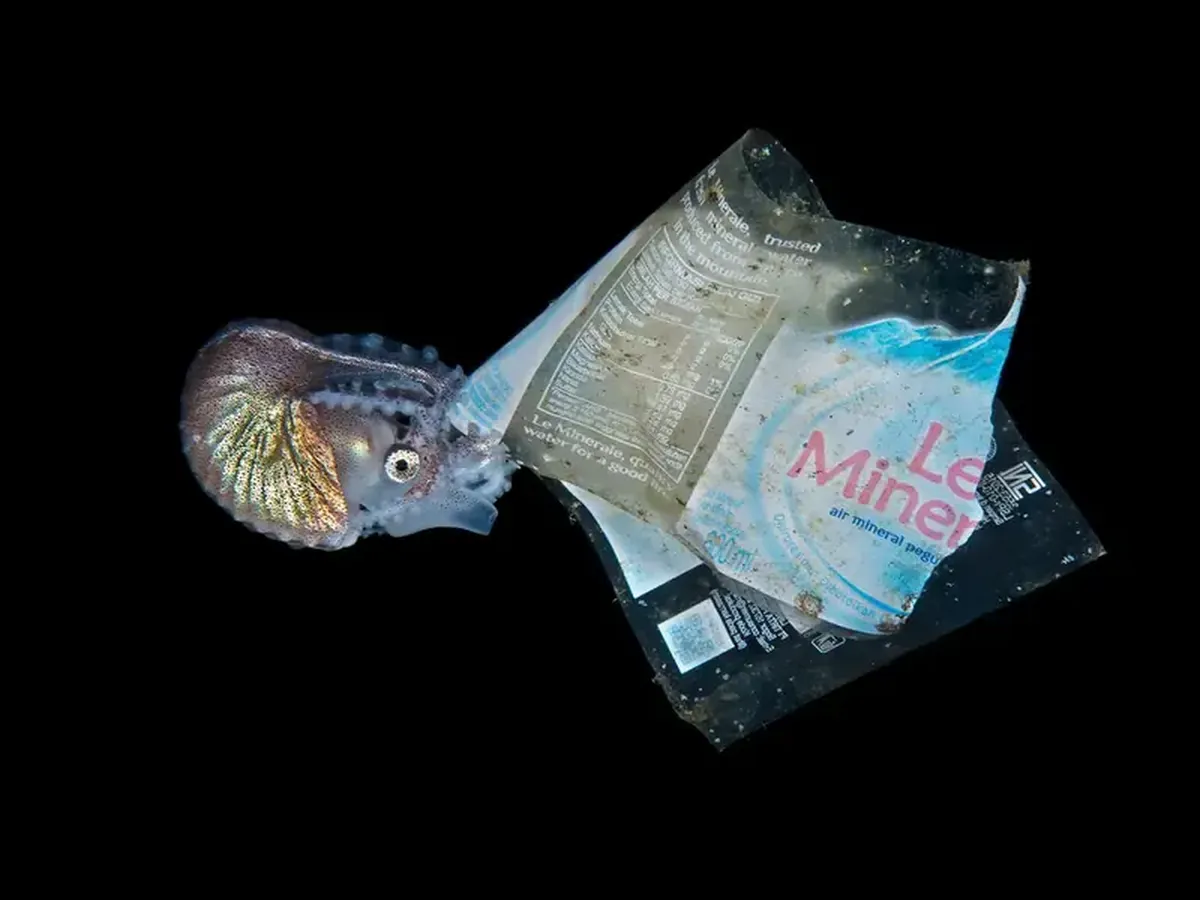
Nautilus “collecting” plastic waste
You publish a lot of your materials on social media. What do you think people will take away from these images?
Social media is a way to show my work to the public, and someone might even want to buy a photo. Mostly, I enjoy sharing what I see that others might not notice.
