
 Gaby
Gaby
Archaeologists have unearthed thousands of stone axes and painted pottery shards in a 5,000-year-old agricultural settlement. The artifacts point to an unknown community that likely farmed the land and traded with other peoples across the Mediterranean.
The history of the Ved-Becht archaeological site dates back to the 1930s, when French colonists first noticed traces of the settlement. The site was then forgotten for more than 90 years. Recently, Moroccan archaeologist Youssef Bokbot suggested the location might hold important discoveries and assembled an international team of researchers.
What Did the Researchers Discover?
During the investigation, the findings of which were published in the journal Antiquity, an “astonishing number of pottery shards and polished axes” were uncovered. Co-author Giulio Lucarini, an archaeologist at the Institute of Cultural Heritage Sciences of the Italian National Research Council, shared this with Live Science.
Using radiocarbon dating of charcoal samples and seeds found during the excavations, the team dated the site to approximately 3400–2900 BCE. The people who lived there probably had diverse genetic backgrounds. Researchers concluded that traditional pastoralists from the Sahara settled here, alongside migrants from the Iberian Peninsula and the Middle East.
“In fact, all the streams of indigenous peoples converge in what we now call a melting pot,” noted co-researcher Cyprian Brudbenk, an archaeologist from the University of Cambridge.
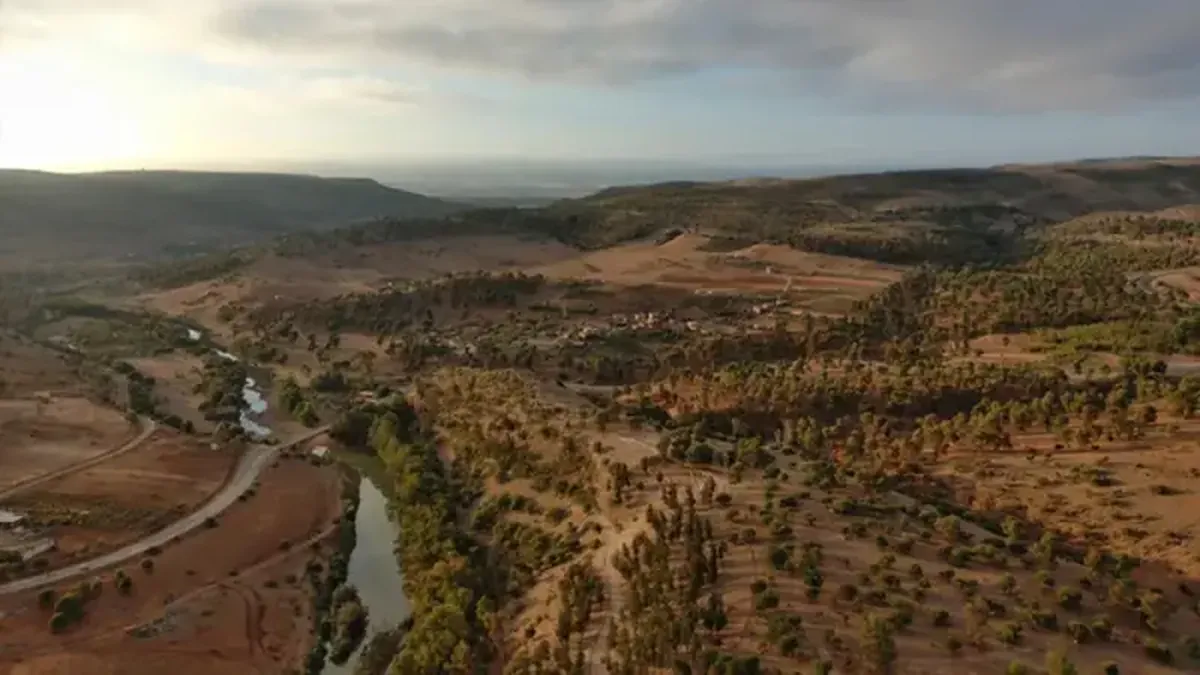
The people who inhabited this arid land were farmers who grew barley, wheat, peas, olives, and pistachios. Seeds found in large excavated pits provided the evidence. The team also uncovered remains of sheep, goats, pigs, and cattle in the settlement. Furthermore, the abundance of pottery and stone axes discovered here suggests that the Neolithic community produced goods for trade with other peoples on the Iberian Peninsula during the Bronze and Copper Ages and possibly with communities in Egypt and Mesopotamia.
Previous studies have found ivory and ostrich eggshells in European settlements from those distant times. Until now, however, archaeologists had no evidence that these goods were supplied to Europe from Africa.
For a long time, archaeologists assumed that 5,000 years ago both sub-Saharan and North Africa were dominated by hunter-gatherers and pastoralists—nomadic herders. Archaeologists had found stationary agricultural societies throughout the Mediterranean from that period, but not in North Africa.
“Before this discovery, nothing was known about agriculture in North Africa outside the Nile Valley,” said Giulio Lucarini.
“We have effectively shown that this part of the world fully entered the Neolithic, that it is part of the larger world of agriculture. We have only just scratched the surface,” added Cyprian Brudbenk.
