
 Gaby
Gaby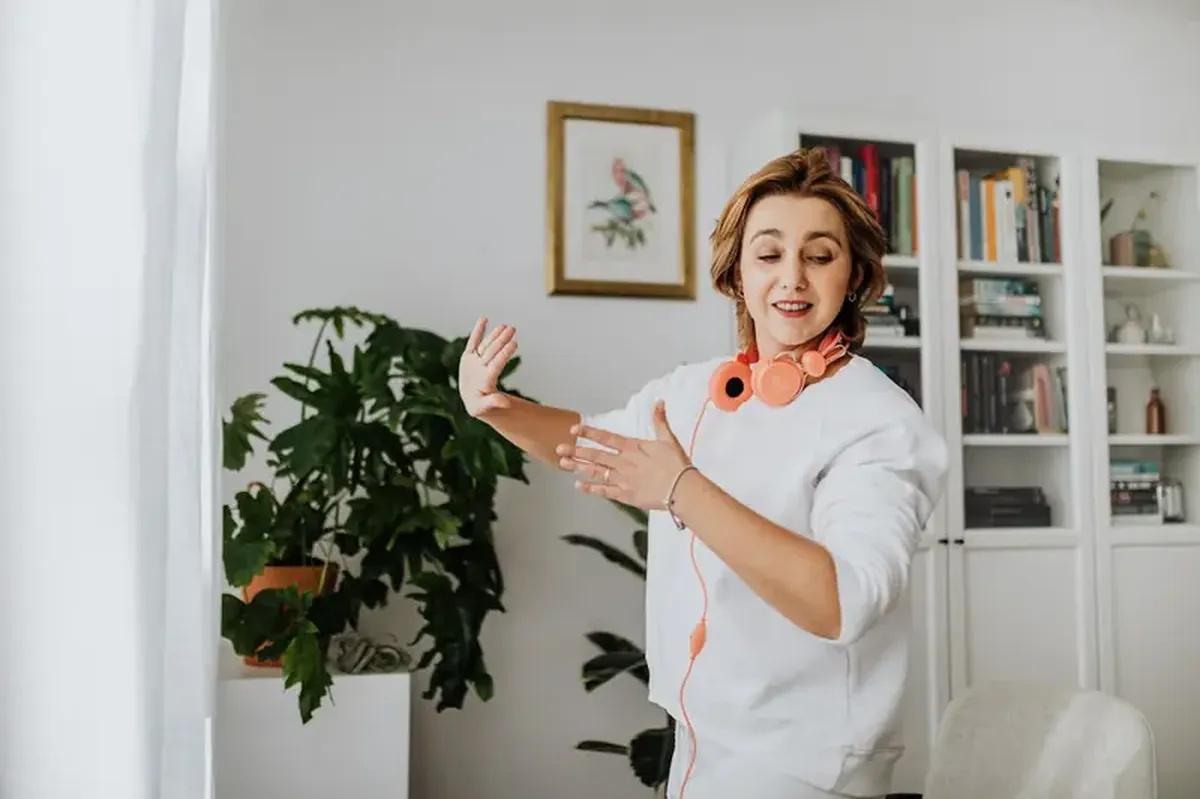
A few short bursts of simple exercise in the hour before bed can help you sleep longer and better, a small study from the University of Otago in New Zealand suggests.
Experts usually advise against intense evening workouts. Vigorous exercise can put strain on the body at a time when you should be winding down. Earlier studies have found that after hard workouts it takes longer to fall asleep and sleep quality can suffer.
That doesn’t mean your evening should be spent sprawled on the couch in front of the TV. The research team wanted to find a middle ground between evening relaxation and activity. Their small study suggests that just a few three‑minute sessions of bodyweight exercises, done every half hour before bed, can improve sleep.
“For many of us, the longest period of uninterrupted sitting occurs in the evening. We wanted to find out what would happen if we engaged in very short bouts of light activity several times throughout the evening,” said Jennifer Gale, an expert in sedentary behavior and the study’s lead researcher.
Half of the 28 participants spent one evening sitting continuously for four hours before bedtime. A week later, the same volunteers spent another evening doing three‑minute sessions of 20‑second bodyweight exercises every half hour. The exercises were simple — things like squats or knee lifts followed by straightening the leg at the hip — so anyone could do them without equipment. Each test evening lasted four hours. The other half of the participants did the opposite: they exercised on the first evening and sat for four hours on the second.
During the experiment, participants ate the same meals and wore wrist accelerometers to track their movement, according to ScienceAlert.
The researchers found that after the exercise evenings, participants slept more soundly and, on average, about 30 minutes longer than when they had sat still all evening.
Gale says the study adds to the evidence that evening exercise does not necessarily hurt sleep quality, despite common beliefs to the contrary.
Because the study mostly involved young, healthy women with an average age of 25, the results need to be confirmed in larger and more diverse groups.
“From other studies, we know that you could likely achieve a similar effect by walking around the house, marching in place, or even dancing in your living room,” said Meredith Petty, a sports and nutrition researcher who also participated in the study. She emphasized that “the most important thing is to regularly get up from your chair and move.”
The study appears in the journal BMJ Open Sport & Exercise Medicine.
