
 Gaby
Gaby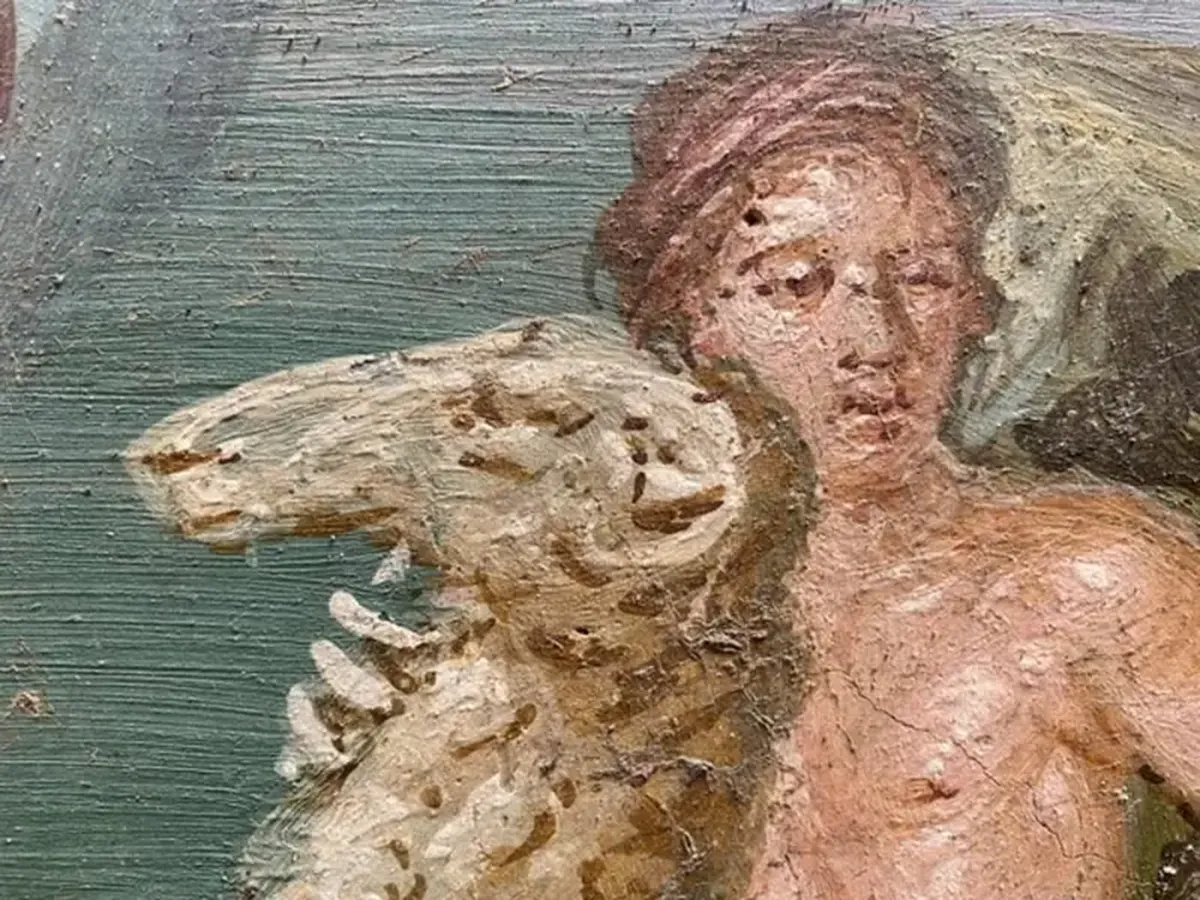
Archaeologists have uncovered a lavish private bath in Pompeii, buried almost 2,000 years ago beneath layers of volcanic rock and ash. The team studying the site in Italy’s Campania region said discoveries like this come along only once a century.
Researchers say this may be the largest private bath ever found. It includes hot, warm, and cold rooms, a massive swimming pool, and exquisite works of art. The bath, more like a spa complex, sits at the center of a large residence unearthed during a two-year excavation.
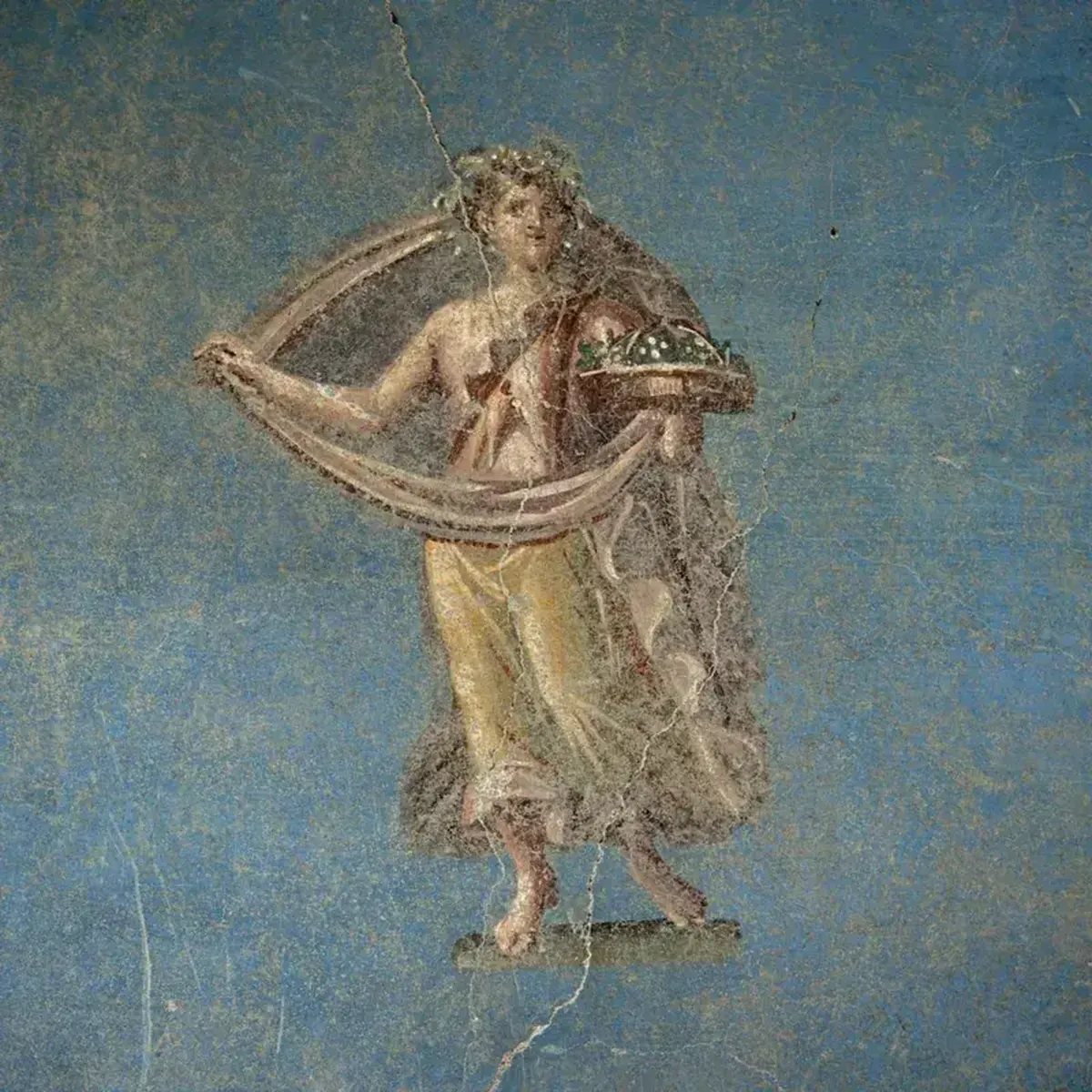
“These kinds of spaces create what we call the ‘Pompeii effect’ — the impression that people just stepped out a moment ago,” said Gabriel Zuchtriegel, director of the Pompeii Archaeological Park, in an interview with the BBC about the new find.
What Did the Archaeologists Find?
One-third of the ancient city remains buried. Archaeologists are gradually excavating Pompeii, and recent digs — the largest in decades — have shed new light on Roman life.
Researchers have unearthed an entire city block that includes a laundry, a bakery, and a large private house. Scholars suggest the block may have belonged to a wealthy individual, possibly Aulus Rustius Verus, a prominent politician in Pompeii. The discovery of an impressive private bath supports the idea that the owner enjoyed high status.
“Only a few houses had private bath complexes — those belonged to the very richest,” said Dr. Zuchtriegel.

Those lucky enough to use the complex would leave their clothes in a changing room with bright red walls and a mosaic floor of geometric patterns. The marble used for the floor inlays came from various corners of the Roman Empire. After changing, visitors would head to the steam room to bathe and enjoy the heat. Hot air circulated beneath the suspended floor and behind walls with cavities.
Next, guests moved to a brightly painted warm room. There, oil was rubbed into the skin and then scraped off with a curved tool called a strigil. Finally, they entered the frigidarium — the cold room. Surrounded by red columns and frescoes of athletes, visitors could cool off in a pool large enough to hold 20 to 30 people at once.

Behind the hot room sat a boiler room. A pipe brought water in from the street. Part of the water flowed to the cold pool, while the rest, destined for the hot room, was heated in a lead cauldron. The water-flow control devices look so modern they could still work today.
Because the boiler room contained a furnace, the slaves who operated the system had to work in unbearably hot conditions.
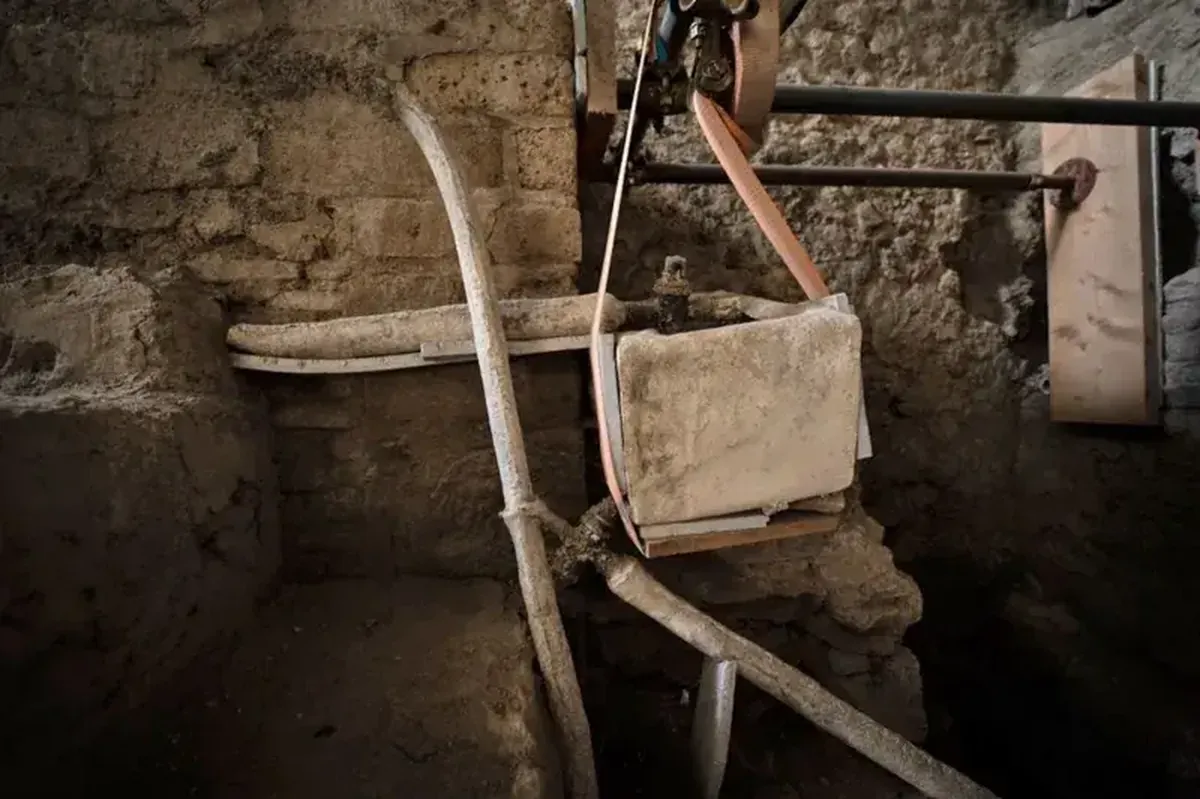
“The most striking impression from these excavations is the stark contrast between the lives of slaves and the very wealthy. And the wall is what separated these two different worlds,” said archaeologist Sophie Hay.
The bath is the latest discovery inside the luxurious house from these excavations. Last year, archaeologists found a massive banquet room with black walls and frescoes depicting classical themes. They also uncovered a smaller, more intimate room painted pale blue where the household prayed to the gods.
When Vesuvius erupted, renovations were underway in the residence: tools and building materials lay scattered. On the floor of the blue room sat a pile of mother-of-pearl oyster shells, ready to be crushed and glued to the walls to give the room a shimmering effect.
Shocking Discovery in a Wealthy Residence
In a cramped, undecorated room, archaeologists found the remains of two people who could not escape. The skeletons provide a haunting reminder of the horror the city’s residents experienced during Vesuvius’s eruption.
The remains included a woman aged 35–50, clutching jewelry and coins, and a young man, possibly just over 20, who had keys on him.
The woman’s skeleton, curled in a fetal position, was found on a bed. The man’s remains were found in the corner of the room.
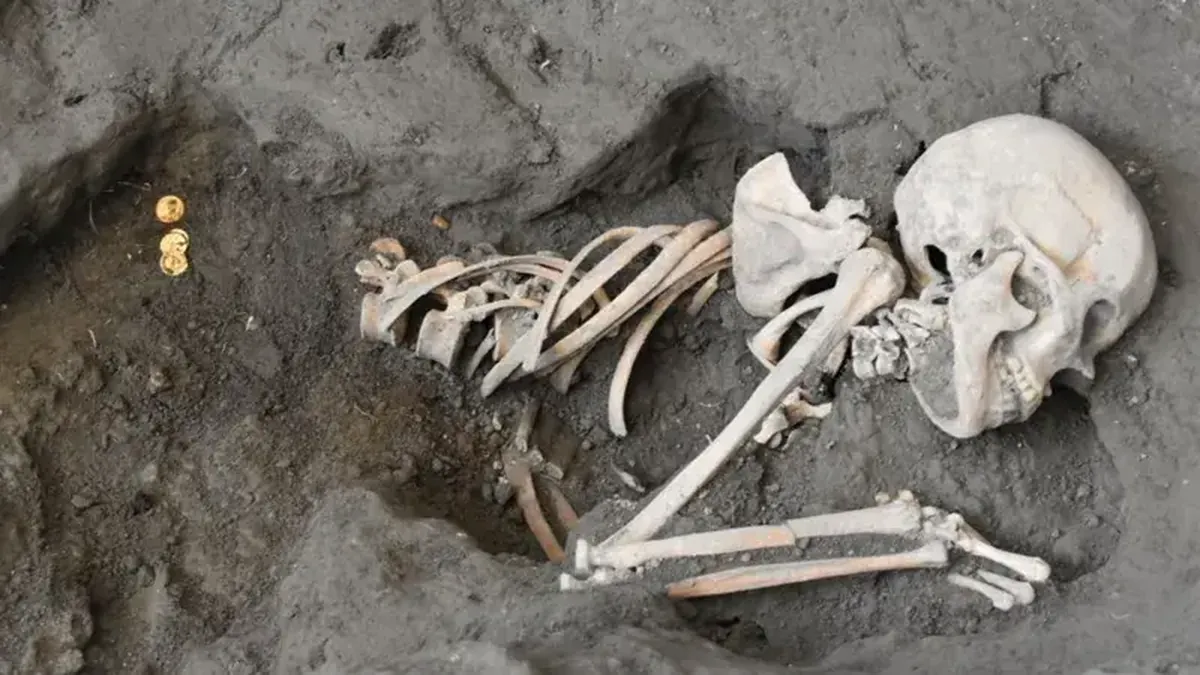
The pair likely tried to barricade themselves but died when a tsunami of superheated volcanic gas and ash — a pyroclastic flow — swept through the city. “This is a dramatic site, and everything you find here speaks to that drama,” said restorer Ludovica Alesse.
“The pyroclastic flow from Vesuvius swept down the street and destroyed the wall of this room, effectively crushing them. The woman was still alive when the man died, and then the pyroclastic flow filled the room and she perished,” explained Sophie Hay.
Analysis of the young man’s skeleton showed signs of wear despite his age, which led researchers to suggest he may have had lower status, possibly even being a slave. In contrast, the bones and teeth of the middle-aged woman were in good condition. “She likely had high status. She could have been the house owner’s wife or perhaps an assistant to his wife,” the researcher added.
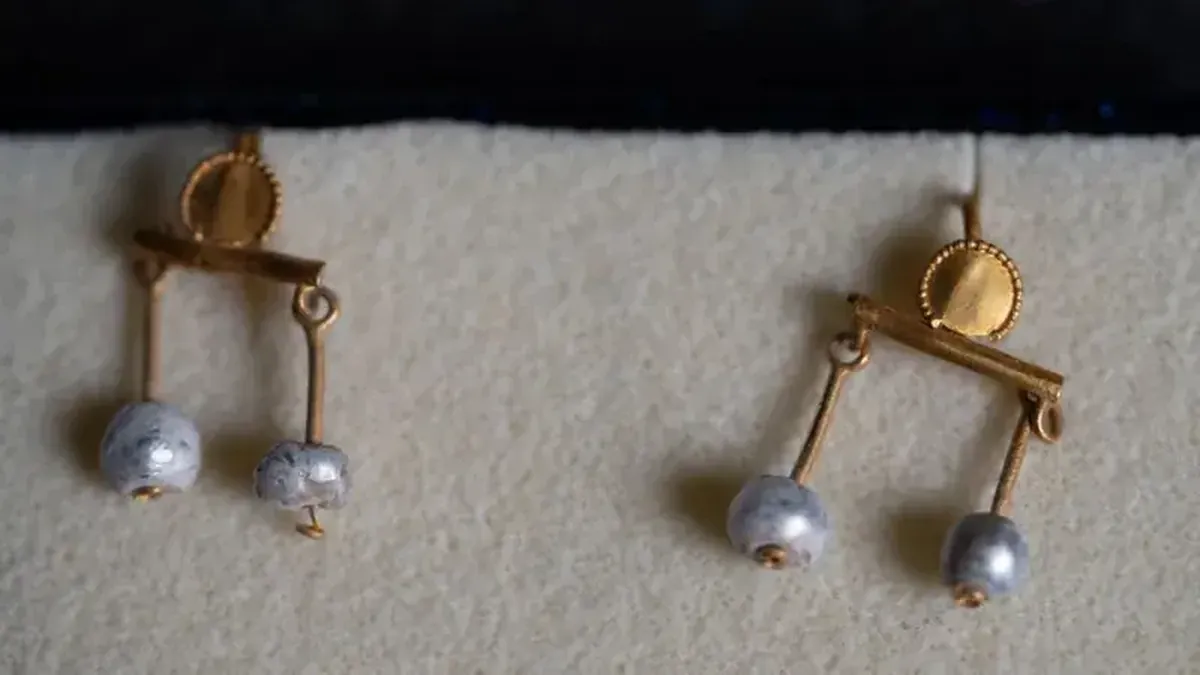
On a marble countertop in the small room, scientists found glassware, bronze jugs, and ceramics. The couple may have brought those items into the room hoping to ride out the eruption.
