
 Gaby
Gaby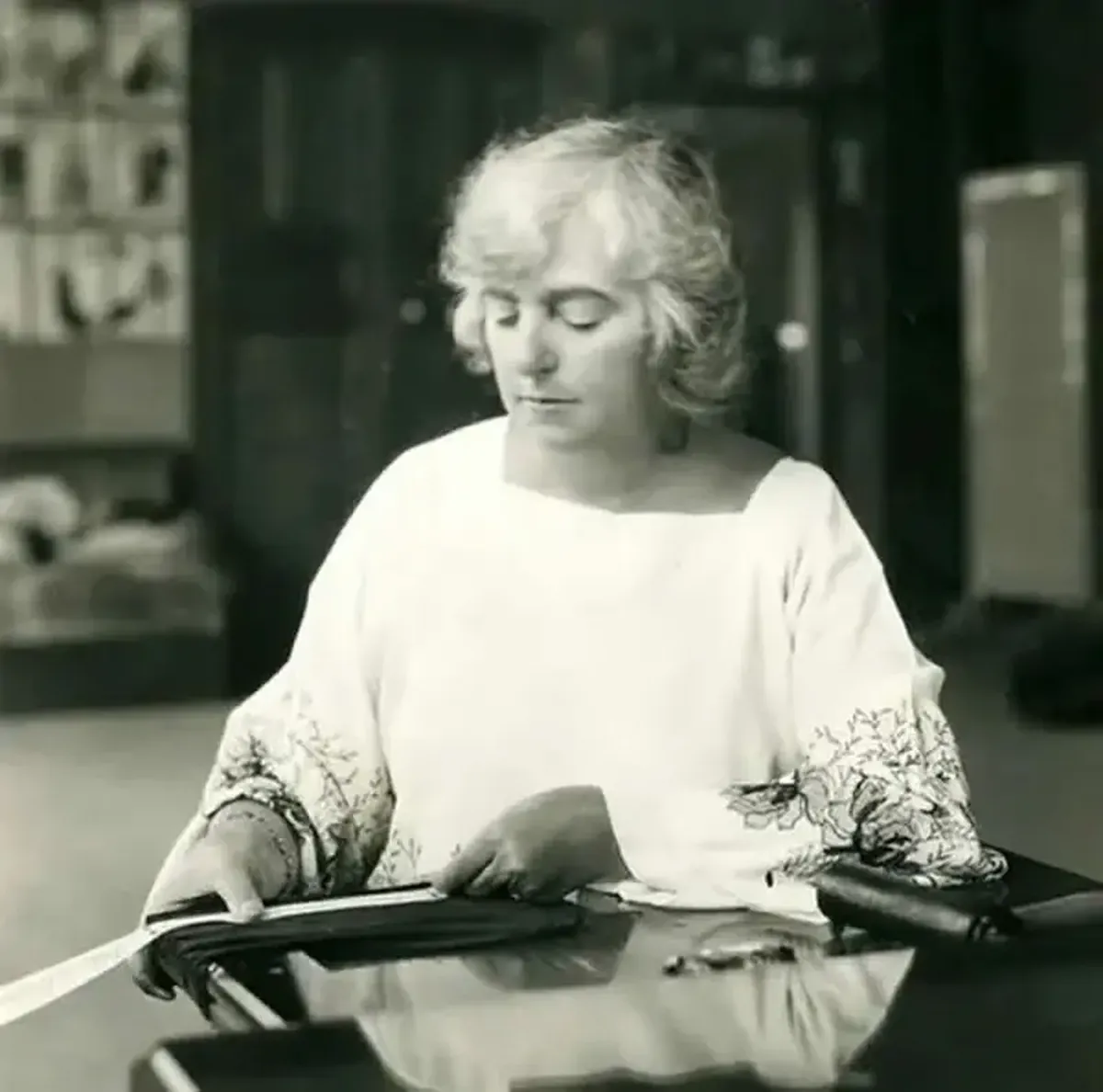
Madeleine Vionnet (1876–1975) famously called herself “the enemy of fashion.” She believed the whims of fashion were superficial and ever-changing, which offended her sense of beauty. Fashion, meanwhile, adored Madame Vionnet. She wasn’t ahead of her time so much as in step with the revolutionary art of her day.
Her star rose during the interwar years, 1919–1939. At elite parties, her dresses were worn by icons like Marlene Dietrich, Greta Garbo, Joan Crawford, and Katharine Hepburn. Designers from various generations, including Cristóbal Balenciaga, Issey Miyake, Yohji Yamamoto, and John Galliano, drew inspiration from her work.

Born in the small French town of Chier-au-Bois, Madeleine came from a poor family and began learning the basics of sewing at the age of 11. Perhaps the hardships of her childhood made her willing to take any job. After a brief marriage at 18 and the loss of a child, she needed to dull her pain and fill the sudden void in her life. So Madeleine set out to build a career. It’s unclear what ambitions she held then.
Without influential relatives or money, she relied solely on her talent. It was this talent, along with her determination, that brought Madeleine to Paris, where she didn’t stay long before moving to London (without knowing English), which became the launching pad for her self-realization. In London, at the atelier of the renowned seamstress Kate Reilly, Madame Vionnet gained invaluable experience before returning to Paris. There, at the fashion house of the Callot sisters (Callot Soeurs), a significant transformation took place. The sisters did not stifle Madeleine’s imagination, and she soon felt like an independent force in the snobbish world of Parisian haute couture.

Her move into business came naturally. In 1912, Madeleine Vionnet opened her own fashion house, simply called Vionnet. Its operations, interrupted by World War I in 1914, resumed after the war ended in 1919. During the hiatus, Madeleine soaked up impressions from her travels in Italy—its architecture, sculpture, and painting. Ancient Roman art became a new source of inspiration, and she borrowed many elements from it for her own style. Perhaps it was then that she first realized her dream: to create clothing that would transcend time.
It took several years for the Vionnet fashion house to fully recover. In 1923, Madame Vionnet opened a new location on Avenue Montaigne. By 1925, she expanded across the ocean, opening a store on Fifth Avenue in New York City.
The Queen of Bias Cut
The clothing of the French designer attracted stars and aristocrats with its unique cuts, structural details, and fabrics. Like Coco Chanel, Vionnet helped free women from corsets and launched her own revolution in fashion.
She raised chic simplicity to a new level, one that felt more like the draping of ancient goddesses. Madeleine Vionnet left behind frills, ruffles, and other overly sweet embellishments. She eliminated unnecessary seams, darts, and fastenings from her sewing toolbox. Instead, she introduced the idea of a streamlined dress that adapted to the body rather than altering it. In doing so, the couturier became one of the first to encourage women to embrace their natural shapes. Her designs featured unstructured garments, often worn against bare skin, free from linings, corsets, and frameworks.
Instead of stiff fabrics, the designer used crepe, silk, chiffon, and satin. These materials gave the garments an air of elegance and weightlessness. Issey Miyake once described the impression of a Vionnet dress as akin to seeing a woman emerge from a bath wrapped in a piece of exquisite fabric.

From left to right: Evening dress of Lady Foley, designed by Madeleine Vionnet, 1935, France. Dress of Lady Foley, designed by Madeleine Vionnet, 1931, France.
It’s hard to say who first called Madeleine “the architect of beauty” and “the queen of the bias cut.” That cut was a key technique that helped her establish a unique style. Many tailors had used the bias cut long before Vionnet, but they typically applied it to specific details. She used it to cut entire dresses, creating pieces that looked more fluid and expressive.
In Vionnet’s creations, staples like the American armhole, cowl neck, scarf dress, and hooded dress were reborn. It seems the queen of the bias cut achieved her dream of creating clothing that would transcend time—21st-century fashionistas still draw inspiration from Madeleine Vionnet’s legacy.
In Lieu of an Epilogue
A sketch of this remarkable woman needs a few more details to satisfy fashion historians.
They would recall that Vionnet led a staff of 1,200 employees. Vionnet valued her staff, creating a benefits package that included medical care, paid vacation (including maternity leave), and an on-site daycare. She paid her hired models generously. She was also one of the first couturiers to push for copyright protection and to fight counterfeiting. Madame Vionnet photographed every piece that left her atelier, tagged it, and meticulously cataloged it.
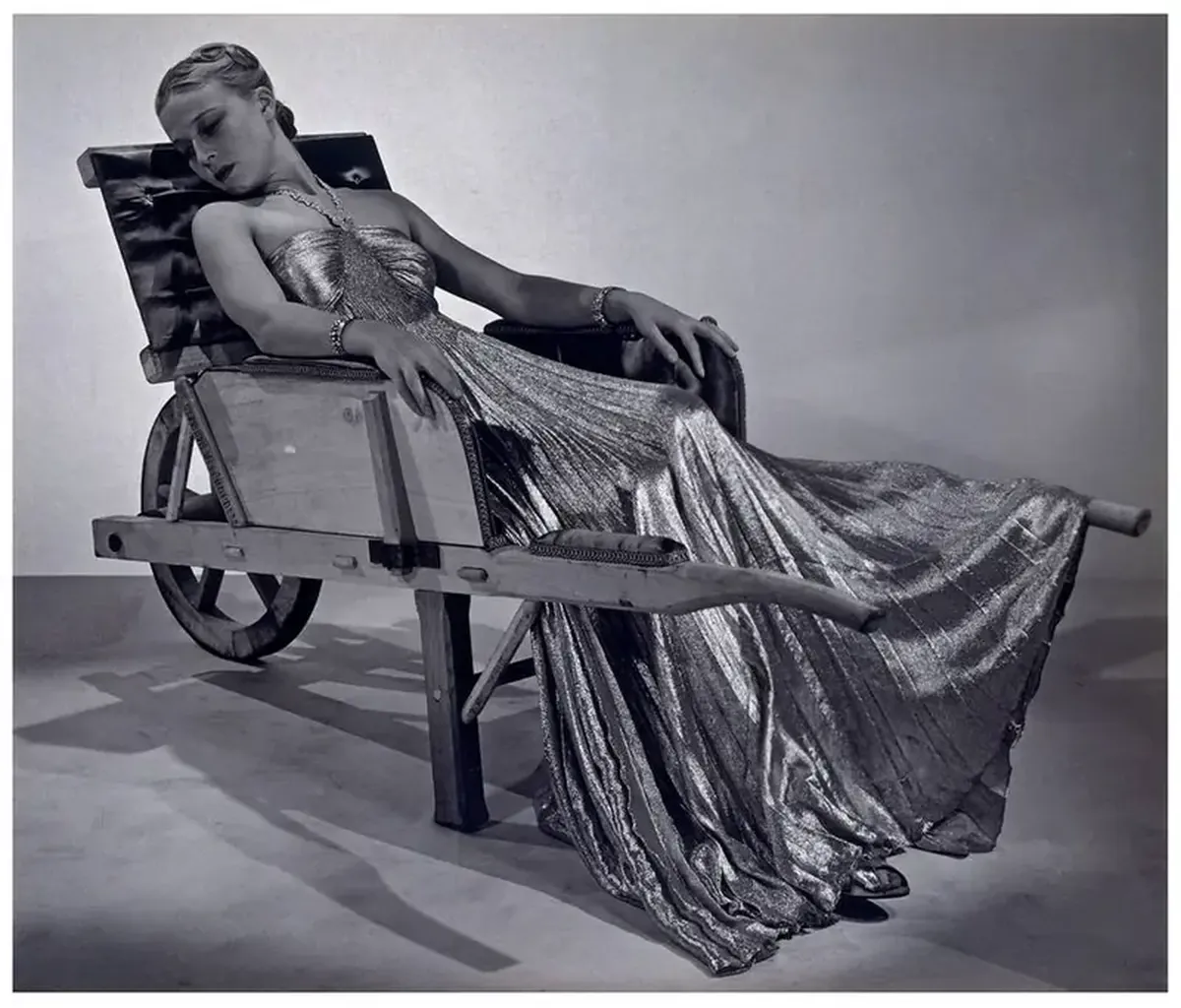
Model in a Vionnet evening dress with “Brouette” by Oscar Dominguez, photographed by Man Ray, 1937, France
At the start of World War II, the designer closed her house. The Vionnet fashion house was never revived—neither by her nor after her death in 1975.
Still, fashion history keeps her elegantly simple dresses and her memorable lines. For example, she once said, “When a woman smiles, her dress should smile with her.”
