
 Gaby
Gaby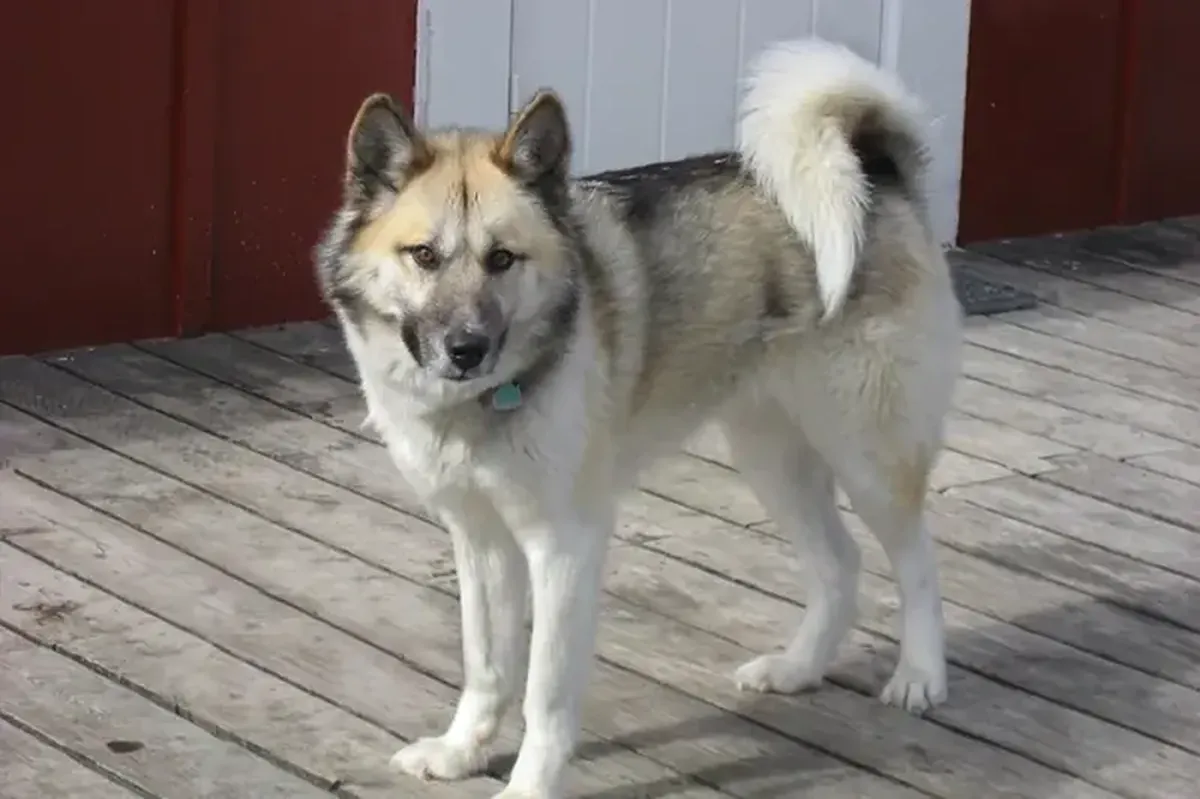
A team led by Tatiana Feirborn, a postdoctoral researcher at the National Institutes of Health, collected DNA from modern dogs and from ancient dog remains unearthed at archaeological sites across Greenland. Analyzing those samples let the team trace the long history of the human–dog relationship.
Sled dogs have helped Arctic people for roughly 9,500 years. Their long presence across the polar region shows how important they are to local communities.
Today there are many sled-dog breeds, but the Greenlandic sled dog is likely the oldest of them—and possibly the oldest dog breed in the world.
In less than 20 years, the population of these dogs has nearly halved
The Greenlandic sled dog, called “qimmeq” (singular) and “qimmit” (plural) in Greenlandic, has served the Inuit — the indigenous people of North America — for about 1,000 years. These dogs remain active and hardworking, but their numbers are falling fast. The decline stems mainly from disappearing snow because of climate change and from increased reliance on snowmobiles.
Because of those and other factors, the total population of Greenlandic sled dogs dropped from about 25,000 in 2002 to 13,000 in 2020. This sharp fall has raised concerns about the breed’s future and highlighted the urgent need to document its genetic diversity for conservation.
What secrets did the DNA analysis reveal?
Feirborn’s team sequenced the genomes of 92 dogs, spanning roughly 800 years. They then compared those genomes with data from more than 1,900 published dog genomes, as reported by IFLScience.
The researchers found that Greenlandic sled dogs form a distinct group separate from other ancient Arctic dogs, particularly the Alaskan dog dated to about 3,700 years old. The finding demonstrates genetic continuity in Greenland’s dogs and supports a rapid migration of the Inuit from northern Canada to Greenland. The data suggest that migration happened roughly 200 years earlier than previously thought—around the 12th century—meaning the Inuit likely arrived in Greenland before Norse explorers.
The Norse settlement in Greenland lasted until the 15th century, after which the island’s indigenous inhabitants became more isolated from Europeans. Danish-Norwegian colonists later established a trading post in the early 18th century in the Kitaa district of western Greenland, creating a new wave of contact between Europeans and the Inuit. Even so, the new study shows that genetic mixing between the qimmit and European dogs was minimal. Instead, the dogs fall into four genetic groups that match the island’s geographic distribution of people.
The paper, published in Science, says the results lay the groundwork for future studies that use time-series genomes from regional populations to investigate how humans and the environment have shaped local animal evolution.
