
 Gaby
Gaby
A team from the University of Wisconsin–Madison, led by Pablo Moreno Yeager, warns that melting glaciers could intensify volcanic activity in Antarctica, North America, and New Zealand — and push more greenhouse gases into the atmosphere.
The glaciers’ retreat could make volcanic eruptions more frequent and destructive, worsening global warming.
What Did the Researchers Report?
Hundreds of volcanoes in Antarctica, New Zealand, and North America lie dormant beneath glaciers. But as the planet warms and ice sheets melt and retreat, those volcanoes are likely to become more active. That’s the conclusion of a new study that analyzed the activity of six volcanoes in southern Chile during the last glacial period.
“Glaciers generally suppress the volume of eruptions from the volcanoes beneath them. But as glaciers retreat due to climate change, volcanoes erupt more frequently and with greater intensity,” explained Moreno Yeager.
Scientists first suggested in the 1970s that melting ice could influence volcanoes. The weight of glaciers presses down on the Earth’s crust and mantle, so when the ice retreats, underground gases and magma expand. That increase in pressure can trigger explosive eruptions, Live Science reported.
Researchers know that such processes have fundamentally altered Iceland’s landscape, which sits atop diverging tectonic plates: the North American and Eurasian plates. In 2002, scientists calculated changes in volcanic activity in Iceland as its glaciers retreated at the end of the last glacial period — around 10,000 years ago. The island’s volcanoes responded with a surge of eruptions, increasing in intensity by 30 to 50 times compared with previous years.
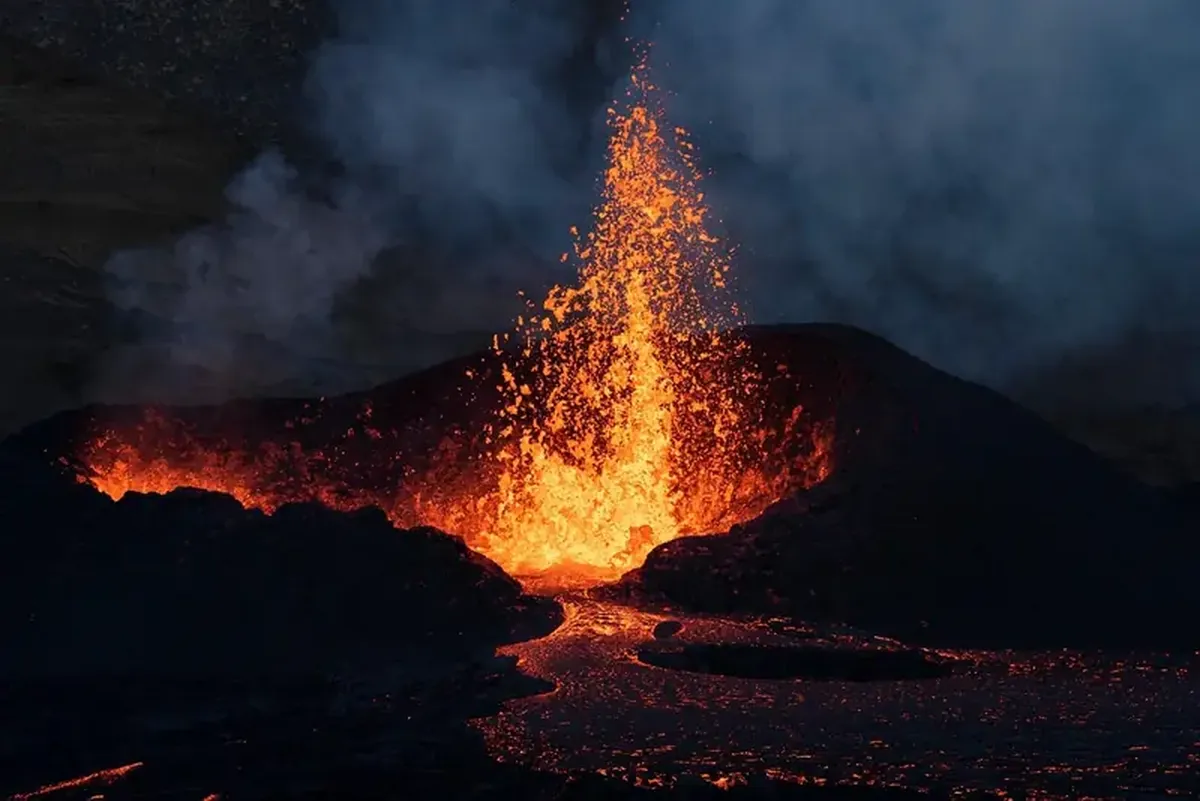
However, the dangers posed by continental volcanic systems are still not well understood. To learn more, the team studied six volcanoes in southern Chile, including the dormant Mocho-Choshuenco volcano, and how they responded to the melting of the Patagonian ice sheet thousands of years ago.
Using radioactive decay of argon released during eruptions as an isotopic clock and examining crystals that began to form within magma, the researchers tracked volcanic activity in the region and its connection to the disappearance of ice.
The scientists found that between 26,000 and 18,000 years ago, during the peak of the last glacial period, the ice cover suppressed eruptions. That led to the buildup of a massive reservoir of magma beneath the surface. When the ice sheet melted, the pressure within the reservoir rose and was eventually released, forming the Mocho-Choshuenco volcano.
This threat has a planetary scale: a 2020 study found that 245 potentially active volcanoes worldwide are located beneath ice or within 5 kilometers of it.
Eruptions over short periods typically release sulfate aerosols that reflect sunlight back into space. Past eruptions have caused cooling. Over the long term, greenhouse gases from these volcanoes could accelerate climate change, the team says.
“Over time, the cumulative effect of many eruptions may contribute to long-term global warming due to the accumulation of greenhouse gases,” Moreno Yeager said.
Recently, the research team presented their findings at the Goldschmidt Geochemistry Conference 2025 in Prague.
