
 Carlos Solis
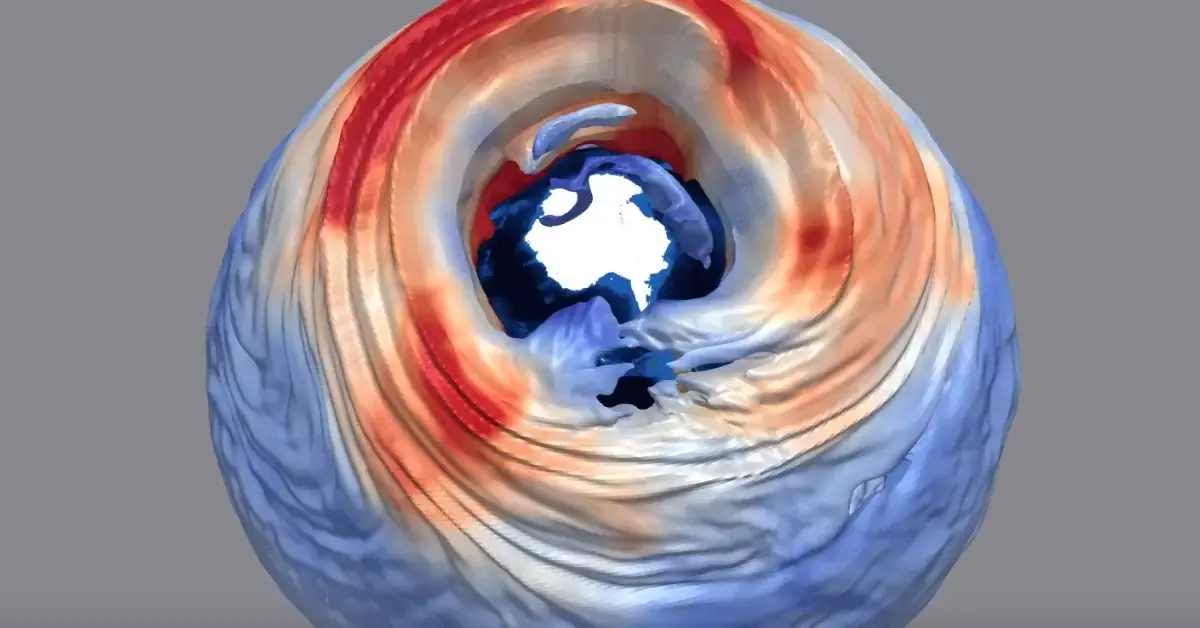 A promising new study shows the ozone layer—a protective shield for the planet, located about 30 kilometers above Earth’s surface—is gradually recovering.
Experts from the World Meteorological Organization (WMO) say the stratospheric ozone layer in 2024 was higher over most of the globe than in previous years. Moreover, the ozone hole that appears over Antarctica every spring was significantly smaller than the 1990–2020 average.
“The ozone layer is healing. This achievement reminds us that when countries heed the warnings of science, progress is possible,” stated United Nations Secretary-General António Guterres.
If progress continues at the current pace, the ozone layer could recover to levels seen in 1980 (before the ozone hole appeared).
Experts predict that full recovery could occur around 2066 in Antarctica, 2045 in the Arctic, and by 2040 in the rest of the world.

Meteorologists launch a probe to measure ozone in Antarctica
The ozone layer acts as Earth’s “natural sunscreen,” protecting people, plants, and animals by filtering out harmful ultraviolet radiation. Without this protection, the planet would see a significant increase in cases of skin cancer, cataracts, and damage to ecosystems.
As early as the 1970s, researchers warned that chlorofluorocarbons (CFCs) could damage Earth’s ozone layer. CFCs were used in refrigeration equipment, air conditioners, fire-extinguishing foam, and even aerosol sprays.
In 1987, an international treaty called the Montreal Protocol was signed, leading humanity to phase out more than 99 percent of the ozone-depleting chemicals. However, it was too late: a massive hole had already formed in the ozone layer over Antarctica.
But it wasn’t just CFCs that kept the ozone hole open; global warming also played a role, according to reporting by the Daily Mail. “A side effect of global warming is a slight decrease in stratospheric temperatures. This means that more polar stratospheric clouds may form over Antarctica,” explained the British Antarctic Survey.
Recent encouraging data showed that the depth of the hole in 2024 was below average, with the maximum ozone mass deficit on September 29 reaching 46.1 million tons.
“The slow depletion of the ozone layer continued throughout September, followed by a relatively rapid recovery after reaching the maximum deficit. Below-average ozone loss persisted until mid-November,” the WMO experts wrote. They noted that while this is promising, the work is not yet finished.
“The world still urgently needs to continue rigorous systematic monitoring of both stratospheric ozone and ozone-depleting substances and their alternatives,” emphasized Matt Tully, head of the WMO Scientific Advisory Group on Ozone and Solar Ultraviolet Radiation.
Photo: World Meteorological Organization
56
