
 Gaby
Gaby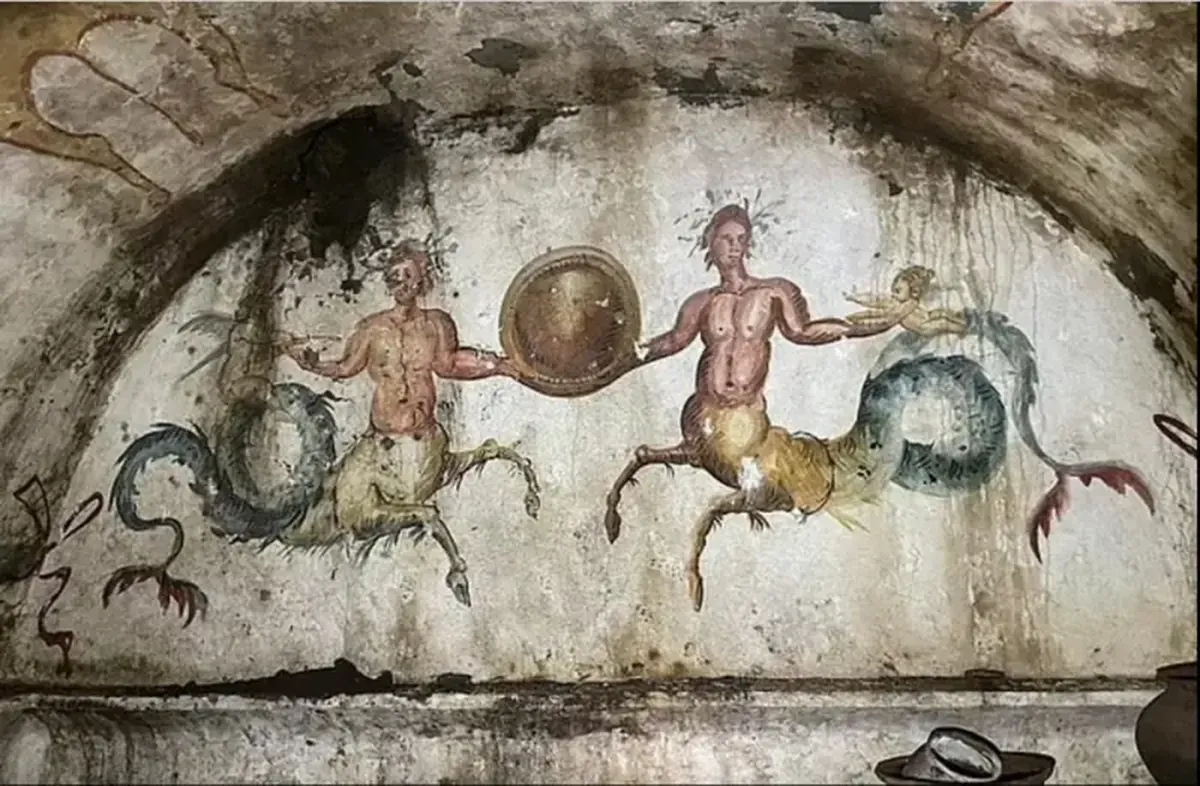
About a year ago, builders laying a water pipeline in a field stumbled upon what has been dubbed the “Tomb of Cerberus.” The scientific community was taken aback by the intricate decoration at the site, particularly a stunning fresco showing Hercules and Hermes, with the three-headed dog Cerberus guarding the entrance to the underworld between the two gods. This discovery gave rise to the tomb’s name.
Now, researchers have found an unexpected surprise: when they opened the 2,000-year-old tomb, they uncovered a well-preserved Roman body wrapped in an intact fabric shroud.

What Archaeologists Found
According to experts from the Department of Archaeology, Fine Arts, and Landscape, the remains have been preserved thanks to a plant-based substance that was applied to the bodies before burial. The scientists explained that the deceased’s body was anointed with a cream made from herbs: white goosefoot and wormwood. A similar substance was previously discovered on the body of a 17th-century bishop found beneath a cathedral in Sweden.
Moreover, the “Tomb of Cerberus” hasn’t been damaged by the elements and appears never to have been opened, meaning it was never looted. That sealed environment created a unique microclimate that helped preserve the mummy and the shroud.
Near the mummy, archaeologists found valuable burial goods, as well as tools for washing the body and ointments. The archaeologists interpret these items as signs of high status; the deceased was likely the founder of the family for whom the sarcophagus was built.

To access the burial chamber, archaeologists had to carefully remove the slab that covered the ceiling. They inserted a microcamera into a small opening, which allowed them to see the bodies hidden inside.
As part of a research project funded by the Italian Ministry of Culture, archaeologists are now cataloging artifacts from the “Tomb of Cerberus” and conducting DNA analysis on the mummified human remains.
