
 Gaby
GabyA team of researchers from Spain and Saudi Arabia analyzed the so-called “Treasure of Villena,” discovered on the Iberian Peninsula in 1963. These ancient valuables were stored for over 60 years in a local archaeological museum. The 3,000-year-old collection includes 59 artifacts—bowls, bottles, and ornaments made of gold, silver, amber, and iron.
What surprised the researchers
Using mass spectrometry, the team found that two objects from the Bronze Age hoard—a hemispherical piece and a bracelet—contained meteoritic iron. The hemispherical piece may have served as a decorative finial. The meteorite that supplied the material struck Earth more than a million years ago.
One object contained 5.5% meteoritic iron; the other contained 2.8%, per the Daily Mail.
The scientists explained that meteoritic iron (an iron-nickel alloy) appears in certain stony meteorites, which are mainly made of silicates—compounds of silicon and oxygen.
“Since this material came from space, it contains an iron-nickel alloy with varying levels of nickel,” the team said. The objects also included other trace elements, with cobalt standing out.
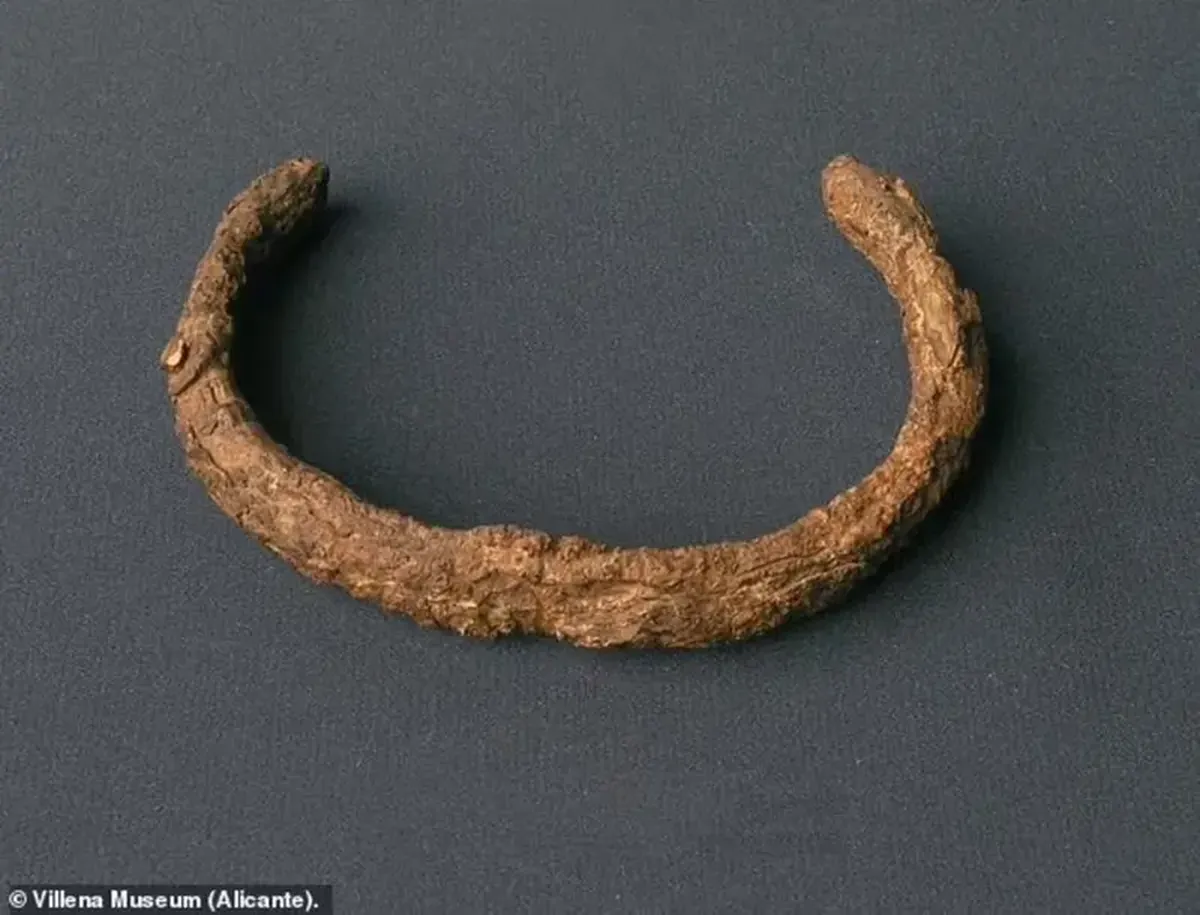
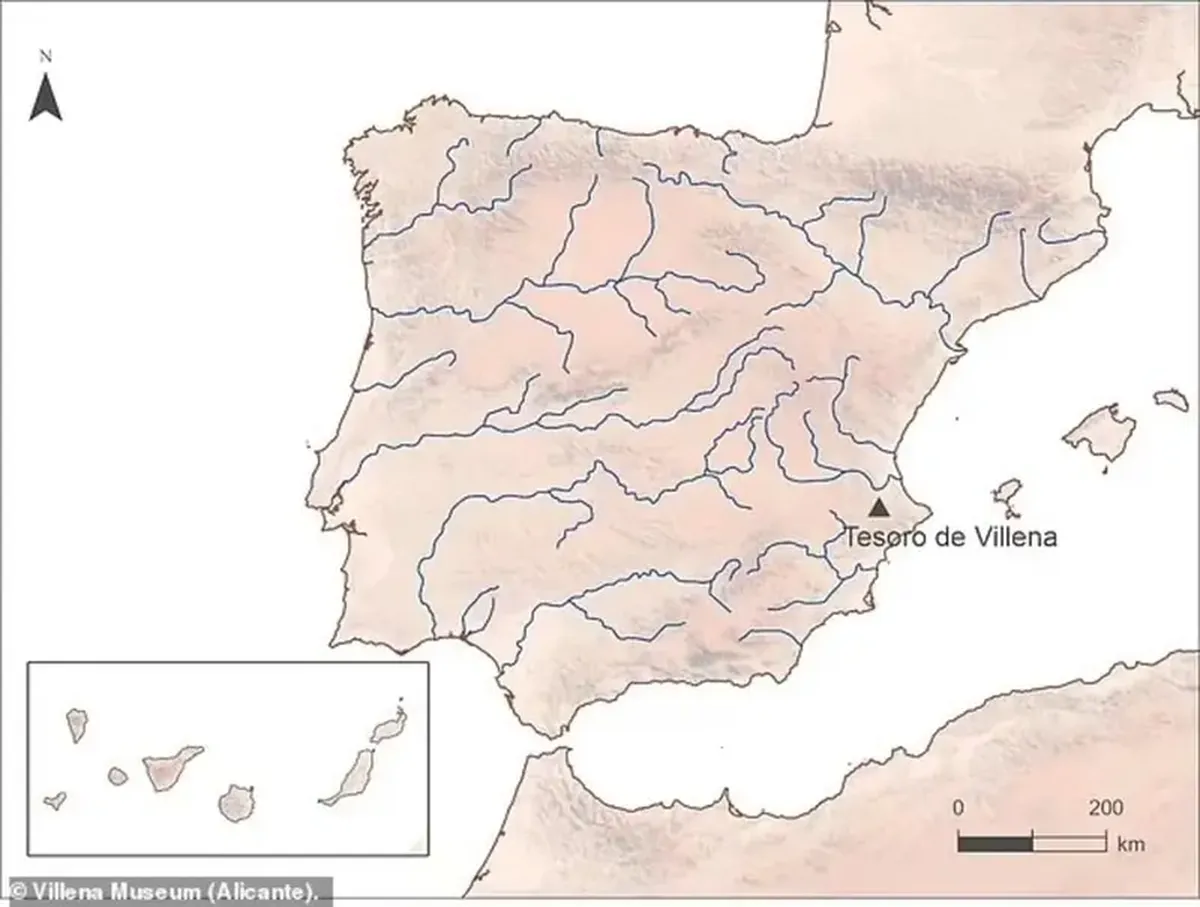
The “Treasure of Villena,” discovered on the Iberian Peninsula, gave scientists an opportunity to study the transition from the Stone Age to the Bronze Age. The artifacts were found by archaeologist José María Soler in December 1963 while excavating the dry riverbed of Rambla del Panadero near the town of Villena. About 90% of the treasures were made of 23.5-karat gold.
Researchers believe the treasure belonged to a community, not a royal family, as there were no kingdoms on the Iberian Peninsula at that time. They suggest the collection originated in the Mediterranean region.
Lead author Ignacio Montero Ruiz, a researcher at the Institute of History in Spain, explained: “The technology used to work with meteoritic iron was entirely different from that used with copper or precious metals like gold and silver. So, those who began working with meteoritic iron—and later with terrestrial iron—had to innovate and develop new technologies.”
He added that nickel levels in terrestrial iron are typically low—or very low—and often undetectable with standard analysis.
Working with extraterrestrial material: a known ancient practice
Scientists have documented the use of meteoritic material in ancient craftsmanship before.
In 2016, a team from the Egyptian Museum in Cairo, the Polytechnic University of Milan, and the University of Pisa examined a dagger from Tutankhamun’s tomb. The dagger was discovered in 1922 among other burial treasures by archaeologist Howard Carter. The blade of the ornately decorated weapon was made of meteoritic iron. The researchers used the same analytical methods applied to the Villena treasure. They compared the blade’s composition to that of the Kharga meteorite, which was found in 2000 on the Maras-Matruh plateau, about 240 kilometers from Alexandria.
The dagger is considered one of the most remarkable items buried with the young pharaoh (Tutankhamun lived only 19 years). It features a golden handle with fine embossing, inlaid gemstones, and a crystal pommel. Its golden sheath is decorated with floral patterns and ornamental designs.
