
 Gaby
Gaby
With 26 Oscars, Walt Disney holds the record for the most Academy Awards won by a single individual. He put it best: “The hardest thing for an artist is to satisfy himself.” He was nominated 59 times, and his achievements as an animator, actor, and film producer are legendary. His entrepreneurial success, including creating Disneyland, helped build a multibillion-dollar entertainment empire. But the son of a carpenter and a teacher didn’t measure his work by money—he measured it by making things. For Walt, the driving force behind his efforts was realizing dreams.
Income or Satisfaction
Walt Disney was born in December 1901 in Chicago. He was of Irish, English, and German descent. Walter Elias Disney was the fourth of five children, born into difficult times, and from an early age he moved around the country with his parents in search of a better life. At five he lived on a farm in Missouri, and by nine he was in Kansas City. His first drawing wasn’t on paper with a pencil but on a building wall, using tar and a stick. A neighbor paid him his first pocket money—25 cents—for a lifelike drawing of a horse. Disney later said that early success convinced him to become an artist—few pursuits offered both income and creative satisfaction.
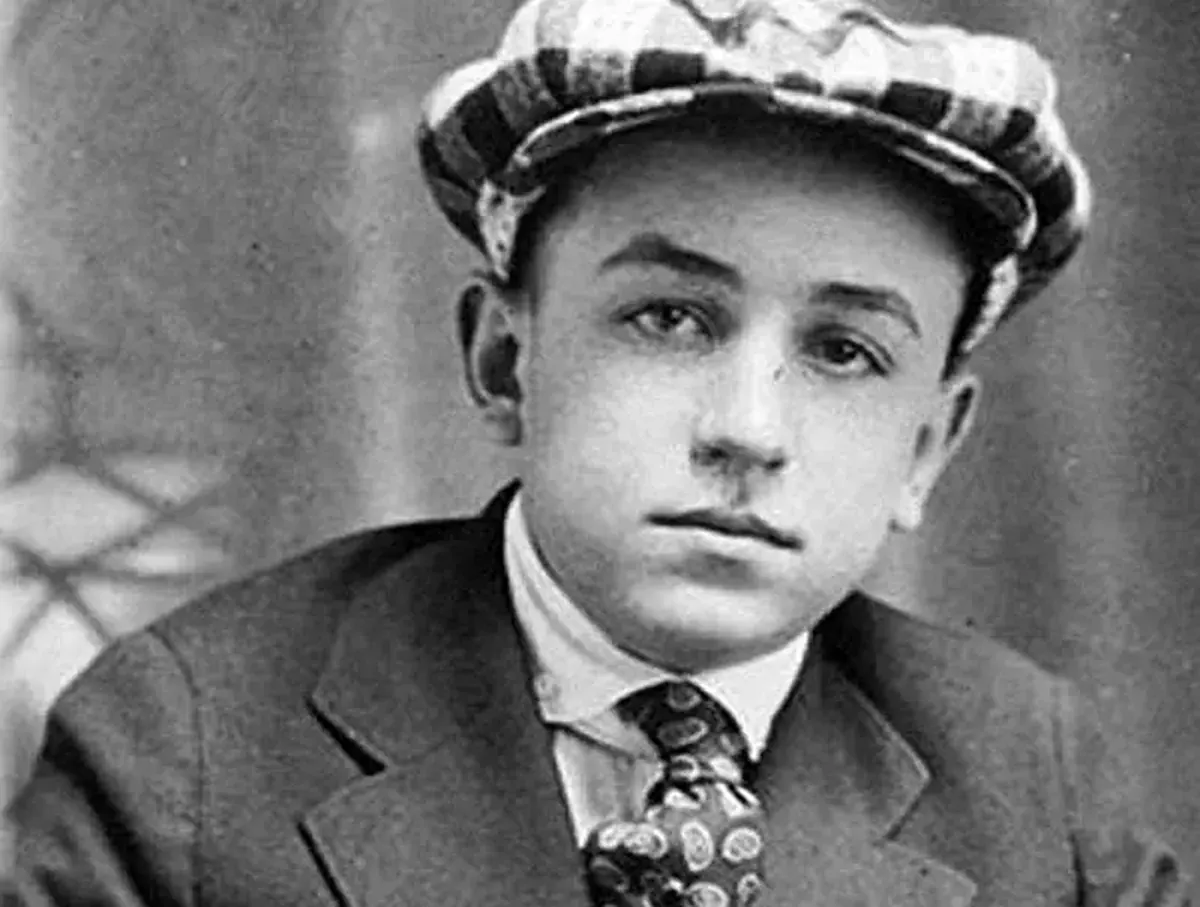
Walt Disney at age 14
At 14 he began working as a newspaper and flyer delivery boy, promoting his father’s local business—Elias Disney sold homemade fruit preserves. Walt learned to help support the family. The four sons would head into the dark streets at night with heavy bags of printed materials, so Walt often arrived at school looking like someone coming off a night shift. It’s no surprise his success didn’t start in the classroom; he wasn’t a standout student and was often tired. Still, fatigue never dampened his imagination. Once he came to class dressed as President Abraham Lincoln—wearing his father’s coat and stovepipe hat, complete with sideburns and a fake beard. He looked so much like the original that teachers let him entertain the other students.
Talent Meets Commerce
Walt’s passion for drawing convinced his father to pay for teenage art classes at the Kansas City Art Institute. He interrupted his studies at 16 to serve in World War I, driving an ambulance for the Red Cross in France. Disney’s vehicle stood out because he painted humorous caricatures on the cab and body. That year he reportedly served alongside Ray Kroc, the future McDonald’s founder. Even in the army, Walt showed his entrepreneurial streak: biographers say he sold hand-painted helmets to American soldiers as “German trophies” and once painted medals on uniforms for a few francs.

Walt Disney next to a car he painted
At 19 Disney got a job as an artist at a film advertising studio, where he became fascinated by animation. He later opened Laugh-O-Gram in Kansas City, combining live actors with animated images. The company eventually went bankrupt, but that step led to a partnership with animator Ub Iwerks, who helped create the iconic Mickey Mouse.
Ub Iwerks didn’t abandon Walt after a two-month strike that saw nearly all the studio’s artists walk out. Walt later admitted, “At first, I was a slave driver, paying my workers crumbs, and eventually the team revolted against me.” He learned from those mistakes and later introduced a system to reward animators for the gags and techniques they developed for characters.
Conquering Hollywood
After moving to Los Angeles in 1923, Disney tried acting but found little demand. He and his older brother Roy set up an animation studio in a relative’s garage. That small operation—Disney Cartoon Studio—grew into Walt Disney Productions, the foundation of The Walt Disney Company.
Disney Cartoon Studio business card featuring a self-portrait of Disney, 1921
By 1927 Disney was focused on creative work and soon moved into film production. He made his mark as an animator, actor, director (he directed 111 films), screenwriter, and producer (with credits on 576 films). He produced the groundbreaking synchronized-sound cartoon “Steamboat Willie,” in which he voiced Mickey Mouse, the star of his earlier silent short “Plane Crazy.” His musical film “Fantasia” introduced an early stereo system to cinemas, and he helped pioneer the use of three-color (multilayer) cameras.

Walt Disney’s honorary Oscar for creating Mickey Mouse, 1932
Beginning with trick films based on Lewis Carroll’s “Alice in Wonderland,” he created a long-running series often called the “Alice” comedies. His early work also included “Oswald the Lucky Rabbit,” “The Ugly Duckling,” and “The Three Little Pigs,” while characters like Donald Duck rose to popularity in the 1930s. Disney’s catalog includes classics such as “Pinocchio,” “Dumbo,” “Bambi,” “Cinderella,” and “Snow White and the Seven Dwarfs.” The studio’s production of the first full-length animated feature, “Snow White,” cost an unprecedented $1.5 million during the Great Depression, earned about $8 million, and collected eight Oscars. At the ceremony the creators received one large statuette and seven smaller ones—one for each dwarf. Later classics include “Peter Pan,” “Sleeping Beauty,” and “101 Dalmatians.” Disney films traveled the world, carrying stories where good triumphs over evil.
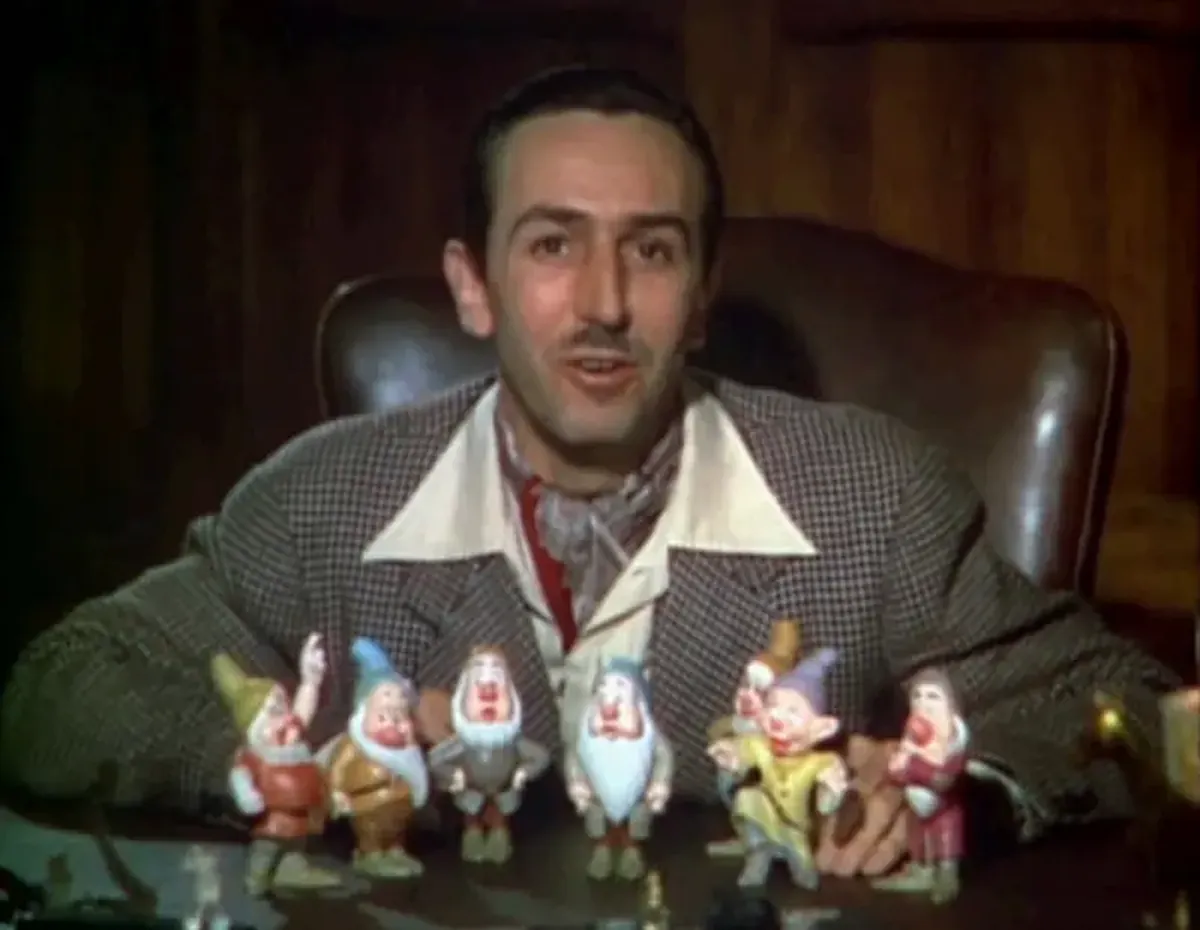
Walt Disney introduces each of the seven dwarfs in a scene from the original 1937 trailer for Snow White
The Meaning of Life
Disney enjoyed such a high reputation that the public often dismissed rumors about his private life—Hollywood gossiped about an infatuation with Mexican actress Dolores del Río, but his family always described him as a devoted family man.
Walt married his secretary, Lillian Bounds, in 1925. In the studio’s early days money was tight, and Walt sometimes paid Lillian less while covering production costs out of his own savings. “My husband said he married me to avoid paying a large debt,” Lillian joked. Though some colleagues teased Walt as a “woman-hater,” everyone acknowledged his respect for Lillian. He sought her advice—she even suggested the name “Mickey”—and adored his daughters, biological Diane and adopted Sharon. According to the girls, it was during family outings that their father first imagined Disneyland.

Walt Disney with his family, 1951
Turning the 17-acre property he bought in 1953 on the outskirts of Los Angeles into a “fairyland” became Walt Disney’s dream. He wanted a park that gathered the heroes of Disney films and the wonders of new technology in a single place. Disneyland was designed to immerse visitors in a world of wonder. The “place for happiness” opened in 1955 in Anaheim, California. Despite some hiccups at the grand opening, the park went on to make Walt’s descendants wealthy. The company’s current assets exceed $203.6 billion. But Walt said, “Counting profits is boring; it’s more important to do creative work that brings joy.”

“Don’t Be Afraid of Big Goals”
He invested $17 million building Disneyland and earned a tenfold return in his lifetime. Over the first 25 years, more than 200 million people visited the “land of fairy tales.” Profit wasn’t his goal. “I could never convince investors why they should put money into Disneyland,” Walt said. “For bankers, someone’s dream can never be a reliable guarantee.”
Walt Disney died on December 15, 1966; a long history of smoking led to lung cancer, and after his death the company banned cigarette advertising. The tireless dreamer left unfinished the animated film “Destino,” a collaboration with Salvador Dalí.

A legend grew that Disney had been frozen in a cryogenic chamber so future science could revive him—an idea that fit his optimism about the impossible. In reality, another volunteer underwent cryonic freezing around that time. Official reports state that after cremation, Disney’s remains were buried in the family vault at Forest Lawn Memorial Park. One of his famous bits of advice remains: “Don’t be afraid of difficult goals, for doing the impossible is the greatest fun.”
Photo from open sources
