
 Gaby
GabyJournalists from the British publication Daily Mail asked the image generator Midjourney to predict what ten major U.S. cities will look like in 2050. Then they sought comments from experts in smart-city development.

Seattle
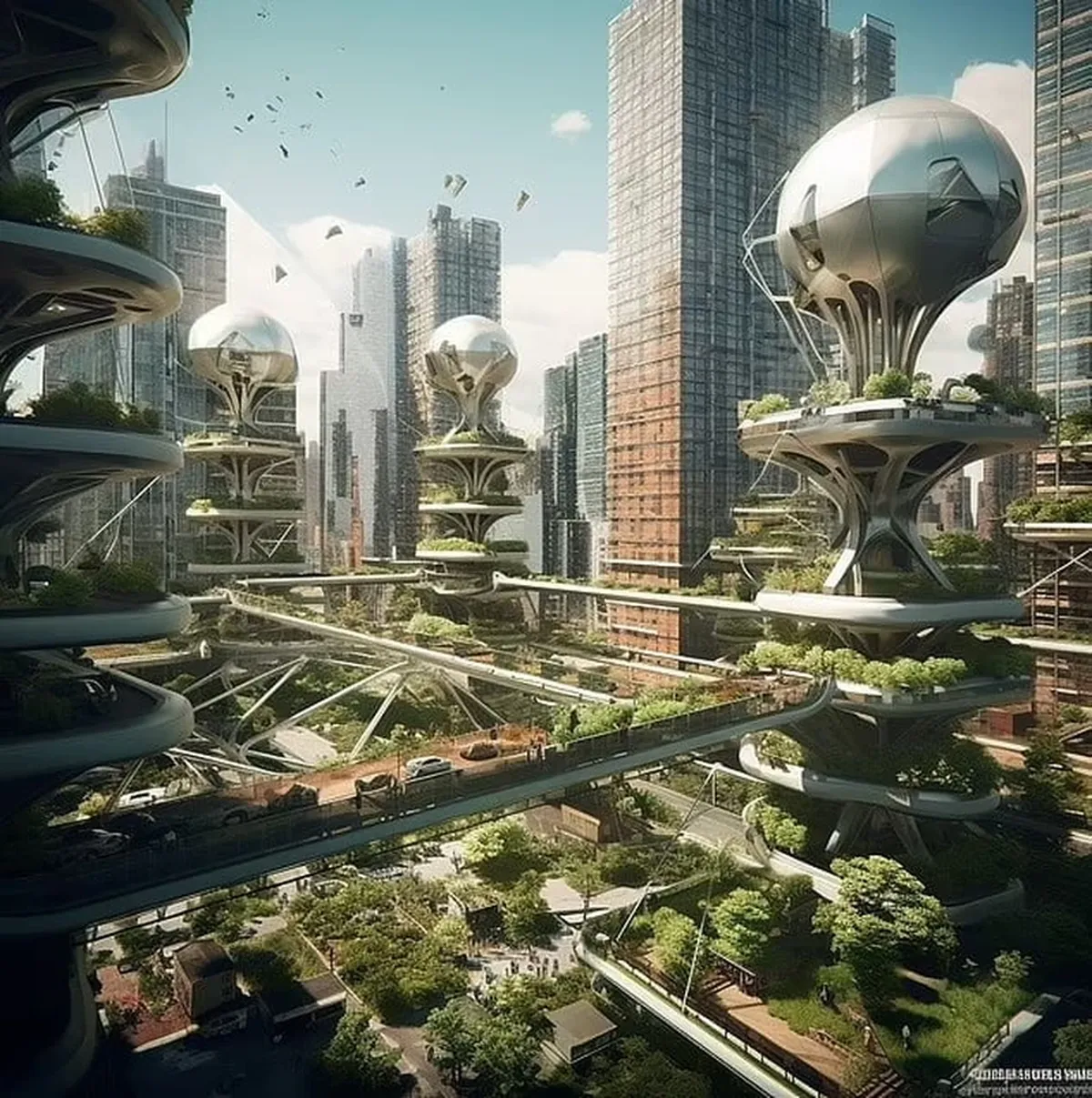
Midjourney generates images from text prompts. The prompts focused on how megacities might change because of overpopulation, global warming, and technological advances. The AI modeled New York, Washington, Houston, Philadelphia, San Francisco, Chicago, Seattle, Los Angeles, Boston, and San Diego. In its depictions, these cities look like utopias straight out of futuristic movies.
New York
These imagined megacities, equipped with robotics, are shown covered in lush greenery. Vertical farms for organic produce appear everywhere. Driverless vehicles and airborne transport that produce no tailpipe emissions share the roads and skies. Cities are depicted as having fully transitioned to solar and other renewable energy sources, reports the Daily Mail.

San Diego
Chris Diamond, director of the International Smart City Management Program at the Zigurat Global Institute of Technology in Barcelona, says future American megacities will use technology primarily to improve residents’ quality of life.

Los Angeles
Diamond says people will probably travel less on city streets, largely because remote work becomes the norm. When residents do leave home, they will have access to various kinds of autonomous and human-operated transport. Diamond expects homes to be energy efficient and powered by renewable sources. He also envisions homes that include small farms for growing fruits and vegetables. He hopes communities will be “radically more efficient,” environmentally friendly, and healthier.

San Francisco
Wendy Shirer, director of smart cities at Pulsant, says AI will play a major role in city management. She even suggests that mayors of large cities could have AI-powered deputies.

Houston
The UN forecasts that by 2050 nearly three-quarters of the world’s population (68 percent) will live in cities.

