
 Gaby
GabyWhat body part would you want more of? An extra pair of hands would certainly come in handy. Maybe a second pair of eyes on the back of your head wouldn’t hurt either. But a second tongue? That thought is a little unsettling. For lemurs, though, a double tongue is a practical advantage. So where does this adorable primate hide its second tongue?
Look closely at a licking lemur and you’ll see a small white structure with a pointed, brush-like tip tucked below its main tongue. This is the sublingua, the lemur’s secondary tongue. 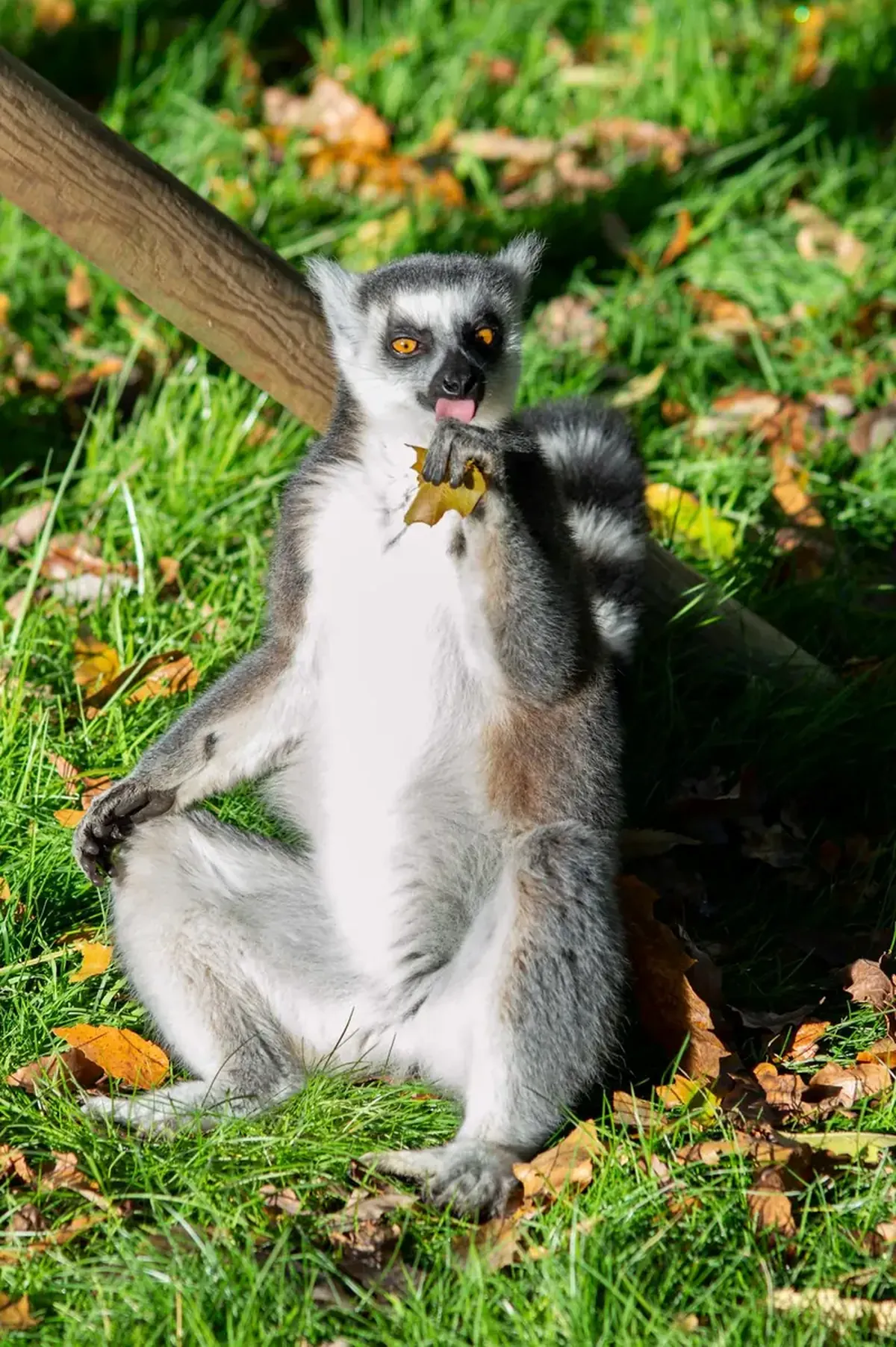 Unlike the primary tongue, the sublingua has no taste buds and doesn’t help the animal taste food. When the sublingua was first described in the early 20th century, some scientists dismissed it as vestigial. Researchers have since linked the sublingua to another unusual lemur feature: the dental comb. The dental comb is a set of six long teeth at the front of the lower jaw—two canines and four incisors—with small gaps between them that form a comb-like tool used for grooming.
But the sublingua does more than handle tangles. It helps lemurs clear food particles, debris, and loose fur from the crevices of the dental comb. Things can easily get stuck in those gaps. While we might reach for dental floss or a toothpick, lemurs use their built-in tool: they clean the comb with the sublingua. 
So the second tongue makes perfect sense for lemurs. Effective self-care is crucial for these primates. Grooming and cleanliness help lemurs in Madagascar form close social bonds. No one wants to be friends with someone who can’t keep their comb clean. But skill with the sublingua isn’t the only way lemurs build and maintain social connections. Like humans, lemurs also enjoy a good gossip session.
