
 Carlos Solis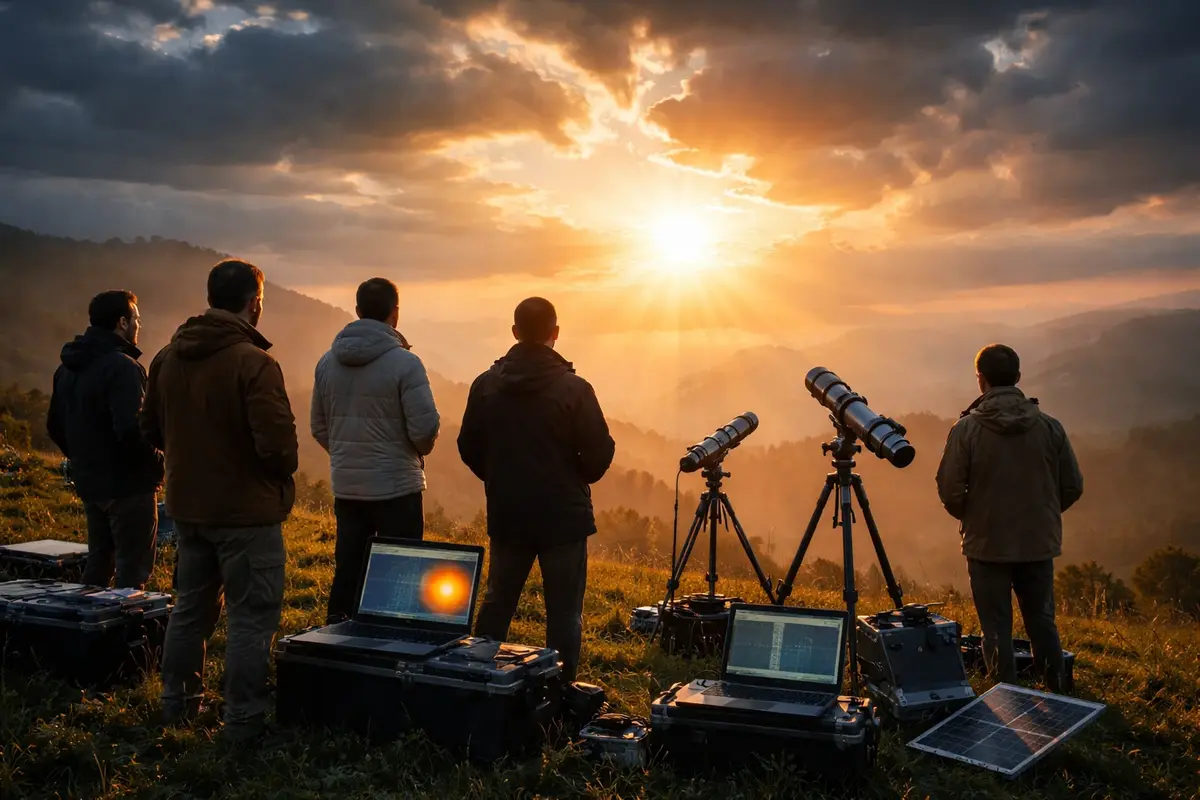
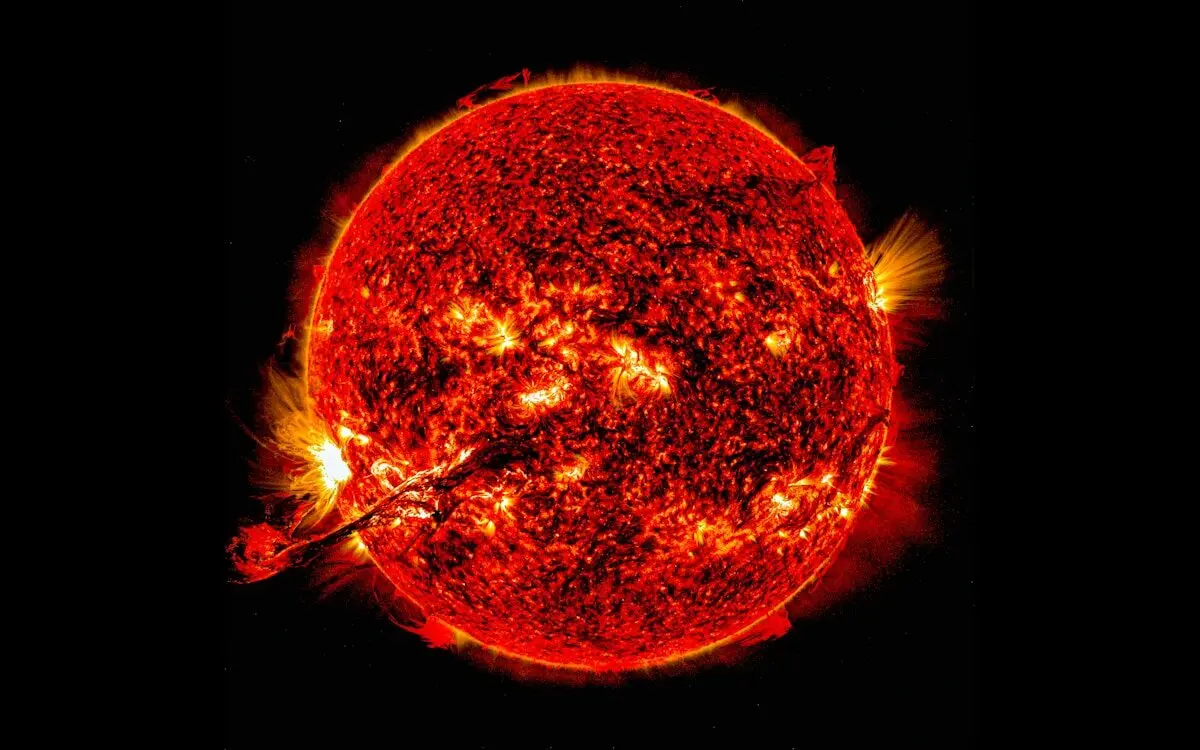
The Sun has its own internal “music” — and that rhythm helps shape space weather. Solar flares and eruptions of charged particles create dangerous conditions near Earth, so it’s urgent to figure out what’s changing inside the star.
The Sun typically follows an activity cycle of about 11 years: during the livelier phases, solar flares and coronal mass ejections become more frequent. Those events affect satellites, power grids, and radio communications on Earth, so they matter for technology and public safety.
How researchers “listened” to the Sun
Scientists analyzed the Sun’s internal oscillations — faint sound waves that travel through the star’s dense layers. That technique, known as helioseismology, lets researchers peer beneath the visible surface and track structural and dynamic changes inside the Sun. The study relied on long-term observations from the BiSON (Birmingham Solar-Oscillations Network).
The team reports that beyond the familiar 11-year rhythm, the Sun shows multi-decade changes in its internal structure — a sign the star may be shifting into a different mode of behavior. In particular, magnetic activity appears to be drifting into a layer just beneath the visible surface, and that layer has grown progressively shallower with each cycle.
“The Sun has its own internal rhythm — rises and falls of magnetic activity that shape space weather. But surface measurements don’t tell the whole story: it looks like the Sun is entering a different regime that unfolds over decades,” says Bill Chaplin of the University of Birmingham, the study’s lead author.
The discovery became possible only because BiSON has gathered continuous data for many years. “We found systematic changes in the Sun’s activity cycles, and most strikingly, magnetic activity is concentrating closer to the surface with each cycle. This is the first time we’ve seen this pattern, and long-term BiSON data made it possible,” the team writes.
What this means — and what’s next
The study shows that the relationship between the Sun’s internal oscillations and its surface activity has evolved over the past few cycles. You can’t explain this trend by weaker magnetic fields alone; instead, the pattern points to a structural reorganization in how magnetic energy is stored beneath the surface.
More observations and better models are needed to pin down the mechanisms behind these changes and to forecast their effects on solar cycles and space weather. For people and systems that depend on satellites, power grids, and radio links — all sensitive to geomagnetic storms — understanding these shifts is a practical priority.
Based on reporting by The Independent
