
 Gaby
Gaby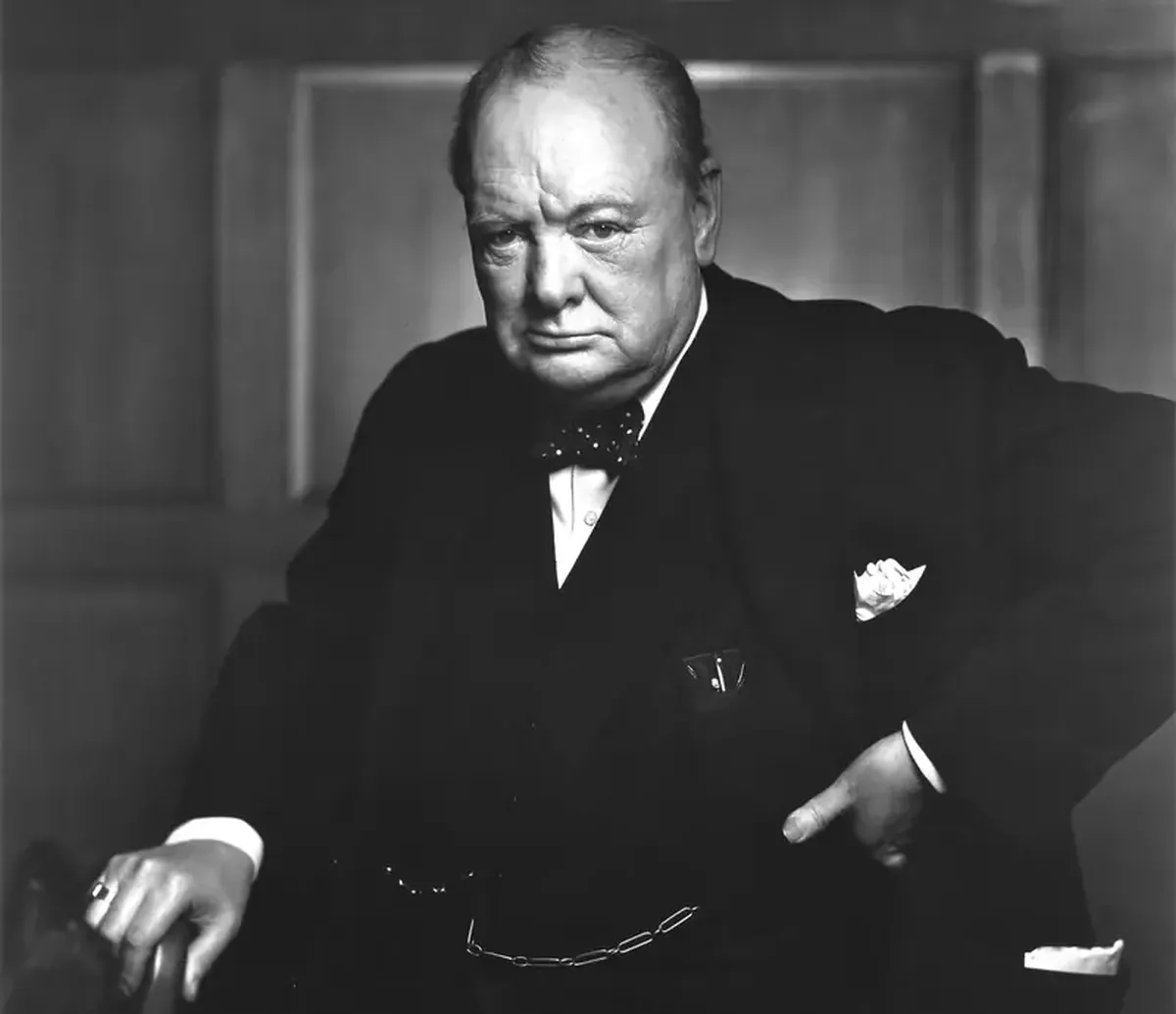
Born at the Ball
Winston Churchill, the son of a lord and the grandson of a duke from the Spencer family, was born on November 30, 1874—in the ladies’ dressing room at his grandparents’ castle near Woodstock. The future two-time prime minister entered the world at the Marlborough family’s grand estate—Blenheim Palace. His birth happened during a ball hosted by his grandparents.
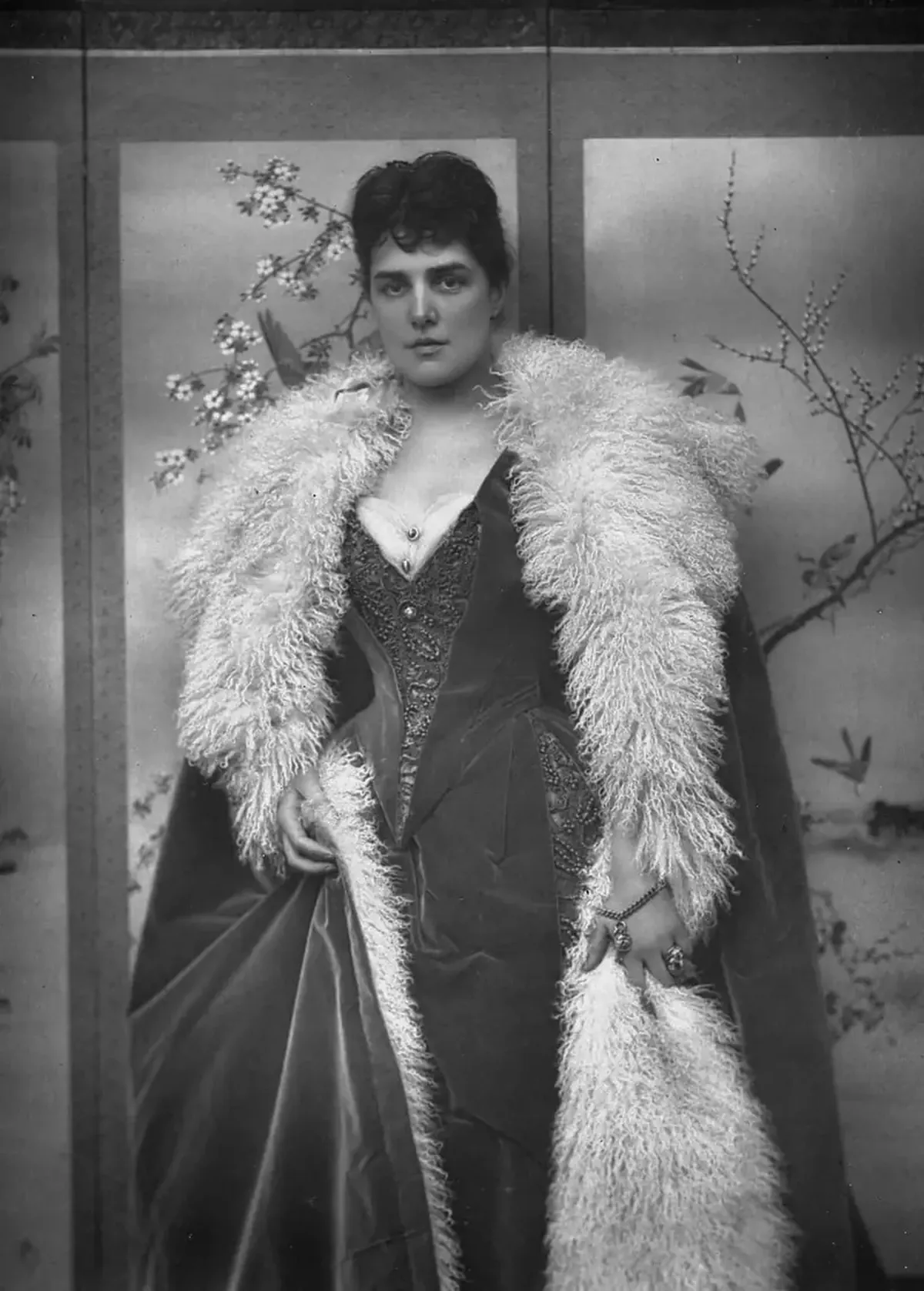
Jenny Churchill – Winston Churchill’s mother
Jenny Churchill, the daughter-in-law of the duke and duchess, was eight months pregnant but decided to attend the ball. Labor began unexpectedly, and the baby arrived in the ladies’ dressing room; he would grow up to be a prominent politician, soldier, journalist, writer, painter, honorary member of the Royal Academy of Arts, and a Nobel Prize laureate in literature.
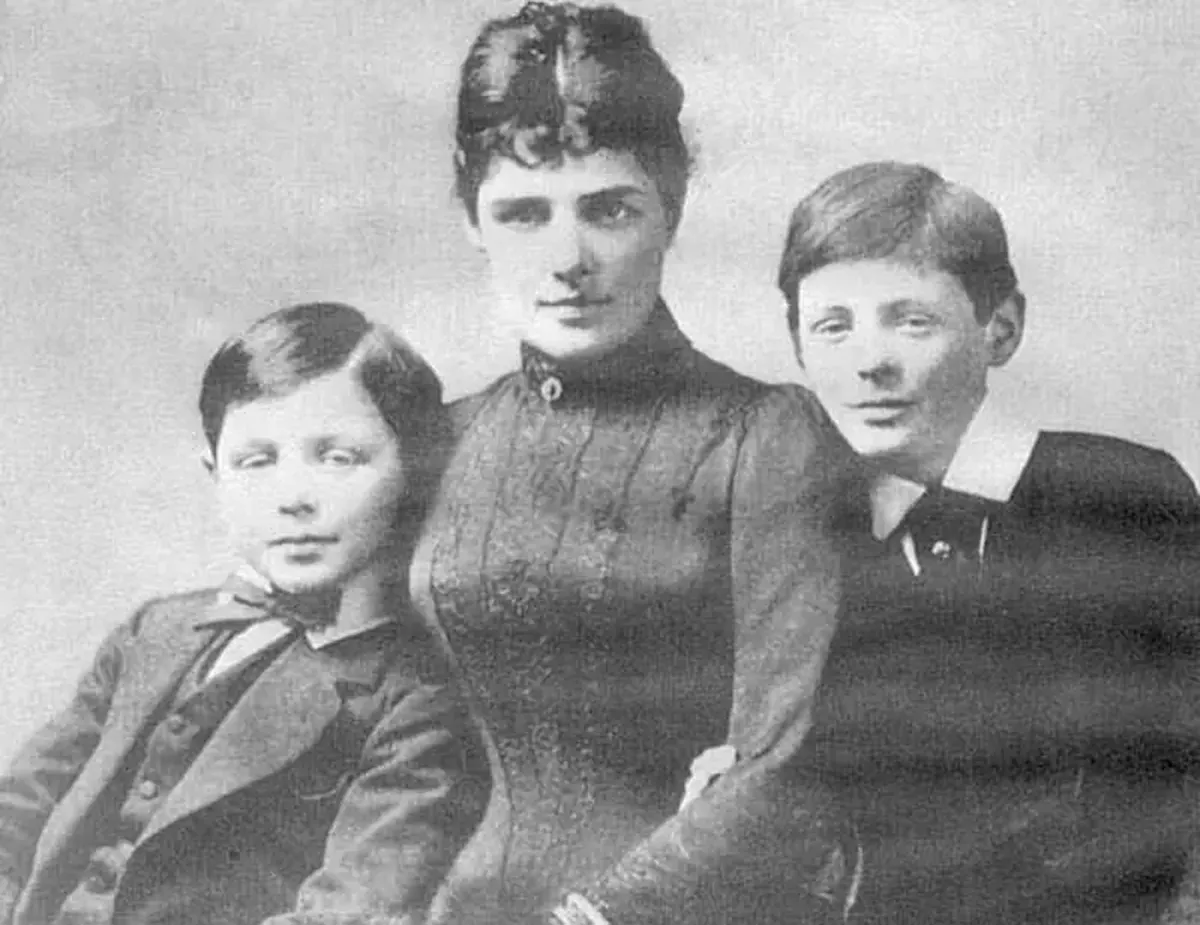
Jenny Churchill with her two sons Jack (left) and Winston (right) in 1889
A Difficult Student
Winston Churchill was the son of a prominent politician—a Conservative MP and Chancellor of the Exchequer—and of a mother who was the daughter of a wealthy American businessman. He grew up under a loving mother’s watch and was not familiar with strict discipline. At St. George’s preparatory school he was often punished for misbehavior, and at a school in Brighton he ranked twelfth out of thirteen for conduct. He did not shine academically, so instead of sending him to Eton College—where generations of Marlborough men were educated—his father sent him to Harrow. Harrow’s so-called “army class” prepared boys for military careers with an emphasis on sports and history. Churchill passed his final exams and became the school’s fencing champion in 1892.
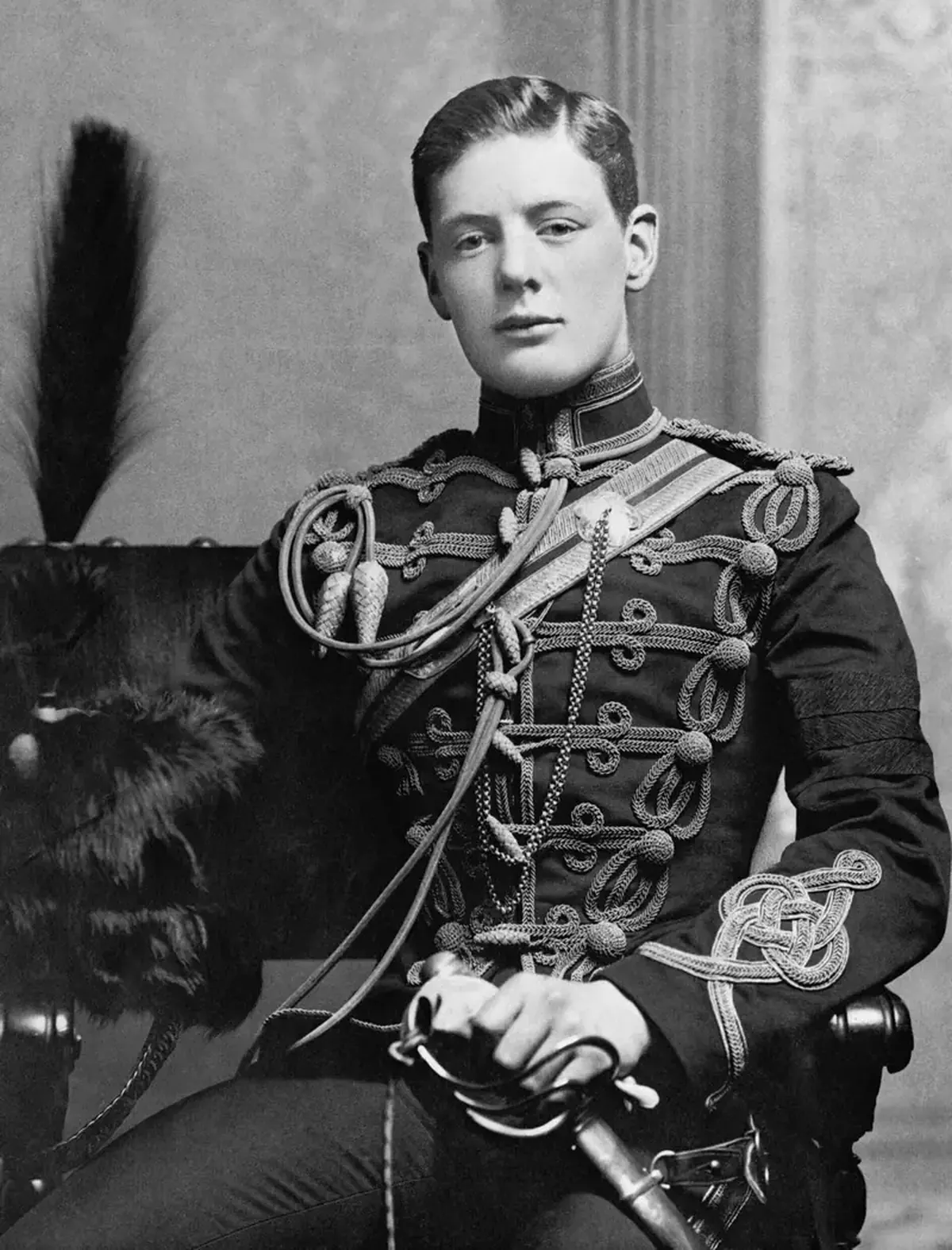
Churchill in the parade uniform of the 4th Queen’s Own Hussars in Aldershot in 1895
Against Routine
Churchill was admitted to the cavalry course at Sandhurst on his third attempt—he ranked 92nd out of 102 on the entrance exams, stumbling particularly on the written Latin paper. He ended up in the more prestigious infantry class only after higher-ranked candidates declined their places. As a second lieutenant he joined the Royal Hussars and quickly realized military routine was not for him. Thanks to his mother’s connections, he was able to take on more interesting duties during his service and pursue creative work. In 1895 Churchill became a war correspondent in Cuba, covering the Cuban insurgents’ rebellion against Spain for a newspaper. His dispatches from the island brought him literary notice and two lifelong habits: smoking strong cigars and taking afternoon naps.
Brave but Critical
While serving with an expeditionary corps in India, Churchill witnessed the suppression of a rebellion by mountain tribes. He displayed personal bravery and told his mother that he prized a reputation for courage in military service. Still, many of his risks were driven more by bravado than necessity. In a letter to his grandmother, the duchess, he condemned the brutality on both sides and called the campaign senseless: “The representatives of the local tribes torture the wounded and desecrate the bodies of the dead. And our soldiers also never leave captured opponents alive, finishing off even the wounded. Field hospitals and convoys with the sick become special targets for the enemy, and we destroy water reservoirs (the only sources of drinking water in summer) and annihilate them with new weapons that have a horrific destructive effect. This is costly, immoral, questionable in terms of military expediency, and politically shortsighted.”
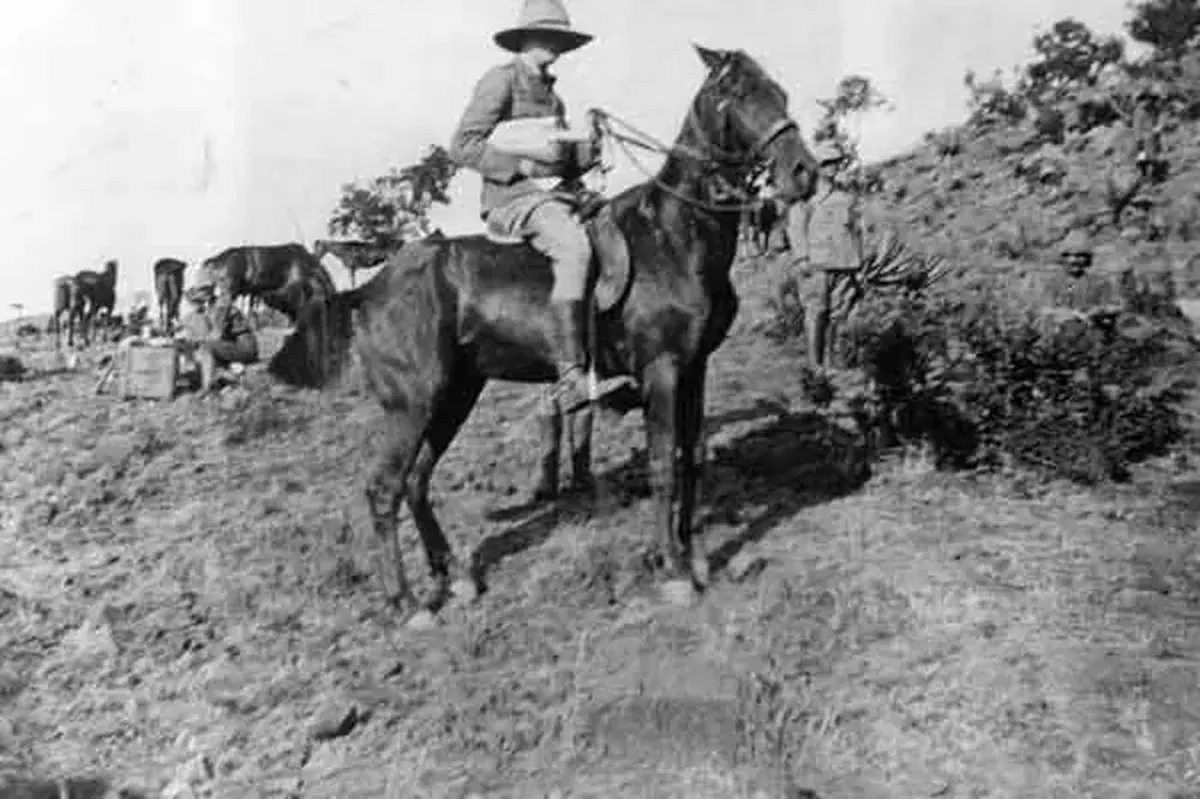
Churchill during the Anglo-Boer War
The Great Gentleman
In a report on the last cavalry charge at the Battle of Omdurman, Churchill criticized the commander, Kitchener, accusing him of mistreating prisoners and the wounded, of disrespecting local customs, and of desecrating a warrior’s grave. “This is a case where a great general cannot be called a great gentleman,” Churchill wrote, provoking mixed reactions. Many supported the gist of his critique, but others felt the outspoken stance of a journalist was incompatible with the duties of a junior officer. After escaping captivity during another assignment in South Africa, Churchill entered politics as a popular figure who combined monarchist-imperial instincts with liberal humanitarian inclinations.
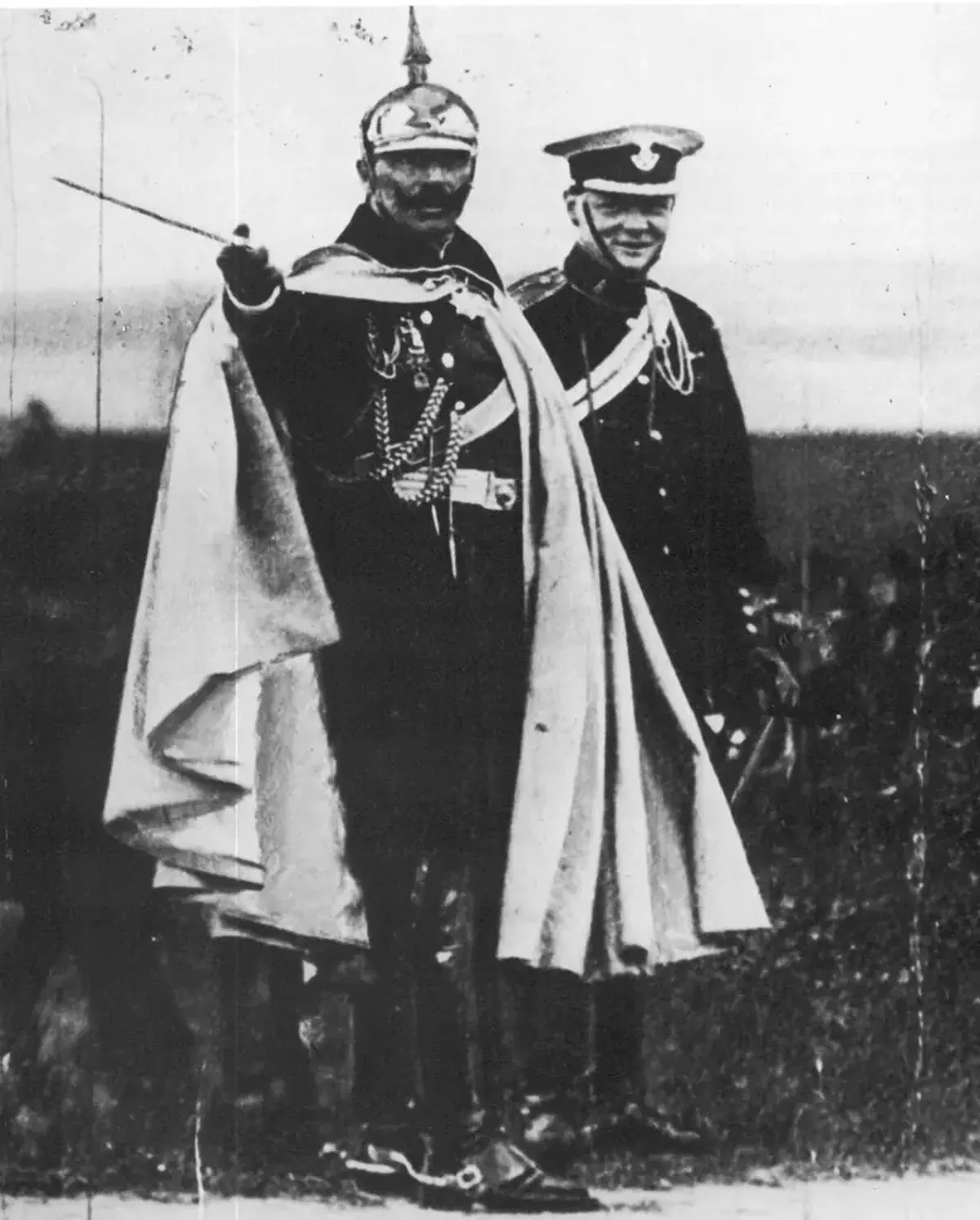
Churchill and German Kaiser Wilhelm II, 1906
Reactionary or Reformer?
Protesters against whom he deployed troops would not have called Churchill a supporter of social reform. As Home Secretary in 1911, the 36-year-old Churchill called up 50,000 soldiers to confront strikers and mass riots, later lamenting that Lloyd George’s mediation had settled the crisis without bloodshed: “It would have been better to give them a good thrashing!” His close friend Charles Masterman said Churchill was eager at the prospect of restoring order “with bullets,” and he enthusiastically sketched troop movements on maps. At home and in the colonies, his actions often made him appear hostile to the working class. His anti-socialist rhetoric and his response to riots in the Rhondda Valley drew condemnation from the left, and many contemporaries labeled him reactionary, pro-military, and a defender of upper-class interests. Yet, paradoxically, in opposing a general strike Churchill also defended trade unions as an alternative to socialism, and he helped initiate minimum-wage legislation in 1908, introducing wage standards and limits on working hours that eased life for many English workers.
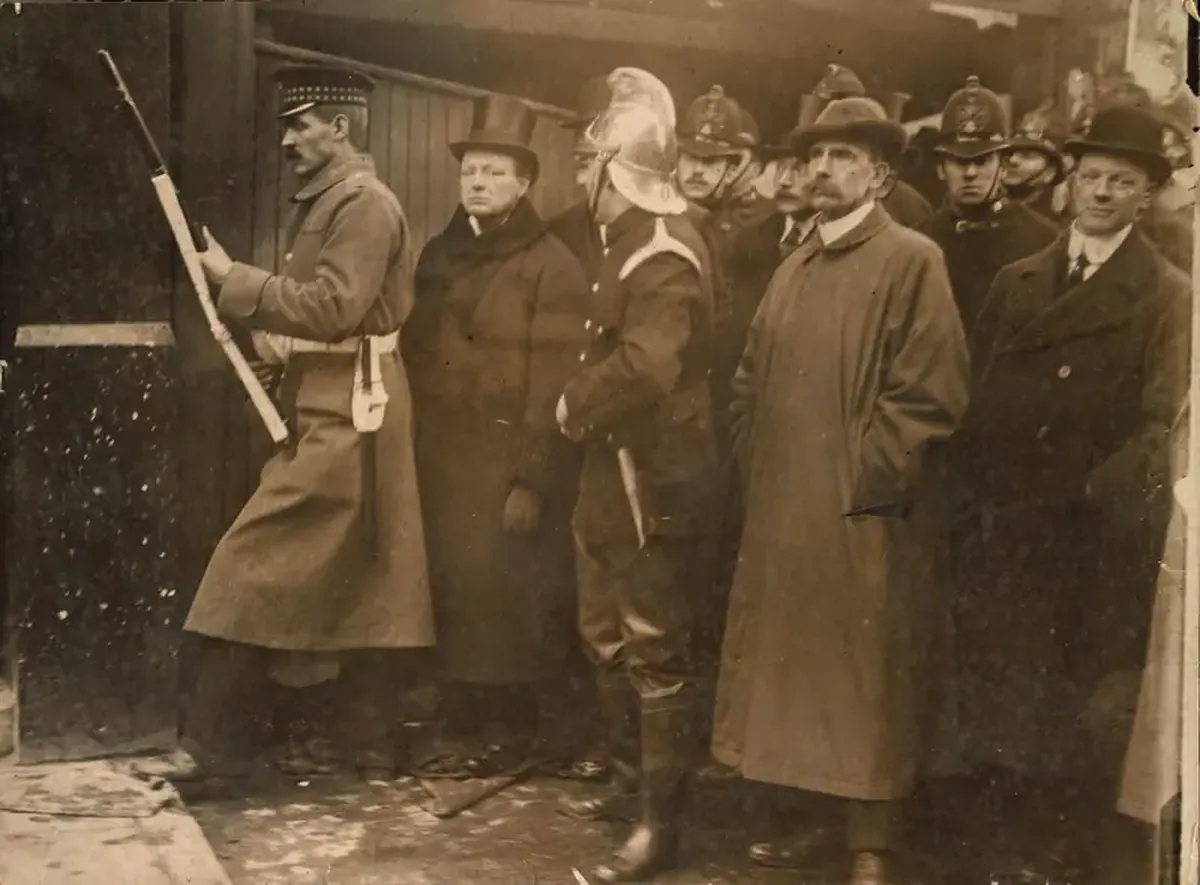
Winston Churchill during the protests, 1911
Victor of Two Wars
As First Lord of the Admiralty, Churchill oversaw a major modernization of the Royal Navy, shifting ships from coal to oil, and as head of the land transport commission he helped drive the development of the first tanks and the creation of armored forces. During World War I, as Minister of War and Minister of Aviation, he supported a doctrine of keeping Britain out of foreign entanglements in the decade after the war. As prime minister in World War II, he was determined to fight to victory and rejected any truce with Nazi Germany. It was then he spoke the famous words: “I have nothing to offer but blood, toil, tears, and sweat.” From 1940 to 1945, roughly 84% of Britons backed their leader. After the war he was a leading voice in the early Cold War with the USSR and a proponent of uniting former enemies—Germany, France, and Britain—into a “United States of Europe.”
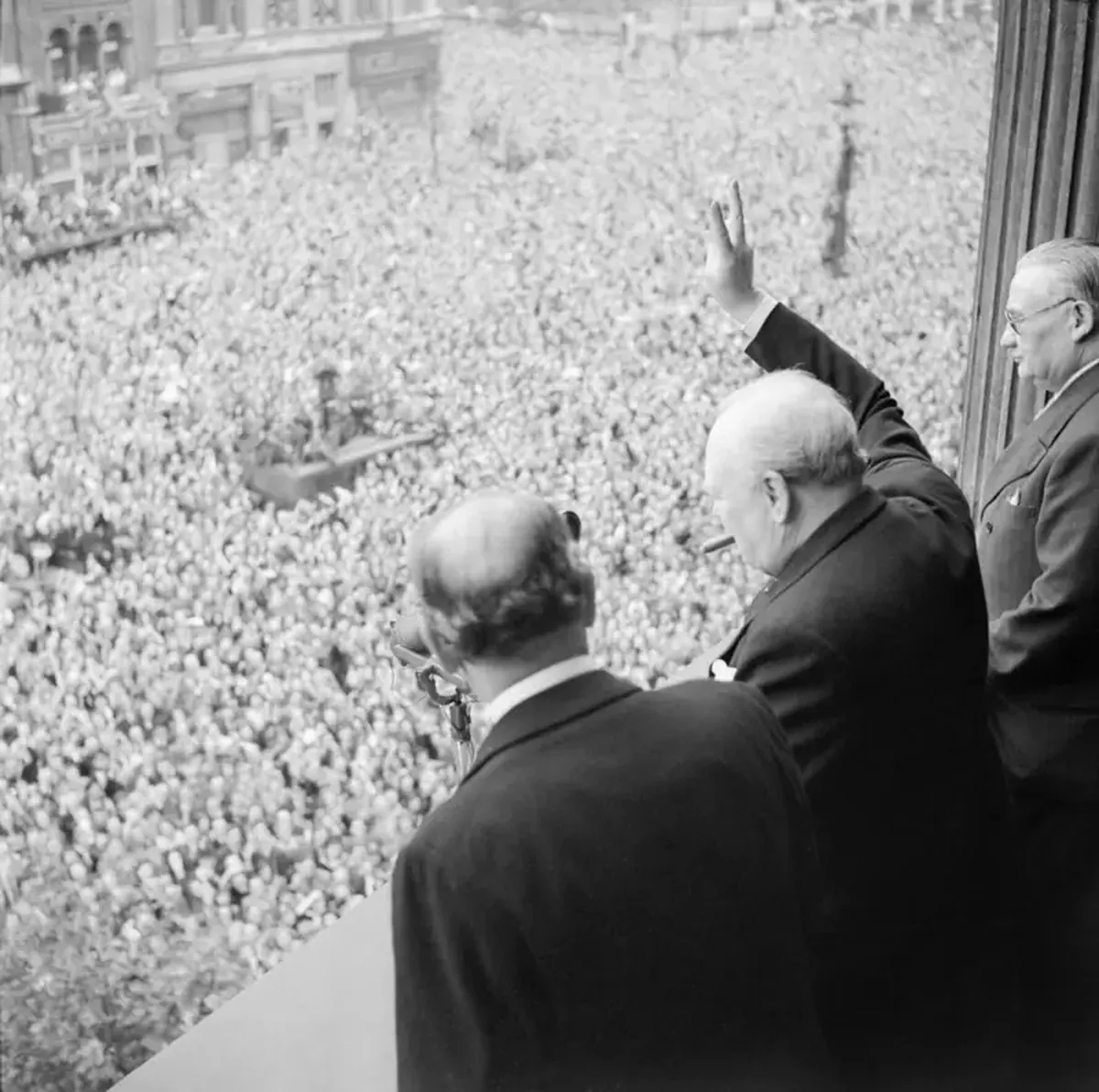
Winston Churchill before the crowd in Whitehall on Victory Day over Germany, May 8, 1945
Critics often said Churchill put personal ambition ahead of principle. He began his parliamentary career with biting rhetoric and audacious behavior, and his taste for controversy won him many enemies in the political elite. Still, even rivals respected his honesty and loyalty to those close to him. Churchill’s temperament did not lend itself to patience, restraint, or hiding his feelings. Unlike many colleagues, he was not an intriguer; he was direct and sincere. Not bound by strict party loyalty, he romanticized the British Empire and viewed colonization as a civilizing blessing for peoples under British rule. He saw Britain’s mission as preventing “great barbaric nations” from threatening the “civilized world.”
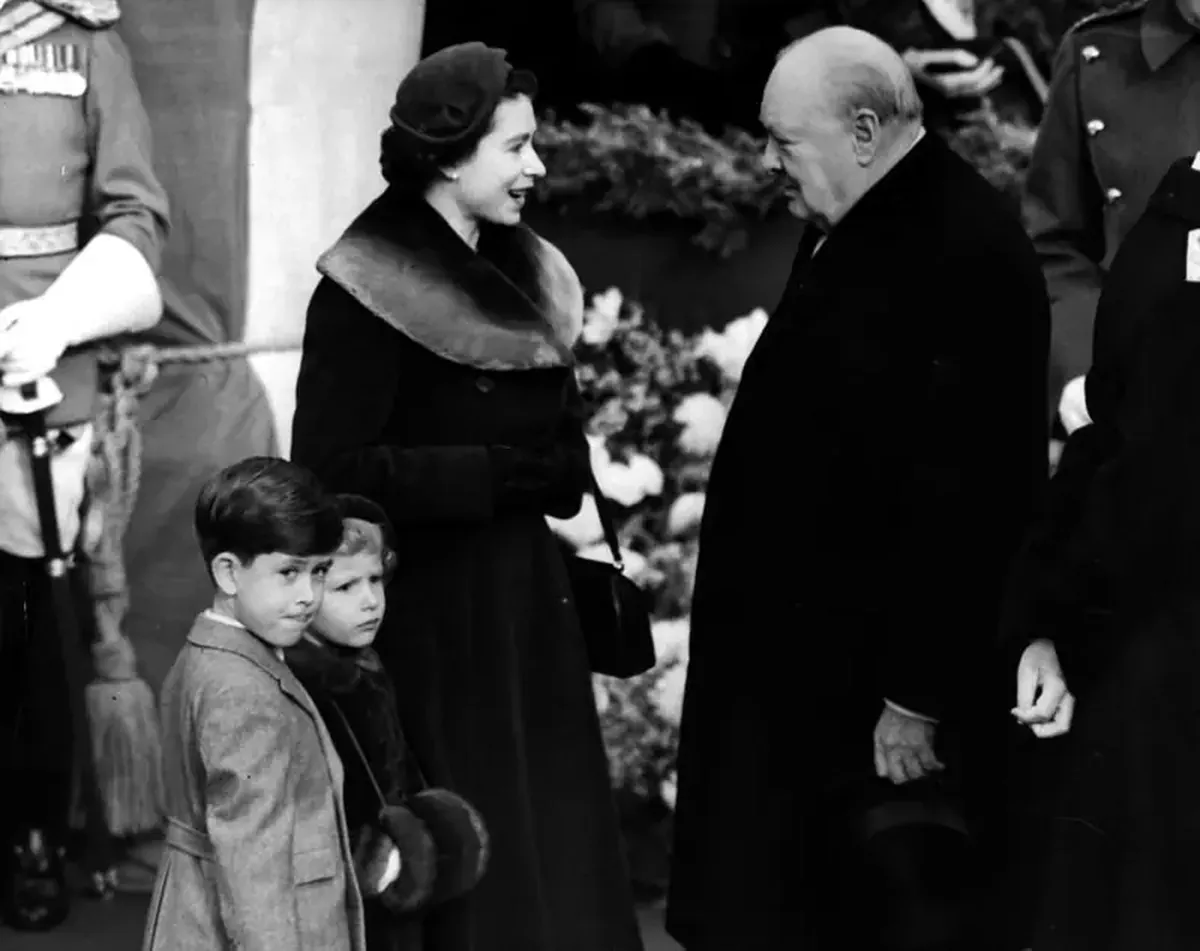
Churchill with Queen Elizabeth II, Prince Charles, and Princess Anne, 1953
Higher Values
For his forceful oratory and his mastery of historical and biographical writing, Churchill won the 1953 Nobel Prize in Literature. His literary output included seven books and a novel. A devoted husband and father of five (his youngest daughter died at age two), Churchill returned to creative pursuits during breaks from public life. At his estate he painted more than five hundred pictures over five decades. He was an Honorary Member of the Royal Academy of Arts and described his painting practice in the essay “Painting as a Pleasant Diversion.”
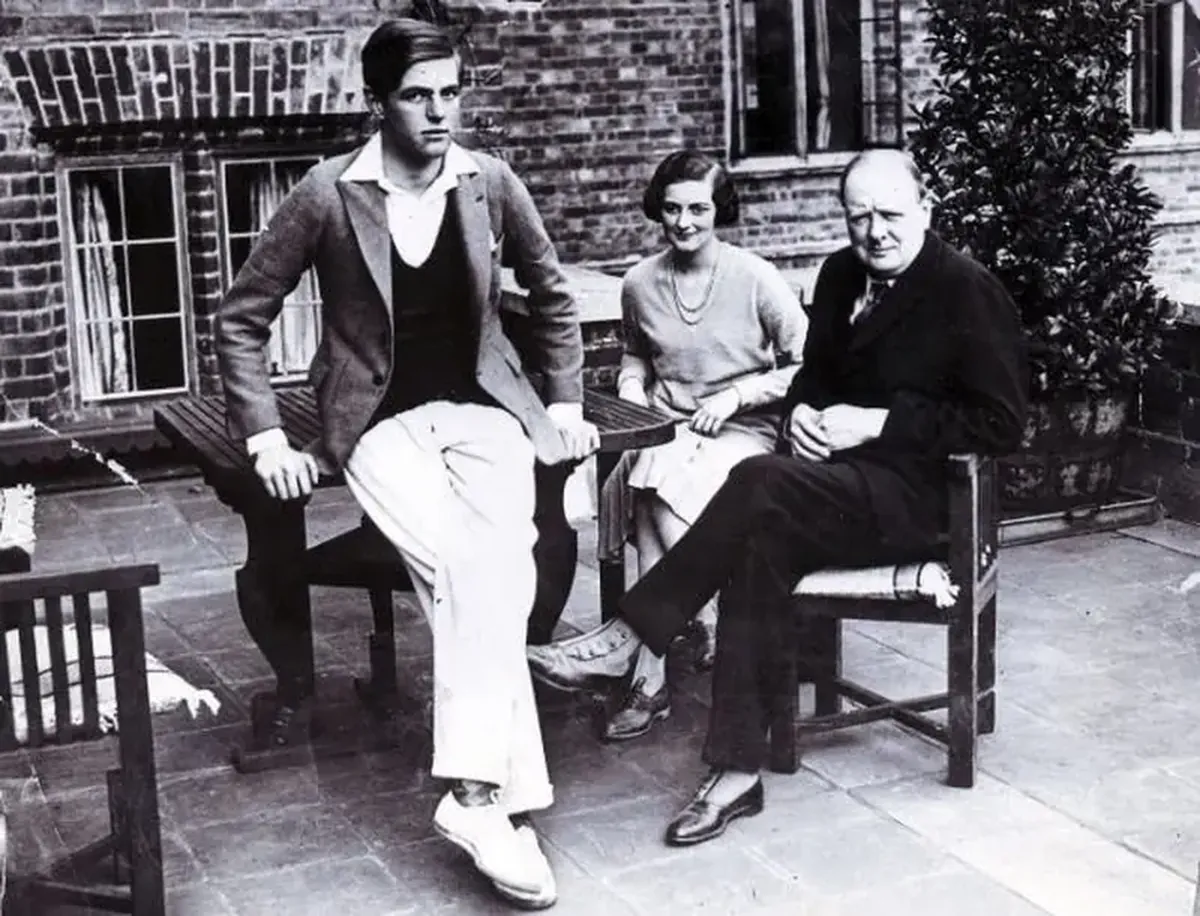
Churchill with his children Randolph and Diana
A Lifelong Drinker
Churchill had a famously hearty relationship with alcohol. He often began the day with champagne and foie gras (estimates place his lifetime consumption of sparkling wine at around 42,000 bottles), and in the evening he favored Armenian cognac paired with a Cuban cigar. During U.S. Prohibition, he was reportedly granted a doctor’s permit for alcohol consumption while visiting in 1932. He liked to say, “Alcohol has given me more than it has taken,” and he lived to age 90 despite his heavy drinking.
A Friendship Built on Bricks
One of Churchill’s more unusual hobbies was laying brick walls on his estate—an activity he said calmed him. When Charlie Chaplin visited, the actor was surprised to learn Churchill had built the brick structures himself and asked for a lesson. Churchill obliged on the condition that Chaplin keep the secret. Whether Chaplin ever used the skill is unknown, but the episode helped start a long friendship between the two men.
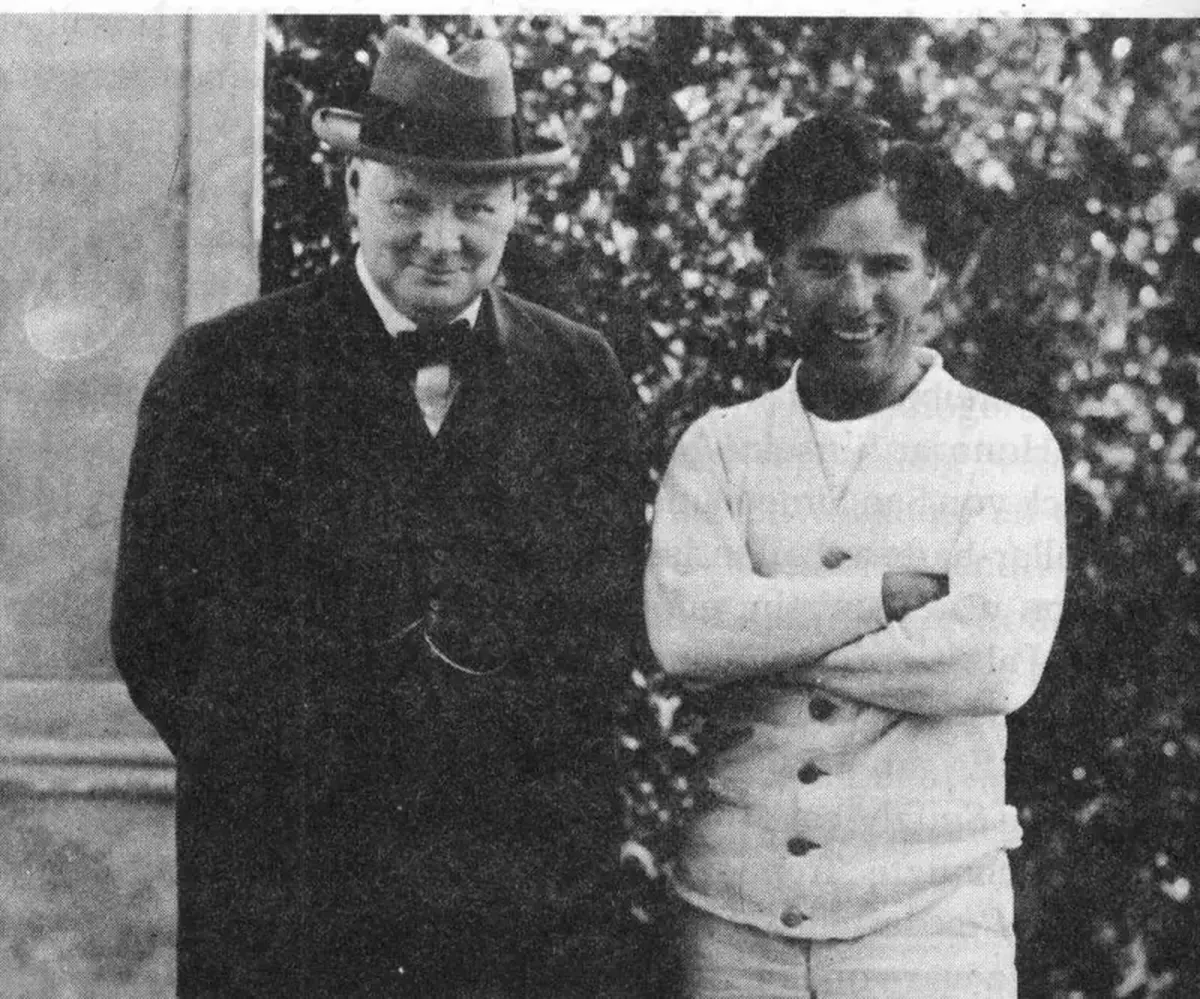
Churchill meeting movie star Charlie Chaplin in Los Angeles, 1929
The Final Act
Churchill died of a stroke on January 24, 1965. His funeral, codenamed “Operation Hope Not,” followed a script Churchill himself had helped plan. It was the largest state funeral in British history and was attended by the Queen. During the service the chimes of Big Ben were stopped, and a 90-gun salute honored his 90 years. After a three-day public lying-in-state in London, his coffin was taken to his home and then buried in the family cemetery at Bladon, near Blenheim Palace, per his wishes. Even his final arrangements left a memorable impression.
