
 Gaby
Gaby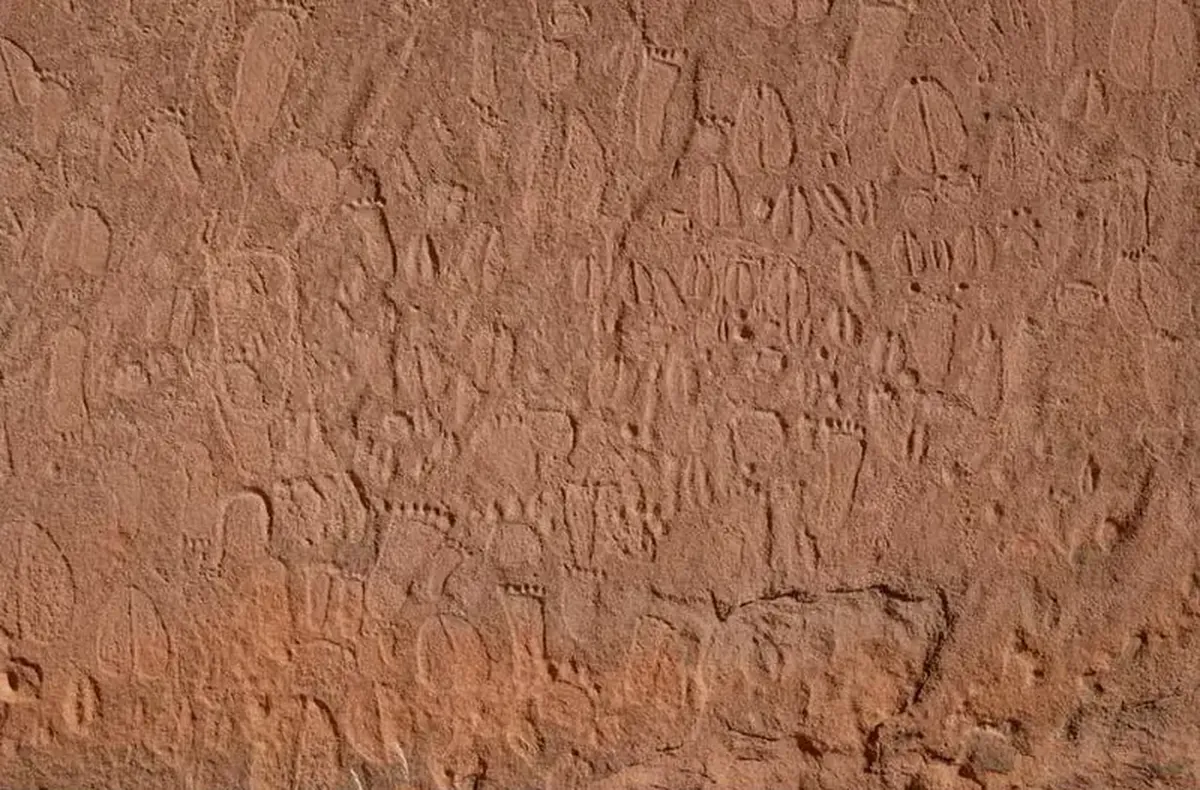
For the first time, researchers have identified more than 400 animal tracks in remarkable detail. The team enlisted a trio of experienced local trackers to help unravel the mystery of these 5,000-year-old records, which together form a true zoological canvas.
A ‘Zoo’ Map of the Stone Age from Animal Tracks
In a set of carved images discovered in the Doro-Nawas mountains of central western Namibia, researchers working in the Kalahari Desert identified 407 distinct tracks and, in many cases, determined the species, sex, approximate age, and even the individual animal that left each footprint—footprints that ancient people preserved in rock. Amazingly, the team managed to identify over 90% of the ancient artworks.
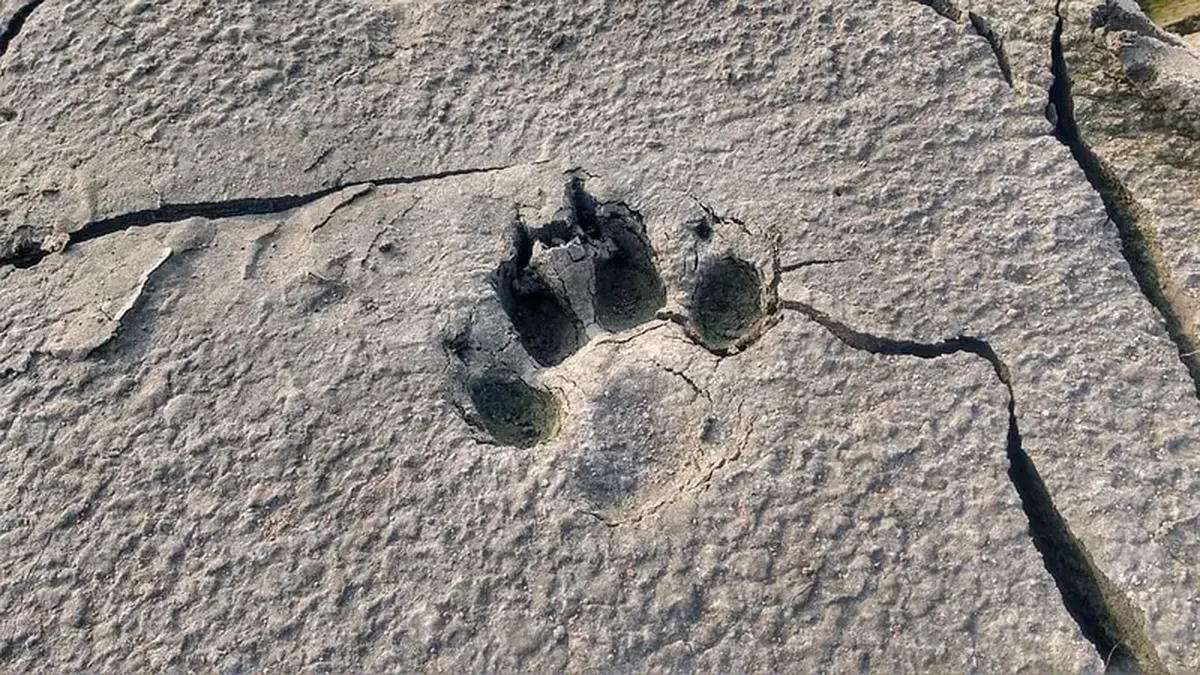 As noted by Newatlas, the results resemble a zoo map more than a typical archaeological record. The most common tracks belonged to giraffes, white and black rhinos, zebras, and leopards. The carvings also include prints from monkeys, jackals, porcupines, elephants, cheetahs, aardvarks, lions, and baboons. In total, researchers identified at least 40 animal species by their distinctive tracks, and more than 60 images were bird footprints.
The giraffe proved to be the most popular subject. Researchers counted 54 images of adult giraffe tracks and 81 drawings of baby giraffe footprints. This is unusual because prehistoric artists usually depicted adult specimens, most often males.
Zoological Art as a Valuable Source of Knowledge About the Past
Archaeologists from Germany deepened their understanding of these drawings by working with local researchers from the reserve in Tsumkwe. Local trackers have increasingly collaborated with scientists who are trying to piece together ancient puzzles.
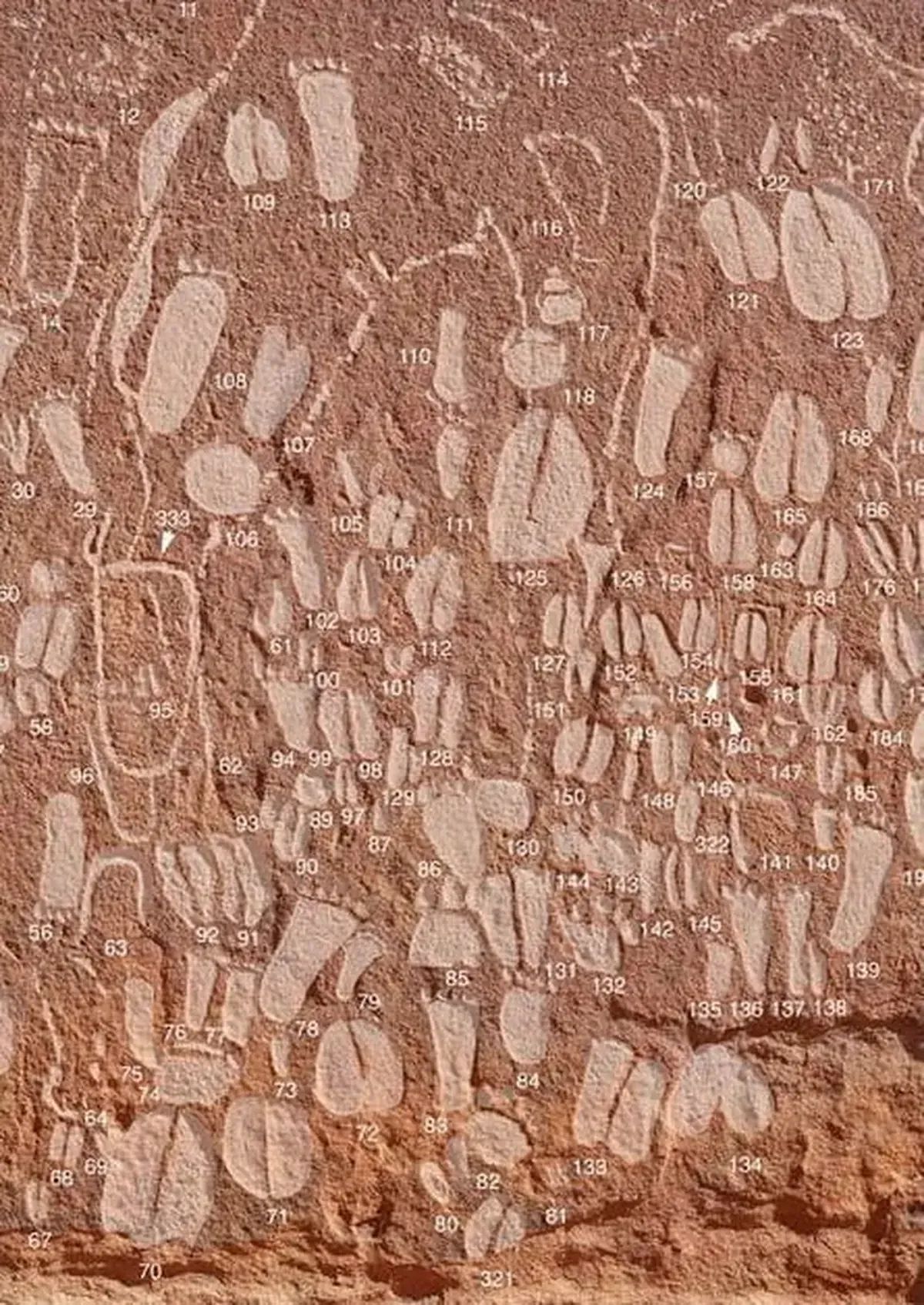
There are many theories about why animal tracks appear in some of humanity’s oldest art galleries. We may never know the full story. Still, this zoological art gives modern researchers valuable information about how landscapes and animal populations have changed over time.
Identifying rock art by tracks is not foolproof. Nevertheless, it highlights the unique skills and ecological knowledge of indigenous people, which are crucial for this kind of research.
Researchers say the rocks of Namibia contain numerous images of Stone Age animals and humans, along with human footprints and animal tracks. Until now, the latter received little attention because scientists lacked the knowledge to interpret them.
